Buying a Secondhand Louis Vuitton Bag: My Honest Guide to Models and Canvas
Which Louis Vuitton to buy secondhand: Speedy vs Neverfull, Monogram vs Damier vs Epi, vachetta honesty and live prices. By Whoppah's co-founder.

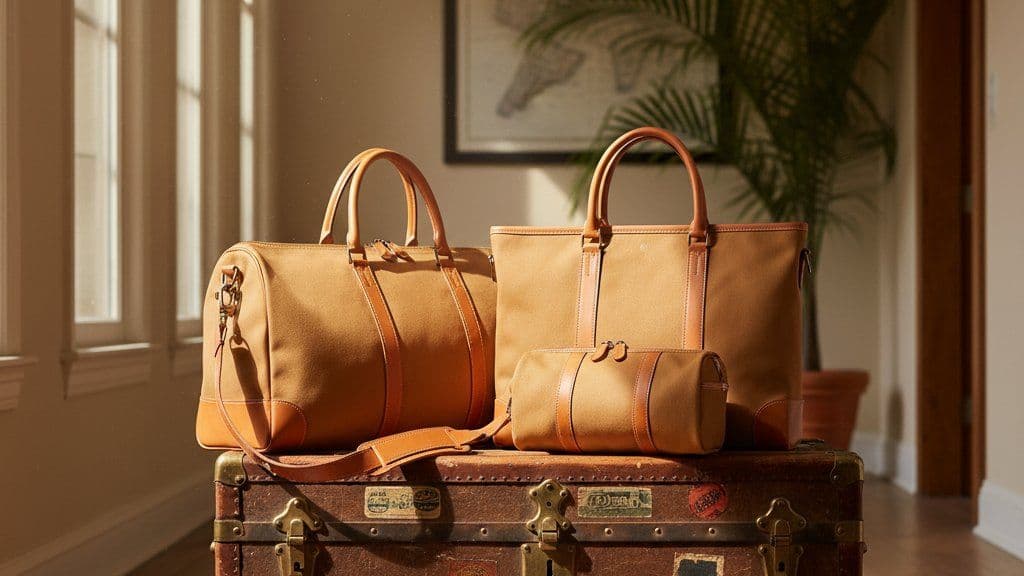
Start with the canvas, not the model. That's my advice to every first-time Louis Vuitton buyer, and I'll explain why in a minute. I started Whoppah in 2019, and today Louis Vuitton is the third-largest bag brand on the platform: 80 bags live, behind Chanel at 376 and Dior at 107. Prices run from about 150 euros to 4,190 euros, so there's a way in at nearly every budget. Every listing was reviewed by our curation team before it went live, and every purchase carries buyer protection with insured shipping options at checkout. In this guide: the five model families worth shortlisting, the Monogram or Damier or Epi question, what these bags cost right now, and the honest conversation nobody has with you at the boutique. Vachetta.
Which Louis Vuitton should you buy first?
Five families cover nearly everything you'll meet on our Louis Vuitton brand page. Here's how I'd choose between them.
Speedy. Created in 1930 as the city-sized companion to the Keepall travel bag, then scaled down in 1965 to the Speedy 25, famously at Audrey Hepburn's request. Sizes run 25 to 40, plus Bandouliere versions with a shoulder strap. It's soft, it's light, and it sags at the base when it's full. That's design, not defect. Right now there are 3 live, from about 1,950 euros to 3,150 euros, typically around 2,100 euros. The full Speedy guide goes size by size if you're torn.
Neverfull. The tote, introduced in 2007 in PM, MM and GM, with side laces to cinch the profile and, on recent lines, a removable pochette insert. Here's the honest bit: supply never keeps up with the people wanting one. There is exactly 1 live as I write this, listed at 2,720 euros. If it's gone by the time you look, the Neverfull guide explains why this pool empties and refills so quickly.
Pochette Accessoires. The little Monogram pouch that became a 1990s staple, and my underrated pick. Everyone stares at the headline models while the friendlier end of the brand quietly sits here and in Epi leather: 5 live, from about 610 euros to 1,630 euros. A first designer bag you'll still respect in a decade.
Keepall. The soft travel bag the house introduced in 1930, and the reason the Speedy exists at all. If your weekends involve platforms and departure boards, it earns its keep. Today: 4 live, from about 2,100 euros to 4,200 euros.
Alma. A structured shape that dates to the 1930s, for people who find the Speedy too casual. There are 3 live today, and I'd view either with the same eyes: check the corners, then decide with your heart.
Monogram, Damier or Epi?
The house began as a Paris trunk-maker in 1854, and its materials still carry that luggage logic. Damier, the quiet checkerboard, came first in 1888. The Monogram followed in 1896, drawn up by Georges Vuitton, the founder's son, partly to fight counterfeiting. I find that detail funnier every year. Epi, the dyed leather with a grain like raked sand, joined in 1985, and in my experience it's the toughest of the three against everyday scuffs.
My first Louis Vuitton was a secondhand Monogram canvas piece, bought long before I could have justified anything grander, and it's still in my rotation. Canvas is the reason why: it's coated, it shrugs off rain, and it ages more slowly than the person carrying it.
Now for the part that divides people: vachetta, the untreated natural cowhide used for handles and trim on Monogram and Damier bags. It leaves the workshop pale and darkens with sun and handling into a honey-coloured patina. Done evenly, it's lovely. But vachetta water-spots easily, marks from handling, and uneven darkening is nearly impossible to undo. I'd rather tell you that here than let the first rain shower tell you. If that maintenance relationship isn't for you, choose Epi, or a bag whose trim has already turned its final colour.
"Monogram canvas was built for train platforms and ship decks. That's why a decades-old piece can still walk into a Monday meeting looking employed."
Evelien Bunnik-Remmelts, co-founder and CEO of Whoppah
What do secondhand Louis Vuitton bags cost?
Live numbers, because printed ones go stale. Beyond that full spread from the top of the page, the useful figures are these: most between about 590 euros and 2,090 euros, and the middle of the market sits typically around 1,500 euros.
Why so firm? Louis Vuitton famously never discounts its bags. That documented no-sales policy means there's no outlet rack and no January markdown to wait for, so the boutique ticket stays a fixed reference point and secondhand becomes the only place the price ever bends. Model-by-model behaviour, and which bags hold their value, is work for the price and value guide.
How to read condition before you buy
Condition moves these prices more than age does. My checklist: vachetta first, looking for water spots and whether the handles have darkened evenly, because patchy patina is a flaw you can't undo. Then corners and canvas coating. Then the interior, since some older linings turn sticky with age, which is fixable but should be priced in. Stitching on Monogram trim should be even and mustard-yellow. And remember the Speedy sag: a soft base on a full bag is the design working, not a defect to negotiate over. On Whoppah you can message the seller directly for extra photos of exactly these spots, and it's the same logic our curation team applies to every bag before it lists. If the bag's era needs checking, date codes ran until March 2021 and embedded microchips took over from there; the authentication guide walks you through all eight checks, date code first.
Why buy secondhand instead of the boutique?
Three reasons, in my order. Price: the house never discounts, so the secondhand market is the only discount Louis Vuitton will ever give you. Selection: the boutique sells this year's catalogue, while the secondhand pool holds retired sizes, discontinued colourways and vintage canvas from decades back, with 80 pieces live on Whoppah today. And the quiet reason: a bag that already exists doesn't need to be made twice.
Louis Vuitton is the third-largest handbag brand on Whoppah, with 80 bags live, behind Chanel at 376 and Dior at 107. Prices run from about 150 euros to 4,190 euros, with most between about 590 euros and 2,090 euros and a median typically around 1,500 euros. The Speedy dates to 1930, with the Speedy 25 created in 1965 for Audrey Hepburn; the Neverfull tote arrived in 2007; Monogram canvas dates to 1896, Damier to 1888 and Epi leather to 1985. Vachetta, the untreated cowhide trim on Monogram and Damier bags, darkens from pale to honey with use and water-spots easily, so even patina is a central condition check. Louis Vuitton does not discount new bags, which keeps secondhand demand steady. Every Whoppah listing is reviewed by a curation team before going live, and every purchase carries buyer protection.
Frequently asked questions
Is it cheaper to buy a Louis Vuitton bag secondhand?
Usually, for a comparable model and condition, and the structural reason is that documented no-sales policy: the boutique ticket never moves down, so secondhand is where the price flexes. On Whoppah today, most between about 590 euros and 2,090 euros.
Which Louis Vuitton should a first-time buyer choose?
A Speedy if you want the shape everyone recognises, a Pochette Accessoires or an Epi piece if you want the gentler end of the price range, a Keepall if your bags spend more time on trains than on shoulders. Pick for the life you actually live, then let the canvas question decide the rest.
What is vachetta, and should it put me off?
It's the untreated natural cowhide used for trim and handles on Monogram and Damier bags. It darkens from pale to honey with sun and handling, and it water-spots easily. If you enjoy a material with a life of its own, that's a feature. If you don't, buy Epi, which has existed since 1985, or choose a bag whose trim has already darkened evenly.
How do I know a secondhand Louis Vuitton is authentic?
Every bag listed on Whoppah is reviewed by our curation team first: date-code or microchip era against the claimed age, canvas print and alignment, stitching, hardware, heat stamps. No checklist guarantees detection, mine included, which is why buyer protection covers every purchase. Two honest rules to keep: receipts prove very little, and packaging can only ever count against a bag, never for it.
Why is the Monogram pattern upside down on the back of my Speedy?
Because the bag is cut from one continuous panel of canvas that wraps under the base, the pattern reads correctly on the front and upside down on the back. That's factory-correct. A secondhand Speedy with a "corrected" back is the one to walk away from.
Ready to look? All 80 Louis Vuitton bags live right now are browsable here, each one checked before it listed. Go meet your canvas.