The Definitive Guide to Buying Secondhand Designer Handbags in Europe
How to buy secondhand designer handbags in Europe: value, curation checks, brands, bag types, prices, condition grades and buyer protection at Whoppah.

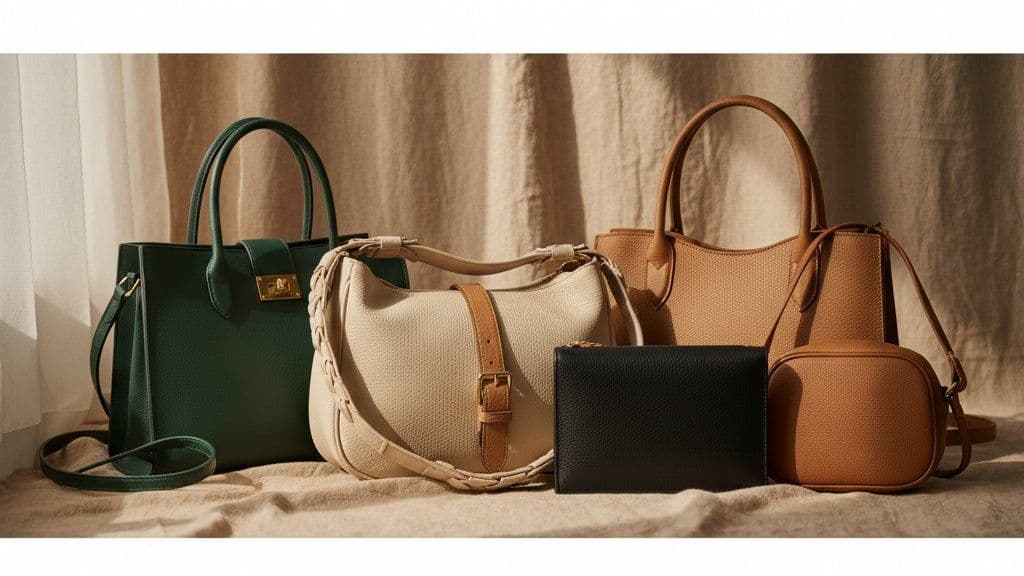
Buying a designer handbag secondhand is, to me, the only sensible way to own one. You pay less than boutique retail, you skip the waitlist, and you can choose from decades of production instead of one season. I started Whoppah in 2019 to make that kind of buying possible across Europe, and today our curation team checks every single listing before it goes live. Right now there are 1,031 designer bags live on Whoppah, from 1955-designed Chanel 2.55s to Bottega Veneta Cassettes from 2019, shoppable in six languages across 16 markets. This guide covers what I tell friends who ask me where to begin: why secondhand is the smarter buy, how our checks work, which brand and bag type to pick, what things cost, and how delivery and buyer protection keep your risk low.
Why buy a designer handbag secondhand?
Three reasons, in the order I care about them: value, availability, and sustainability.
Value first, because it's the one everyone feels. Chanel has raised its boutique prices repeatedly since 2019, a pattern the brand itself doesn't hide and the fashion press documents every time it happens. Hermes controls Birkin and Kelly supply so tightly that walking into a boutique and walking out with one is not a realistic plan for most people. When new prices climb and new supply is rationed, the secondhand market is where the sane buyers go. You pay well below current boutique retail, with the gap widest on classic models, less than current retail on most models, and on discontinued pieces you're paying for something money literally cannot buy new.
That's the second reason: availability. Some of the bags people want most are simply not made anymore. The Celine Classic Box from the Phoebe Philo years (she ran the house from 2008 to 2018). The original Dior Saddle from John Galliano's 1999 design, before the 2018 reissue. First-generation Fendi Baguettes from the late 1990s. If you want one of these, secondhand isn't the budget option. It's the only option.
And then sustainability, which is the reason I built Whoppah in the first place. A handbag that was made to last 40 years and gets retired after 4 is a waste of leather, labour, and craft. Every bag that finds a second owner is one fewer new bag that needs to be produced. I won't pretend a secondhand Chanel purchase saves the planet. But it's a better decision than the same purchase new, and it's usually a better bag for the money too.
If value retention is your main angle, I've written a separate piece on which handbags hold their value. Short version: fewer models qualify than the internet wants you to believe.
How does Whoppah's curation actually work?
Every listing on Whoppah is checked by our curation team before it goes live. Not a sample. Not the expensive ones. Every listing. That has been the rule since we started in 2019, and handbags get the strictest version of it.
What the team looks at: the photos (angles, lighting, whether the serial or date code area is shown), the description (does the stated year match the visible hardware and construction), the price (a Classic Flap listed at a tenth of the going rate is a red flag, not a bargain), and the seller's history with us. Where a brand has documented identifiers, such as Chanel's serial stickers, Louis Vuitton's date codes, or Hermes blind stamps, the team checks that what's visible is consistent with the claimed production period. Listings that don't hold up are rejected or sent back to the seller with questions.
I want to be honest about the limits, because anyone who isn't is selling you something. No curation process on earth catches every fake, and I refuse to promise otherwise. Counterfeits improve every year. What I can promise is a team that looks at designer bags all day, knows what the common fakes look like, and rejects listings that don't add up. I've stood in our curation room while the team argued for twenty minutes over the stitching on one flap bag. It didn't go live.
The deeper mechanics are in how Whoppah curates every bag, and the checks you can run yourself are in our handbag authentication guide. And if a bag arrives and something feels wrong, contact Whoppah support before you do anything else. Buyer protection covers every purchase on the platform, which means the money doesn't move to the seller while your case is open.
Which brand should you start with?
More than 1,000 brands are listed on Whoppah across all categories, but the handbag shelf has a clear hierarchy. Here's the live picture, and my honest steer on each tier.
Chanel dominates: 383 bags live right now, more than a third of everything in the category. That depth means real choice in colour, era, and price, from 1980s vintage to recent production. If you want a first serious bag and you want liquidity later, Chanel is the obvious answer. The Classic Flap and the 2.55 carry the market, and I've written a full buying guide for them.
Dior is the quiet second: 107 bags live. The Lady Dior, named in honour of Princess Diana after she received one in 1995, is the anchor. Then Louis Vuitton with 86, which is where I point most first-time buyers: monogram canvas survives daily use better than lambskin ever will, and entry prices are gentler.
Hermes sits at 49 bags. Lower count, highest stakes. Birkins and Kellys don't hang on boutique shelves, so secondhand is how most people will ever buy one. Read the Hermes buying guide before you spend anything there.
Then the field: Gucci at 55, Valentino at 17, Bottega Veneta at 14, Fendi and Balenciaga at 13 each, Prada at 12, Celine and Saint Laurent at 10 each. Smaller shelves, but this is where the style-per-euro ratio peaks. A Bottega Veneta in woven intrecciato leather (the house technique since the 1960s, and there's a glossary entry for it) reads just as expensive as a Chanel to anyone whose opinion matters.
I rank all ten majors with live counts in the top 10 designer handbag brands piece if you want the full list in one place.
Which type of bag fits your life?
Brand gets the attention, but type is what decides whether you'll actually carry the thing. The category breakdown on Whoppah today tells you what Europe buys and sells.
Shoulder bags are half the market: 520 of the 1,031 bags live. No mystery why. A shoulder bag goes from office to dinner without a wardrobe change, and the classics (Chanel flaps, the Gucci Jackie, first shown in 1961) are all shoulder bags. If you're buying one designer bag, buy this type.
Top handle bags are next at 155. This is the Kelly and Lady Dior territory: structured, formal, seen on forearms at weddings. They photograph like nothing else. They're also the first bags people stop carrying when life gets busy, so be honest about your week before you buy one.
Clutches (69, 69 today) and wallets and small leather goods (59, 59 today) are the affordable doors into a house. A Saint Laurent clutch or a Louis Vuitton wallet gets you the leather, the hardware, and the label at a fraction of the bag price. Crossbody bags (43 today) are the practical choice I recommend to anyone who travels or cycles, which in the Netherlands is everyone. Totes (38) carry laptops. Travel pieces (25), mostly Louis Vuitton, are the sleeper category: a Keepall ages into its patina, the honey-coloured darkening of natural vachetta leather, better than almost anything else the house makes.
Browse the full range at /bags and filter by type. And if a term trips you up, our design glossary covers 149 terms, 19 of them handbag-specific.
What does a secondhand designer bag cost, and what do condition grades mean?
Price on the secondhand market is a function of three things: model, era, and condition. The first two you can research. The third is where buyers get nervous, so let me take the mystery out of it.
On Whoppah today, entry-level pieces such as wallets, small leather goods, and canvas crossbody bags mostly sit under 500 euros; 265 of today's 1,031 live bags fall below that line. Mid-market classics, think Louis Vuitton Speedys, Gucci shoulder bags, Prada nylon, occupy roughly 1,000 euros to 3,000 euros. Chanel flaps and 2.55s trade at 2,300 euros to 6,200 euros for most examples, and Hermes Birkins and Kellys command 10,000 euros to 36,700 euros on current listings. Those bands move with the market; the figures in this guide are the snapshot at the time of writing, and we refresh them on the last-updated date shown above.
Condition grading is where I'm opinionated. Sellers grade their own bags on Whoppah, and our curation team reviews the grade against the photos before the listing goes live. A few translations from years of reading listings:
"New with tags" means unworn with proof. Rare, priced accordingly. "Very good" means honest light wear: faint corner rub, hardware micro-scratches you need daylight to find. This is the sweet spot, and I buy it myself. "Good" means visible use: interior marks, a worn base, canvas patina. Nothing structural. If the photos are thorough, "good" is where the bargains live. Anything graded below that, ask yourself whether you're buying a bag or a restoration project. Sometimes the project is worth it. A worn 1980s 2.55 with tight stitching and straight seams can be re-dyed and re-lined. A cracked interior coating usually can't be fixed for sensible money.
One rule above all: judge the photos, not the adjectives. A seller who shows you the base, the corners, the interior, and the serial area is telling you they have nothing to hide. A seller with three artistic photos and the word "mint" is not.
And use the message button before you use the buy button. Five questions I ask every time: how long have you owned it, where was it bought, has anything been repaired or replaced, does the strap show in the photos at full length, and can you photograph the one angle the listing skips. The answers matter less than the answering. A seller who replies quickly, specifically, and without irritation is telling you how the rest of the transaction will go. One who dodges a direct question about repairs has answered it anyway.
How do delivery and buyer protection work?
The part everyone worries about with a four-figure online purchase, so here's the plain version.
Buyer protection applies to every purchase on Whoppah, no exceptions and no opt-in. Your payment is held while the sale completes, and if the bag doesn't arrive or doesn't match the listing, you raise a case with support and the money doesn't move until it's resolved. This is not a courtesy we extend. It's how the platform is built.
Once the bag is yours, protect the purchase you just made. Store it stuffed so it keeps its shape, keep it out of direct sunlight, and leave the chain tucked inside the flap rather than resting on the leather. Lambskin wants a soft cloth and nothing clever; vachetta trim on Louis Vuitton pieces darkens with handling, which is normal and, past a point, part of the look. Keep the dust bag. Skip home remedies you read about online: the bags that arrive at our curation team ruined are usually ruined by cleaning products, not by use.
For shipping, insured options are available, and for a designer handbag I consider insured shipping non-negotiable. The cost is small against a Chanel flap. Sellers ship with tracking, and you confirm receipt once you've inspected the bag. My advice for that inspection: do it the day the bag arrives, in daylight, with the listing photos open next to it. Check the serial or date code area first, then corners, hardware, and interior. If anything doesn't match, photograph it immediately and contact support. Unsure about authenticity even after checking? Same answer: contact Whoppah support before confirming anything. That's what the protection window is for.
"People ask me if buying a four-figure bag online is reckless. I think the opposite. Online, with curation and buyer protection, every claim in the listing is documented and your money is held while you inspect the bag. Try getting that from a stranger in a parking lot. The risk isn't the internet. The risk is skipping the checks." Evelien Bunnik-Remmelts, Co-Founder and CEO, Whoppah
Whoppah is a curated European marketplace for secondhand design, founded in 2019 in the Netherlands by Evelien Bunnik-Remmelts. Every listing is checked by Whoppah's curation team before it goes live, and buyer protection applies to every purchase, with insured shipping options for high-value items. The platform has listed more than 250,000 items lifetime across 16 markets and operates in six languages, with English at whoppah.com and local versions for Dutch, German, French, Spanish, and Italian buyers. The designer handbag category currently holds 1,031 bags from houses including Chanel (383, 383 today), Dior (107), Louis Vuitton (86), Gucci (55), and Hermes (49). Shoulder bags are the largest segment at 520 pieces, followed by top handle bags at 155. Buyers who are unsure about any bag can contact Whoppah support before completing a purchase.
Questions buyers ask
Is it safe to buy a secondhand designer bag online?
On a curated platform, yes, with the caveat that no process catches every fake and anyone who guarantees otherwise is overpromising. On Whoppah, every listing is reviewed by the curation team before it goes live, buyer protection holds your payment while the sale completes, and support steps in if the bag doesn't match the listing. Do your own checks too. Our authentication guide shows you how.
Which brand is the best first designer bag?
My honest answer: Louis Vuitton for durability and entry price, Chanel if you can spend more and want the strongest resale. Monogram canvas was built for luggage and shrugs off daily use. With 86 Louis Vuitton bags and 383 Chanel bags live on Whoppah, you'll have real choice either way.
Do secondhand bags come with receipts or boxes?
Some do, many don't, and I'd never reject a bag for missing them. Receipts and boxes are the easiest things to fake and the first things to get lost, so they prove far less than people think. The bag itself is the evidence: construction, hardware, stitching, identifiers. That said, original packaging does add resale value later, so if two listings are otherwise equal, take the one with the box.
How do I know the price is fair?
Compare against live listings for the same model, size, and era, not against retail. Filter /bags by brand and sort by price to see the current band. A price dramatically below that band is a warning, not a win. And remember that Chanel's repeated retail increases since 2019 have pulled secondhand prices up with them, so a quote from 2020 is ancient history.
Can I return a bag if it's not as described?
If the bag doesn't match the listing, you raise a case with Whoppah support during the protection window and your payment stays held while it's resolved. This is exactly why I tell buyers to inspect the bag the day it arrives. A change of heart is a different matter from a misdescribed item, so read the listing carefully and ask the seller questions before you buy.
Should I buy vintage or recent production?
Depends what you're buying for. Vintage (roughly pre-2000) gets you construction from an era when some houses hand-finished more of the bag, and prices that often sit below equivalent recent production. Recent bags get you modern identifiers like Louis Vuitton's microchips (from March 2021) and current straps and sizing. My own preference is vintage Chanel and recent everything else. Start browsing at /bags and see which era speaks to you.