Have it delivered hassle-freeBuyer protectionAll Designer items curated by WhoppahDownload the Whoppah App – get alerts & sell with ease.
Have it delivered hassle-free
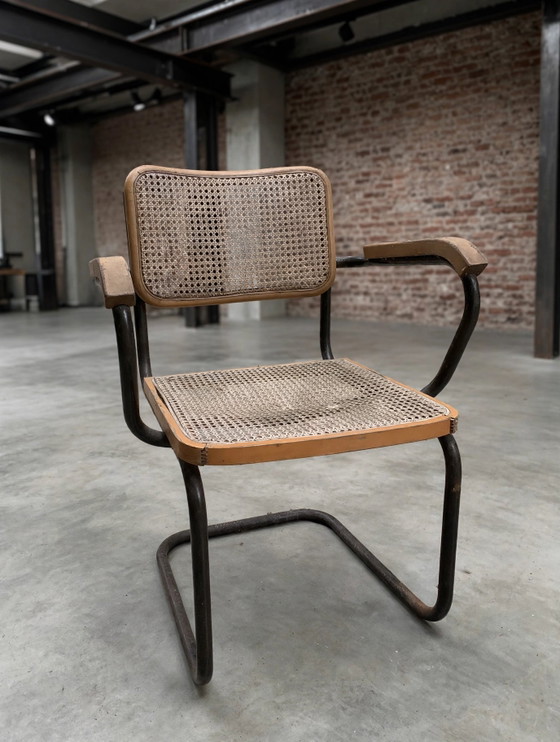
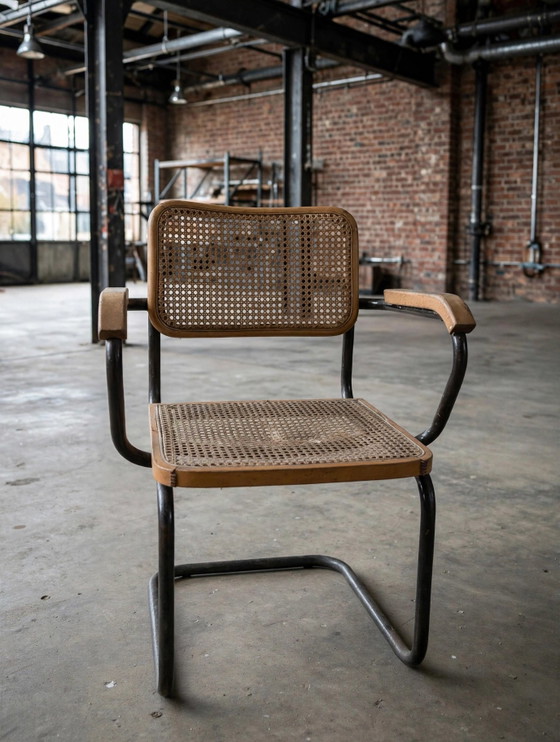
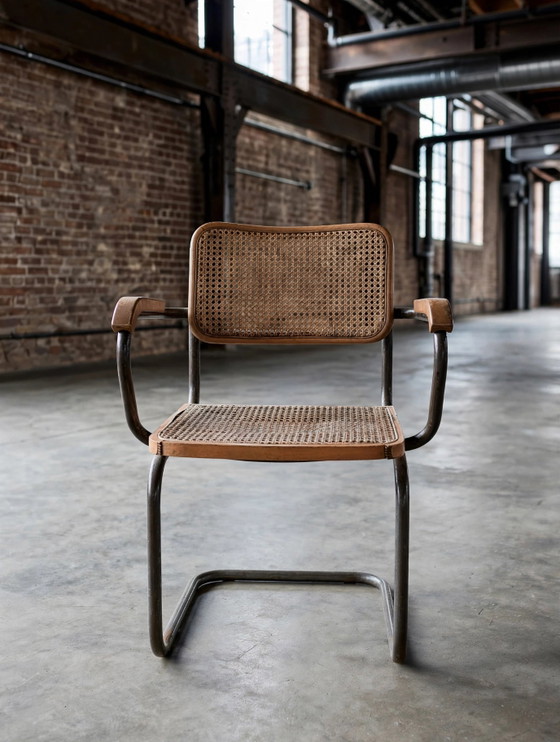
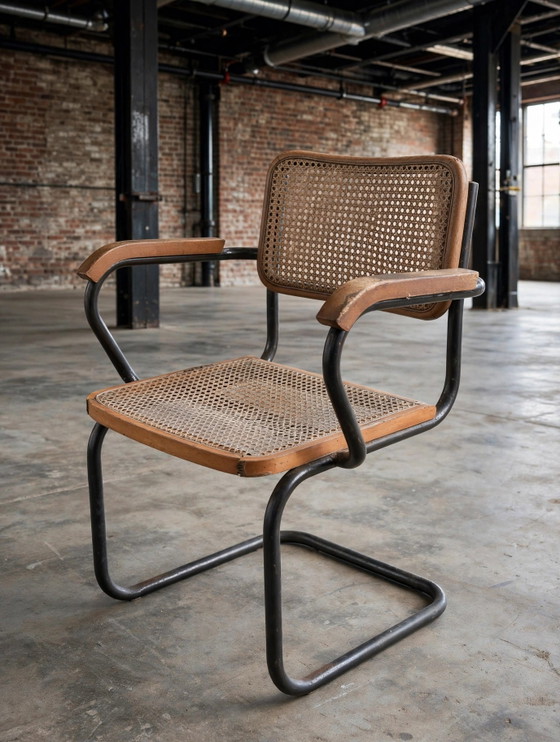
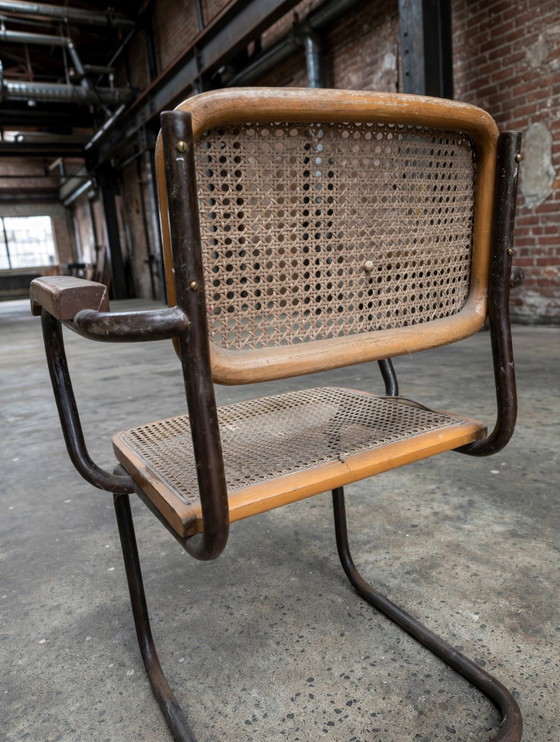
Extremely rare Cesca Bauhaus ancestor, 1920s/30s - Curved solid iron - Vienna straw - To be restored
€720Bid from €625
Buy with confidence
Shop & pay safely with Buyer ProtectionDesigner items curated by WhoppahWe only pay the seller once you have safely received the itemTrusted payment methods


About this seller
Private sellerProduct description
The mother of all Cescas.
What I present to you is not the usual tubular steel Cesca. This is its much rarer and more primitive ancestor.
The structure is entirely of hand-bent solid iron, not hollow tubing. Extremely heavy, solid, with hand-crafted curves that betray a production from the very early Bauhaus era, in the late 1920s/early 1930s. This was when Breuer was still experimenting, inspired by the handlebars of his Adler bicycle, before Thonet's industrial production.
It's immediately obvious: the iron is solid, the welds are hand-welded, and the weight is almost double that of a classic Cesca. A museum piece, fit for an architectural studio, not just for simple furniture.
Technical specifications and condition details:
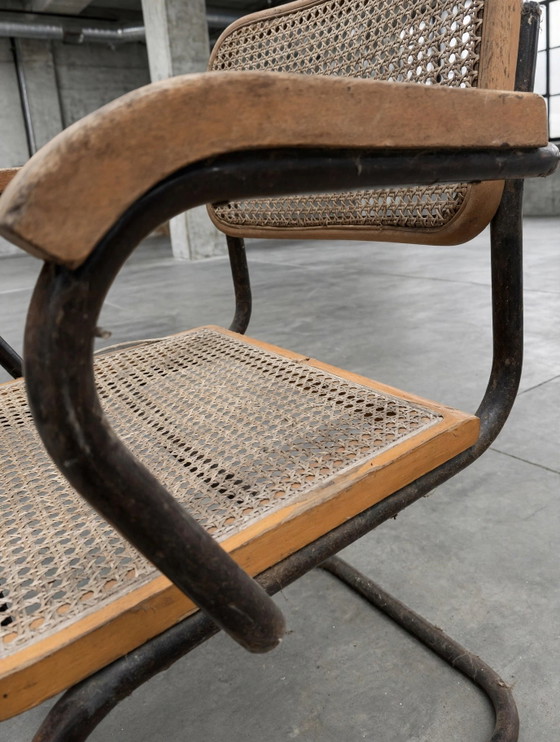
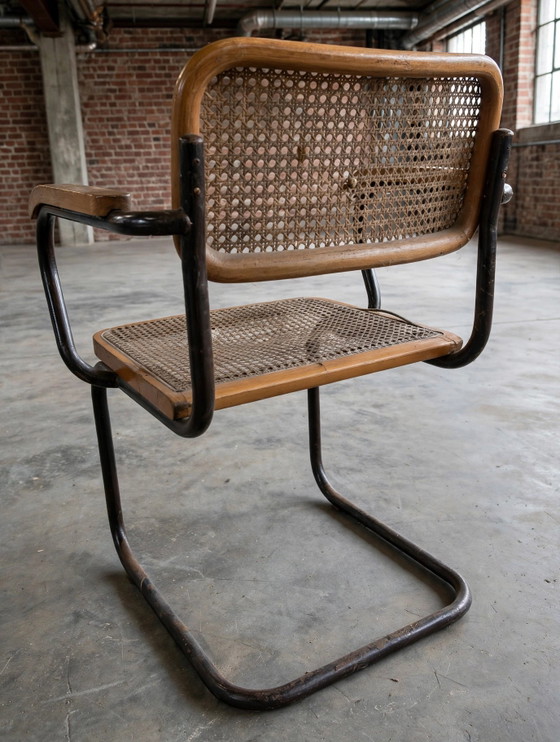
• Structure: Bent solid iron, not tubular steel. Significant period patina, surface oxidation, very solid. No play.
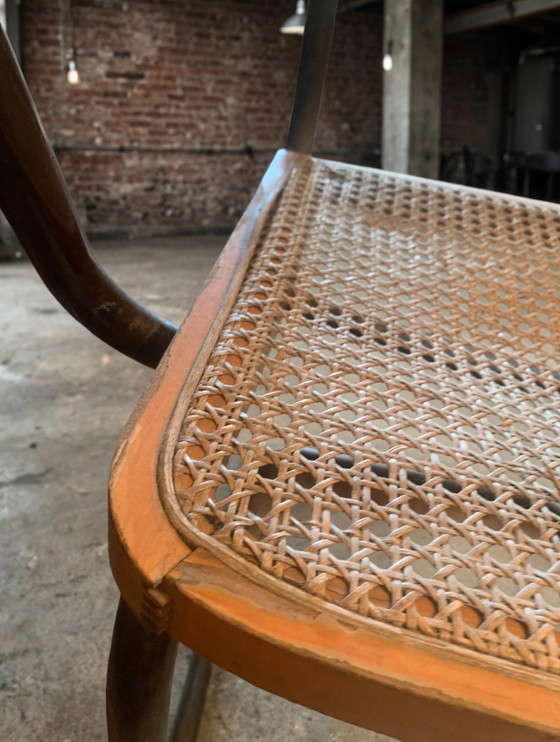
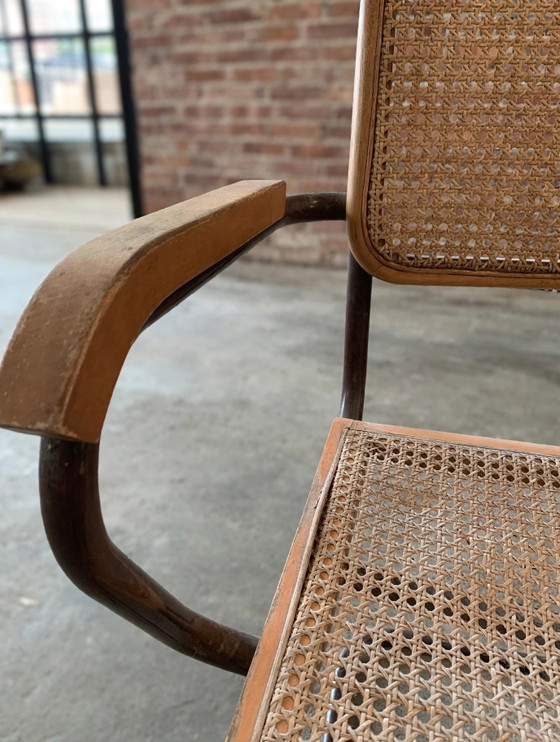
• Wood: Solid beech with sculptural armrests, consistent wear, needs refreshing.
• Vienna straw: Original. The backrest is still in good condition, but the seat needs to be completely redone - sagging in the center, frayed, as shown in the photo. This is a typical restoration on these chairs.
• Markings: No visible markings, stamps, or labels, as is typical of very early artisanal/small-workshop Bauhaus production.
• Rarity: A collector's item for those in the know. You won't find another one this easily.
I'm selling this as a conservative restoration project. The price reflects only the work on the seat; the chair itself is extremely rare.
Approximate dimensions: W 59 x D 60 x H 84 cm approx. - Significant weight (solid iron)
Materials: Solid iron, beech, hand-woven Vienna straw
Period: Attributed ca. 1928-1935
Specifications
CategoryDining chairsConditionGoodColorsYellow, BlackMaterialIron, RattanNumber of items1Height84 cmWidth63 cmDepth50 cmSeat height41 cmSeller locationSant’Eusanio del Sangro, ItalyDelivery optionsDelivery or pickup
Discover more
Seller information
About this seller
Private sellerSant’Eusanio del Sangro , ItalyOn Whoppah since July 2026 • 1 sale