Have it delivered hassle-freeBuyer protectionAll Designer items curated by WhoppahDownload the Whoppah App – get alerts & sell with ease.
Have it delivered hassle-free
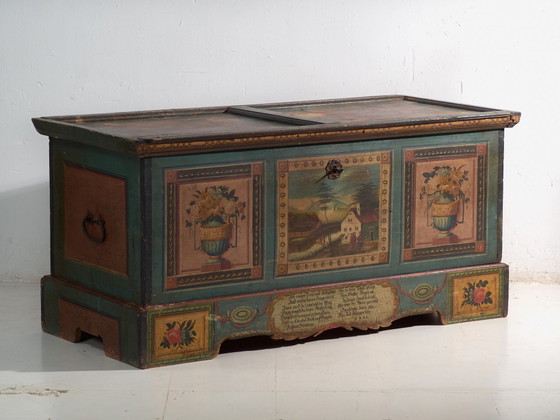
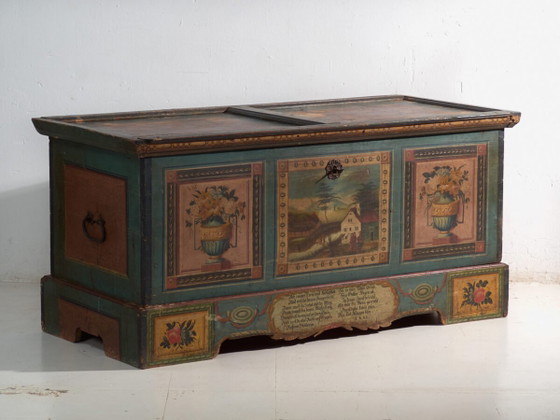
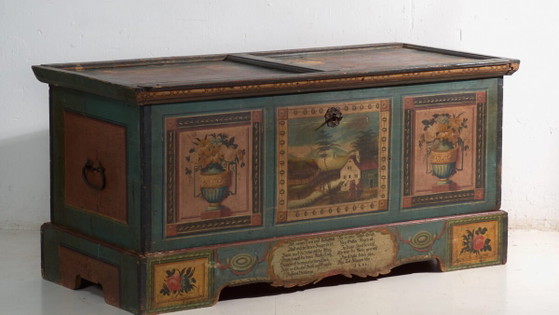
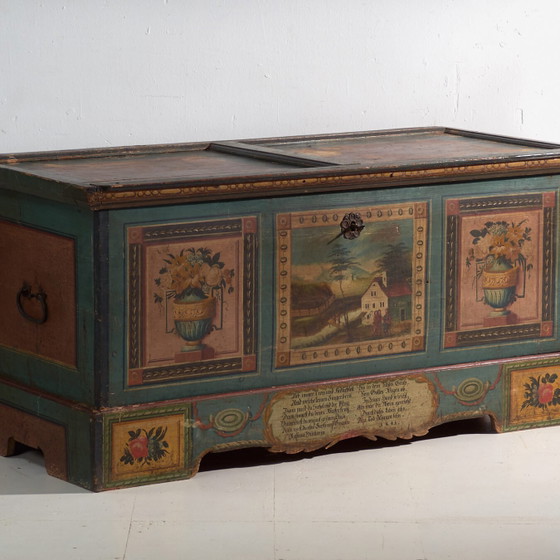
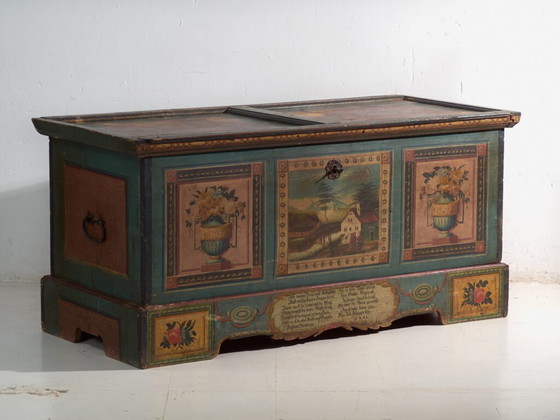
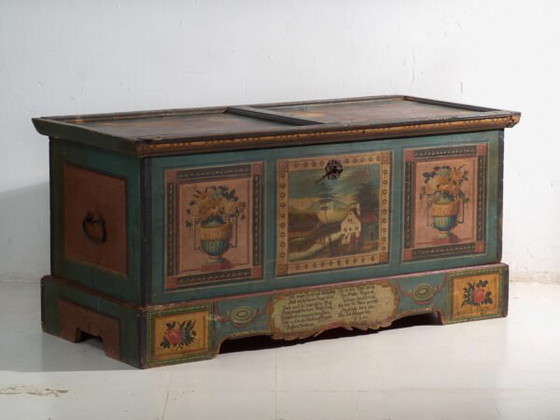
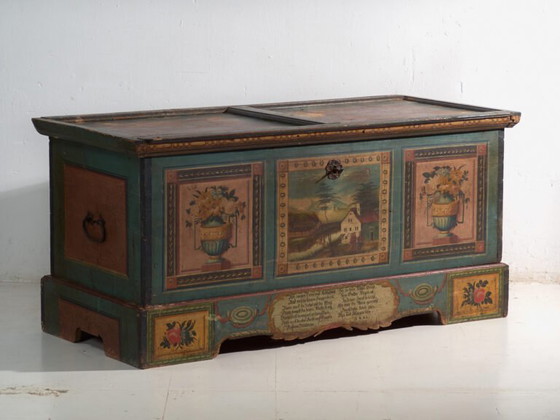
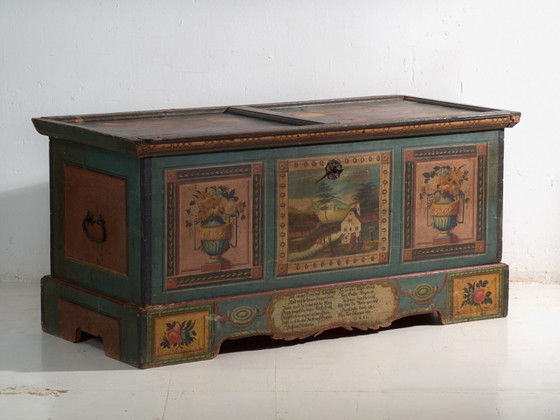


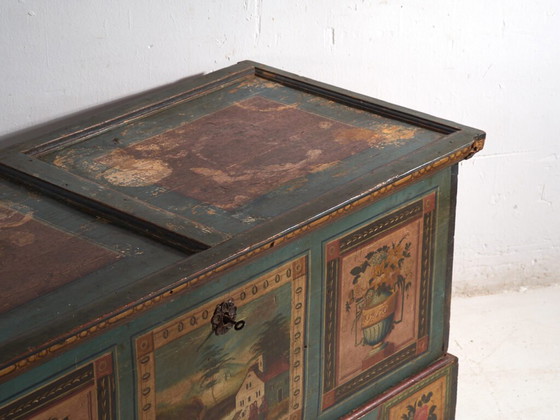
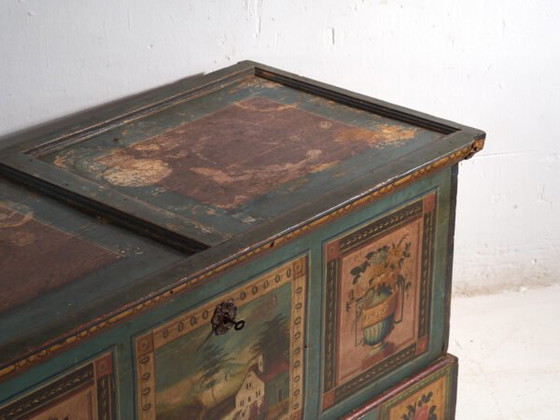
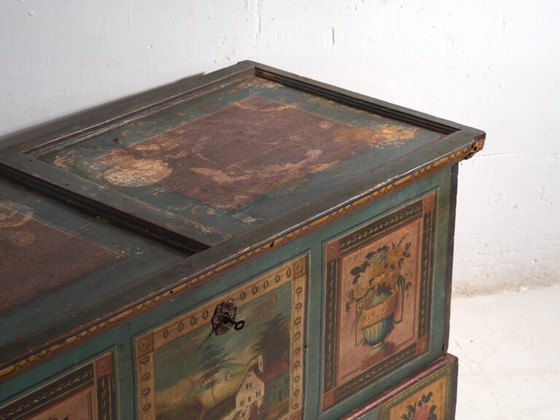
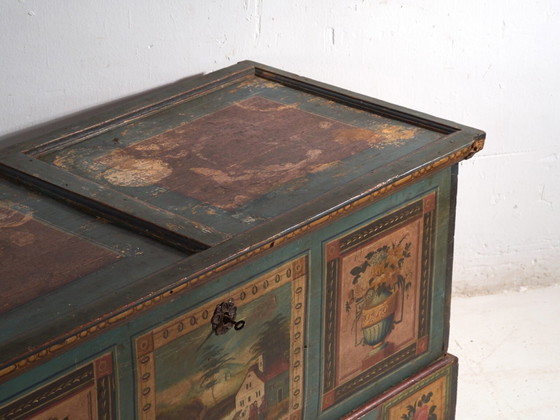



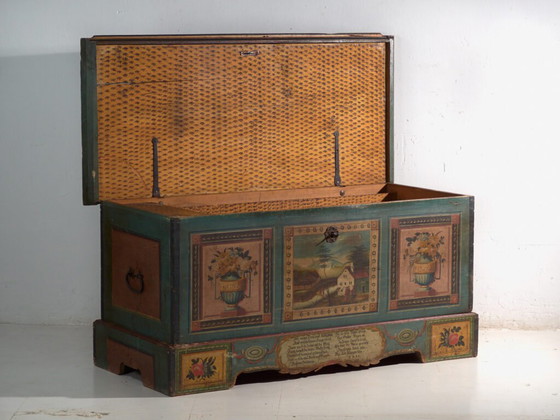

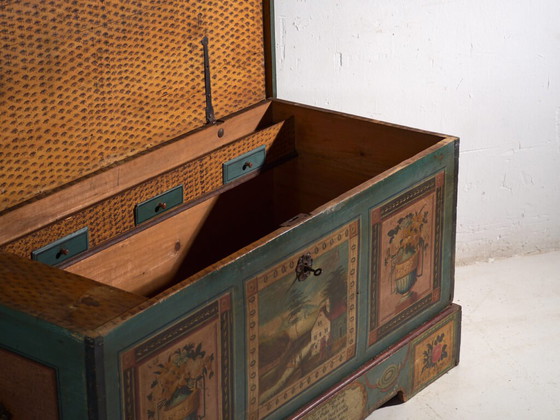
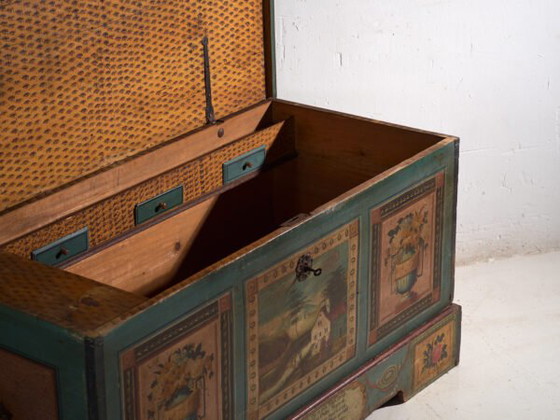
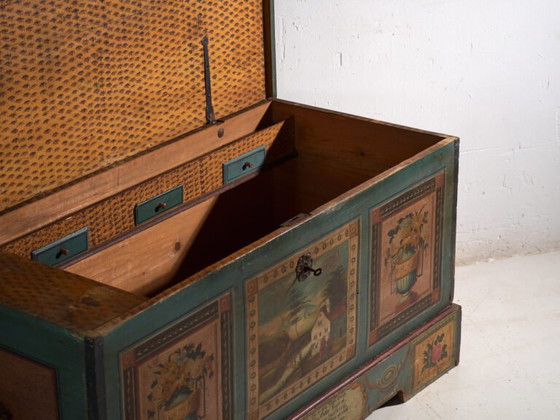
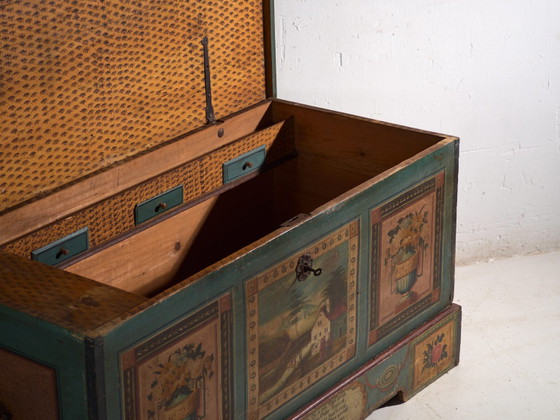

Antique painted marriage chest in pine – Austro-Hungarian Empire, 1841
€2,475Bid from €2,227.50
Buy with confidence
Shop & pay safely with Buyer ProtectionDesigner items curated by WhoppahWe only pay the seller once you have safely received the itemTrusted payment methods


About this seller
ProfessionalProduct description
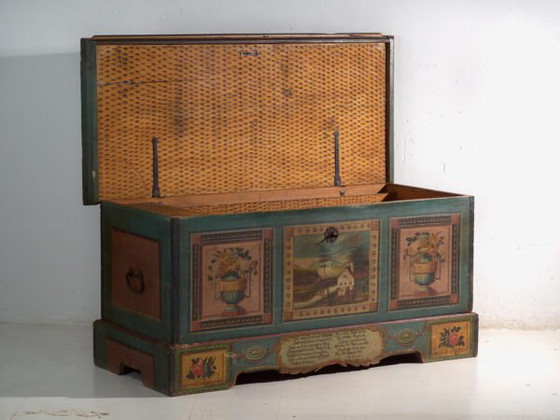
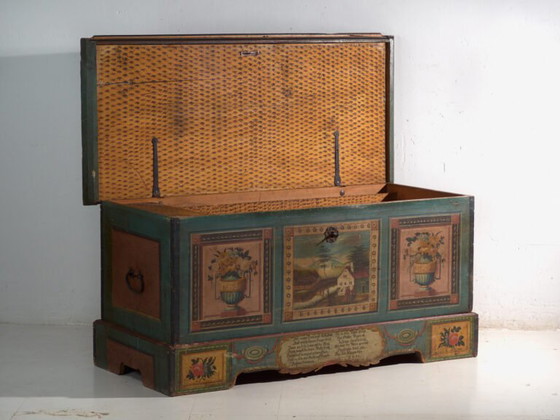
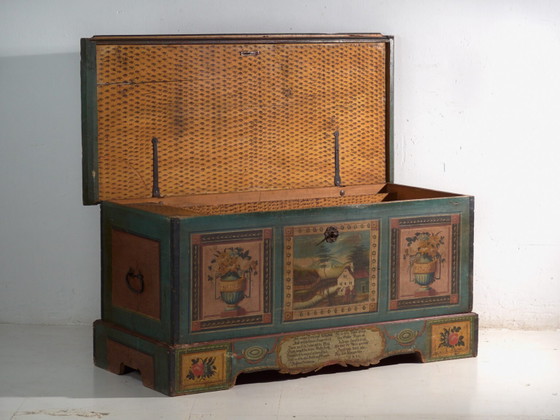
This antique painted marriage chest in pine is a Central European dowry chest with a painted landscape, neoclassical vases and an inscription signed and dated 1841. It originates from Austro-Hungarian Empire, from the Biedermeier period, where pine was painted in distemper over a turquoise-green ground.
Around 1840 the peasant wedding chest absorbed the learned repertoire circulating in prints: the neoclassical vase profile, the laurel garland, the framed landscape. What in the city was cabinet painting arrives here translated into distemper on board, with the same ambition of a picture.
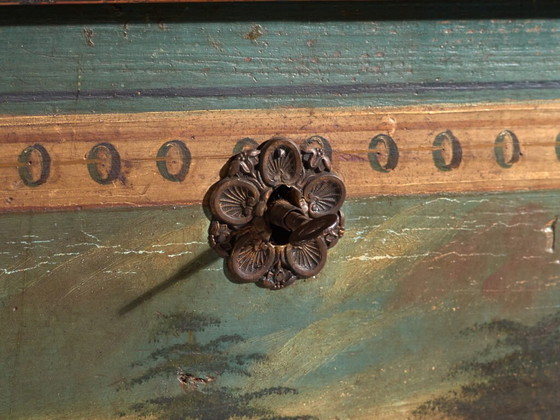
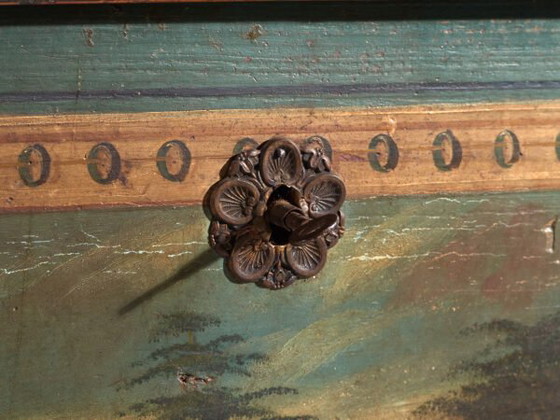
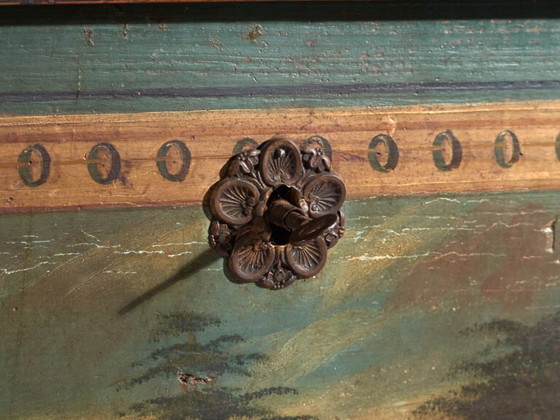
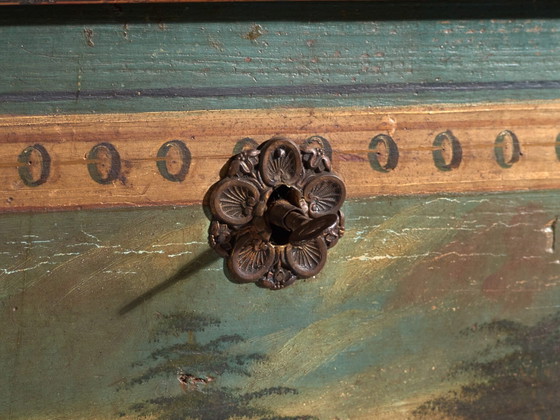
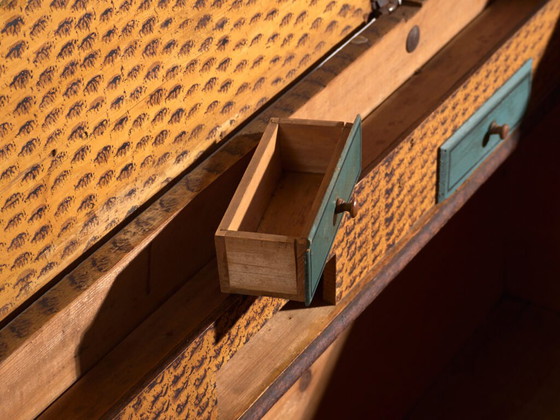
The case is solid pine on a moulded plinth with an arched cut-out. The lid carries two framed panels and long-strap wrought-iron hinges. The sides retain iron carrying handles, and the escutcheon is cast bronze in the form of a six-lobed rosette.
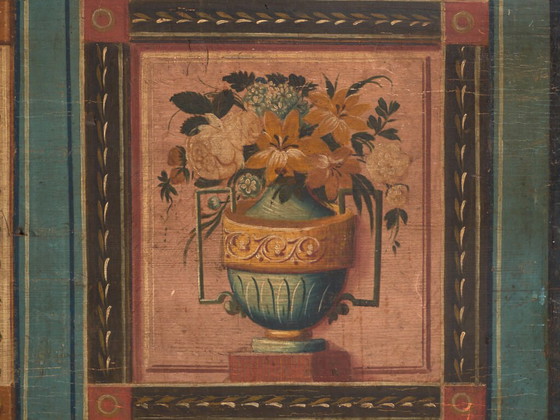
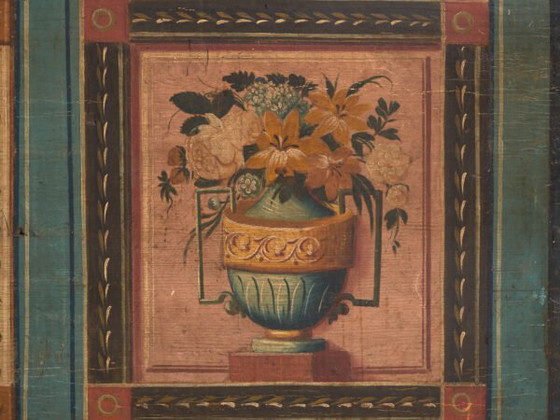
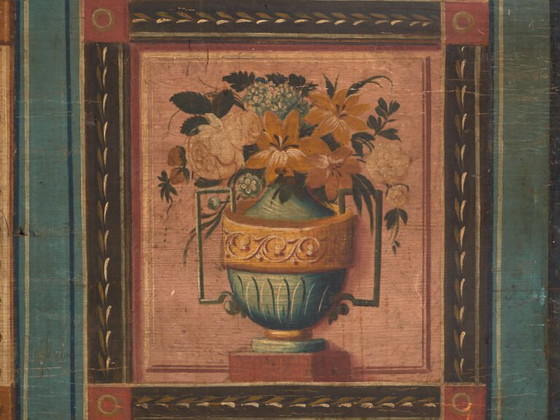
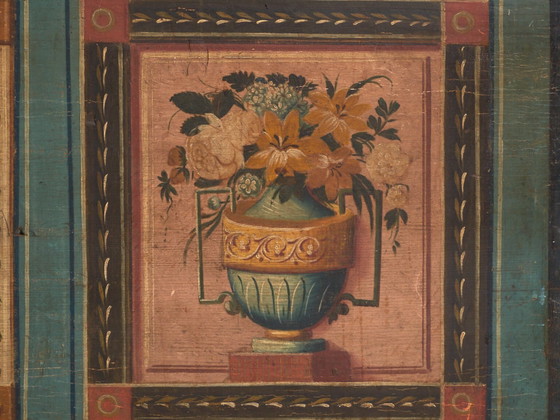
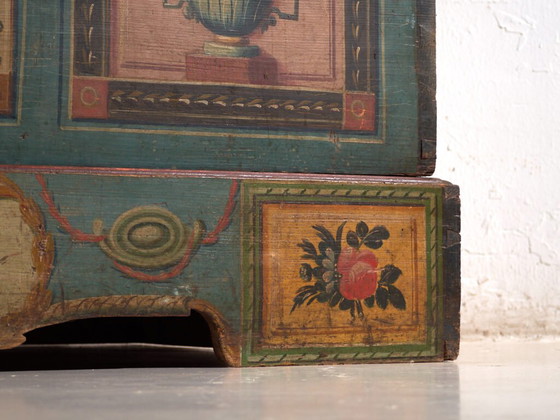
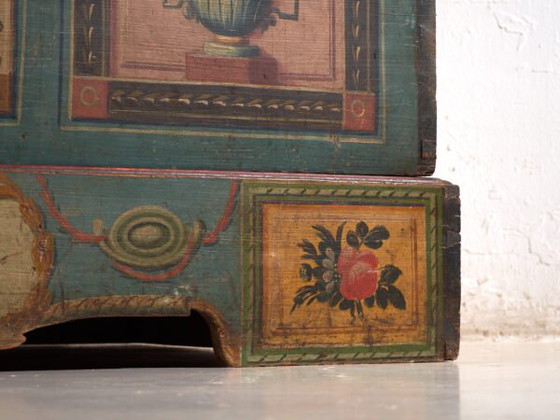
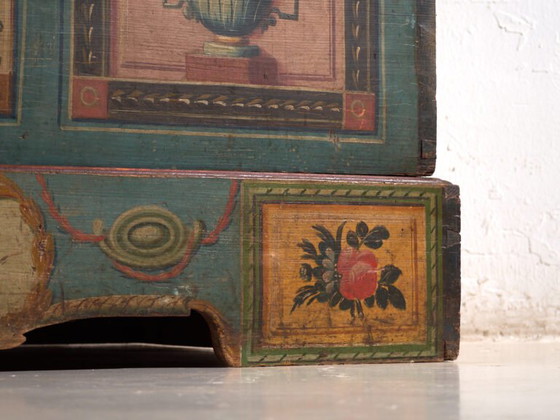
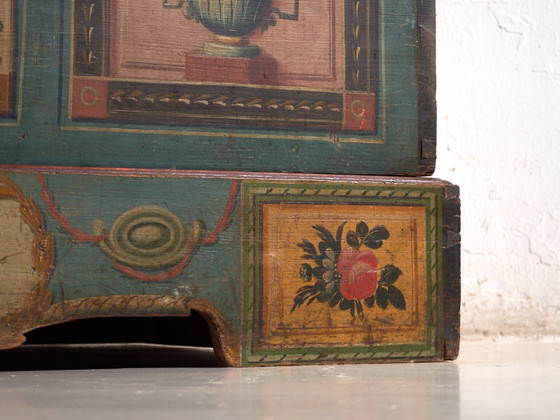
The front, over a turquoise-green ground, divides into three fields. The lateral ones, on a pink ground, show neoclassical urns with sprays of orange lilies, roses and blue flowers. The central one is a landscape: a red-roofed farmhouse beside a tree and a fence, with three figures in regional dress and a hill behind, all framed by a border of ovals. On the plinth, two yellow panels with roses flank a shaped medallion bearing a handwritten inscription.
That medallion carries, in Gothic lettering, the stanza by Ludwig Hölty “Üb immer Treu und Redlichkeit bis in dein kühles Grab” — practise always loyalty and honesty unto your cool grave — transcribed with the painter’s own bis in variant and popularised across Central Europe to Papageno’s melody from Mozart’s The Magic Flute. It closes with the owner’s name, Rosina Hinnerin, and the date 1841.
The distemper holds its body well on the front and has lost colour on the back and lid, where the pine shows through. The turquoise green has lightened unevenly and the pink of the lateral fields has shifted to an earthy tone. The surface has not been restored.
Its 160 cm length and 76 cm height place it as an entrance piece, a low sideboard or a bedroom cabinet. It is at once a storage piece and a dated family document, which gives it a place of its own in an interior of character.
Details
Ref.: AM38032
Dimensions: Length 160 cm – Width 72 cm – Height 76 cm
Style: Central European folk art
Materials and techniques: Pine wood; wrought-iron hinges and handles; bronze escutcheon; distemper painting over a green ground.
Place of origin: Central Europe – Austro-hungarian Empire
Period: Folk Biedermeier
Date of manufacture: 1841
Condition: Good. Original painting signed and dated 1841 on the front; colour lost on lid and back. Wear consistent with age and use.
This piece is part of the curated collection of Amaru Antiques, Barcelona.
ONE OF A KIND PIECE
Additional details:
- Brand: AMARU
- Style: Folk Art
- Style: Biedermeier
- Style: Neoclassical
- Material: Pine wood
- Material: Distemper painting
- Material: Wrought-iron
- Colour: Turquoise-green
- Period: Folk Biedermeier
Specifications
CategoryStorage cabinetConditionGoodColorsPink, Red, Orange, Blue, YellowMaterialBronzeHeight160 cmWidth72 cmDepth76 cmSeller locationGelida (Barcelona), SpainDelivery optionsDelivery or pickup
Discover more
Seller information
About this seller
ProfessionalGelida (Barcelona), SpainOn Whoppah since July 2026 • 0 sales