Have it delivered hassle-free

The great female figures in the history of design

wp:paragraph Some very talented women have left their mark on the history of 20th century design. Yet they were paid less than their male counterparts...


Design MarketMay 2021
wp:paragraph Some very talented women have left their mark on the history of 20th century design. Yet, paid less than their male counterparts, and rewarded even less, too few of them achieved the recognition they deserved in their own lifetime. It's an injustice that experts and curators are trying to right. The proof is in the retrospectives devoted to Charlotte Perriand in 2005-2006, and more recently to Eileen Gray in 2013, by one of the most influential cultural institutions in contemporary art, the Centre Pompidou. Highly talented women have left their mark on the history of 20th-century design. Yet, paid less than their male counterparts, and even less rewarded, too few of them achieved the notoriety they deserved during their lifetime. It's an injustice that experts and curators are trying to right. The proof is in the retrospectives devoted to Charlotte Perriand in 2005-2006, and more recently to Eileen Gray in 2013, by one of the most influential cultural institutions in the field of contemporary art, the Centre Pompidou. /wp:paragraph wp:paragraph If you look at the pivotal periods in the history of design, there have always been innovative and inspired female designers: from the Bauhaus era to the 1980s, via the development of industrial design after the Second World War. This article looks back at the great female figures in the history of design, as well as those who are less well known, often wrongly so. If you look at the pivotal periods in the history of design, there have always been innovative and inspired female designers: from the Bauhaus era to the 1980s, via the development of industrial design after the Second World War. This article looks back at the great female figures in the history of design, and those who are less well known, often wrongly so. /wp:paragraph wp:paragraph One of the first great female figures in the history of design was Eileen Gray (1878-1976). Born in Enniscorthy in the south of Ireland, Eileen Gray was determined to pursue an artistic career and gave up her marriage with the intention of going to art school. She entered the Slade School of Fine Art in London, then decided to go and live in Paris on her own. In 1902 she exhibited a watercolour at the Grand Palais, followed by a painting in 1905 for the Salon de la Société des Artistes Français. She gradually moved into arts and crafts, and in 1910 opened a workshop with the master lacquerer and sculptor Senzo Sugawara, a naturalized Frenchman of Japanese origin. She began exhibiting decorative panels, combining lacquers and rare woods, geometric abstractions and Japanese-inspired motifs. One of the first great female figures in the history of design was Eileen Gray (1878-1976). Born in Enniscorthy in the south of Ireland, Eileen Gray was determined to pursue an artistic career and gave up her marriage with the intention of going to art school. She entered the Slade School of Fine Art in London, then decided to go and live in Paris on her own. In 1902 she exhibited a watercolour at the Grand Palais, followed by a painting in 1905 for the Salon de la Société des Artistes Français. She gradually moved into arts and crafts, and in 1910 opened a studio with the master lacquerer and sculptor Senzo Sugawara, a naturalized Frenchman of Japanese origin. She then began exhibiting decorative panels, combining lacquers and rare woods, geometric abstractions and Japanese-inspired motifs. /wp:paragraph wp:image {"align": "center", "id":11516, "width":229, "height":305, "sizeSlug": "large"} Eileen Gray, portrait by Berenice Abbott, circa 1925. Courtesy of the National Museum of Ireland. Eileen Gray, portrait by Berenice Abbott, circa 1925. Courtesy of the National Museum of Ireland. /wp:image wp:paragraph The early 1920s marked a turning point in Eileen Gray's career. She became aware of the Dutch avant-garde movement De Stijl and the first steel tube designs by Marcel Breuer, who encouraged her to abandon the Art Deco style. She then began designing furniture. Alongside Marcel Breuer, René Herbst, Charlotte Perriand and Gerrit Rietveld, she was one of the pioneers of tubular steel furniture. Then came the major project of her career: from 1926 to 1929, with her partner, the Romanian architect Jean Badovici, she built the villa E 1027 E 1027 , considered to be one of the masterpieces of modern architecture at the time. She collaborated with Badovici on the structure of the house, and also designed all the furniture. /wp:paragraph wp:image {"align": "center", "id":11547, "width":533, "height":400, "sizeSlug": "large"} Dressing table, 1926-1929, design by Eileen Gray © Mnam-Cci © Dist. RMN-GP. A total artist, if Eileen Gray began her career as a painter, she went on to design furniture, demonstrating her capacity for innovation in the design of functional furniture. Dressing table, 1926-1929, design by Eileen Gray © Mnam-Cci © Dist. RMN-GP. A total artist, if Eileen Gray began her career as a painter, she went on to design furniture, demonstrating her capacity for innovation in the design of functional furniture. Dressing table, 1926-1929, design by Eileen Gray © Mnam-Cci © Dist. RMN-GP. A total artist, if Eileen Gray began her career as a painter, she went on to design furniture, demonstrating her capacity for innovation in the design of functional furniture. /wp:image wp:image {"align": "center", "id":11518, "width":384, "height":256, "sizeSlug": "large"} The Villa E 1027 (E for Eileen, 10 for Jean's J, the 10th letter of the alphabet, 2 for Badovici's B, 7 for Gray's G), built: 1929. Architecture and design: Jean Badovici Eileen Gray, interior layout and furniture: Eileen Gray. A self-taught architect, it took Eileen Gray 3 years to draw up the plans for the project with Jean Badovici. The villa is located in Roquebrune-Cap-Martin in the Alpes-Maritimes. Villa E 1027 (E for Eileen, 10 for Jean's J, the 10th letter of the alphabet, 2 for Badovici's B, 7 for Gray's G), built: 1929. Architecture and design: Jean Badovici Eileen Gray, interior layout and furniture: Eileen Gray. A self-taught architect, it took Eileen Gray 3 years to draw up the plans for the project with Jean Badovici. The villa is located in Roquebrune-Cap-Martin in the Alpes-Maritimes. /wp:image wp:image {"align": "center", "id":11519, "sizeSlug": "large"} Villa E 1027, view of the living room. In the foreground you can see the Transat and Bibendum armchairs and the Centimètre rug designed by Eileen Gray. Villa E 1027, view of the living room. In the foreground you can see the Transat and Bibendum armchairs and the Centimètre rug designed by Eileen Gray. /wp:image wp:image {"align": "center", "id":11520, "width":362, "height":369, "sizeSlug": "large"} Villa E 1027, view of the alcove in the main room, with the headboard, the pillow cupboard and the book stand restored to their original condition and the Marine rug. Furniture entirely designed by Eileen Gray © Manuel Bougot Villa E 1027, view of the alcove in the main room, with the headboard, pillow cupboard and book stand restored to their original condition and the Marine rug. Furniture entirely designed by Eileen Gray © Manuel Bougot /wp:image wp:image {"align": "center", "id":11521, "width":376, "height":282, "sizeSlug": "large"} Transat armchair, designed by Eileen Gray, 1926-1929. Made for the Villa. Wood, metal and synthetic leather. Its name is a direct reference to the folding chairs installed on the decks of transatlantic liners © Mnam-Cci/Jean-Claude Planchet. Dist. RMN-GP Transat armchair, design by Eileen Gray, 1926-1929. Made for the Villa. Wood, metal and synthetic leather. Its name is a direct reference to the folding chairs installed on the decks of transatlantic liners © Mnam-Cci/Jean-Claude Planchet. Dist. RMN-GP Transat armchair, design by Eileen Gray, 1926-1929. Made for the Villa. Wood, metal and synthetic leather. Its name is a direct reference to the folding chairs installed on the decks of transatlantic liners © Mnam-Cci/Jean-Claude Planchet. Dist. RMN-GP /wp:image wp:image {"align": "center", "id":11546, "sizeSlug": "large"} /wp:image wp:paragraph She was one of the leading figures of the Bauhaus School (1919-1933) and invented modern tapestry. Anni Albers (1899-1994) remains relatively unknown. Born into the Berlin bourgeoisie, she enrolled at the Hamburg School of Applied Arts, which she left unsatisfied to try her hand at the Bauhaus Bauhaus ( design-market link ) in 1922. The woman who was still called Annie Fleischmann first tried her hand at the wood and metal workshops, but reluctantly had to switch to textiles, as she was suffering from a neurological condition known as Charcot-Marie-Tooth disease. Inspired by the colour lessons given by the painter Paul Klee (1879-1940), Albers put the Bauhaus objectives into practice by designing tapestries halfway between the piece of furniture and the painting, between the single piece and the multiple. She turned weaving into an avant-garde art form, developing a powerful language of colour and abstract motifs. /wp:paragraph wp:image {"align": "center", "id":11549, "width":361, "height":610, "sizeSlug": "large"} Anni Albers, wall tapestry, 1926. Silk and cotton. The Metropolitan Museum of Art.© 2018 The Josef and Anni Albers Foundation / Artists Rights Society (ARS), New York/DACS, London. Anni Albers, wall tapestry, 1926. Silk and cotton. The Metropolitan Museum of Art.© 2018 The Josef and Anni Albers Foundation / Artists Rights Society (ARS), New York/DACS, London. Anni Albers, wall tapestry, 1926. Silk and cotton. The Metropolitan Museum of Art.© 2018 The Josef and Anni Albers Foundation / Artists Rights Society (ARS), New York/DACS, London. /wp:image wp:image {"align": "center", "id":11548, "sizeSlug": "large"} Anni Albers, rug, 1959, wool. Marked by a trip to Mexico with her husband, the painter Josef Albers, she was inspired by the pre-Columbian artistic expression found in this carpet. Anni Albers became a source of inspiration for many artists. Herbert F. Johnson Museum of Art, Cornell University © 2018 The Josef and Anni Albers Foundation / Artists Rights Society (ARS), New York/DACS, London. Anni Albers, rug, 1959, wool. Marked by a trip to Mexico with her husband, the painter Josef Albers, she was inspired by the pre-Columbian artistic expression found in this carpet. Anni Albers became a source of inspiration for many artists. Herbert F. Johnson Museum of Art, Cornell University © 2018 The Josef and Anni Albers Foundation / Artists Rights Society (ARS), New York/DACS, London. Anni Albers, rug, 1959, wool. Marked by a trip to Mexico with her husband, the painter Josef Albers, she was inspired by the pre-Columbian artistic expression found in this carpet. Anni Albers became a source of inspiration for many artists. Herbert F. Johnson Museum of Art, Cornell University © 2018 The Josef and Anni Albers Foundation / Artists Rights Society (ARS), New York/DACS, London /wp:image wp:paragraph Charlotte Perriand (1903-1999) is, of course, one of the pioneers of design. Noticed by Le Corbusier in the 1920s, she collaborated for 10 years (1927-1937) with the brilliant Swiss architect and her cousin Pierre Jeanneret to design the interior furniture for the buildings designed by the 2 architects. The result was the famous Chaise Longue model LC4, also known as the "Chaise Longue Le Corbusier Chaise Longue Le Corbusier". But Charlotte Perriand was much more than this shortcut. Close to the European, Japanese and Brazilian avant-gardes, she had an intense 75-year career that saw her create rational, elegant furniture and interior fittings for some of the most daring projects of their time, culminating in her devoting almost 20 years of her life (1967-1989) to designing the Les Arcs resort. /wp:paragraph wp:image {"align": "center", "id":11545, "width":492, "height":555, "sizeSlug": "large"} LC4 Lounge Chair, Charlotte Perriand design, 1928. At the time, this was a revolutionary seat, because it was made from a bent metal structure, but above all it was highly technical and functional, because it could be adjusted continuously to fit the shape of the body. To design it, Charlotte Perriand drew inspiration from aviation catalogues and worked on car bodywork techniques. Initially launched by Thonet, the Italian company Casssina has published the chair exclusively since 1965 Chaise Longue LC4, design Charlotte Perriand, 1928. At the time, this was a revolutionary seat, because it was made from a bent metal structure, but above all it was highly technical and functional, because it could be adjusted continuously to fit the shape of the body. To design it, Charlotte Perriand drew inspiration from aviation catalogues and worked on car bodywork techniques. Initially launched by Thonet, the Italian company Casssina has published the chair exclusively since 1965. /wp:image wp:image {"align": "center", "id":11550, "width":406, "height":447, "sizeSlug": "large"} LC7 swivel armchair designed by Charlotte Perriand in 1927 and unjustly signed Le Corbusier. Considered a design classic, it has been reissued exclusively by the Italian company Cassina. The frame of the LC7 swivel armchair is made from robust stainless steel. Clean, elegant lines in the spirit of the Bauhaus LC7 swivel armchair designed by Charlotte Perriand in 1927 and unjustly signed Le Corbusier. Considered a design classic, it has been reissued exclusively by the Italian company Cassina. The frame of the LC7 swivel armchair is made from robust stainless steel. Clean, elegant lines in the spirit of the Bauhaus /wp:image wp:image {"align": "center", "id":11551, "sizeSlug": "large"} View of the exhibition "Le monde nouveau de Charlotte Perriand" organised by the Fondation Louis Vuitton (2019-2020). In the foreground, a reconstruction of the exhibition held on 31 March 1955 entitled "Proposition d'une synthèse des arts, Paris 1955. Le Corbusier, Fernand Léger, Charlotte Perriand". You can see the iconic triangular coffee table "Mexique 527" (Charlotte Perriand, 1952) and a modular storage bookcase /wp:image wp:image {"align": "center", "id":11552, "sizeSlug": "large"} View of the exhibition "Le monde nouveau de Charlotte Perriand" organised by the Fondation Louis Vuitton (2019-2020). Presentation of various pieces of furniture designed by Charlotte Perria View of the exhibition "Le monde nouveau de Charlotte Perriand" organised by the Fondation Louis Vuitton (2019-2020). Presentation of various pieces of furniture designed by Charlotte Perria nd. /wp:image wp:image {"align": "center", "id":11553, "width":382, "height":509, "sizeSlug": "large"} View of the exhibition "Le monde nouveau de Charlotte Perriand" organised by the Fondation Louis Vuitton (2019-2020). Bookcase 526 Nuage, designed by Charlotte Perriand. This piece of furniture is very popular with fans of vintage design, as it allows you to combine different elements (support, shelf, cheek, doors and drawers) with different materials (wood, metal and aluminium). View of the "Le monde nouveau de Charlotte Perriand" exhibition at the Fondation Louis Vuitton (2019-2020). Bookcase 526 Nuage, designed by Charlotte Perriand. This piece of furniture is very popular with fans of vintage design, as it allows you to combine different elements (support, shelf, cheek, doors and drawers) with different materials (wood, metal and aluminium). View of the "Le monde nouveau de Charlotte Perriand" exhibition at the Fondation Louis Vuitton (2019-2020). Bookcase 526 Nuage, designed by Charlotte Perriand. This piece of furniture is very popular with fans of vintage design, as it combines various elements (support, shelf, cheek, doors and drawers) with different materials (wood, metal and aluminium). /wp:image wp:image {"align": "center", "id":11530, "sizeSlug": "large"} In 1948, the Eames created a seat that was elevated to the rank of art. The Chair is a veritable sculpture that allows you to adopt different positions, from sitting to reclining, passing through various intermediaries suitable for reading, for example. In 1948, the Eames created a chair that was elevated to the level of art. The Chair is a veritable sculpture that allows you to adopt different positions, from seated to reclining, with various intermediate positions for reading, for example. In 1948, the Eames created a chair that was elevated to the level of art. The Chair is a veritable sculpture that allows you to adopt different positions, from sitting to lying down, passing through various intermediary positions for reading, for example. /wp:image wp:image {"align": "center", "id":11554, "sizeSlug": "large"} An aesthetic manifesto of organic design, the Eames were inspired to create their extraordinary seat by the sculpture "Floating figure" by the French-born American artist Gaston Lachaise (1882-1935). An aesthetic manifesto of organic design, the Eames drew inspiration for their extraordinary seating from the sculpture "Floating figure" by the French-born American artist Gaston Lachaise (1882-1935). An aesthetic manifesto of organic design, the Eames drew inspiration for their extraordinary seating from the sculpture "Floating figure" by the French-born American artist Gaston Lachaise (1882-1935). /wp:image wp:image {"align": "center", "id":11555, "sizeSlug": "large"} Eames Lounge Chair (European version), also known as Lounge Chair 670 and its Ottoman 671 footrest. To create this model, the Eames worked for years on the moulded plywood technique. This legendary chair has been produced since 1956 by the American firm Herman Miller for the American market. In Europe, Vitra bought the licence in 1984 and today continues to produce this timeless design classic. Eames Lounge Chair (European version), also known as Lounge Chair 670 and its Ottoman 671 footrest. To create this model, the Eames worked for years on the moulded plywood technique. This legendary chair has been produced since 1956 by the American firm Herman Miller for the American market. In Europe, Vitra bought the licence in 1984 and today continues to produce this timeless design classic. Eames Lounge Chair (European version), also known as Lounge Chair 670 and its Ottoman 671 footrest. To create this model, the Eames worked for years on the moulded plywood technique. This legendary chair has been produced since 1956 by the American firm Herman Miller for the American market. In Europe, Vitra bought the licence in 1984 and today continues to produce this timeless design classic. /wp:image wp:image {"align": "center", "id":11533, "sizeSlug": "large"} Lounge Chair 670, back view. 3 moulded plywood shells make up the chair, veneered in rosewood or rosewood for a superb finish. A vintage design must-have! Lounge Chair 670, back view. 3 moulded plywood shells make up the armchair, veneered in rosewood or rosewood for a superb finish. A vintage design must-have! Lounge Chair 670, back view. 3 moulded plywood shells make up the armchair, veneered in rosewood or rosewood for a superb finish. A vintage design must-have! /wp:image wp:paragraph A name that resonates throughout the history of post-war design and still does today: Knoll. From 1955 to 1965, Florence Knoll (1917-2019) presided over the destiny of the famous American furniture and office equipment manufacturer Knoll, founded in 1938 by her future husband, Hans Knoll. Considered by some to be the "founding mother of technological design", Florence Knoll and her husband established a Knoll style that blended interior architecture, design, production, textiles and graphics in office furnishings. A gifted student of the German designer and architect Mies van der Rohe, she worked with Walter Gropius (1883-1969) and Marcel Breuer (1902-1981). He was responsible for many pieces of furniture characterised by elegant, functional design. /wp:paragraph wp:image {"align": "center", "id":11534, "width":338, "height":277, "sizeSlug": "large"} "Parallel" armchair, Florence Knoll design for Knoll International, 1959. Together with her husband, Florence Knoll worked with some of the best designers in the second half of the 1940s: Eero Saarinen, Pierre Jeanneret, Mies van der Rohe, and later Isamu Noguchi and Harry Bertoia. Parallel" armchair, designed by Florence Knoll for Knoll International, 1959. With her husband, and for their company, Florence Knoll collaborated with many top designers in the second half of the 1940s: Eero Saarinen, Pierre Jeanneret, Mies van der Rohe, and later Isamu Noguchi and Harry Bertoia. Parallel" armchair, designed by Florence Knoll for Knoll International, 1959. With her husband, and for their company, Florence Knoll worked with many of the best designers in the second half of the 1940s: Eero Saarinen, Pierre Jeanneret, Mies van der Rohe, and later Isamu Noguchi and Harry Bertoia. /wp:image wp:image {"align": "center", "id":11535, "width":389, "height":205, "sizeSlug": "large"} Sofa with side table, Florence Knoll design, 1960s. Sofa with side table, Florence Knoll design, 60s. Sofa with side table, Florence Knoll design, 1960s. /wp:image wp:image {"align": "center", "id":11536, "sizeSlug": "large"} Oval marble dining table, Florence Knoll design for Knoll International, circa 1970. Oval marble dining table, Florence Knoll design for Knoll International, circa 1970. Oval marble dining table, designed by Florence Knoll for Knoll International, circa 1970. /wp:image wp:paragraph In addition to these 5 great female figures of modern and contemporary design, we should also mention, for the sake of completeness, the German designer and interior architect Lilly Reich (1885-1947), who worked for many years with Mies van der Rohe. Eino Aalto née Marsio (1894-1949) wasn't just the wife of... and didn't just design glasses (the Bölgeblick line of tableware for Iittala). With her husband, Alvar Aalto (1898-1916, married 1924), one of Finland's most famous architects and designers, she began designing not only buildings in the 1920s, but also interior surfaces, furniture, lamps, furnishings and glassware. In 1935, the Aalto family, along with Maire Gullichsen and Nils-Gustav Hahl, founded Artek, a company that sold lighting and furniture designed by the Aalto family, and which still exists today (owned by Vitra since 2013). In addition to these 5 great female figures of modern and contemporary design, we should also mention, for the sake of completeness, the German designer and interior architect Lilly Reich (1885-1947), who worked for many years with Mies van der Rohe. Eino Aalto née Marsio (1894-1949) wasn't just the wife of... and didn't just design glasses (the Bölgeblick line of tableware for Iittala). With her husband, Alvar Aalto (1898-1916, married 1924), one of Finland's most famous architects and designers, she began designing not only buildings in the 1920s, but also interior surfaces, furniture, lamps, furnishings and glassware. In 1935, the Aalto family, along with Maire Gullichsen and Nils-Gustav Hahl, founded Artek, a company that sold lighting and furniture designed by the Aalto family, and which still exists today (owned by Vitra since 2013). /wp:paragraph wp:image {"align": "center", "id":11556, "sizeSlug": "large"} In 1929, architect Ludwig Mies van der Rohe commissioned Lilly Reich to design and supervise the various exhibition pavilions, including the famous German Pavilion, for the Barcelona International Exhibition. A symbol of modern architecture at the time, built using innovative construction principles and rather luxurious materials, it has since been rebuilt identically. A masterpiece in the history of architecture for which Reich's artistic contribution has been unjustly erased. This is the 1st collaborative work by Reich and Mies, and the beginning of their association. /wp:image wp:image {"align": "center", "id":11558, "sizeSlug": "large"} Villa Tugendhat, completed in 1930, located in Brno in the Czech Republic. A symbol of the international style in the modern movement in architecture as it developed in Europe during the 1920s, it is a building that is very well known in the history of architecture. As a close collaborator of Mies van der Rohe, Lilly Reich played an active role in its creation. Villa Tugendhat, completed in 1930, located in Brno in the Czech Republic. A symbol of the international style in the modern movement in architecture as it developed in Europe during the 1920s, it is a building that is very well known in the history of architecture. As a close collaborator of Mies van der Rohe, Lilly Reich played an active role in its creation. Villa Tugendhat, completed in 1930, located in Brno in the Czech Republic. A symbol of the international style in the modern movement in architecture as it developed in Europe during the 1920s, it is a building that is very well known in the history of architecture. As a close collaborator of Mies van der Rohe, Lilly Reich played an active role in its creation. /wp:image wp:image {"align": "center", "id":11559, "sizeSlug": "large"} View of the Paimio sanatorium (Finland), an emblematic architectural achievement built between 1929 and 1933 by Alvar Aalto and Aino Aalto. The building is considered by many to be one of the couple's major works. View of the Paimio sanatorium (Finland), an emblematic architectural achievement created between 1929 and 1933 by Alvar Aalto and Aino Aalto. The building is considered by many to be one of the couple's major works. View of the Paimio sanatorium (Finland), an emblematic architectural achievement created between 1929 and 1933 by Alvar Aalto and Aino Aalto. The building is considered by many to be one of the couple's major works. /wp:image wp:image {"align": "center", "id":11560, "sizeSlug": "large"} View of a room in the Paimio sanatorium. Aino and her husband Alvar designed all the furnishings and fittings for the sanatorium. Some of the furniture, such as the Paimio armchair shown here, is still produced by Artek. View of a room in the Paimio sanatorium. Aino and her husband Alvar designed all the furniture and fittings for the sanatorium. Some of the furniture, such as the Paimio armchair shown here, is still produced by Artek. View of a room in the Paimio sanatorium. Aino and her husband Alvar designed all the furniture and fittings for the sanatorium. Some pieces of furniture, such as the Paimio armchair shown here, are still produced by Artek. /wp:image wp:image {"align": "centre", "id":11561, "sizeSlug": "large"} A legendary armchair, the "Paimio", 1932. With its organic shape, flowing lines and volumes, and made from natural materials, this armchair was designed to offer sanatorium patients an ideal position. A legendary armchair, the "Paimio", 1932. With its organic shape, flowing lines and volumes, and made from natural materials, this armchair was designed to offer sanatorium patients an ideal sitting position. A legendary armchair, the "Paimio", 1932. With its organic shape, flowing lines and volumes, and made from natural materials, this armchair was designed to offer sanatorium patients an ideal sitting position. /Among them are Anna Ferrieri (1918-2006), artistic director of Kartell from 1976 to 1987, Lina Bo Bardi (1914-1992), Gae Aulenti (1927-2012) and Afra Scarpa Afra Scarpa (1937-2011). On the Scandinavian side, we should mention the Swedish designer Greta Grossman (1906-1999), who created the Grasshopper and Cobra lamps. Finally, the Englishwoman Lucienne Day (1917-2010), wife of designer Robin Day, was one of the most influential textile designers of the 50s and 60s. /wp:paragraph wp:image {"align": "center", "id":11542, "width":313, "height":313, "sizeSlug": "large"} "Componibili" modular system, 2 shelves, round. Design: Anna Ferrieri for Kartell, 1967. An ingenious system of modular elements (the individual elements fit together) in round or square shapes, still produced by Kartell. "Componibili" modular system, 2 shelves, round. Design: Anna Ferrieri for Kartell, 1967. A clever system of modular elements (the individual elements fit together), round or square, still produced by Kartell /wp:image wp:image {"align": "center", "id":11562, "sizeSlug": "large"} "Pipistrello" lamp, 24-carat gold-plated model. Design: Gae Aulenti for the Italian publisher Martinelli Lucce. Created in 1965, the "Pipistrello" is an icon of contemporary design with its organic shape. The diffuser is in opal white methacrylate. Mythical and exhibited in the world's greatest museums... "Pipistrello" lamp, 24-carat gold-plated model. Design: Gae Aulenti for the Italian publisher Martinelli Lucce. Created in 1965, the "Pipistrello" is an icon of contemporary design with its organic shape. The diffuser is in opal white methacrylate. Mythical and exhibited in the world's greatest museums... "Pipistrello" lamp, 24-carat gold-plated model. Design: Gae Aulenti for the Italian publisher Martinelli Lucce. Created in 1965, the "Pipistrello" is an icon of contemporary design with its organic shape. The diffuser is in opal white methacrylate. Mythical and exhibited in the world's greatest museums... /wp:image wp:image {"align": "center", "id":11563, "sizeSlug": "large"} Grasshopper (Gräshoppa) floor lamp, design: Greta Magnusson Grossman, 1947. A unique silhouette that is instantly recognisable, with its tripod, stem tilted back and articulated head. It has been reissued since 2011 by Danish publisher Gubi. Grasshopper (Gräshoppa) floor lamp, design: Greta Magnusson Grossman, 1947. A unique silhouette that is instantly recognisable, with its tripod, stem tilted backwards and articulated head. It has been reissued since 2011 by Danish publisher Gubi. Grasshopper (Gräshoppa) floor lamp, design: Greta Magnusson Grossman, 1947. A unique silhouette that is instantly recognisable, with its tripod, stem tilted backwards and articulated head. It has been reissued since 2011 by Danish publisher Gubi. /wp:image wp:paragraph To read about the recognition of women in the history of design: To read about the recognition of women in the history of design: /wp:paragraph wp:list The Voice of Women by Libby Sellers, Pyramyd Edition The Voice of Women by Libby Sellers, Pyramyd Edition The Voice of Women by Libby Sellers, Pyramyd Edition Women Designers: Un siècle de créations de Marion Vignal, Editions Aubanel Women Designers: A century of creations by Marion Vignal, Editions Aubanel Women Designers: A century of creations by Marion Vignal, Editions Aubanel /wp:list wp:paragraph /wp:paragraph wp:paragraph {"align": "right"} François Boutard François Boutard François Boutard /wp:paragraph

Read our other blogs too
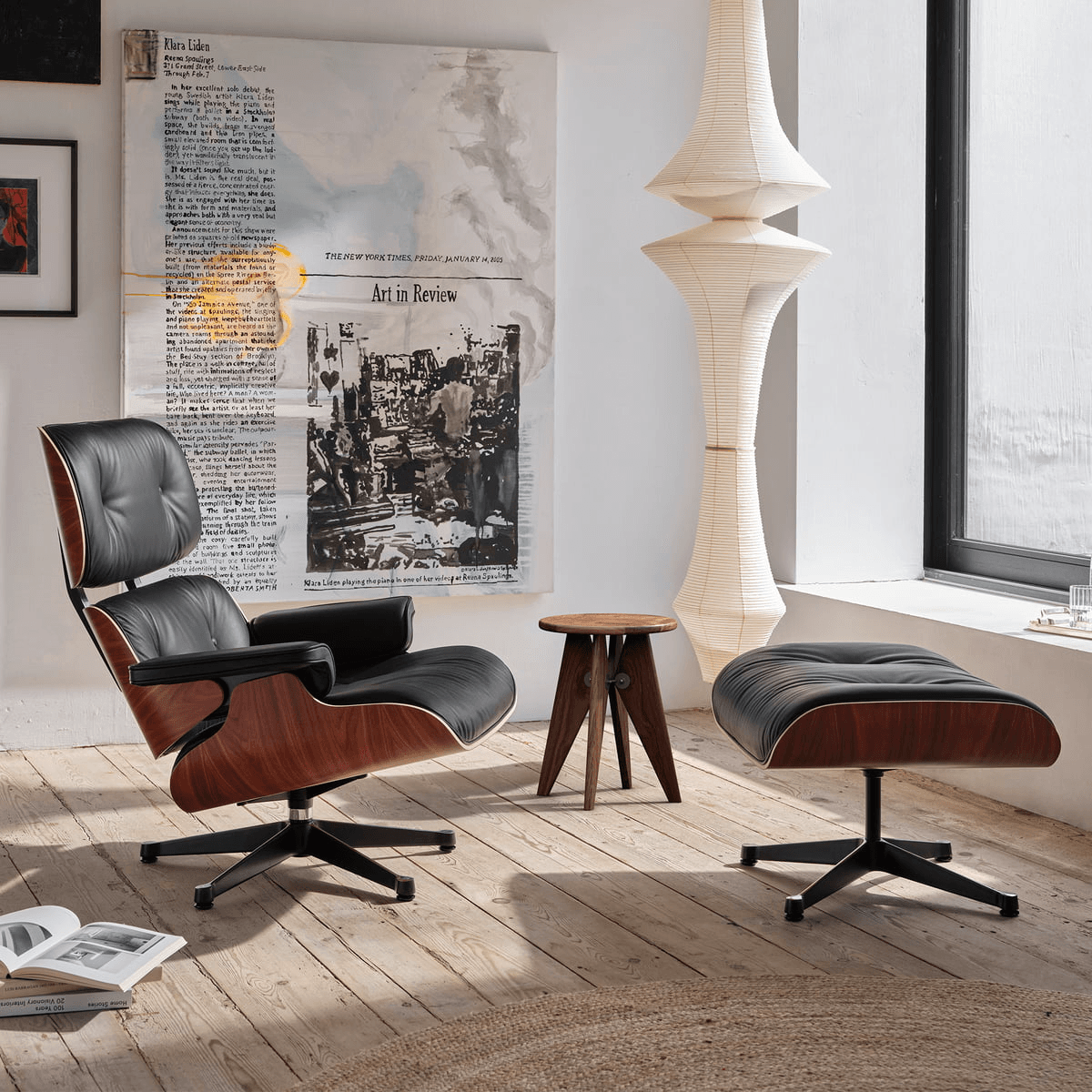
Eames Lounge Chair

Whoppah explores: Eames Lounge Chair

The Eames Lounge Chair is undoubtedly one of the most popular lounge chairs ever made. The iconic chair was released by The Herman Miller Company in 1956 and is here to stay. Do you dream of such a beautiful copy? We share 5 facts about this legendary lounge chair and we spoke to Aksel, Eames connoisseur and trader, about the differences between the vintage and recent models of this chair.

Read more

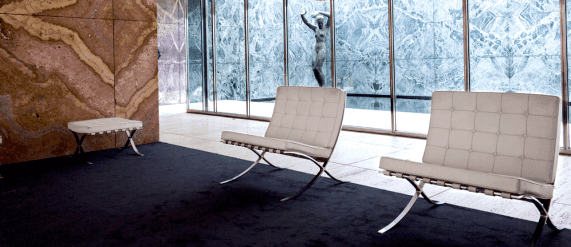
At home with Michael

Next up in our home visit series – where we come to your home to get to know you better, discover your style, and learn more about your relationship with secondhand and design – is Michael (31). He is a passionate art lover and dealer, with his own art and framing business in the charming town of Weesp, and recently, he has also started publishing art. Here, he perfectly combines his love for art with his entrepreneurial flair.
Read more
Ludwig Mies van der Rohe Image

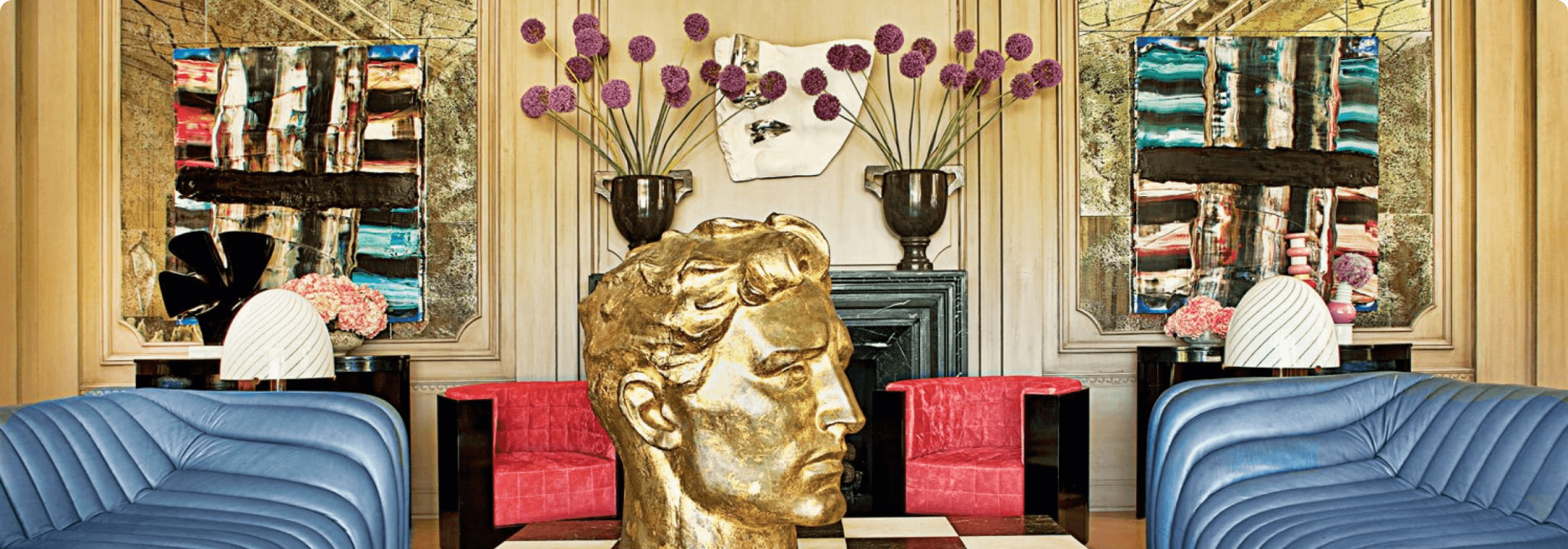
Whoppah explores: Ludwig Mies van der Rohe

One of the most iconic design chairs is the Barcelona Chair by Mies van der Rohe. The chair was exhibited in 1929 during the World Exhibition in Barcelona and is one of the best-selling designer armchairs ever. It is amazing how a chair has not lost its popularity for more than 90 years and remains a symbol of elegant and modern design. That is why this week is an ode to architect and furniture designer Mies van der Rohe.
Read more
blog-one-main-test.png

Whoppah explores: Frank Lloyd Wright

Frank Lloyd Wright was one of the most influential architects of the twentieth century. It's high time to find out more about this world architect!

Read more