Pierre Paulin: the Frenchman who softened modernism into curves
Pierre Paulin's chairs from the 1960s and 70s are the most distinctive shapes of French post-war design. He worked with Artifort and produced some of the most photographed seating of the era.

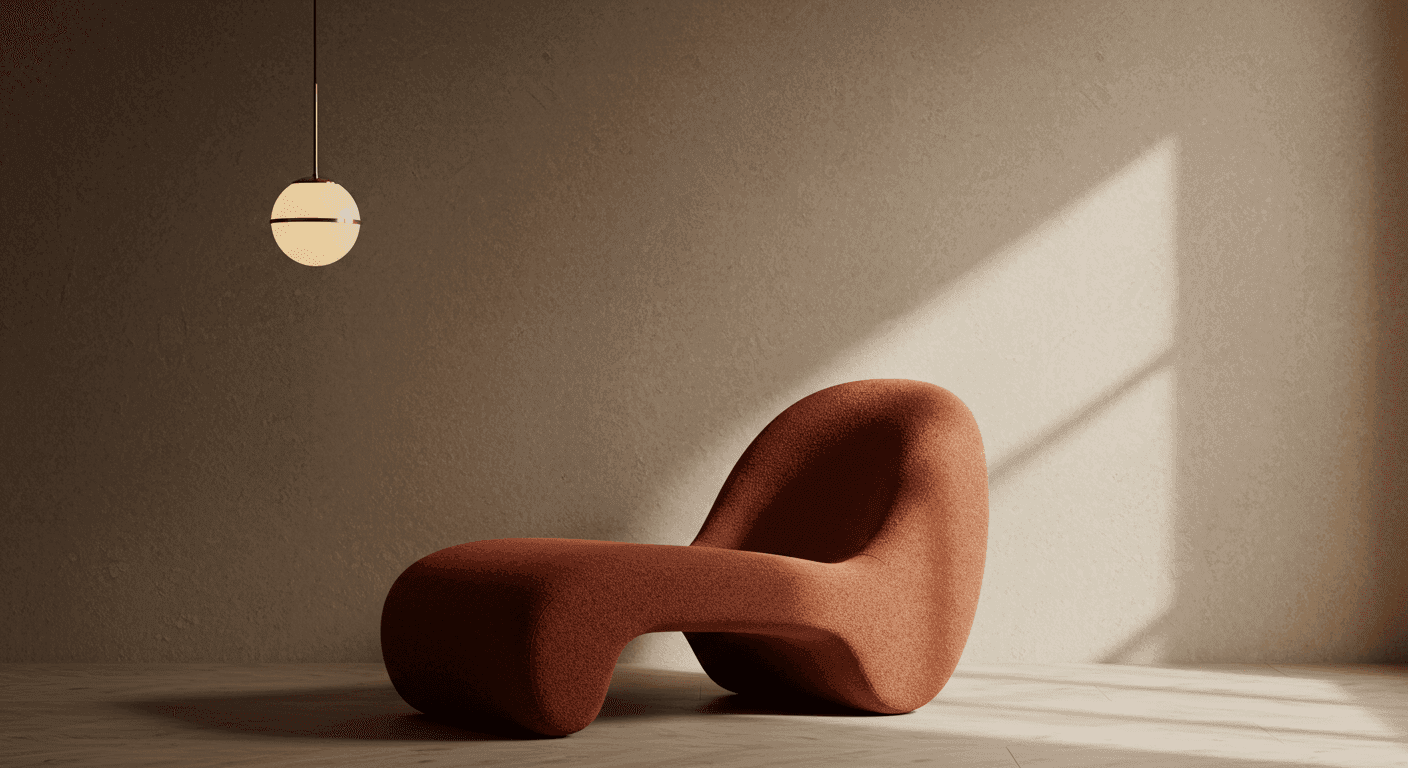
Pierre Paulin (1927 to 2009) is the chair you buy when you want colour in the room. Where his Danish contemporaries worked in wood and his Italian contemporaries in steel, Paulin worked in foam, jersey upholstery and saturated tone, mostly with the Dutch manufacturer Artifort from 1958 onward. On Whoppah the Tongue chair (1967) sells at €700 to €1,800, the Mushroom (F560, 1959) at €1,200 to €3,000 and the Ribbon (F582, 1966) at €1,500 to €4,000, with red, yellow and orange examples commanding a premium over the muted tones. Our curators check upholstery condition closely, because a cautious beige reupholstery undersells the design and affects authentic-fabric value.
A French outlier
Pierre Paulin (1927 to 2009) is the French designer whose 1960s and 70s work feels most distinctly French and most distinctly of its moment. Where his Danish contemporaries were working in wood and his Italian contemporaries were working in steel, Paulin was working in foam, jersey upholstery and brilliant colour. The chairs look like they belong on a Paris film set, and several of them literally did.
His most productive partnership was with Artifort, the Dutch furniture manufacturer based in Maastricht. Most of the Paulin pieces you'll see on Whoppah came out of that collaboration, which ran from 1958 onward.
He also worked on the Élysée Palace interiors in 1971 (under Georges Pompidou) and again in 1983 (under François Mitterrand), which gave his pieces a particular cultural standing in France. The work is on the front lines of what "French modernism" means.
The pieces
The Tongue chair (1967, Artifort), the wide low chair with the curving tongue-shaped silhouette, is the most-photographed Paulin. Vintage Artifort Tongues from the 1970s and 80s sell for €700 to €1,800 on Whoppah depending on upholstery condition. Brilliant colour examples (red, yellow, orange) command a premium over the muted tones.
The Mushroom chair (1959, F560, Artifort), the round low chair on a swivelling chrome base, is the slightly earlier and more architectural piece. €1,200 to €3,000 used.
The Ribbon chair (1966, F582, Artifort), the curving "S"-shaped lounge chair, is technically the most ambitious. €1,500 to €4,000 in good vintage condition.
The Élysée chair (1973), designed for the Pompidou-era Élysée Palace interior, is a more architectural piece. Limited production. €2,000 to €5,500 when one comes up.
Why should a Pierre Paulin chair keep its original colour?
Paulin's work was meant to carry colour. The Tongue and Mushroom are designed to take saturated upholstery, and a beige reupholstery (which is what cautious buyers often do) tends to undersell the design. If you're buying a Paulin, I'd encourage you to keep or restore the original colour intent. A red Tongue is the Tongue. A taupe one is a tongue.
Reupholstery is common and accepted on Paulin pieces because the jersey covers wear at the corners over thirty years. Artifort still produces original-spec replacement covers in the period colours, so a sympathetic reupholstery is possible and not a value-killer when done correctly.
How do you authenticate an Artifort chair by Pierre Paulin?
Artifort-produced Paulins carry a paper or metal label on the underside or inside the base, identifying the model number and (on later pieces) the year. The chrome bases are heavy cast steel; lighter copies exist and are easy to identify by weight.
For the more architectural pieces (Ribbon, Élysée), provenance documentation matters. Paulin's archive is held by the Paulin family foundation, who can confirm specific commissions when needed.