Gio Ponti: the Italian who designed everything and made most of it well
Gio Ponti's career spanned six decades and almost every category of design: furniture, lighting, ceramics, architecture, magazines. He's the founding father of Italian Modernism and one of the most enjoyable designers to live with.

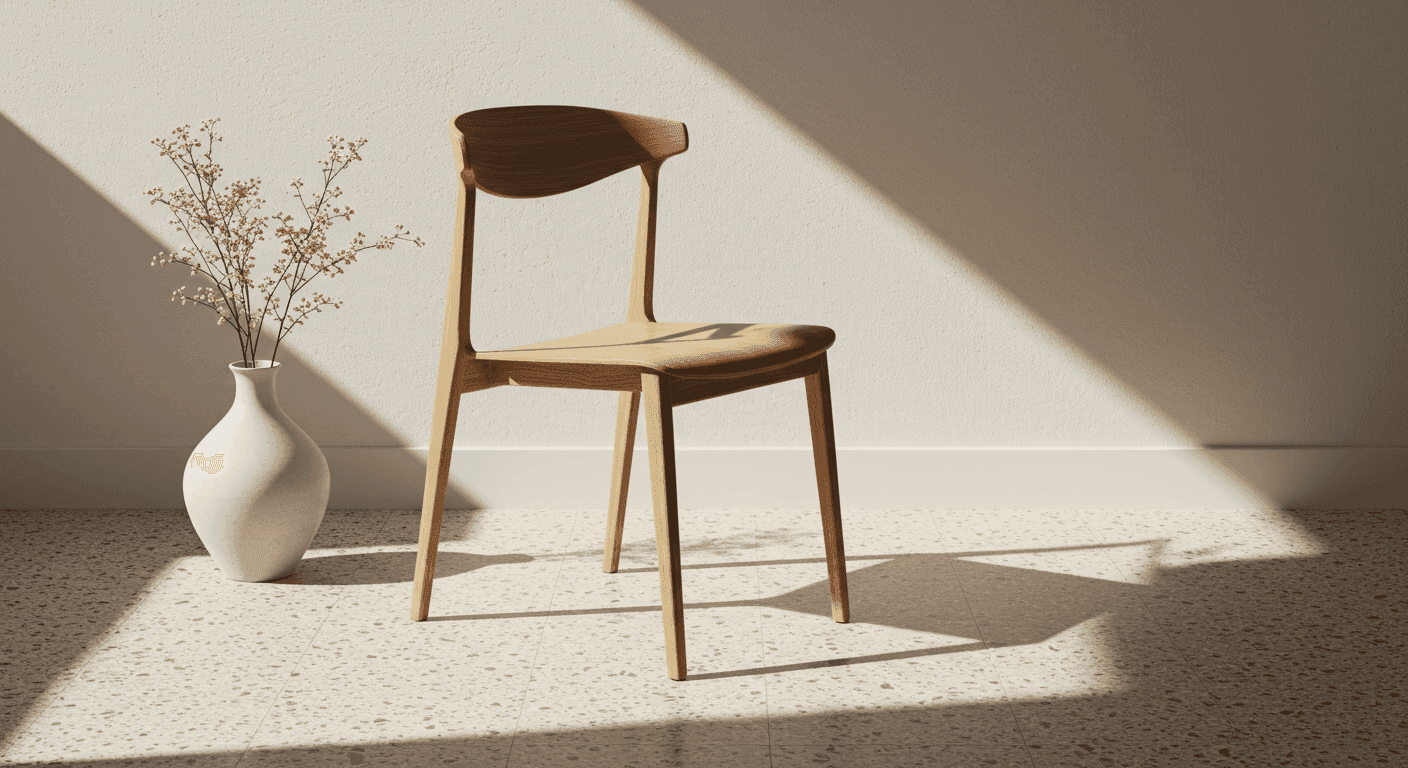
Gio Ponti (1891 to 1979) is the designer Italian Modernism is built on, and the fastest way into his work is the Superleggera 699. Ponti drew it for Cassina in 1957 by reducing the Chiavari fishing-village chair to its structural minimum: it weighs 1.7 kilos and you can lift it with one finger. Vintage 1960s and 70s Cassina examples sell on Whoppah at €350 to €800 against roughly €2,000 new. He also founded Domus in 1928 and edited it for over 50 years, ran Fontana Arte from 1933 to 1961, and designed the Pirelli Tower. Ponti listings here span chairs, ceramics and architectural artefacts, and our curators keep category-specific authentication notes for each.
A career too big to summarise
Gio Ponti (1891 to 1979) is the designer Italian Modernism is built on. Born in Milan, trained as an architect at the Politecnico, founded Domus magazine in 1928 (he edited it for over 50 years), designed the Pirelli Tower in Milan (1956, one of the most influential skyscrapers in Europe), and designed furniture, ceramics, glassware, cutlery and lighting in industrial quantities. His career is too big to summarise in 400 words, so I'll point at the pieces you're most likely to see on Whoppah and tell you what I think of each.
The chair, the lights, the cutlery
The Superleggera 699 (1957) is the headline piece. Ponti designed it for Cassina, taking the traditional Chiavari fishing-village chair and reducing it to the structural minimum. The chair weighs 1.7 kilos. You can lift it with one finger. Cassina has produced it continuously since 1957. Authentic vintage Cassina Superleggeras from the 1960s and 70s sell for €350 to €800 on Whoppah; current retail is around €2,000.
The Distex armchair (1953), made by Cassina, with the long curved back and tapered legs, runs €1,800 to €4,500 in good vintage condition.
His lighting work for Fontana Arte (where he was art director from 1933 to 1961) produced some of the most-collected mid-century Italian lighting. The Bilia table lamp (1932), the Pirellone floor lamp (1957), various opaline-glass pendants. Vintage Fontana Arte Pontis run €600 to €3,500 depending on model and condition.
The Conca cutlery (1951) for Krupp Italiana, still in production today, is one of the most enjoyable everyday Ponti objects. Vintage sets are €300 to €900 used.
What makes Gio Ponti furniture good to live with?
Two things. First, the proportions are always carefully tuned, even on his most modest pieces. The Superleggera is the obvious example: nothing structurally unnecessary, nothing visually heavy. Second, he liked colour. Where his Danish contemporaries kept palettes restrained, Ponti enjoyed saturated tones in upholstery, in ceramics, in his architectural interiors. A Ponti room is alive.
How do you authenticate a Gio Ponti piece on Whoppah?
Cassina-produced Pontis carry the Cassina label and are easily authenticated. Period Fontana Arte lighting has the Fontana Arte stamp on the metal components, usually on the underside of the base or inside the diffuser collar.
The Krupp Conca cutlery is occasionally listed without provenance documentation. Look for the Krupp mark on each piece (it's on the back of every fork and spoon, and on the blade base of every knife). Genuine sets feel substantial in the hand. Lightweight imitations exist.
For larger pieces, the Domus archive (the magazine's digitised back issues) is the best authentication resource. Ponti documented almost everything he made, so most pieces have a published reference.