Florence Knoll Bassett: the architect who reshaped the American office
Florence Knoll designed the post-war American executive office (and most of Knoll's residential furniture along the way). Her work is the disciplined, calm side of mid-century, and it's still some of the best-built furniture you can buy.

Florence Knoll Bassett (1917 to 2019) designed the disciplined half of mid-century America, and that is exactly why her furniture is the easiest of the period to actually live with. She trained under Eliel Saarinen at Cranbrook and Mies van der Rohe at IIT, married Hans Knoll in 1946, and ran Knoll design direction through the 1950s. Her own 1954 pieces are the ones to buy: on Whoppah the lounge chair runs €1,200 to €3,000, the settee €1,800 to €4,500, and the credenza €2,200 to €5,000. Her work is among the most consistently demanded American mid-century design here, and our curators trace production runs carefully via the Knoll markings.
The architect inside the manufacturer
Florence Knoll Bassett (1917 to 2019) trained as an architect under Eliel Saarinen at Cranbrook in Michigan, then under Mies van der Rohe at IIT in Chicago. She married Hans Knoll in 1946 and effectively co-led Knoll Inc. as design director through the 1950s. She designed the company's interior planning service, the residential and contract furniture catalogue, and most of the post-war American executive office vocabulary. The "Knoll look" of the 1950s is her look.
She was, by all accounts, a quietly demanding designer. The catalogue choices she made (which European designers Knoll licensed, which pieces were produced, which materials were standard) shaped what American design conservatism looked like for a generation.
Her own designs
The Florence Knoll lounge chair, settee and sofa (1954) are the canonical pieces. Steel frame, button-tufted leather or wool upholstery, polished chrome legs. The lounge chair sits at €1,200 to €3,000 in good vintage Knoll production on Whoppah; the settee at €1,800 to €4,500; the three-seat sofa at €2,500 to €5,500.
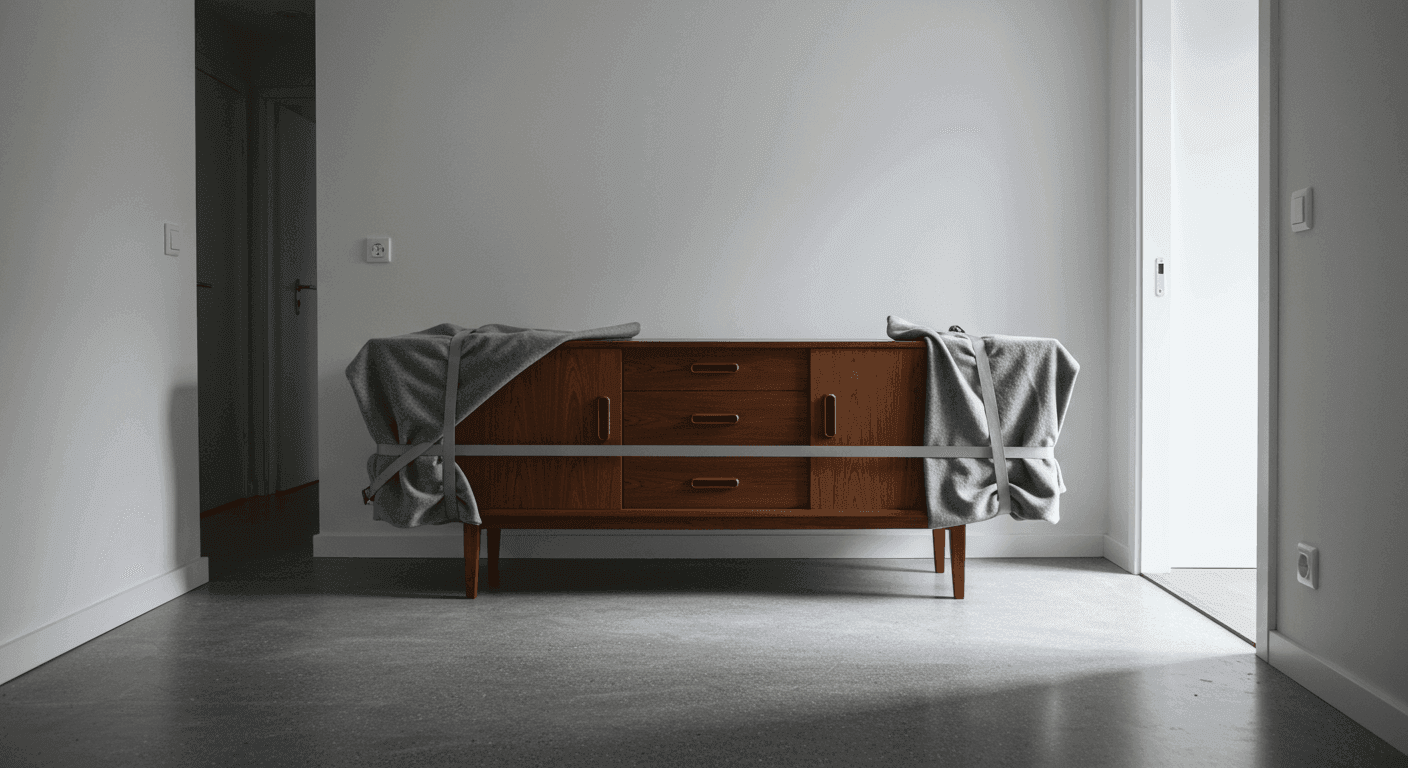
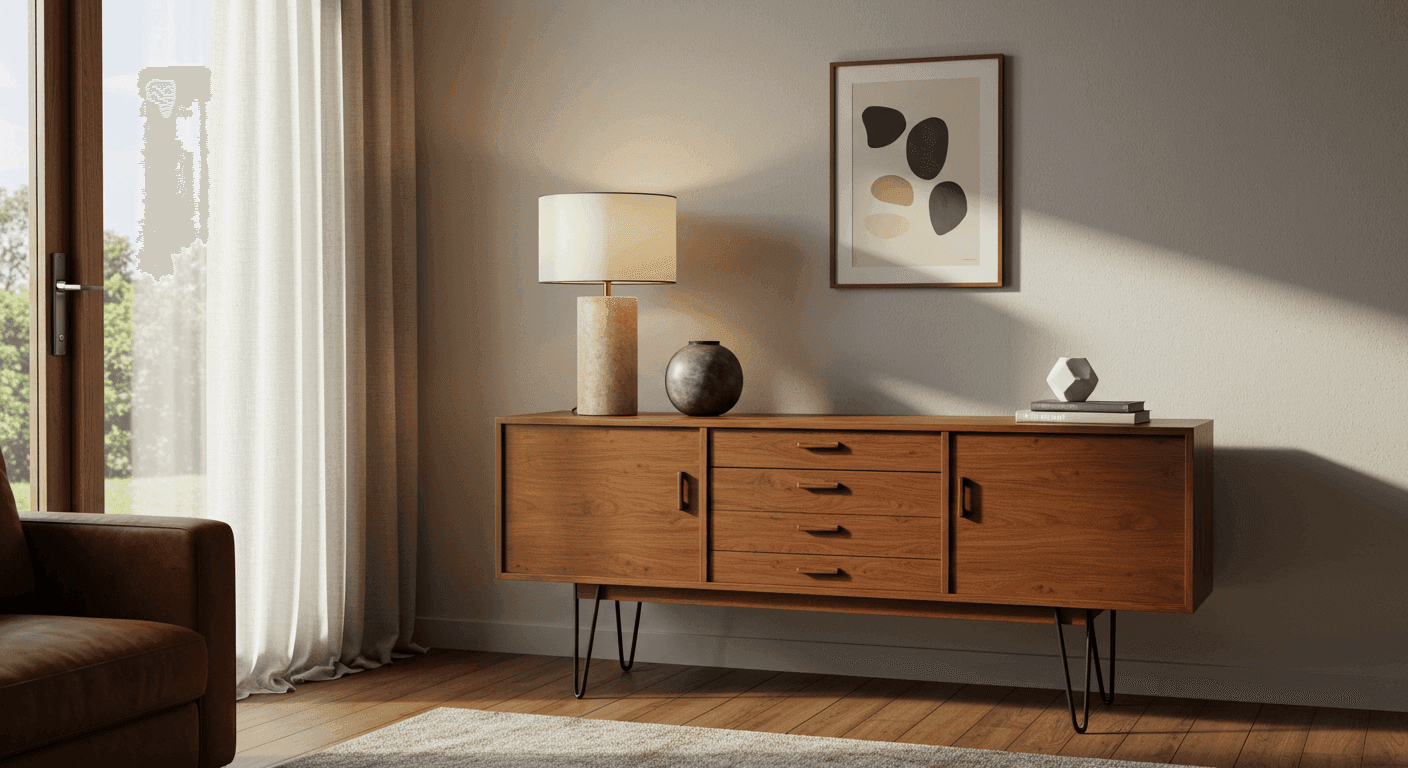
The Florence Knoll credenza (1954) is the long low storage cabinet on slim chrome legs. Vintage Knoll examples in walnut, rosewood or oak run €2,200 to €5,000 used. This is the credenza other American mid-century credenzas tried to look like.
The Knoll Parallel Bar collection (1955), with the bench-and-table family, is the contract-furniture series she designed for airports, hotels and waiting rooms. The bench is what survived best on the secondhand market; €600 to €1,500 used.
Why does Florence Knoll furniture feel different from the rest of mid-century?
Florence Knoll's furniture is the opposite of theatrical. The shapes are square. The proportions are calm. The materials are mid-tone (walnut, oak, polished chrome, neutral upholstery). Where Saarinen made the dramatic shapes and Eames made the lyrical ones, Florence Knoll made the disciplined ones.
This is what makes her work uniquely good for everyday use. Her sofa is the sofa that doesn't compete with other furniture in the room. Her credenza is the storage cabinet that lets the painting on the wall above it actually be the painting. Quiet excellence is hard to design.
How do you recognise authentic Florence Knoll production?
All authentic Florence Knoll-designed Knoll production carries the Knoll label. On the lounge, settee and sofa, look for the metal Knoll plate on the underside of the frame, near the leg attachment. On the credenza, the label is inside one of the drawers or doors.
Reupholstery is accepted on the seating pieces (the original Knoll fabric or leather has often worn through after fifty years), but should be transparent in the listing. Refinishing of the chrome legs is a value-decreaser; original chrome with normal patina is more desirable than re-plated chrome.