Tom Dixon: the British designer-brand that brought industrial-craft back
Tom Dixon founded his eponymous brand in 2002. The Beat pendants, the Mirror Ball, the Wingback chair and the Mass table all came out of his London studio. Here's the short story.

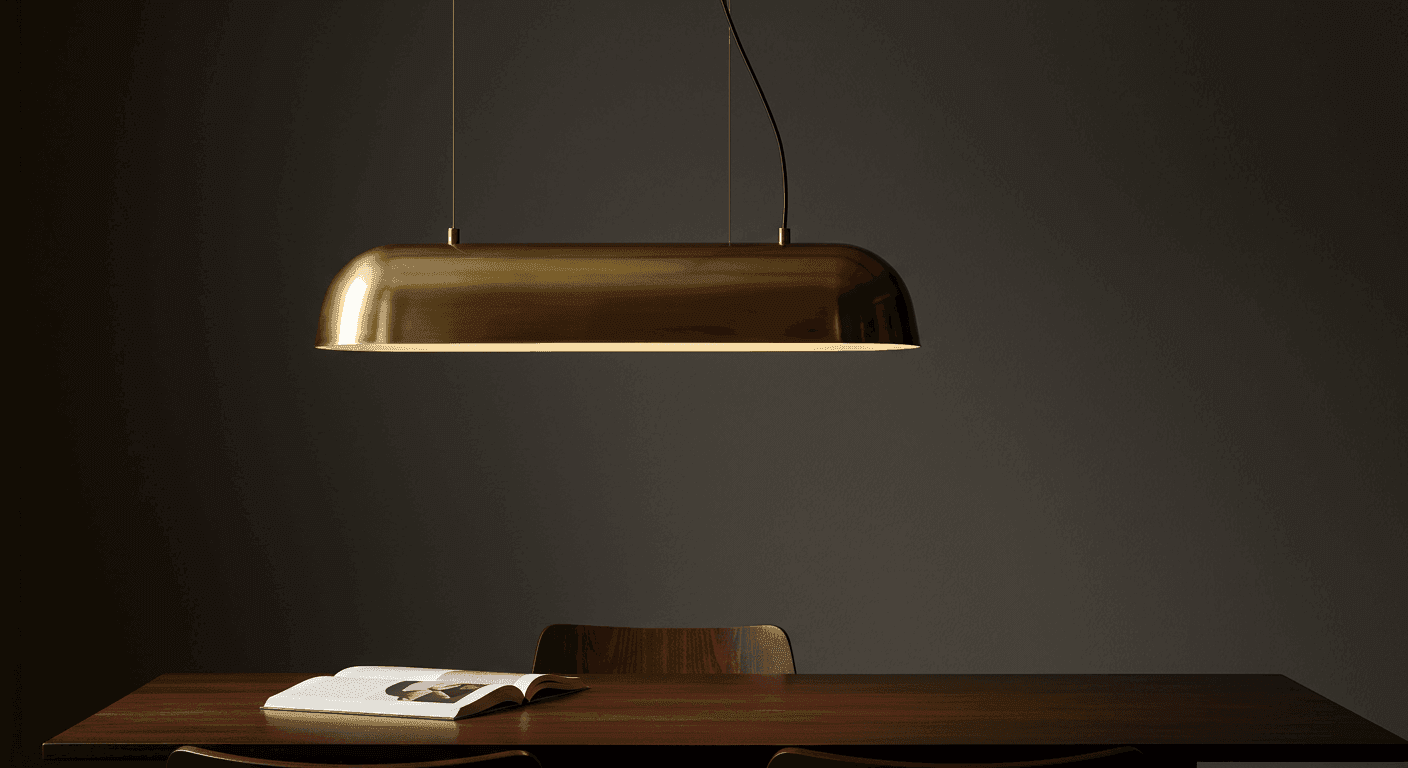
Tom Dixon (born 1959) brought industrial-craft back, and he did it with no formal training: he came up welding bicycles for cash in the 1980s London scene alongside Ron Arad and Jasper Morrison, designed for Cappellini and Habitat through the 1990s, and founded his own brand in 2002. The hand-spun brass Beat pendant (2006) is the signature. On Whoppah a late-2000s or early-2010s Beat sells at €350 to €900 each against €600 to €1,200 new, the Mirror Ball (2003) at €180 to €450, and the Wingback chair (2007) at €1,200 to €3,500. His work is among the most actively traded British contemporary design here, and our curators verify the Tom Dixon markings, which are reliable identifiers.
Tom Dixon (born 1959) is the British designer who came up through the 1980s London design scene without any formal training. He worked welding bicycles for cash, became part of the post-punk furniture movement that included Ron Arad and Jasper Morrison, designed for Cappellini and Habitat through the 1990s, and founded his eponymous brand in 2002 to produce his own work on his own terms.
The Tom Dixon brand sits in a specific niche: industrial-craft aesthetic, polished metal as the signature material, mid-priced relative to Italian high-end but premium relative to mass-market. The pieces look hand-made even when they're not, which is part of the appeal.
What does a used Tom Dixon Beat pendant cost on Whoppah?
The Beat pendant lamp series (2006), the hand-spun brass pendants with the spherical or bell-shaped form, is the brand's most-photographed work. Vintage Beat pendants from the late 2000s and early 2010s sell on Whoppah at €350 to €900 each, depending on shape and finish. Current Tom Dixon retail is around €600 to €1,200 each.
The Mirror Ball pendant (2003), the spun polycarbonate sphere with the mirrored chrome finish, is the more accessible Tom Dixon. €180 to €450 used.
The Wingback chair (2007), the contemporary high-backed armchair with the dramatic silhouette, is the brand's seating signature. €1,200 to €3,500 in vintage Tom Dixon production.
The Mass table series (2014), the heavy polished-aluminium or copper tables with the geometric forms, is the architectural piece. €800 to €2,500 used depending on material and size.
How do you recognise an authentic Tom Dixon piece?
What to look for on the secondhand market: every authentic Tom Dixon piece carries the Tom Dixon brand mark, typically engraved or stamped into the metal hardware. The Beat pendants have the marking on the inside of the rim of the shade. The Mirror Ball has a small embossed mark near the cable entry.
Copies of the Beat pendants exist (the spinning technique is harder to fake than it looks, but Chinese manufacturers have produced acceptable imitations). The differential is the brass quality: real Tom Dixon brass patinates evenly; cheap brass-plated steel patinates spottily.