Magis: the Italian brand that took plastic furniture seriously again in the 1990s
Magis was founded in 1976. Their collaborations with Jasper Morrison, Konstantin Grcic, the Bouroullec brothers and others have produced some of the most influential contemporary furniture of the past 25 years. Here's the short story.

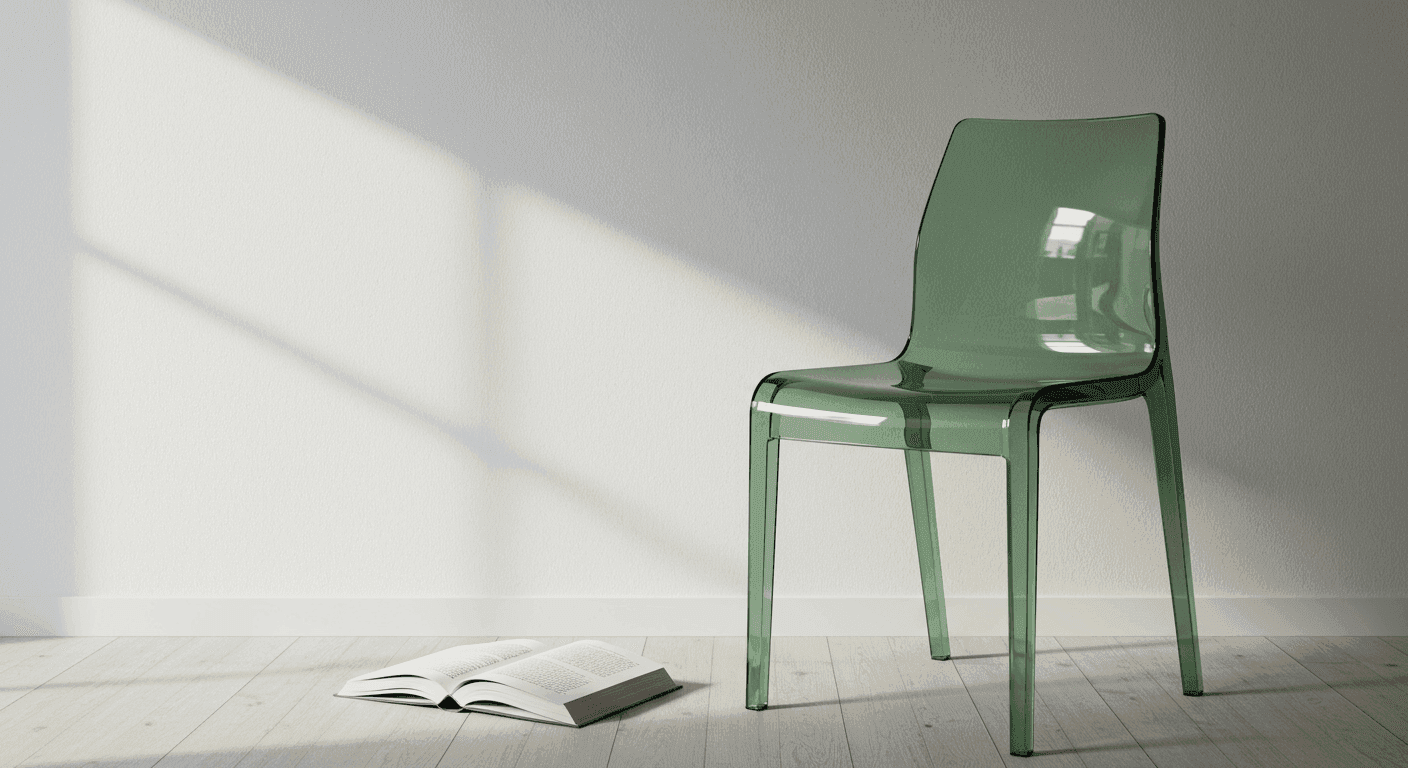
Magis took plastic furniture seriously again in the 1990s, becoming the contemporary heir to the Kartell and Artemide tradition. Eugenio Perazza founded it in 1976 in Motta di Livenza and ran it as a modest plastic manufacturer for 15 years before he began commissioning Jasper Morrison, Konstantin Grcic, Marc Newson and the Bouroullec brothers. On Whoppah an early-2000s Air-Chair (Morrison, 1999) sells at €60 to €140 against roughly €170 new, Chair One (Grcic, 2004) at €350 to €750, and the Steelwood chair at €280 to €600. Magis is one of the safer contemporary brands to buy secondhand, because build quality is consistent and the designs hold value. Our curators see broad geographic demand for it.
Magis was founded in 1976 in Motta di Livenza, north-east Italy, by Eugenio Perazza. The company spent its first 15 years as a relatively modest plastic-furniture manufacturer. The transformation came in the 1990s when Perazza began collaborating systematically with the new generation of international designers (Stefano Giovannoni, Jasper Morrison, Konstantin Grcic, the Bouroullec brothers, Marc Newson, Marcel Wanders). Magis became the contemporary heir to the 1960s Italian plastic-furniture tradition of Kartell and Artemide.
What does a used Magis Air-Chair cost on Whoppah?
The Air-Chair (Jasper Morrison, 1999) is one of the pieces that defined the brand. A single-piece air-moulded polypropylene chair, stackable, in saturated colours. Vintage Magis Air-Chairs from the early 2000s sell on Whoppah at €60 to €140 each; current Magis retail is around €170.
The Chair One (Konstantin Grcic, 2004), the die-cast aluminium chair built from triangulated facets, is the brand's most photographed design. €350 to €750 used.
The Spun chair (Thomas Heatherwick, 2010), the spinning conical chair, is the most theatrical Magis piece. €700 to €1,800 in vintage condition.
The Steelwood chair (Bouroullec brothers, 2007), with the bent steel frame and beech back, is the most refined of the brand's seating. €280 to €600 used.
The Me Too children's collection has produced several genuinely well-designed children's pieces, notably the Trioli chair (Eero Aarnio, 2005) and the Puppy (Eero Aarnio, 2005).
How do you recognise an authentic Magis piece?
What to look for on the secondhand market: every authentic Magis piece carries a moulded Magis logo somewhere on the underside or back of the seat. Plastic pieces from the early 2000s may show some patina (slight colour shift, micro-scratches); pristine "new-looking" pieces are often more recent production or copies.
Magis is one of the safer contemporary brands to buy secondhand because the build quality is consistent and the designs are recognised enough to hold value, but the brand isn't yet so heavily copied that authentication is a regular concern.