Ligne Roset: the French house behind the Togo sofa
Ligne Roset has been making furniture since 1860. They are the French manufacturer of Michel Ducaroy's Togo sofa, which is the most-replicated sofa shape in contemporary design. Here's the short story.

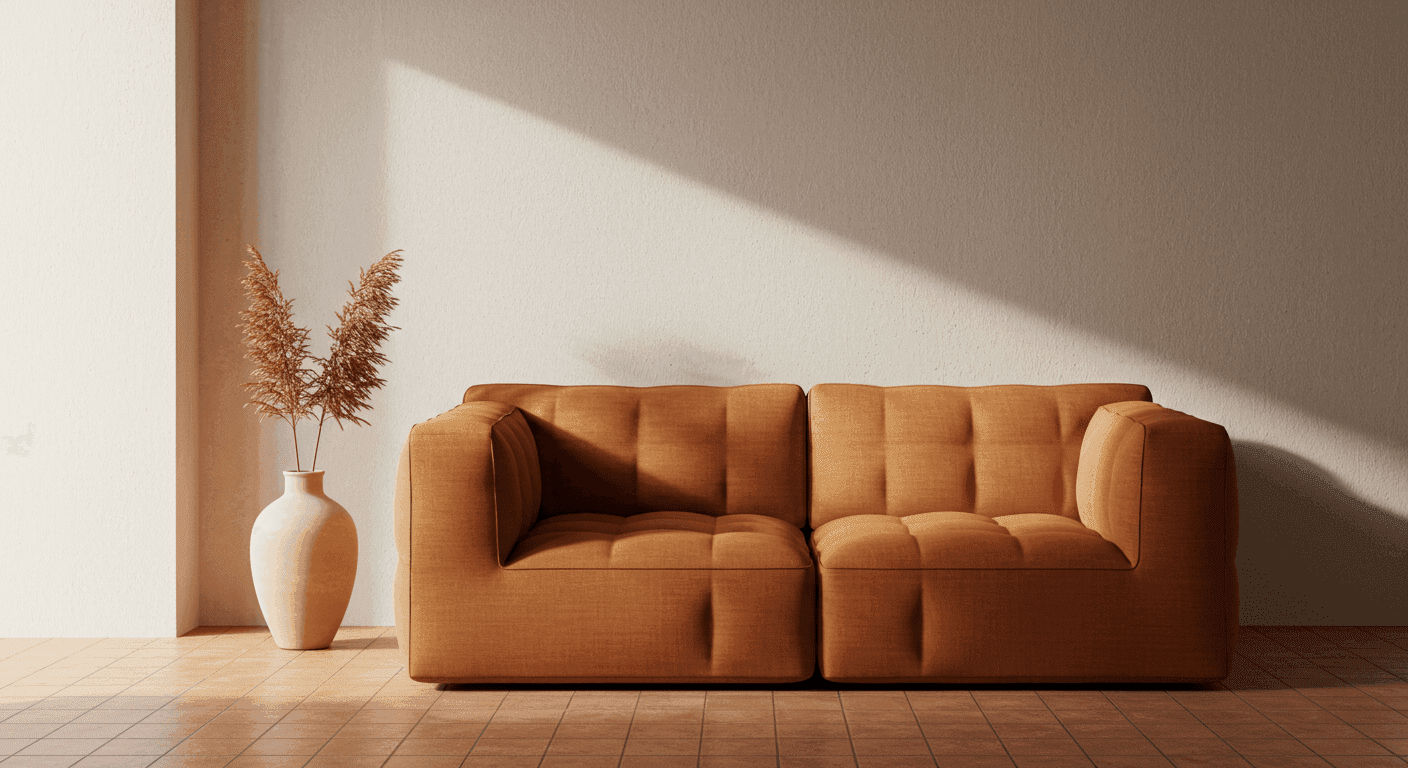
Ligne Roset is the French house behind the Togo, and the Togo is one of the most-listed single designs on Whoppah. The company has been making furniture in Briord since 1860, starting with walking sticks and parasol handles, and the defining moment came in 1973 when Michel Ducaroy drew a sofa with no internal frame and no legs, built from a single foam structure in five components. He described it as a tube of toothpaste folded back on itself. Original 1970s and 80s Togos sell here at €1,400 to €3,800 for the three-seater. Our curators hold authentication notes down to the foam-density era, because genuine high-density foam holds shape for 30 to 40 years and copies do not.
Ligne Roset has been making furniture in Briord, France, since 1860, originally as a beechwood workshop producing walking sticks and parasol handles. The shift to upholstered furniture came after World War II, and the defining moment came in 1973 when Michel Ducaroy designed the Togo sofa for them.
The Togo is one of the most-produced and most-imitated sofa designs of the 20th century. Five components (a low sofa, a high lounge chair, a low lounge chair, an ottoman, and a corner unit) all built from a single foam structure with quilted fabric or leather covers. No internal frame, no legs, the whole piece sits flat on the floor. Ducaroy described it as "a tube of toothpaste folded back on itself". It was launched at the Salon du Meuble in 1973 to mixed reviews, and is now considered one of the canonical pieces of 1970s French design.
Beyond the Togo, Ligne Roset has produced Pierre Paulin's Pacha lounge chair (originally 1975 for another brand, reissued by Ligne Roset since 2018), the Calin armchair (Pascal Mourgue, 1989), the Multy sofa-bed system (Claude Brisson, 1973), and a long catalogue of contemporary upholstered pieces by Pierre Paulin, the Bouroullec brothers, Inga Sempé and others.
How do you recognise an authentic Ligne Roset Togo?
What to look for on the secondhand market: every authentic Ligne Roset piece carries a sewn-in label inside the upholstery with the model name and a serial number. The Togo specifically has a Ligne Roset label sewn into the underside of one of the seat cushions. Original Togos from the 1970s and 80s sell on Whoppah at €1,400 to €3,800 for the three-seater sofa, depending on upholstery condition.
How do you tell a real Togo sofa from a copy?
The Togo has been heavily copied since the 1980s. The differences are real: genuine Ligne Roset Togos use a specific high-density foam that holds shape for 30 to 40 years; copies use cheaper foam that compresses faster. The quilted stitching pattern on the cover is also specific (look for the diagonal quilting at the seat edge).