Knoll: the American manufacturer that licensed the Bauhaus to the post-war world
Knoll holds the licences on the Wassily, Cesca, Barcelona, MR10, Saarinen Tulip, Bertoia Diamond, Florence Knoll lounge series and the Mies / Reich catalogue. They are, functionally, the American Cassina. Here's the field guide.

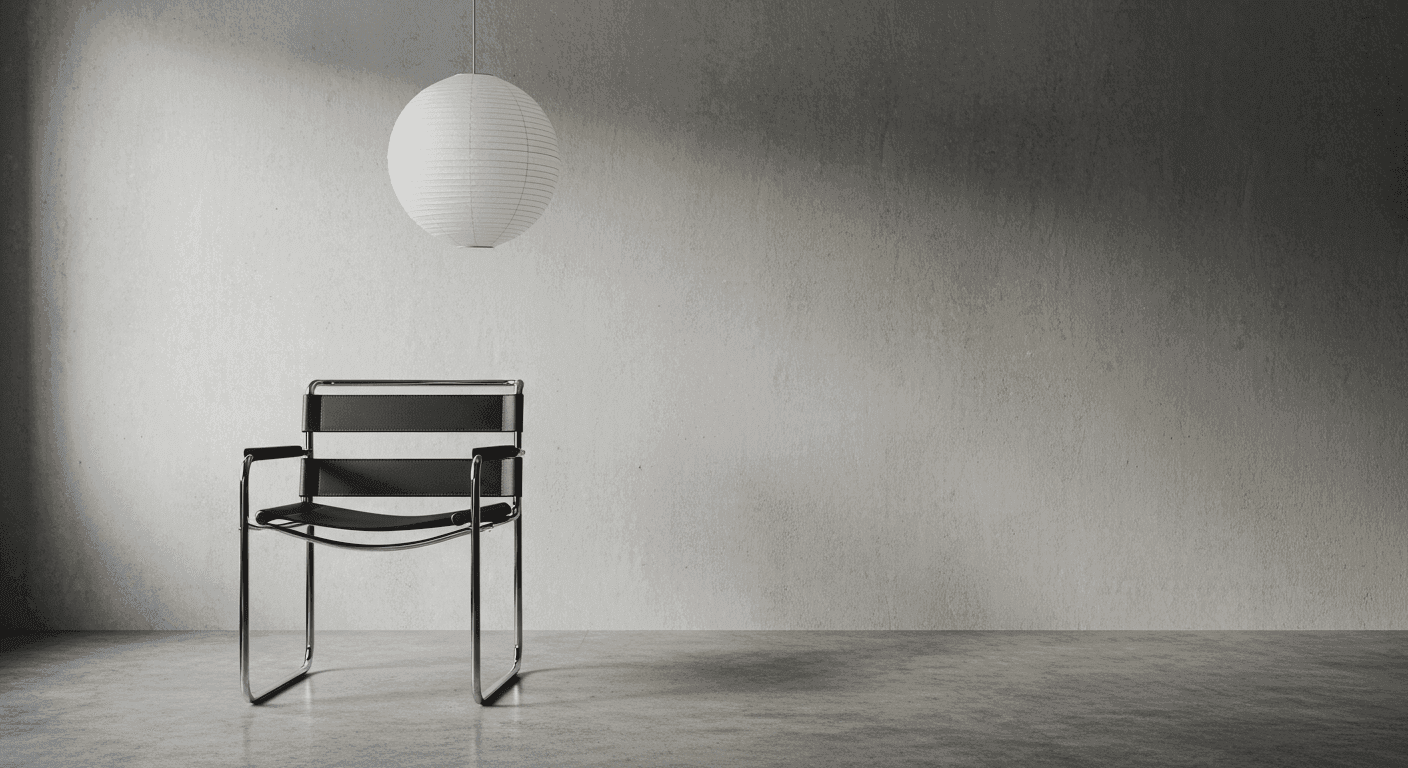
Knoll is the American manufacturer that licensed the Bauhaus to the post-war world, and it still holds those licences: Breuer's Wassily (1925) and Cesca (1928), Mies and Reich's Barcelona chair (1929) and MR10 (1927). Hans Knoll founded it in New York in 1938, and the pivot came in 1946 when he married the architect Florence Schust, who ran design direction through the 1950s. Authentic 1970s and 80s vintage Knoll typically sells on Whoppah at 50 to 75% of current retail, and the gap between a real Wassily at €900 and a convincing copy at €250 is genuine material difference. Our listings skew toward the mid-century classics, and our curators verify the Knoll production markings on every one.
Knoll was founded in 1938 in New York by Hans Knoll, the son of a German furniture maker. The pivotal moment came in 1946, when Hans married Florence Schust, an architect trained under Eliel Saarinen at Cranbrook and under Mies van der Rohe at IIT. Florence Knoll Bassett ran the design direction of the company through the 1950s and shaped what "Knoll" came to mean: disciplined modernism, the Bauhaus heritage translated into the American post-war home and office.
Knoll holds the licences on the Bauhaus catalogue: Marcel Breuer's Wassily (1925) and Cesca (1928), Mies and Reich's Barcelona chair (1929) and MR10 (1927). They also produce Eero Saarinen's Tulip series (1957) and Womb chair (1948), Harry Bertoia's Diamond chair (1952), and Florence Knoll's own residential and contract collections.
How do you recognise an authentic Knoll piece?
What to look for on the secondhand market: every authentic Knoll piece carries Knoll branding. On the Wassily and Cesca, look for the leather hide label sewn into the seat panel reading "KNOLL INTERNATIONAL" plus a metal serial-number plate on the underside of the frame. On the Barcelona chair, the label is sewn into one of the cushions and a metal Knoll plate sits on the underside of the frame near the leg pivot.
What does vintage Knoll cost on Whoppah?
Authentic 1970s and 80s vintage Knoll typically sells on Whoppah at 50 to 75% of current Knoll retail for the same model. Italian and German copies are widespread, particularly of the Wassily and Barcelona. The price gap between an authentic Knoll Wassily (€900) and a convincing copy (€250) reflects real material differences (chrome quality, leather thickness, frame weight, integrated bent-tube construction with no visible weld joints).
If you're considering a high-value Knoll piece (Barcelona, Womb, Tulip table in marble), the Knoll heritage department can verify serial numbers via email. Our curation team uses them for authentication queries on listings above €2,000.