Fritz Hansen: the Danish maker that became the home of Jacobsen, Wegner and Kjærholm
Fritz Hansen has been making furniture in Denmark since 1872. They hold the rights to almost the entire Jacobsen catalogue, plus key Wegner, Kjærholm and Bruno Mathsson pieces. Here's the short story.

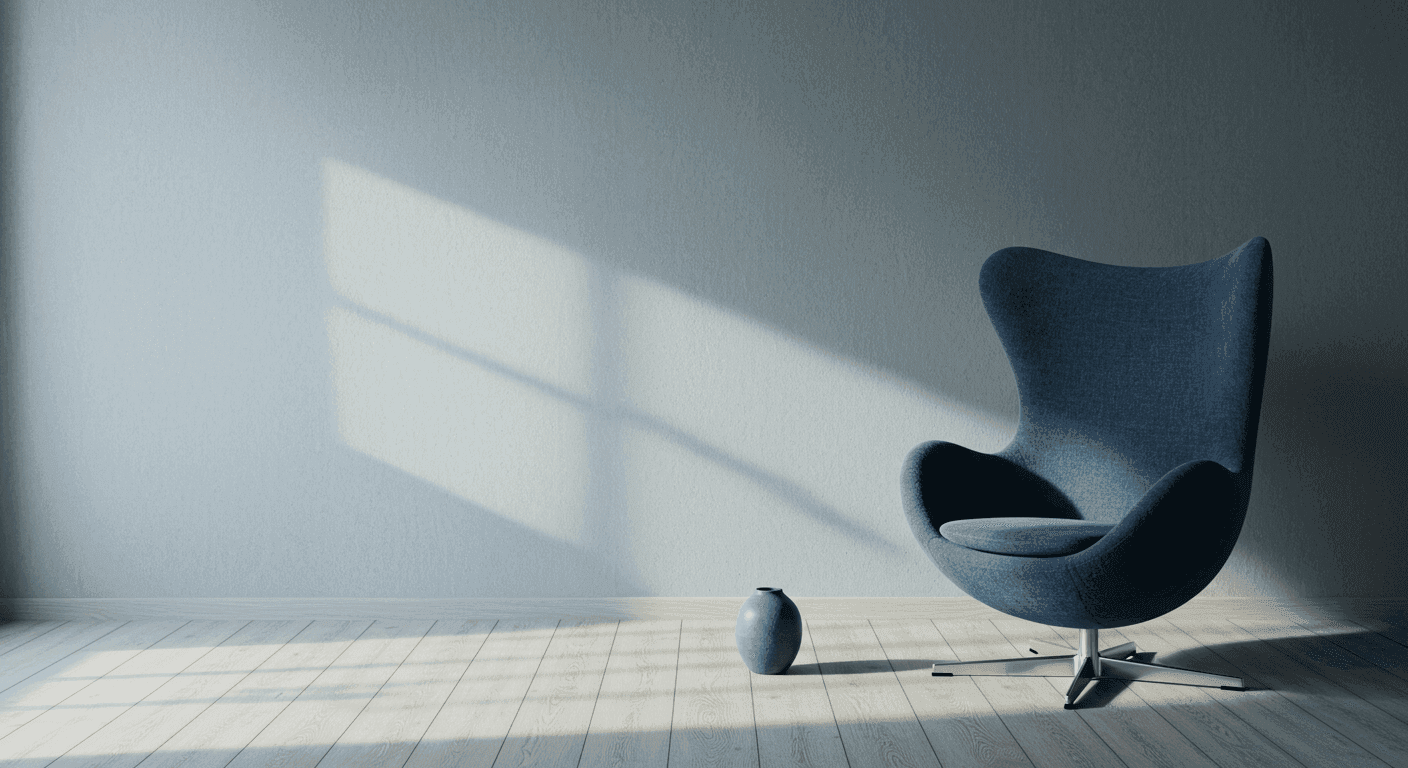
Fritz Hansen is the Danish maker that has been producing furniture in Copenhagen since 1872 and became the home of Arne Jacobsen's catalogue: the Ant (1952), the Series 7 (1955), and the Egg and the Swan (both 1958) all carry its label. That label is exactly why the brand matters secondhand: a genuine 1970s Fritz Hansen Egg sells at €3,500 to €7,000 on Whoppah against a current retail around €10,500, so original-period production is where the value sits. Fritz Hansen listings are some of the highest-quality Scandinavian pieces our curators handle, and the brand's unusually well-kept production records make authentication straightforward when documentation is available. Here's the short story, and what to look for.
Fritz Hansen was founded in 1872 in Copenhagen by Fritz Hansen the elder. For most of the late 19th and early 20th century, the company was a respected but not particularly distinctive Danish furniture manufacturer. The transformation came in the 1930s and 40s, when they began producing Arne Jacobsen's work. The Ant chair (1952), Series 7 (1955), Egg (1958), Swan (1958), Oxford (1965) and Drop chair (1958) all came out of the Jacobsen / Fritz Hansen partnership and made the company's name.
Beyond Jacobsen, Fritz Hansen produces important Poul Kjærholm pieces (the PK22, PK24 hammock chair, PK61 coffee table), some Hans Wegner pieces (the China chair, the Chinese chair), and the Bruno Mathsson catalogue.
The current Fritz Hansen catalogue includes contemporary work from Cecilie Manz, Jaime Hayon, Nendo, and Piero Lissoni, among others. The Republic of Fritz Hansen branding from the 2010s is the same company, the name was tweaked.
How do you recognise authentic Fritz Hansen production?
What to look for on the secondhand market: authentic Fritz Hansen production carries the Fritz Hansen label, usually a circular metal disc on the underside of the seat, or on the inside of the steel frame on chairs like the PK22. Earlier pieces (pre-1990) sometimes have a paper label that's worn off; in those cases, verify against Fritz Hansen's archive (their heritage department responds to model and serial queries).
The Egg and Swan chairs are the most commonly reupholstered. Original fabric or leather typically wears through after 30 to 40 years. Sympathetic reupholstery using Fritz Hansen's current fabric range is fine and not a value-killer. The frame underneath is what determines authenticity.
What does a vintage Fritz Hansen Egg chair cost on Whoppah?
A genuine 1970s Fritz Hansen Egg in good vintage condition sells at €3,500 to €7,000 on Whoppah. Current Fritz Hansen retail is around €10,500, so the secondhand premium is real for original-period production.