Artifort: the Dutch house behind Pierre Paulin's most photographed work
Artifort has been making upholstered furniture in Maastricht since 1890. Their Paulin work (the Tongue chair, the Mushroom, the Ribbon) is some of the most recognised European mid-century. Here's the short story.

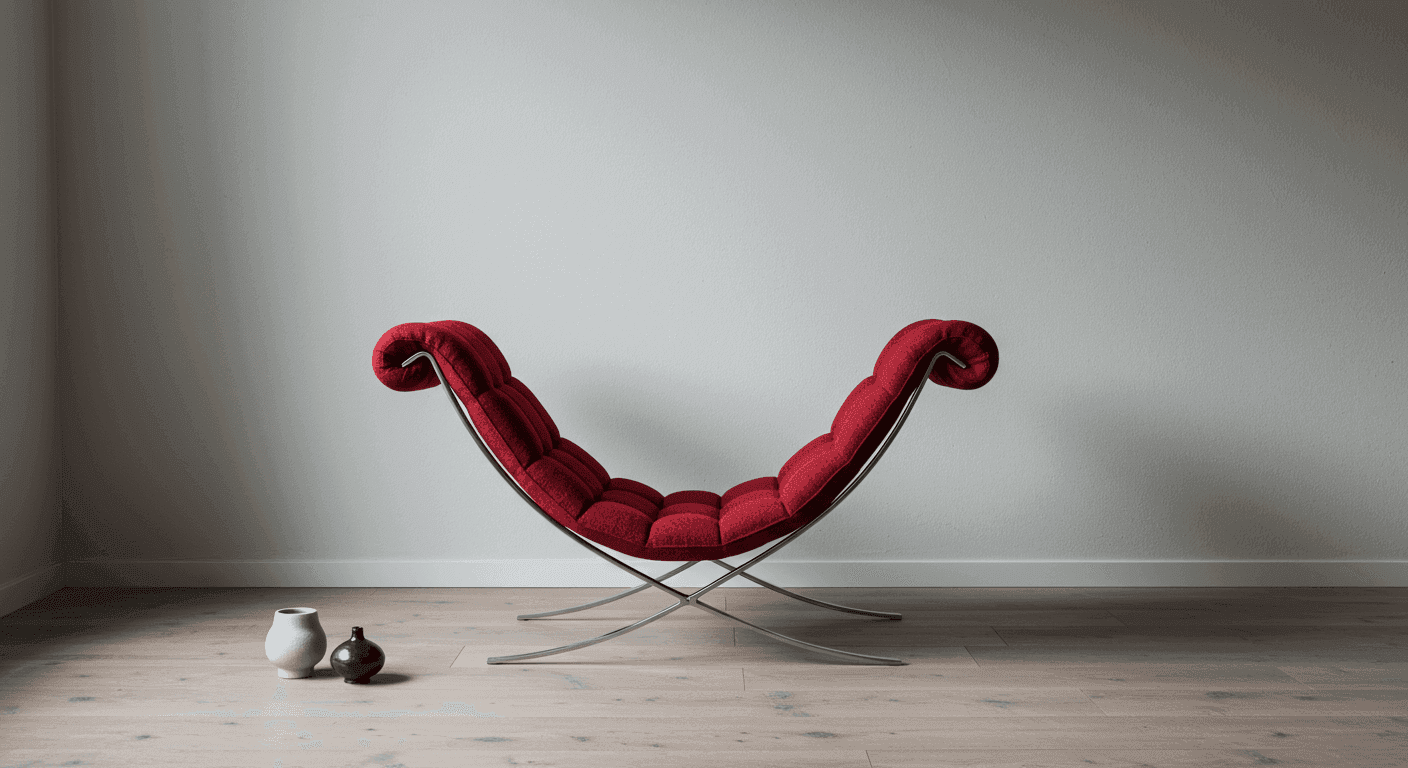
Artifort is the Dutch house behind Pierre Paulin's most photographed work, and the Paulin years are what you are buying when you buy Artifort secondhand. Jules Wagemans founded the company in Maastricht in 1890, and it spent 60 years as a conventional upholstery manufacturer until Kho Liang Ie became artistic director in 1958 and brought Paulin in. That partnership ran to the mid-1980s. On Whoppah a 1970s or 80s Tongue chair (F577, 1967) sells at €700 to €1,800, the Mushroom (F560, 1959) at €1,200 to €3,000, and the Ribbon (F582, 1966) at €1,500 to €4,000. Our curators authenticate via the Artifort markings and check upholstery integrity, which is where most older pieces need attention.
Artifort was founded in 1890 in Maastricht by Jules Wagemans. The company spent its first 60 years as a traditional Dutch upholstery manufacturer. The transformation came in 1958 when Kho Liang Ie became artistic director and brought in Pierre Paulin as the principal external designer. The Paulin-Artifort partnership ran from 1958 to the mid-1980s and produced some of the most photographed European mid-century furniture.
What does a vintage Artifort Tongue chair cost on Whoppah?
The Tongue chair (F577, 1967) is the calling card. A low wide chair with the curving tongue-shaped silhouette, originally upholstered in saturated jersey colours. Vintage Artifort Tongues from the 1970s and 80s sell on Whoppah at €700 to €1,800 depending on upholstery and frame condition. Brilliant-colour examples (red, yellow, orange) command a premium over muted tones.
The Mushroom chair (F560, 1959) is the slightly earlier, more architectural piece: a round low chair on a chromed swivel base. €1,200 to €3,000 in good vintage condition.
The Ribbon chair (F582, 1966) is the technically most ambitious Paulin: a continuous "S"-curve lounge in foam-and-jersey construction. €1,500 to €4,000 used.
Beyond Paulin, Artifort produces Geoffrey Harcourt's work (the F060 chair series), Kho Liang Ie's own designs, and contemporary work from René Holten, Patrick Norguet and Khodi Feiz.
How do you recognise an authentic Artifort?
What to look for on the secondhand market: every authentic Artifort piece carries an Artifort label, usually on the underside of the seat or inside the base. The chrome bases on the Tongue and Mushroom chairs are heavy cast steel; lighter copies exist and are easy to identify by weight.
Reupholstery is common on Paulin pieces (the jersey covers wear at the corners over 30 years). Artifort still produces original-spec replacement covers in the period colours, so sympathetic reupholstery is possible and not a value-killer when done correctly. Original-colour upholstery is preferred over neutral replacement when condition allows.