Have it delivered hassle-freeBuyer protectionAll Designer items curated by WhoppahDownload the Whoppah App – get alerts & sell with ease.
Have it delivered hassle-free
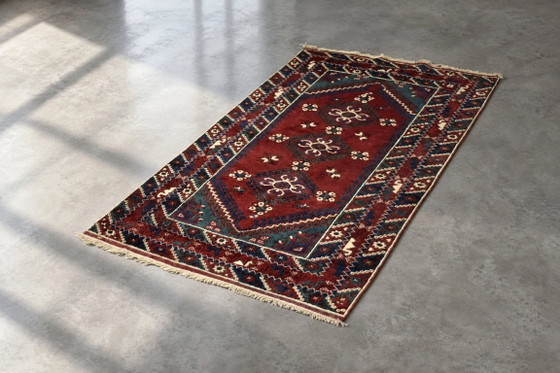
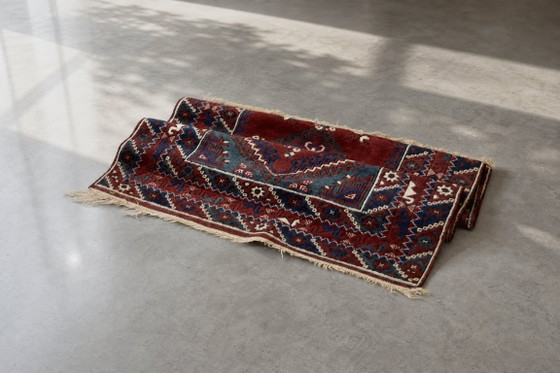
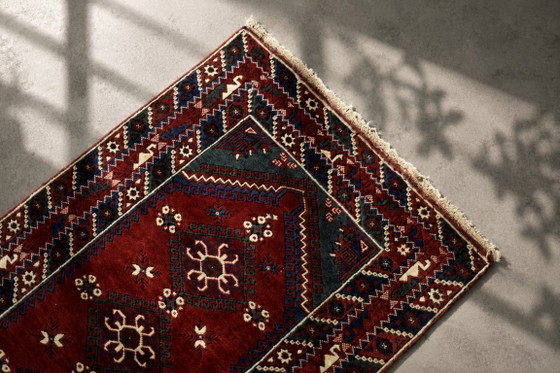
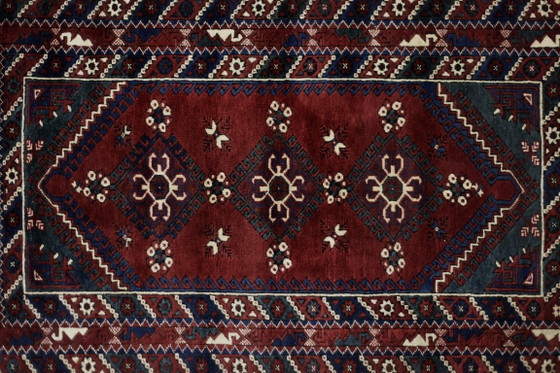
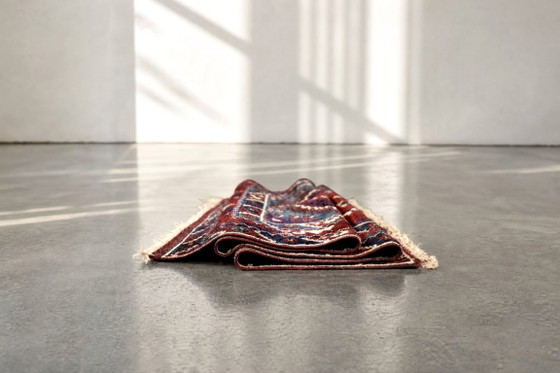
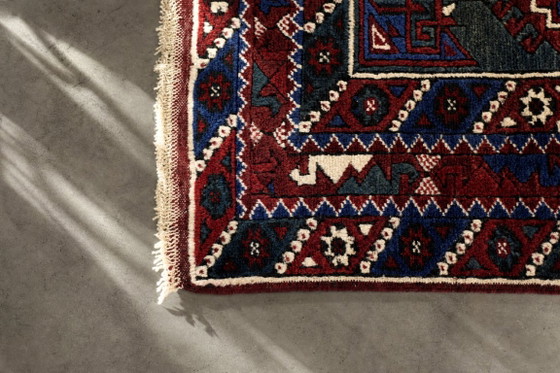
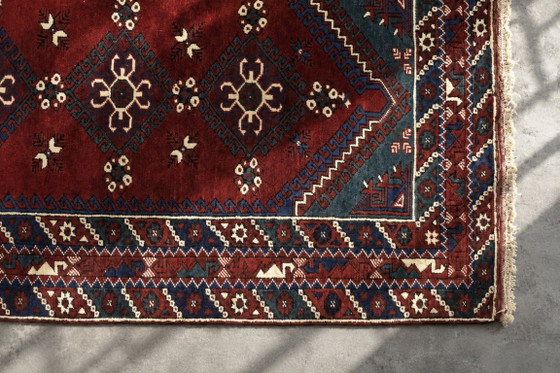
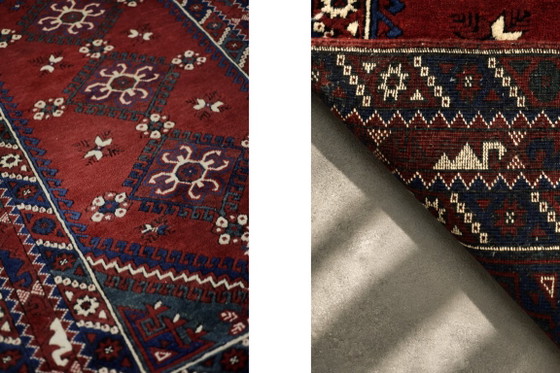
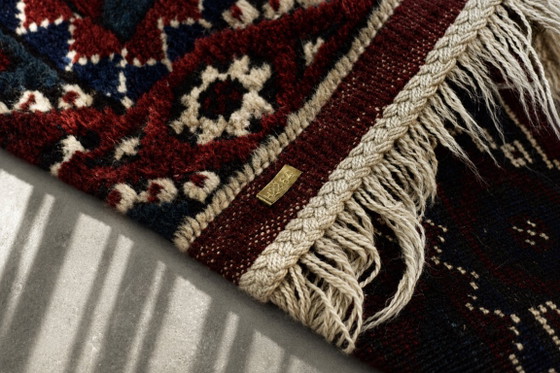
Vintage Red Hand-Woven Oriental Afghan Rug, 1970s
€995
Buy with confidence
Shop & pay safely with Buyer ProtectionDesigner items curated by WhoppahWe only pay the seller once you have safely received the itemTrusted payment methods


About this seller
ProfessionalWarszawa, PolandOn Whoppah since October 2024 • 3 sales
Product description
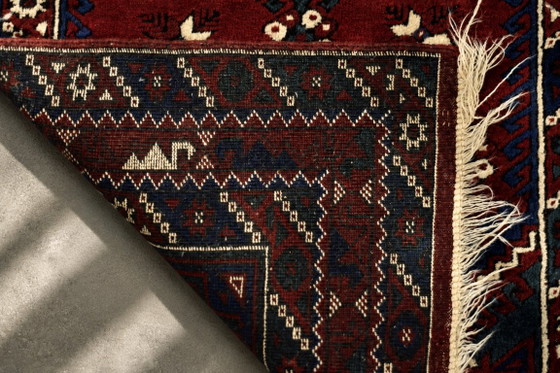
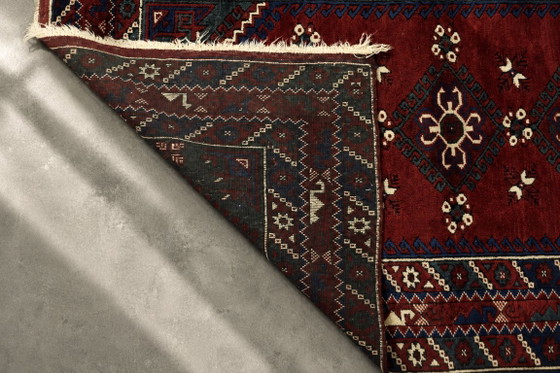
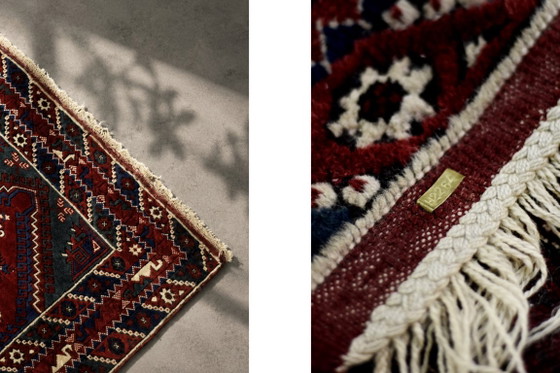
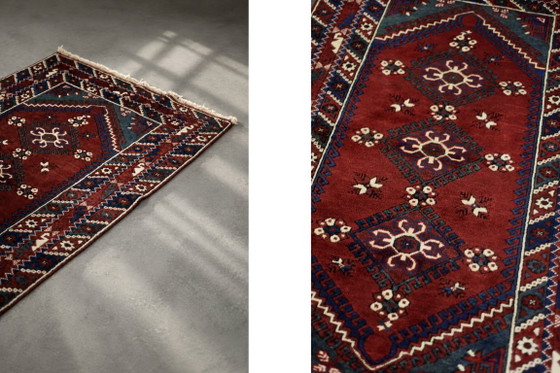
The hand-knotted, vintage Afghan rug with a distinctive, tribal character, woven in a deep palette of burgundy, navy blue, black, and natural ivory. It dates from the 1970s. This piece requires no additional decoration. Its strength lies in its design, the refined imperfections of handcraft, and the color scheme, which has acquired exceptional depth over time. The central area is built around three large, geometric medallions, surrounded by small rosettes, stylized flowers, and small bird motifs. The entire piece is completed by a multi-layered border with a rhythmic, geometric design. Corners with abstract, almost archaic ornaments are also distinctive. The dominant dark burgundy, offset by navy blue and deep blue, gives the rug a refined, somewhat theatrical character. The natural white of the motifs acts as a point of light, highlighting the structure of the ornament. The rug clearly shows signs of being handmade. Visible are the irregularities of the pattern, subtle differences in the density of the pile, and natural color variations. These are the characteristics that distinguish handmade textiles from modern mass production. HISTORICAL OVERVIEW Afghan weaving has never been a single, uniform style. Its character was shaped by the traditions of many communities, including the Turkmen, Baluch, Uzbeks, Hazara, and Tajiks. Afghanistan's location at the crossroads of Central Asia and the Persian world fostered the intermingling of motifs and techniques. In tribal traditions, ornament was not merely decorative. Repeated medallions, rhombuses, rosettes, and geometric borders constituted a visual language passed down from generation to generation. In many Afghan and Turkmen traditions, characteristic gul medallions served as a distinctive symbol of a specific weaving tradition. This legacy of nomadic cultures is particularly interesting: a carpet was a utilitarian object, but also a carrier of memory, aesthetics, and local identity. Handcrafted, often in a home environment, it was created without industrial repetition. Therefore, each piece retains the individual character of its creator and the place where it was made. Afghan rugs are renowned worldwide for their high quality, durability, and distinctive designs. Natural dyes are traditionally used, giving the rugs their unique colors. These rugs are hand-knotted, making each one unique. Afghan weavers often use high-quality wool, which is densely woven. There are many types of Afghan rugs, each from a different region or ethnic group. The most popular include Bokhara rugs, known for their Gul motifs; Chobi rugs, with more subtle, earthy colors; and Akhche rugs, with their distinctive geometric patterns. This craftsmanship reflects not only aesthetics but also the traditions, history, and way of life of various ethnic groups in Afghanistan. Due to their uniqueness and quality, Afghan rugs are valued both as utilitarian objects and as works of art. It's important to remember that the hallmark of authentic Oriental rugs is their imperfections. Before shipping, the rug will be professionally cleaned and ready for use. The rug has retained its authentic patina of age and use. It shows natural signs of wear, local variations in pile height, and slight abrasions typical of older, used textiles. These are not aesthetic flaws; on the contrary, they emphasize its vintage character and distinguish it from modern reproductions. The fleece are worn in places. The colors of the products shown in the photos may differ slightly from the actual ones. This is due to individual monitor settings and lighting conditions – the photos were taken in artificial light, which may affect the perception of colors. However, we strive to ensure that the photos reflect the actual appearance of the product as faithfully as possible. The offer may include photos of item in the living space, but these are for illustrative purposes only.
Specifications
ConditionGoodColorsMulti ColorMaterialWoolNumber of items1Height1 cmWidth209 cmDepth124 cmSigns of usageScratches
Discover more
Seller information
About this seller
ProfessionalWarszawa, PolandOn Whoppah since October 2024 • 3 sales