Have it delivered hassle-freeBuyer protectionAll Designer items curated by WhoppahDownload the Whoppah App – get alerts & sell with ease.
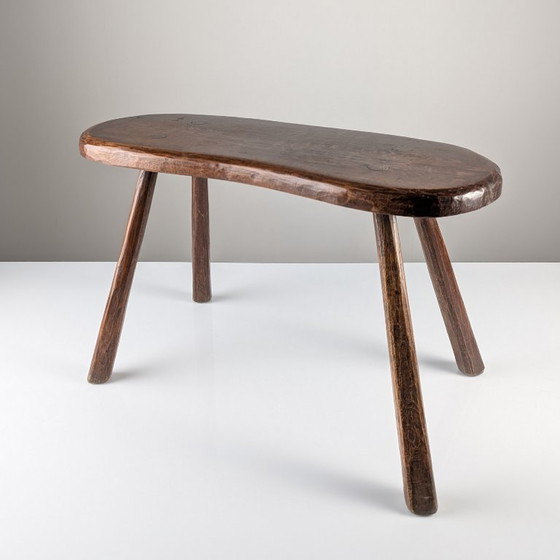
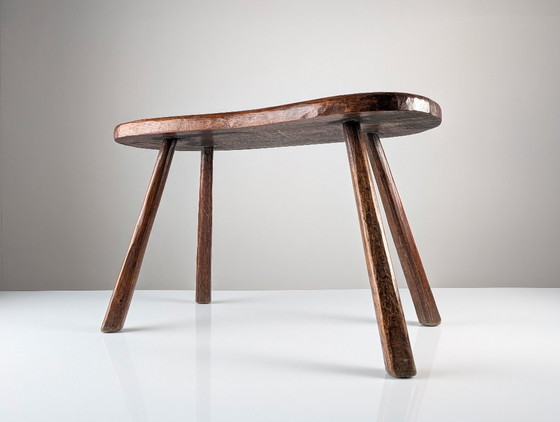
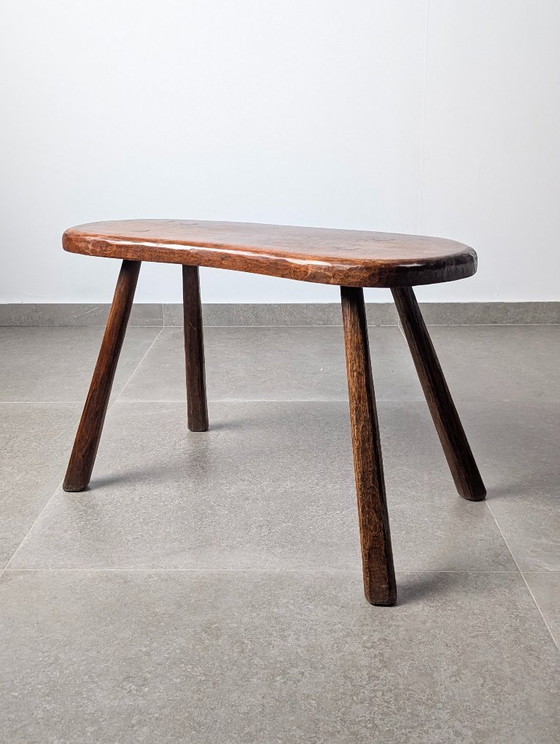
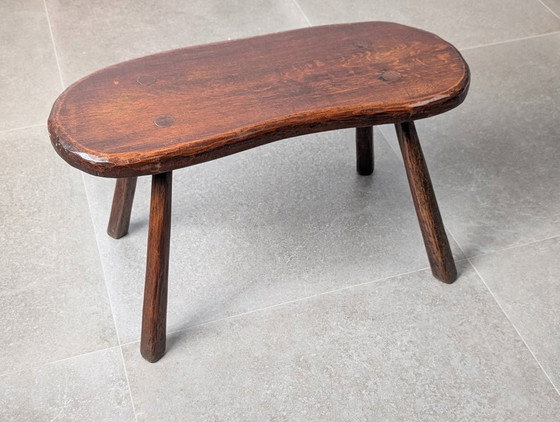
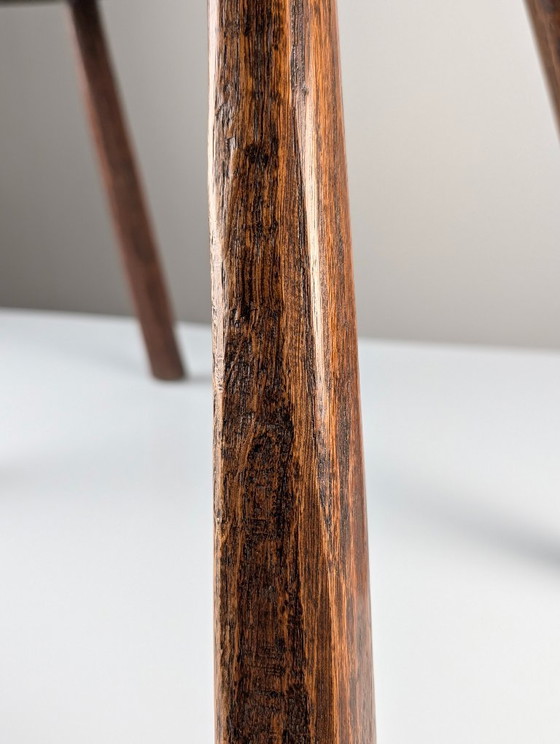
Rustic Hand-Carved Wood Bench With Organic Free-Form Top, 1940s
€1,600Bid from €800
Buy with confidence
Shop & pay safely with Buyer ProtectionDesigner items curated by WhoppahWe only pay the seller once you have safely received the itemTrusted payment methods


About this seller
ProfessionalBenalmádena, SpainOn Whoppah since October 2024 • 18 sales
Product description
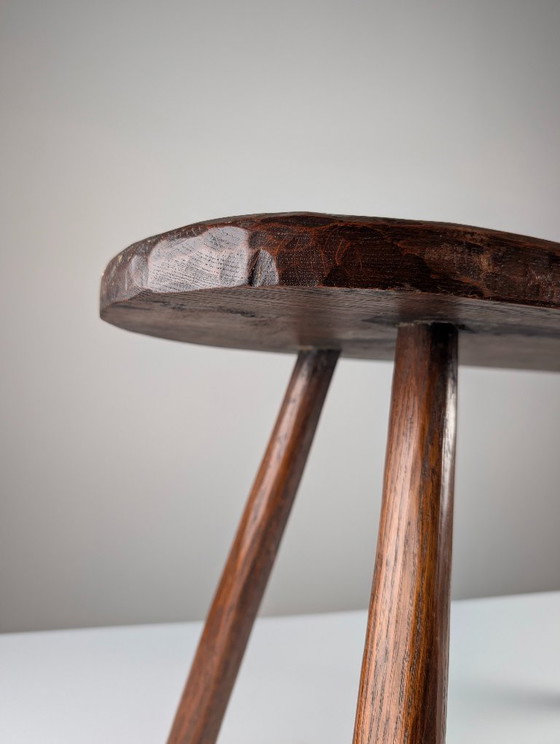
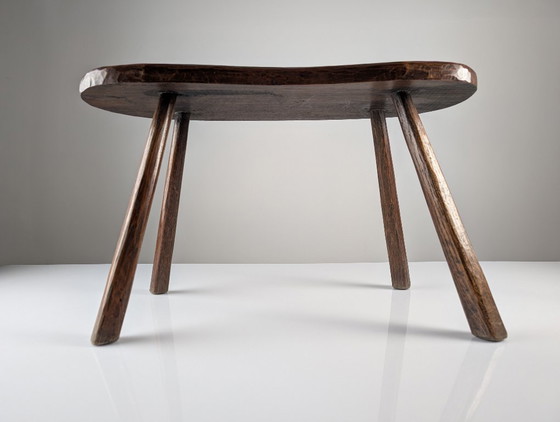
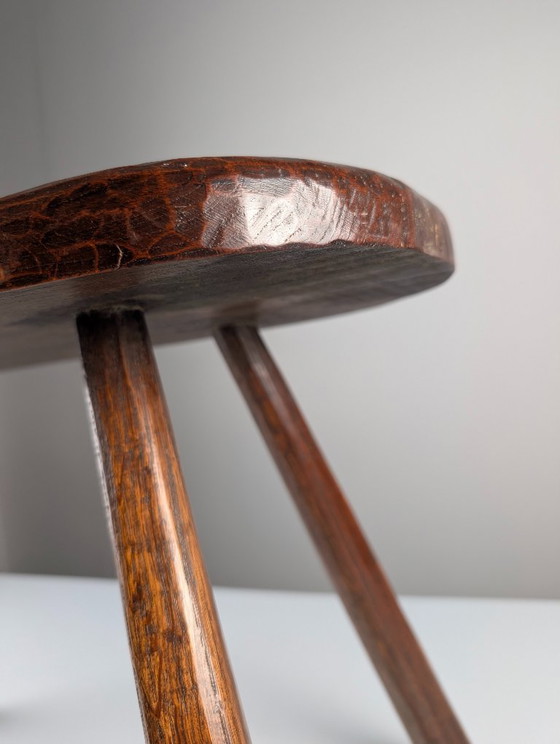
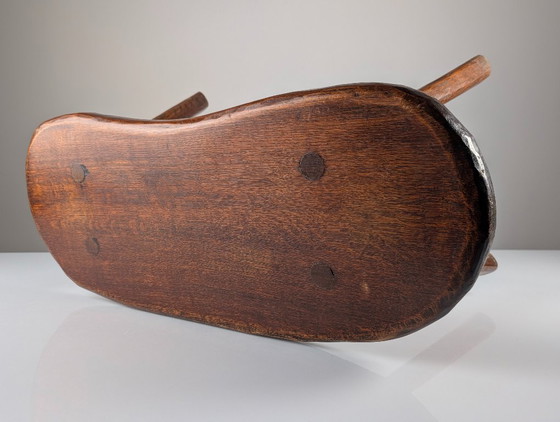
This bench was hand-carved from a single thick slab of dark hardwood in the 1940s, reflecting the wabi-sabi sensibility that favors irregular, organic forms over strict symmetry. The top follows the natural curve of the timber rather than a straight rectangular line, tapering gently at both ends and widening toward the center, so no two edges repeat the same profile. Four splayed round legs, turned by hand, angle outward from the underside and are joined with visible dowel pegs set flush into the seat. The wood carries a deep brown tone with reddish undertones, and the grain runs freely across the surface, following the shape of the trunk or root section it was cut from. Wide enough to seat two people or serve as a long occasional table, this bench suits a hallway, an entryway, or a spot at the foot of a bed, and its sculptural silhouette also works well as a plinth for objects or plants in a living room. Pieces like this, carved rather than joined from milled boards, are typical of mid-century rural workshops that prized irregular grain and knots as part of the design rather than flaws to be hidden. The result reads as much like a small sculpture as a functional seat, and it fits naturally alongside other primitive or organic-form furniture from the same period.
Specifications
ConditionGoodColorsBrownMaterialWoodNumber of items1Height45 cmWidth75 cmDepth30 cmSeat height45 cm
Discover more
Seller information
About this seller
ProfessionalBenalmádena, SpainOn Whoppah since October 2024 • 18 sales