Have it delivered hassle-freeBuyer protectionAll Designer items curated by WhoppahDownload the Whoppah App – get alerts & sell with ease.
Have it delivered hassle-free
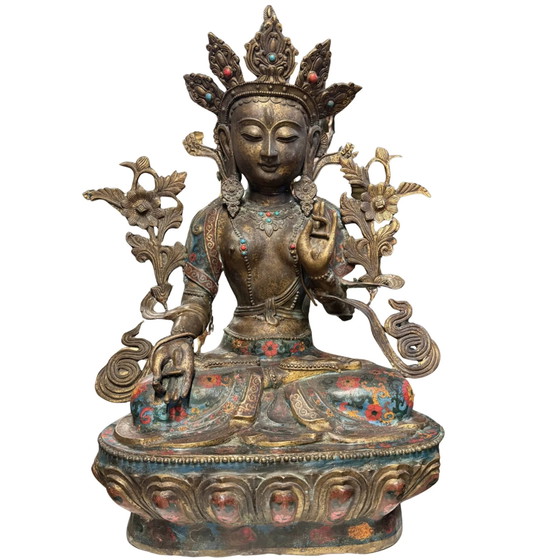
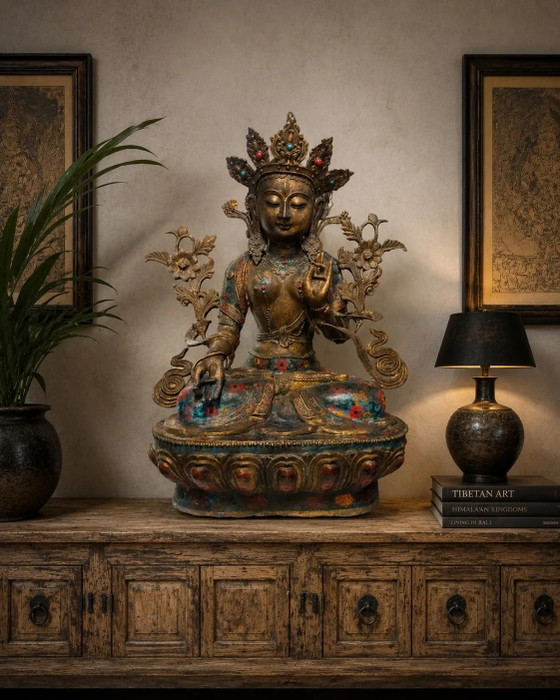
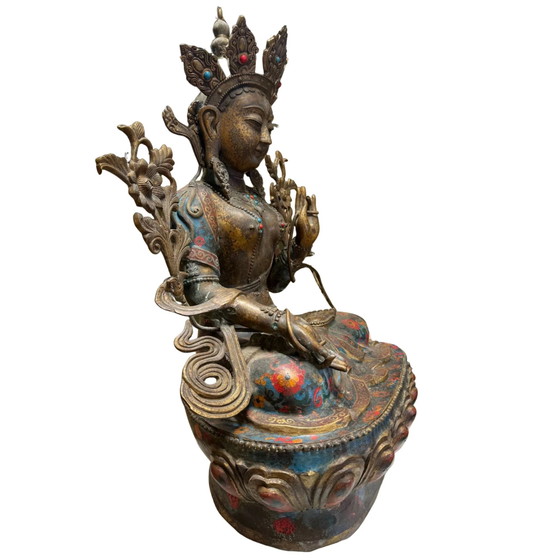
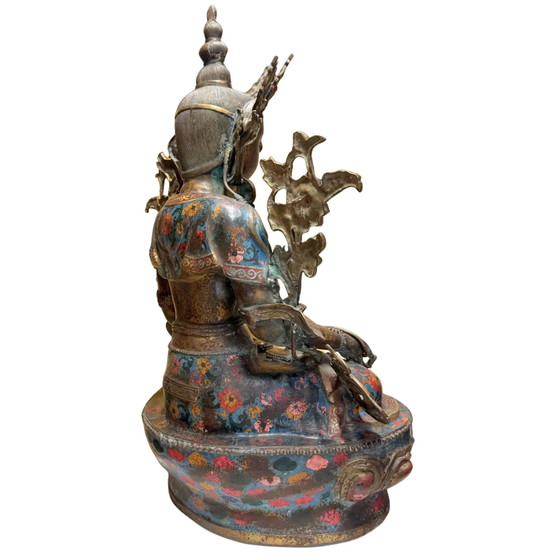
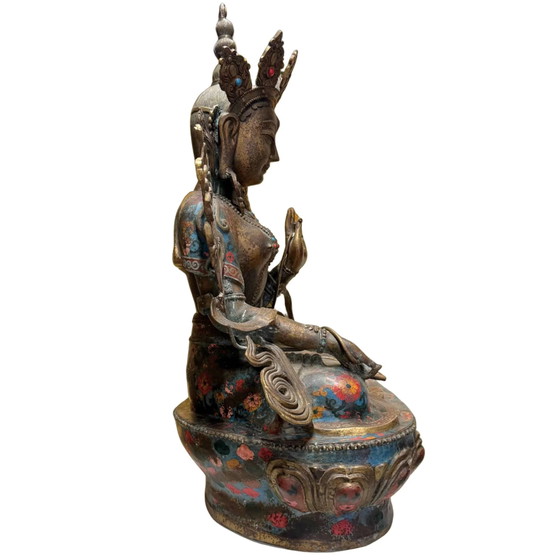
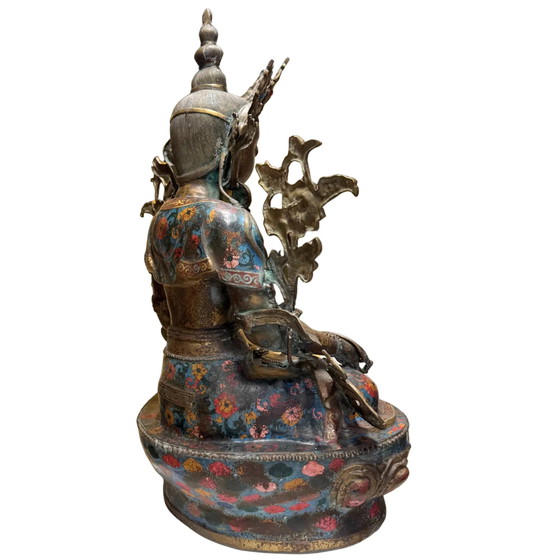
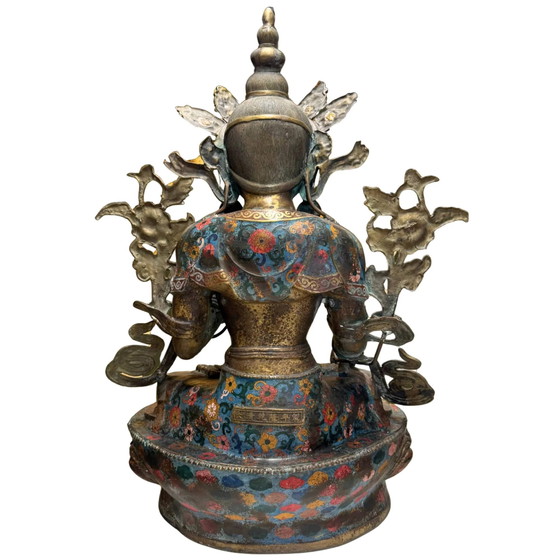
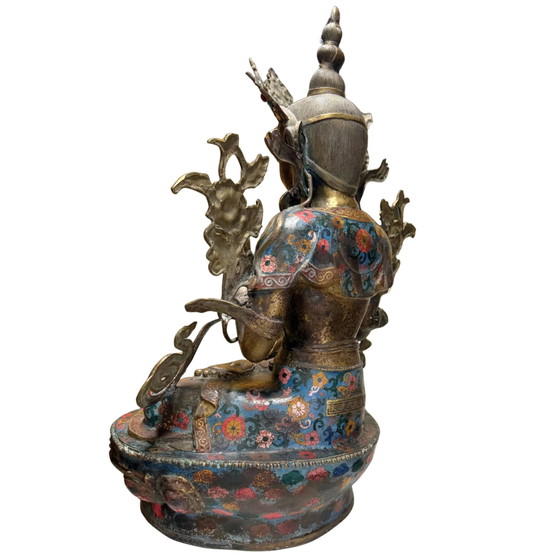
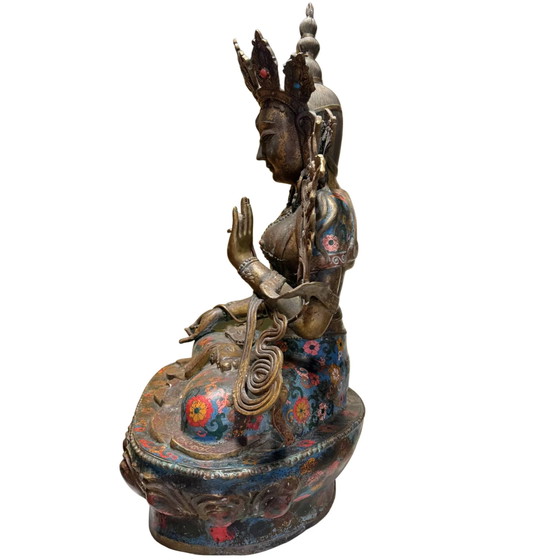
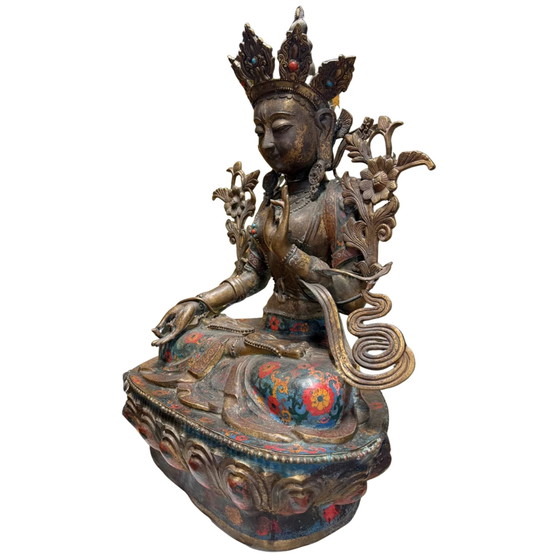
Monumental White Tara Sitatara – Late Qing Dynasty – 80 cm – 26.2 kg Gilded Bronze & Cloisonné
€34,000Bid from €30,600
Buy with confidence
Shop & pay safely with Buyer ProtectionDesigner items curated by WhoppahWe only pay the seller once you have safely received the itemTrusted payment methods


About this seller
Private sellerDamme, GermanyOn Whoppah since February 2025 • 3 sales
Product description
A Monumental 19th Century Altarpiece
This monumental sculpture of White Tara (Sitatara) is a rare masterpiece from the late Qing Dynasty (c. 1870–1900). With an impressive height of 80 cm and a weight of over 26.2 kg, this object serves as a spiritual anchor in any space. In the Sino-Tibetan tradition, White Tara is known as the 'Mother of all Buddhas,' ceaselessly watching over the well-being of all living beings from her seven eyes.
Spiritual Significance and Symbolism
In line with 1stbuddha's philosophy, priority is given to the spiritual and symbolic meaning of this object over purely decorative attributes. The seven eyes — located in the face (including the third eye of wisdom), the palms of the hands, and the soles of the feet — represent her all-seeing compassion and her ability to perceive every living being in every realm. Her hand gestures (Mudras) of blessing and teaching remind the observer that compassion and wisdom are the fundamental pillars of a fulfilled life.
Scientific Research & Forensic Findings
At 1stbuddha, we employ a rigorous, scientific approach to the validation of antiques. This object has been extensively analyzed using Dino-Lite microscopy and UV-spectral analysis. Our key findings substantiate the historical substance of this masterpiece:
Corrosion Analysis of the Base: The original iron base plate has completely degraded (rusted away) over a period of at least 100 to 130 years. The remaining rust ring on the bronze flange is the result of a long-term electrolytic process between the iron and the nobler bronze. This is irrefutable evidence of the claimed age.
Microscopic Metal Structure: Dino-Lite images reveal clear, manual file marks beneath the patina. The presence of deeply rooted verdigris (copper oxide) crystallized directly within these file marks proves that the metal was manually finished by a craftsman decades ago and has since undergone a natural oxidation process.
Enamel Degradation (Cloisonné): The blue and red enamel shows microscopic pitting and gas bubbles (pinholes). This indicates the use of traditional 19th-century kilns where temperature variations caused gases to escape from the glass mass. Furthermore, mineral efflorescences are visible, indicating long-term exposure to varying atmospheric conditions.
UV-Spectral Analysis (365nm): UV light examination confirms the presence of authentic mineral pigments. The characteristic blue-green fluorescence of the turquoise enamel is typical for copper and cobalt oxides from the late Qing period and is absent in modern synthetic reproductions. A small, bright green spot beneath the cartouche indicates a historically justifiable repair or reinforcement, underscoring the object's authenticity.
Iconographic Mass: Weighing 26.2 kg, this is a very thick-walled casting. The stability and substance of this bronze indicate precious production, originally made for a temple or a very wealthy private altar during the Imperial Revival period.
Technical Specifications
Object: Monumental White Tara (Sitatara)
Period: Late Qing Dynasty (c. 1870–1900)
Dimensions: Height: 80 cm | Width: 56 cm
Weight: 26.2 kg
Technique: Lost-wax casting, Gilt bronze, Cloisonné enamel
Mark: Apocryphal Qianlong mark in relief (Imperial Revival)
This sculpture bears the scars of time as testament to its history. Where the iron plate has perished, the bronze essence of White Tara has remained indestructible. An undisputed masterpiece for the serious collector who values forensic integrity.
Additional details:
- Brand: 1stbuddha
- Style: Sino-Tibetaanse
- Style: Imperial Revival
- Material: Verguld Brons
- Material: Cloisonné
- Colour: Goud
- Period: Late Qing-Dynastie (ca. 1870–1900)
- availability: in_stock
- product_type: Beeld / sculptuur
Specifications
CategorySculptureConditionVery goodColorsRed, White, Blue, TurquoiseSeller locationDamme, GermanyDelivery optionsDelivery or pickup
Discover more
Seller information
About this seller
Private sellerDamme, GermanyOn Whoppah since February 2025 • 3 sales