Have it delivered hassle-freeBuyer protectionAll Designer items curated by WhoppahDownload the Whoppah App – get alerts & sell with ease.
Have it delivered hassle-free
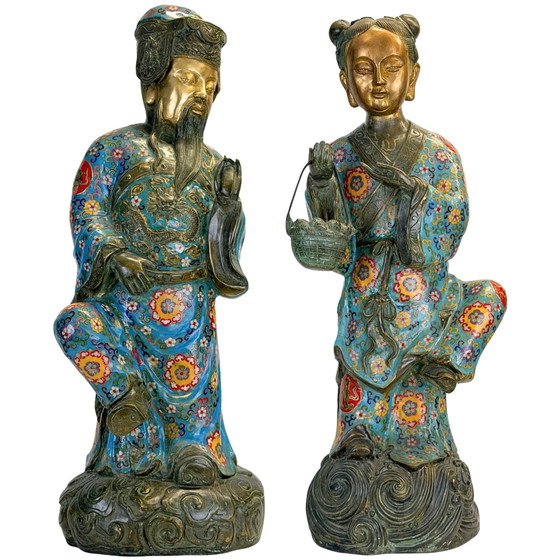
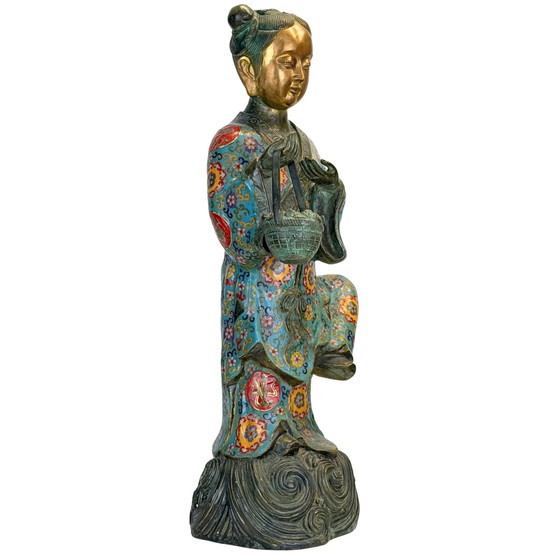
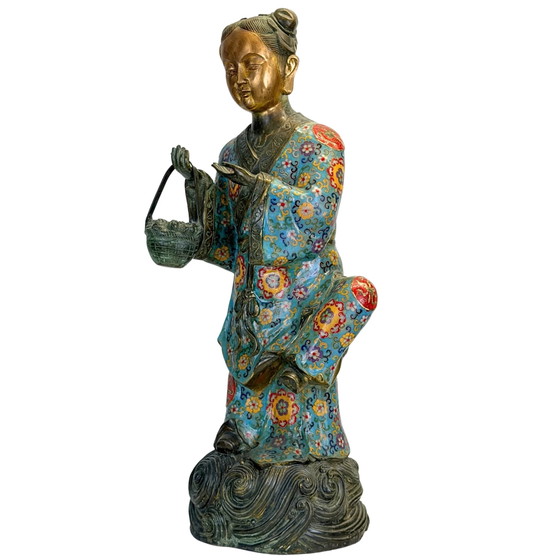
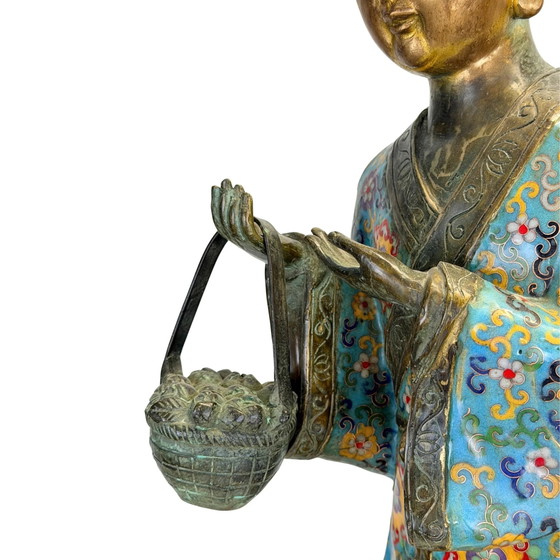
Monumental Chinese Cloisonné Pair Lü Dongbin & Lan Caihe – Qing 19th Century
€42,500Bid from €38,250
Buy with confidence
Shop & pay safely with Buyer ProtectionDesigner items curated by WhoppahWe only pay the seller once you have safely received the itemTrusted payment methods


Private seller: no right of withdrawal, but you get your money back if the item significantly differs from the description. Return policy
About this seller
Private sellerDamme, GermanyOn Whoppah since February 2025 • 3 sales
Product description
Monumental Chinese Cloisonné Pair Lü Dongbin & Lan Caihe
Also view the extensive research and appraisal file with more than 30 additional detail and microscope photos: Full appraisal & technical research →
Origin: China
Period: Qing Dynasty, 19th century, c. 1850–1900
Material: Cloisonné enamel on copper alloy/bronze, with gilded sections
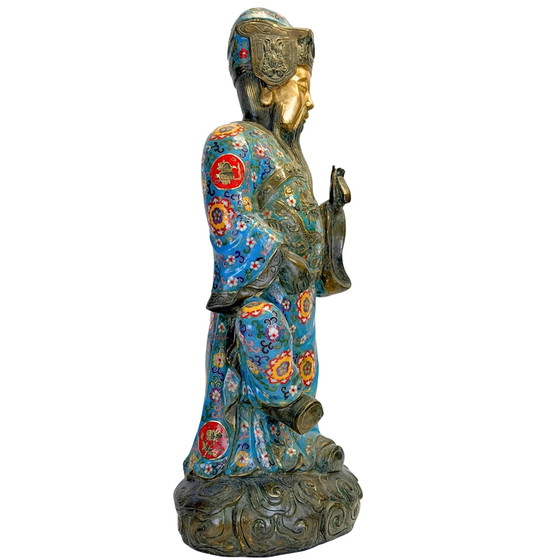
Lü Dongbin: H 79 × W 29 cm; 20.8 kg
Lan Caihe: H 76 × W 34 cm; 20.2 kg
Combined weight: approximately 41 kg
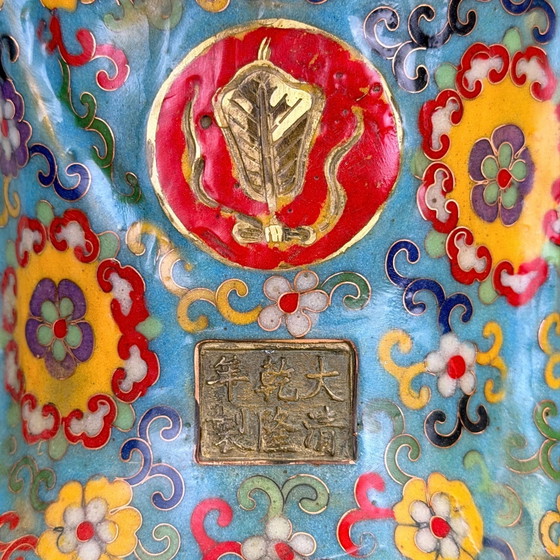
Mark: Six-character Qianlong reign mark, 大清乾隆年製, here judged as apocryphal
Two of the Eight Immortals
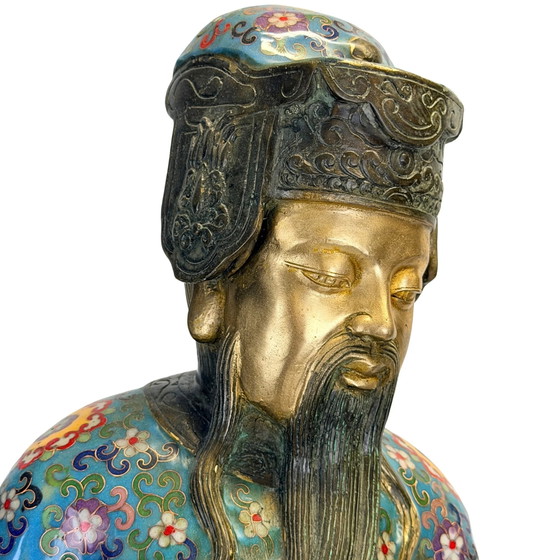
This monumental pair depicts Lü Dongbin and Lan Caihe, two figures from the Daoist Eight Immortals. Lü Dongbin is depicted as the bearded scholar with a formal headdress; Lan Caihe carries the characteristic flower basket and displays the youthful, lively posture associated with this figure.
An Baxian on the Robes
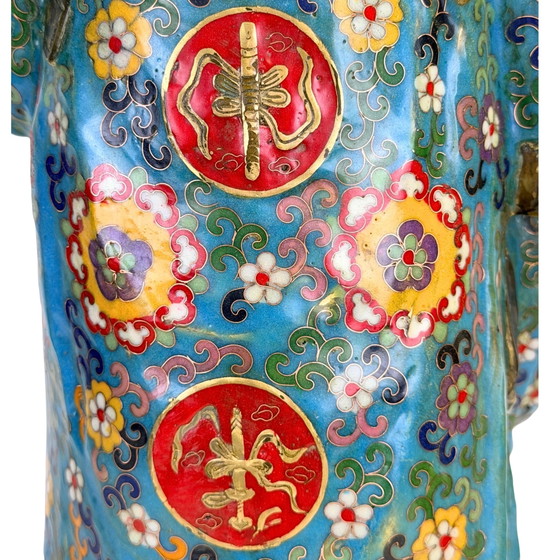
The red medallions on the richly enameled robes contain the An Baxian: the symbolic attributes of the Eight Immortals. Thus, the pair not only forms a sculptural ensemble but also a fully developed Daoist iconographic program.
Cloisonné, Patina, and Old Restoration
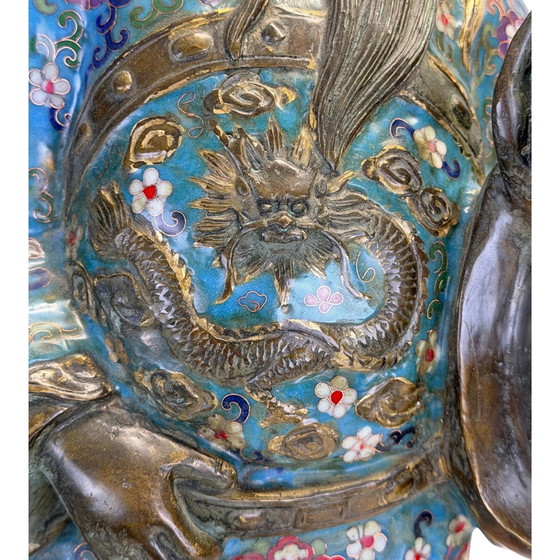
The heavy metal bodies are fully adorned with cloisonné enamel in turquoise, red, yellow, green, blue, purple, and white. The surfaces show old wear, pitting, localized enamel losses, remnants of gilding, and brown to greenish oxidation. The faces were re-gilded at a later stage; neck, hair, hands, and other metal parts retain an older patina.
Qianlong Mark and Dating
A rectangular mark plate with 大清乾隆年製 is located on the robe. The dating of the pair is not based on this inscription: technical execution, wear patterns, construction, and style place the ensemble in the 19th century, circa 1850–1900. The mark is therefore described as an apocryphal Qianlong mark.
Provenance
According to the passed-down provenance, the pair was already in Europe in the 1960s. It is said to have originated from the inventory of a Chinese restaurateur and subsequently remained in a single private collection for decades, until the owner's passing in 2024.
Additional details:
- Brand: 1stbuddha
- Style: Chinees
- Material: cloisonné-email
- Material: koperlegering
- Material: verguld metaal
- Colour: verguld
- Period: Qing-dynastie, 19e eeuw, ca. 1850–1900
Specifications
CategorySculptureConditionGoodColorsRed, Turquoise, Purple, Blue, Yellow, White, GreenMaterialBronzeSeller locationDamme, GermanyDelivery optionsDelivery or pickup
Discover more
Seller information
About this seller
Private sellerDamme, GermanyOn Whoppah since February 2025 • 3 sales