Have it delivered hassle-freeBuyer protectionAll Designer items curated by WhoppahDownload the Whoppah App – get alerts & sell with ease.
Have it delivered hassle-free
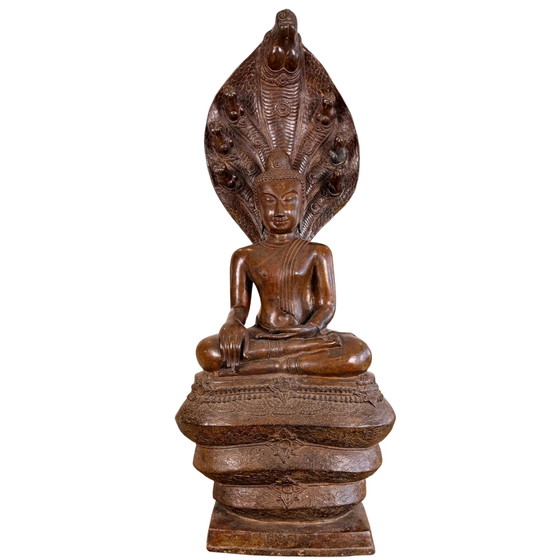
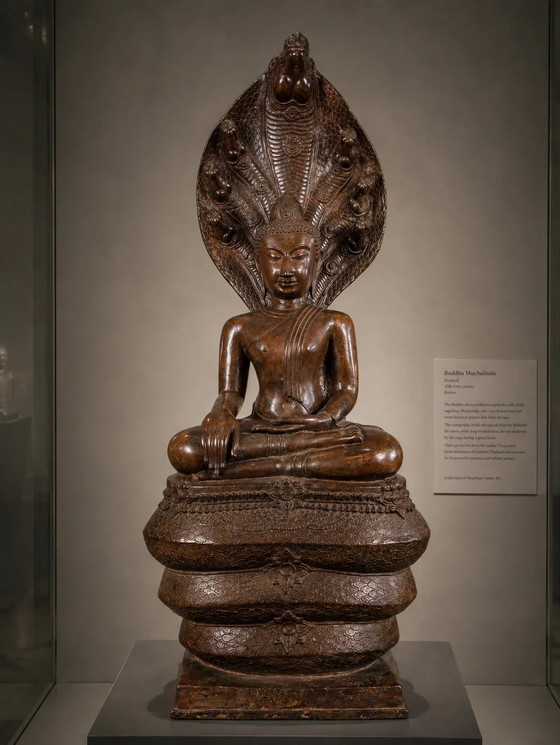
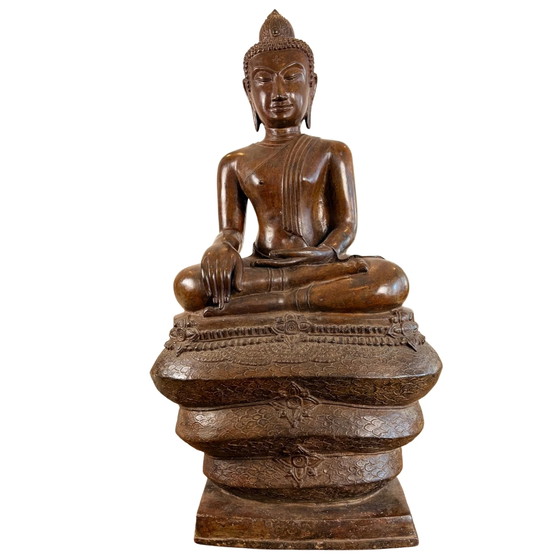
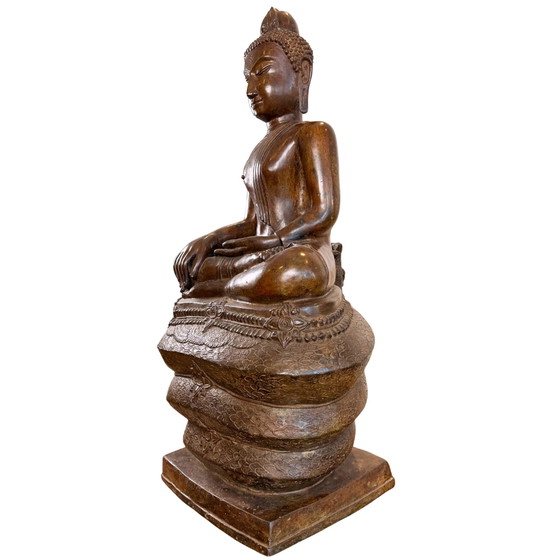
Monumental Bronze Buddha Muchalinda – Thailand, 13th–14th Century – 122 cm
€295,000Bid from €265,500
Buy with confidence
Shop & pay safely with Buyer ProtectionDesigner items curated by WhoppahWe only pay the seller once you have safely received the itemTrusted payment methods


About this seller
Private sellerDamme, GermanyOn Whoppah since February 2025 • 3 sales
Product description
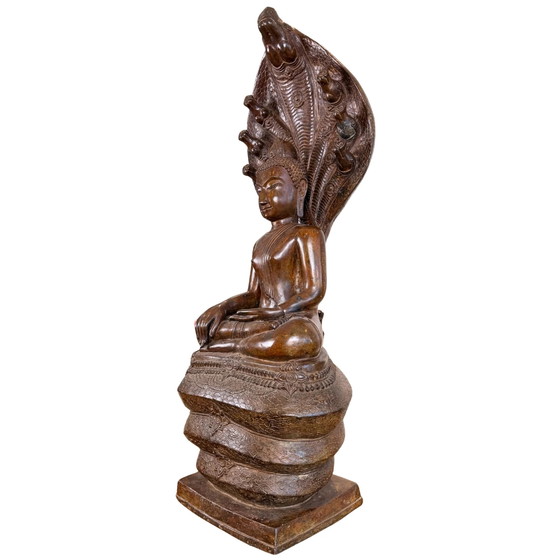
Monumental Bronze Buddha Muchalinda – Thailand, probably late 13th–14th century
Age: probably late 13th–14th century
Material: hollow cast bronze / copper alloy, with preserved original casting core
Height: 122 cm
Origin: Thailand, Grahi/Chaiya-derived tradition
Depiction: Buddha Muchalinda / Naga-Protected Buddha
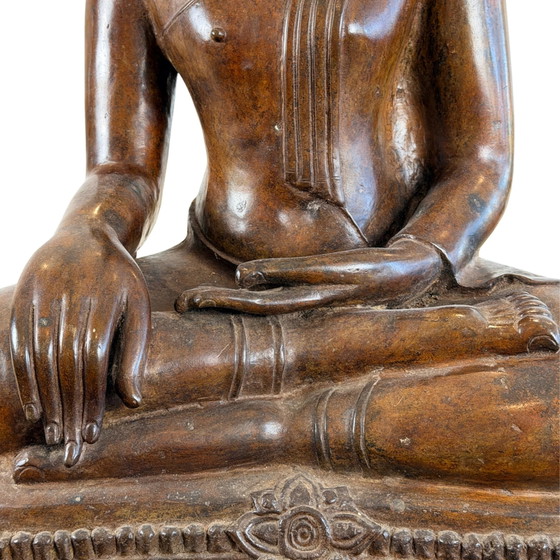
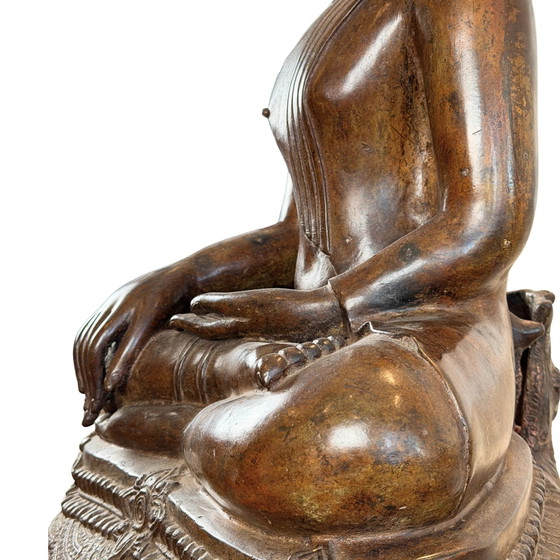
Mudra: bhumisparsha mudra with the right hand; left hand resting in meditation posture
A monumental continuation of the Grahi type
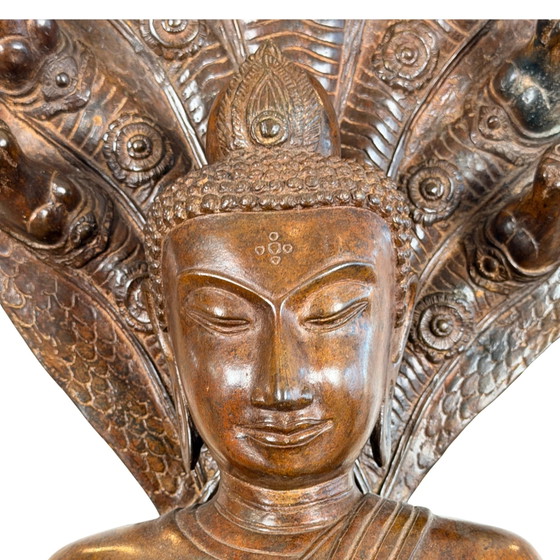
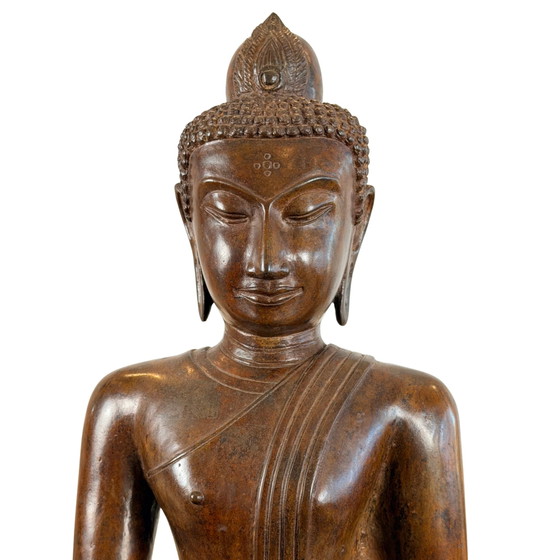
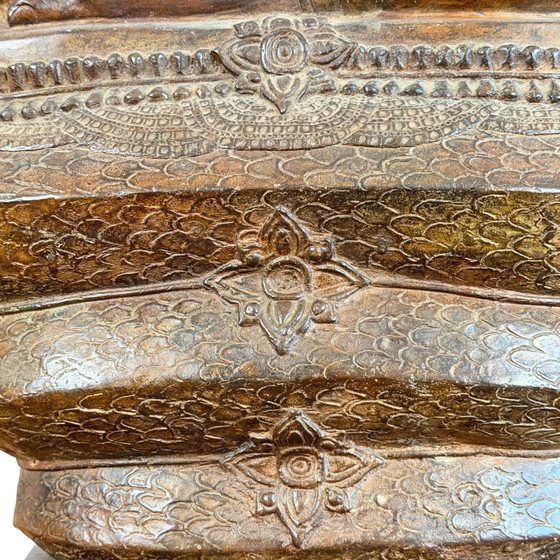
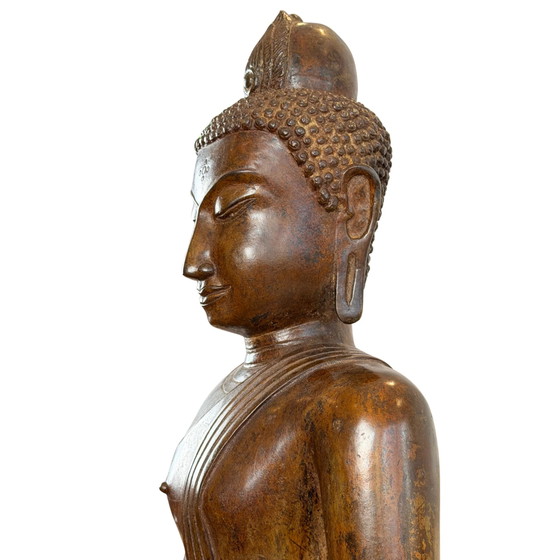
This exceptionally large bronze depiction shows the Buddha seated on the coiled naga Muchalinda, protected by a monumental seven-headed serpent hood. The composition clearly stands in the tradition of the famous Buddha of Grahi from Chaiya in Southern Thailand, one of the most important early bronze Muchalinda depictions from the region. However, the present sculpture does not appear to be a literal reproduction of that earlier prototype. Especially the face shows a more developed Thai iconography: an elongated straight nose, strongly arched eyebrows, half-closed almond-shaped eyes, a refined smile, and a high, leaf-like crowning above the ushnisha. These characteristics point to a later phase in which the older Chaiya and Khmer traditions were combined with the developing central Thai aesthetic. Based on this combination, the sculpture is tentatively placed in the late 13th to 14th century, possibly within an early U-Thong or related Thai tradition. A later dating cannot be completely ruled out without laboratory research; the current attribution is based on stylistic, technical, and comparative study.
Fivefold Urna and Iconography
On the forehead there is a striking fivefold, ring-shaped urna marking: one larger central circle surrounded by four smaller rings. This is not a standard feature of most Thai Buddha images and constitutes an important iconographic detail of the object. Its precise ritual or cosmological significance is still subject to research. The combination of this marking, the Muchalinda motif, and the archaic naga structure makes the sculpture unique within Thai bronze sculpture.
Construction and Technical Examination
The sculpture is monumental and traditionally hollow-cast using the lost-wax technique. The Buddha, the naga coils, and the heavy naga hood form a complex multi-part construction. The separately mounted naga hood is estimated to weigh approximately 35–40 kg. Internally, a significant amount of the original earthenware casting core has been preserved. This consists of reddish-orange iron-rich clay with dark grey reduced zones and localized organically tempered material. Remnants of internal metal core supports and the original mounting structure are also visible. Microscopic examination of the surface reveals multiple historical finishing phases. Beneath the current dark brown patina, yellow-ochre colored preparatory layers and localized very small metallic gold residues are visible, consistent with earlier gilding. UV examination also shows heterogeneous remnants of older organic surface treatments.
Condition
The surface possesses a deep, layered patina with long-term signs of use and maintenance, localized wear, and remnants of earlier finishing layers. Strong old contact marks are visible around the historical mounting of the naga hood. Due to the monumental hand-cast construction, the sculpture does not stand perfectly upright, and the heavy naga hood requires careful positioning to connect correctly. The mounting zone also contains later stabilization and repair materials. These are separately identifiable and and are not used as evidence for the object's dating. The asymmetry, historical assembly, original core, and various surface phases make the technical history of this sculpture exceptionally readable.
Research and Comparison
An important comparison is the monumental Buddha of Grahi from Chaiya, Thailand, currently preserved in the Bangkok National Museum. The present sculpture follows the same fundamental iconographic concept but translates it into a more developed Thai style. This object is therefore presented by 1stBuddha not exclusively as a decorative sculpture, but as an important research and collector's item within the history of monumental Thai bronze sculpture.
Additional details:
- Brand: 1stbuddha
- Style: Grahi
- Style: Chaiya
- Style: Khmer
- Style: U-Thong
- Style: Thaise
- Material: Koperlegering
- Material: Klei
- Colour: Donkerbruin
- Colour: Geel-oker
- Colour: Goud
- Period: 13e–14e Eeuw
- availability: in_stock
Specifications
CategorySculptureConditionGoodMaterialBronze, GoldSeller locationDamme, GermanyDelivery optionsDelivery or pickup
Discover more
Seller information
About this seller
Private sellerDamme, GermanyOn Whoppah since February 2025 • 3 sales