Have it delivered hassle-freeBuyer protectionAll Designer items curated by WhoppahDownload the Whoppah App – get alerts & sell with ease.
Have it delivered hassle-free
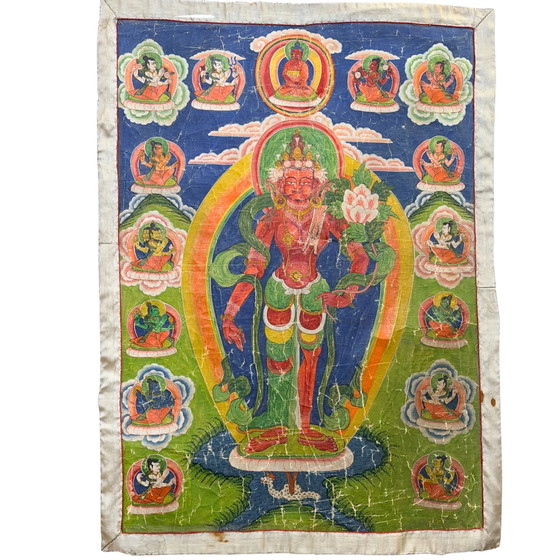
Monumental 19th-century Nepalese Newar Paubha of Rakta Tara – Red Tara of Wish Fulfillment and Prosperity – 120 cm
€4,950Bid from €4,455
Buy with confidence
Shop & pay safely with Buyer ProtectionDesigner items curated by WhoppahWe only pay the seller once you have safely received the itemTrusted payment methods


About this seller
Private sellerDamme, GermanyOn Whoppah since February 2025 • 3 sales
Product description
Dimensions: H 120 × W 73 cm including textile mounting
A monumental 19th-century Nepalese thangka / Newar paubha with a rare depiction of Rakta Tara (Red Tara). The goddess appears as a red-colored, richly adorned female figure, standing in an elegant tribhanga posture on a lotus base and surrounded by an extensive pantheon of smaller deities. While religious paintings from Nepal's Newar tradition are traditionally called paubha, the term thangka is internationally much better known. This 19th-century work belongs to that broader Himalayan tradition where Nepalese and Tibetan Buddhist painting influenced each other for centuries.
**Rakta Tara – the Red Tara**
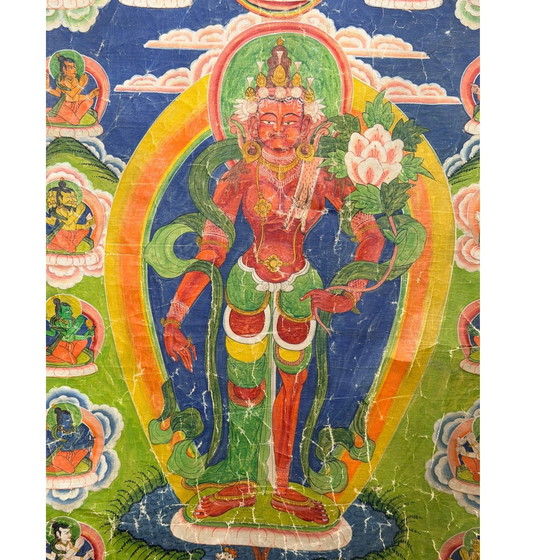
Central to this piece is Rakta Tara, literally the Red Tara. She is depicted with two arms, a distinctly feminine physique, richly elaborated jewelry, and a high crown. Her red body color gives the composition exceptional visual power. Her right hand is open downwards in Varada Mudra, the traditional gesture of generosity, blessings, and the granting of wishes. With her left hand, she holds the long stem of a large blooming lotus that rises beside her shoulder. Also striking is the spotted animal hide draped over her left shoulder, an unusual iconographic element clearly visible between her jewelry and robes.
**Red Tara – prosperity, wish-fulfillment, and magnetizing power**
Within the Tantric-Buddhist tradition, red is associated with magnetizing activity: attracting favorable circumstances, relationships, opportunities, and the means necessary to overcome obstacles. In combination with the Varada Mudra, the depiction acquires a powerful symbolism of generosity, prosperity, abundance, and wish-fulfillment. The lotus simultaneously represents spiritual purity and the ability to transcend the limitations of ordinary existence. Rakta Tara thus combines feminine compassion with active power: not only protection against adversity but also the creation of conditions in which both material and spiritual development become possible.
**A monumental Newar composition**
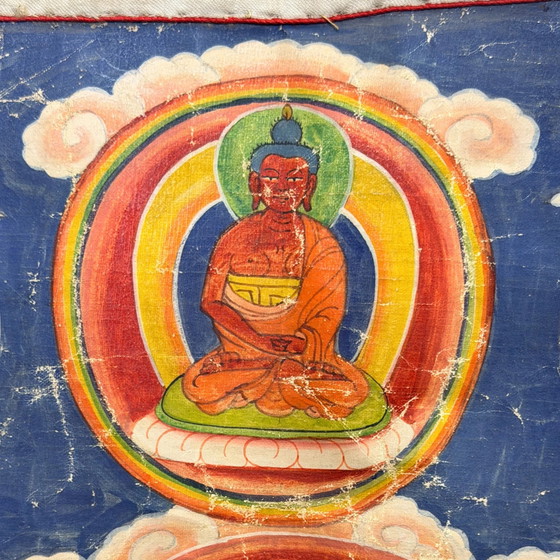
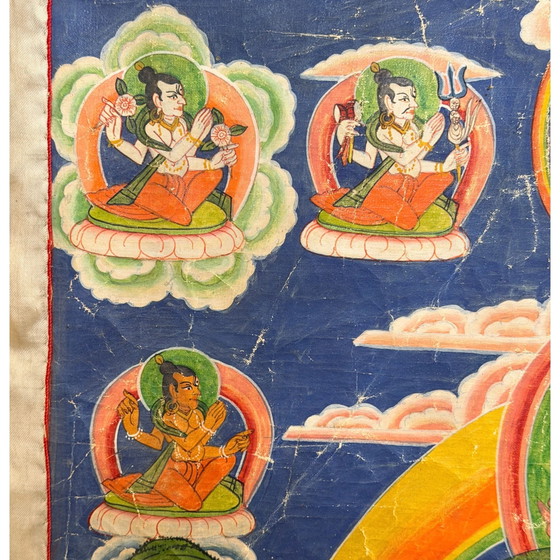
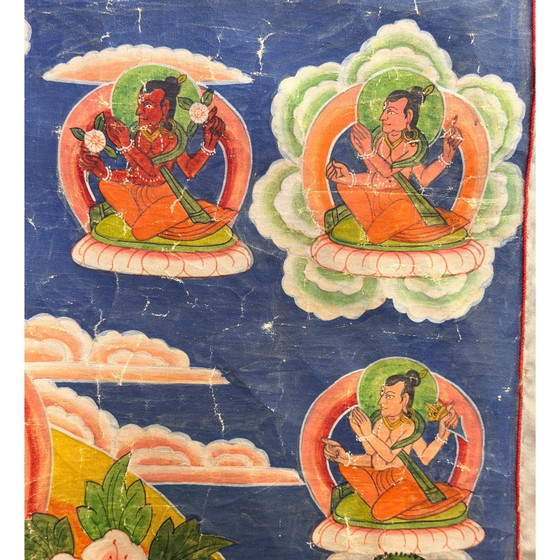
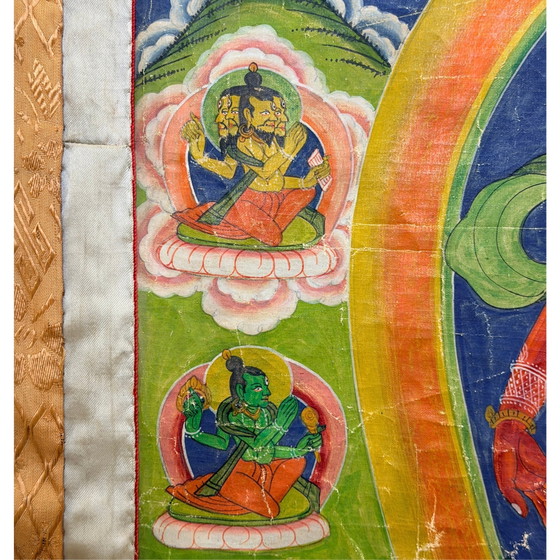
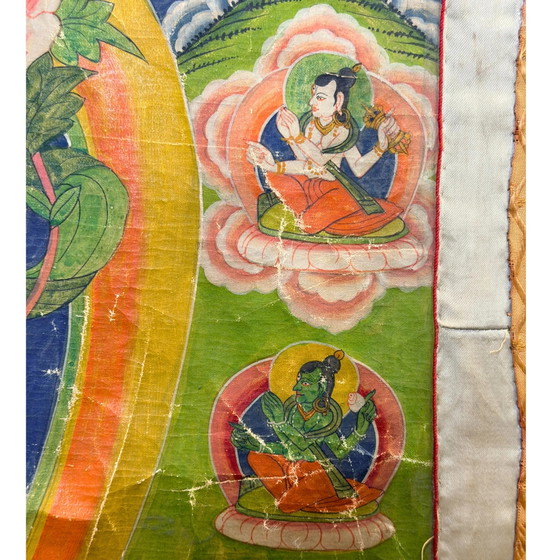
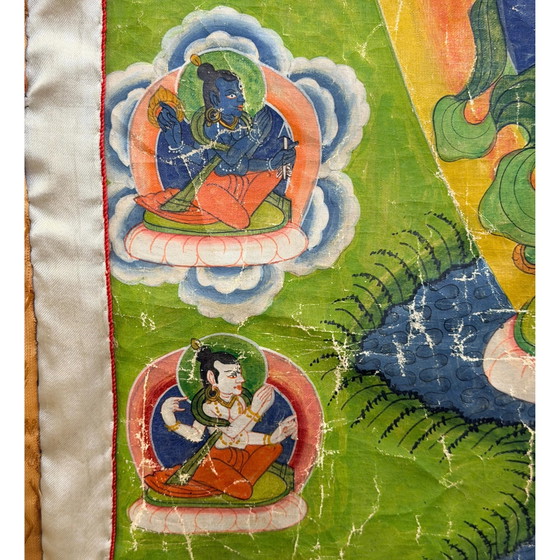
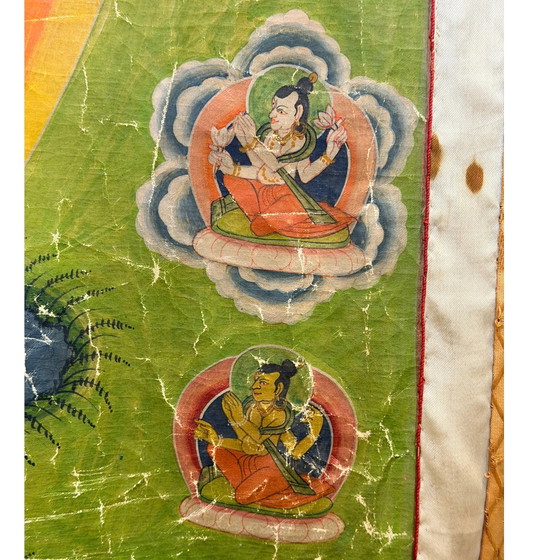
Surrounding the central Red Tara is an extensive pantheon of smaller deities. They appear individually within round aureoles and cloud formations and are depicted in various body colors, postures, and with diverse attributes. The almost symmetrical arrangement of these figures, the intensely saturated red, green, blue, and yellow color fields, the richly decorated crown and jewelry, and the precise linearity are consistent with the characteristic visual language of Newar painting from Nepal. Up close, a world of individual deities, jewels, lotus flowers, robes, and ritual details unfolds. From a greater distance, everything forms one powerfully organized religious image around the monumental central goddess.
**Thangka and paubha – Nepalese painting tradition**
The traditional Nepalese name for such a religious painting is paubha. This art form was developed over centuries by Newar artists from the Kathmandu Valley. In Tibet, the closely related thangka tradition developed. Due to the intensive religious and commercial traffic between Kathmandu and Tibet, both traditions strongly influenced each other. Newar artists also worked for Tibetan patrons, and their painting played an important role within the broader art history of the Himalayas. Therefore, a work like this is also internationally recognized and sought after as an antique Nepalese thangka, while Newar paubha is the more specific art historical designation.
**19th-century art historical context**
For this rare type of Himalayan painting, important 19th-century parallels exist in international museum and auction collections. Himalayan Art Resources documents under item 65564 a monumental red Avalokiteshvara composition from the collection of the Rubin Museum of Art, attributed to Tibet and dated 1800–1899. The work also shows a large red central deity with a lotus, surrounded by an extensive pantheon of individual deities. Christie's also offered a Nepalese painting of a red deity within the well-known John C. and Susan L. Huntington Collection, cataloged as Nepal, probably 19th century. The powerful red central figure, deep blue background, round aureoles, and organized composition provide important points of comparison for the Newar painting tradition to which the work offered here also belongs. These museum and auction references serve as comparative material for the art historical context and do not constitute provenance of the object offered here.
**Nepalese export history – 2033 B.S. / 1976**
Particularly important is the old Nepalese lacquer/export seal preserved on the work. It bears the calendar year 2033 Bikram Sambat, corresponding to 1976 A.D. This means that this 19th-century thangka / paubha possesses a physically dated chapter from its later history: the painting was in Nepal in 1976 and was provided with the relevant export/inspection seal there. For an antique Himalayan painting, such a historical marking is particularly attractive. The object literally carries its travel history on its own surface.
**Authentic historical condition**
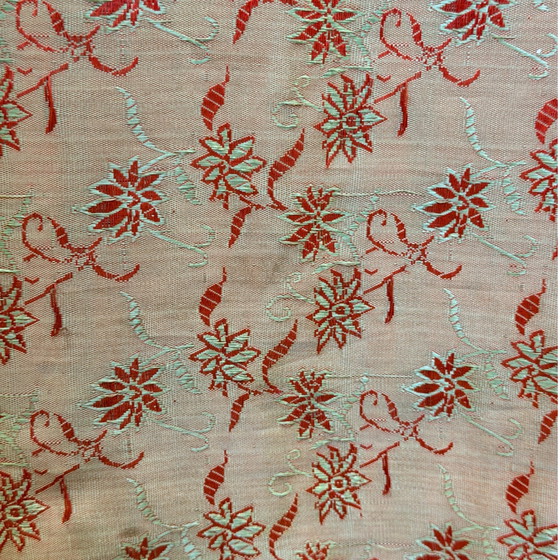
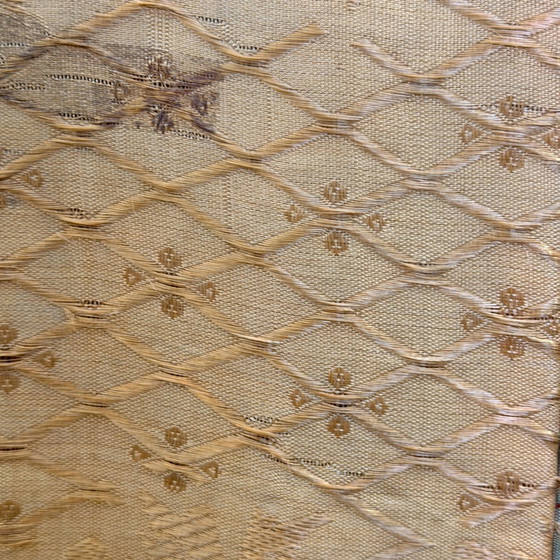
The thangka is in a distinctly historical and untouched condition. The painted surface shows old folding creases, craquelure, wear, localized discoloration, and pigment loss. The textile mounting also bears clear signs of age and prolonged use. Under strong magnification, the traditional painting technique and various pigment layers become clearly visible. The outlines are applied by hand, and natural variations in pigment density, brushwork, craquelure, and wear are present across the surface. These traces of use are an essential part of the work's character. The paubha has not been restored to an artificially perfect state: its long material history remains visible.
**An impressive size of 120 cm**
With a total height of 120 cm and a width of 73 cm, this antique Nepalese thangka has a monumental presence. The combination of its large size, the rare depiction of Rakta Tara, the extensive Newar iconography, its 19th-century dating, its historical condition, and the dated Nepalese export seal from 1976 makes this a particularly collectible example of religious painting from the Himalayas.
**Symbolism**
Rakta Tara: the Red Tara, female manifestation of compassion and active power
Red body color: magnetizing activity, transformation, and attracting favorable circumstances
Varada Mudra: generosity, blessings, and wish-fulfillment
Lotus: spiritual purity, awakening, and transformation
Standing tribhanga posture: grace, movement, and active presence
Surrounding pantheon: religious and protective forces around the central deity
**Specifications**
Object: antique thangka / Newar paubha
Depiction: Rakta Tara – Red Tara
Tradition: Newar / Himalayan Buddhism
Origin: Nepal, Kathmandu Valley
Period: 19th century
Technique: traditional pigments on prepared textile
Dimensions: H 120 × W 73 cm including textile mounting
Historical marking: Nepalese lacquer/export seal, 2033 B.S. / 1976 A.D.
Condition: authentic historical traces of use and age, craquelure, folding wear, discoloration, and localized pigment loss
A monumental 19th-century Nepalese thangka and Newar paubha of Rakta Tara, combining the powerful symbolism of the Red Tara with exceptional historical character and a dated Nepalese export history from 1976.
Additional details:
- Brand: 1stbuddha
- Style: Nepalese Newar
- Style: Himalayan Buddhist
- Period: 19e eeuw
- availability: in_stock
- product_type: Thangka / paubha
Specifications
CategoryPaintings & DrawingsConditionVery goodColorsYellow, Red, Blue, GreenMaterialTextileSeller locationDamme, GermanyDelivery optionsDelivery or pickup
Discover more
Seller information
About this seller
Private sellerDamme, GermanyOn Whoppah since February 2025 • 3 sales