Have it delivered hassle-freeBuyer protectionAll Designer items curated by WhoppahDownload the Whoppah App – get alerts & sell with ease.
Have it delivered hassle-free
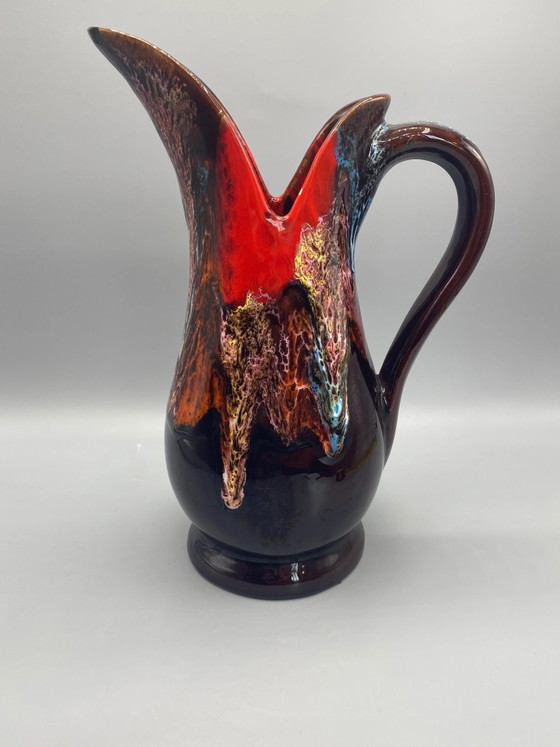
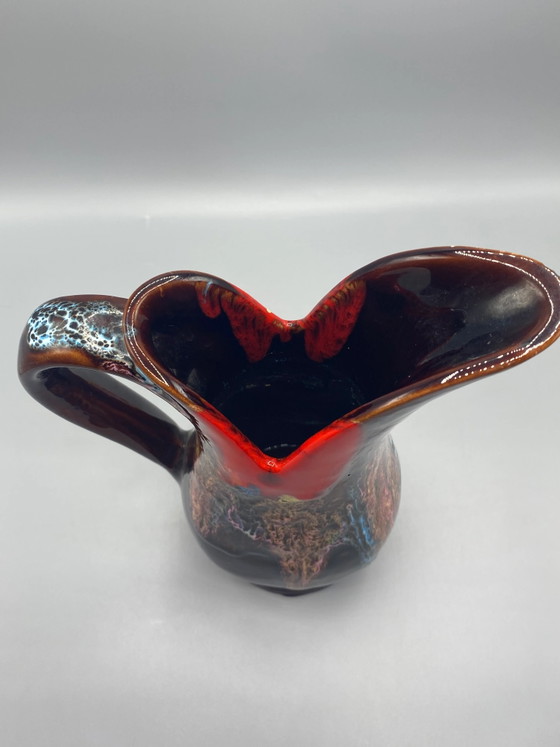
Large polychrome enameled ceramic ewer – Vallauris
€69Bid from €62.10
Buy with confidence
Shop & pay safely with Buyer ProtectionDesigner items curated by WhoppahWe only pay the seller once you have safely received the itemTrusted payment methods


About this seller
ProfessionalProduct description
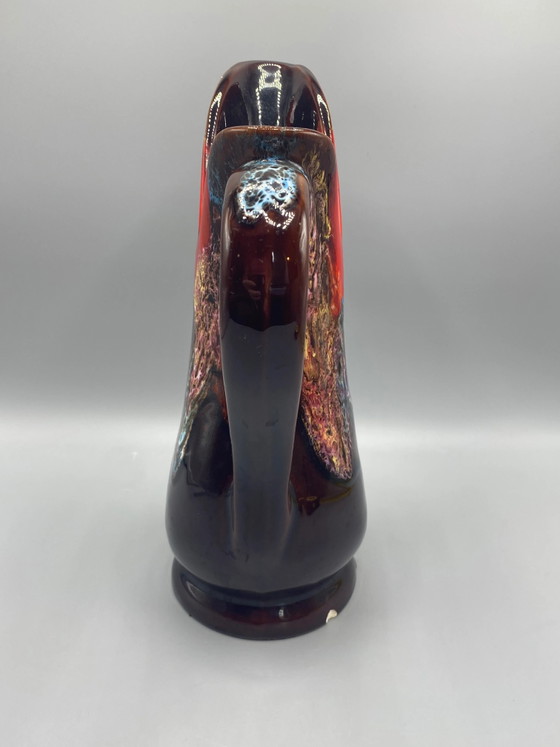
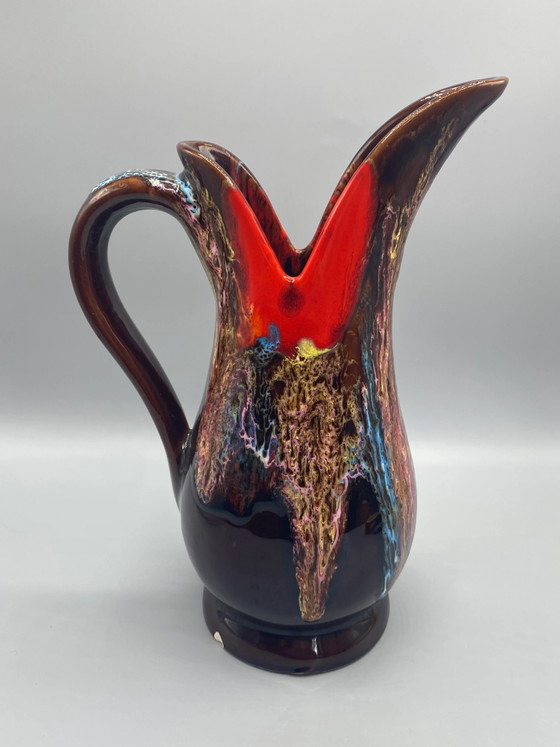
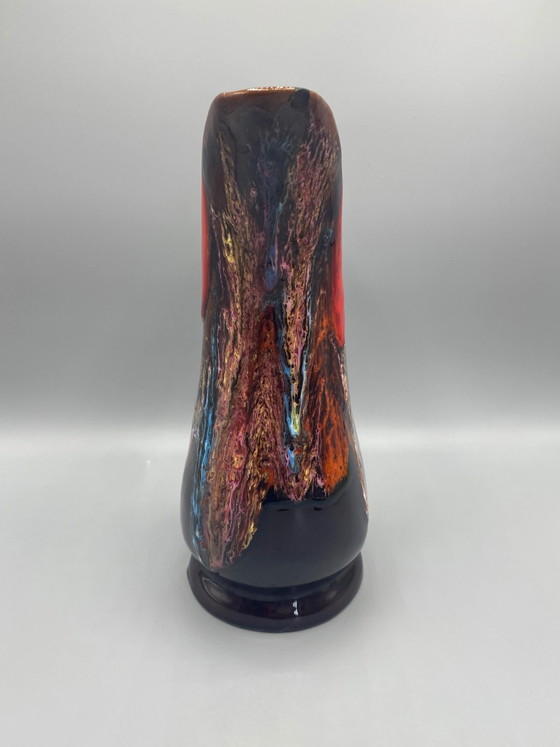
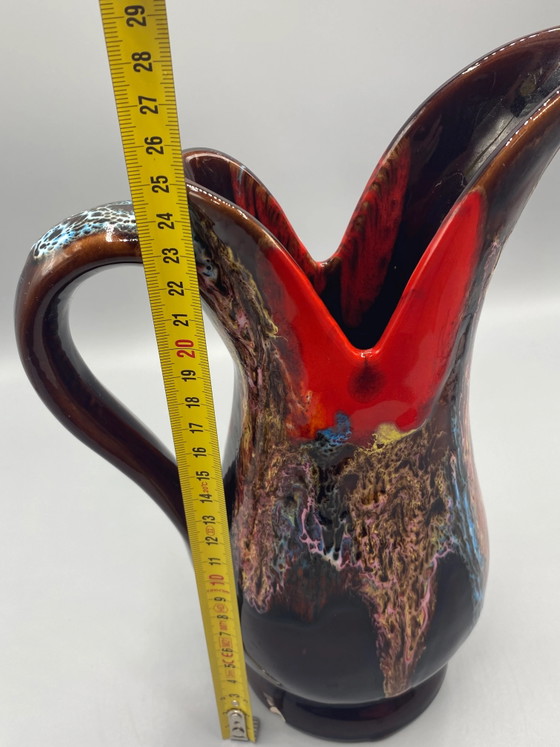
A large decorative ewer in Vallauris glazed ceramic, characteristic of this particularly fruitful period when workshops in the South of France turned ceramics into a true field of artistic expression. Its silhouette immediately possesses a strong presence. The generously curved body rests on a circular base before rising towards a very free opening, crafted with an asymmetrical movement. The long, raised spout unfolds with an almost vegetal elegance, while the large handle complements the height of the piece and perfectly balances the composition. At approximately 28 cm in height, this ewer far exceeds the simple utilitarian realm to become a sculptural decorative object.
The glaze work is particularly remarkable. Against a very deep brown base, almost black aubergine, an intense red stands out, enlivening the entire upper part. Polychrome glaze drips then flow across the belly in shades of blue, pink, yellow, cream, and brown. Their superposition creates very rich textural effects, sometimes frothy, sometimes almost volcanic, which give the surface constant depth and movement.
This aesthetic fully aligns with the revival of Vallauris ceramics during the post-war decades. Workshops then gradually abandoned strictly functional forms to explore freer silhouettes, asymmetrical openings, powerful color contrasts, and glazes with almost experimental effects. The pitcher, ewer, or vase thus became decorative objects in their own right, designed to attract the eye as much as to bear witness to the craftsmanship of their workshop. Through its design, the freedom of its opening, and the particularly expressive treatment of its glazes, this piece dates to the 1960s-1970s, with an aesthetic very close to the turn of the 1970s.
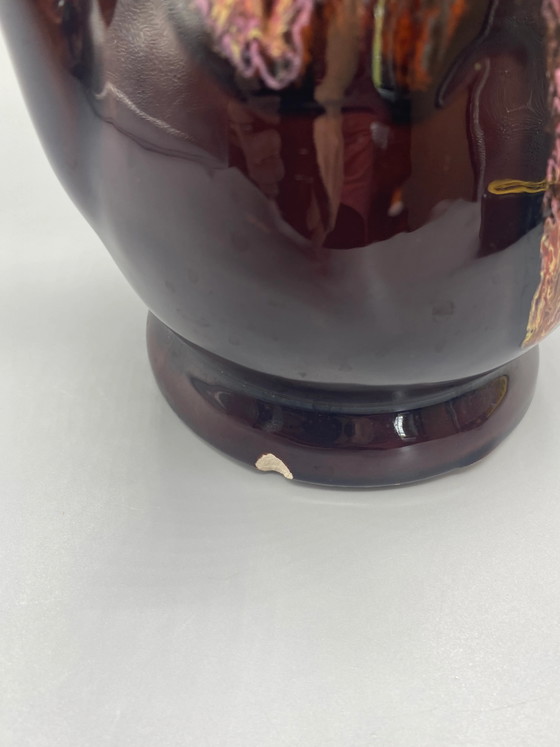
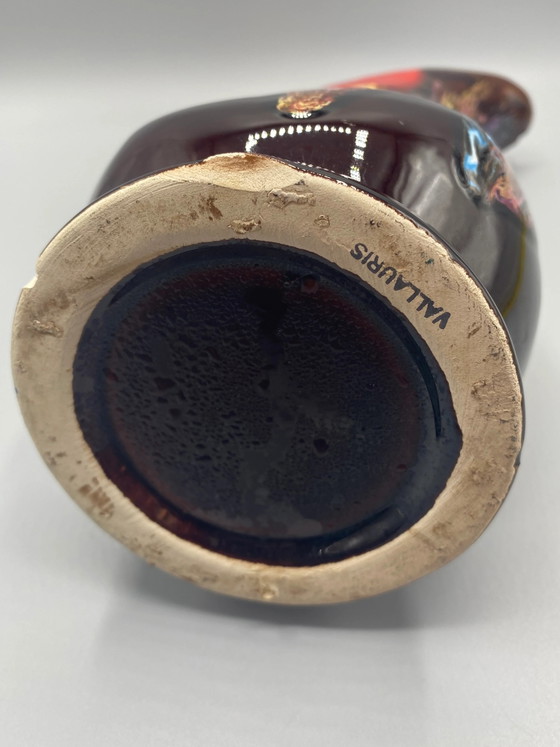
The old "Vallauris" mark on the underside of the base accompanies the piece and confirms its connection to this emblematic production. The piece as a whole has retained a beautiful presence, with a brilliant and deep glaze that perfectly highlights the color contrasts. A small old chip is present on the lower edge of the foot. Located at the very bottom of the piece, it remains discreet when displayed and does not affect its stability or its decorative impact. An ewer full of character, generous in its proportions, and particularly attractive due to the richness of its glazes. Displayed alone on a console, a low cabinet, or within a collection of 20th-century ceramics, it possesses enough visual strength to immediately become a central decorative piece.
Additional details:
- Brand: Vallauris
- Style: Vallauris
- Colour: brun
- Colour: aubergine
- Period: 1960s-1970s
Specifications
ConditionVery goodColorsPink, Red, Black, Creme, Blue, YellowMaterialCeramic
Discover more
Seller information
About this seller
ProfessionalSaint symphorien des bois, FranceOn Whoppah since August 2026 • 1 sale