Have it delivered hassle-freeBuyer protectionAll Designer items curated by WhoppahDownload the Whoppah App – get alerts & sell with ease.
Have it delivered hassle-free
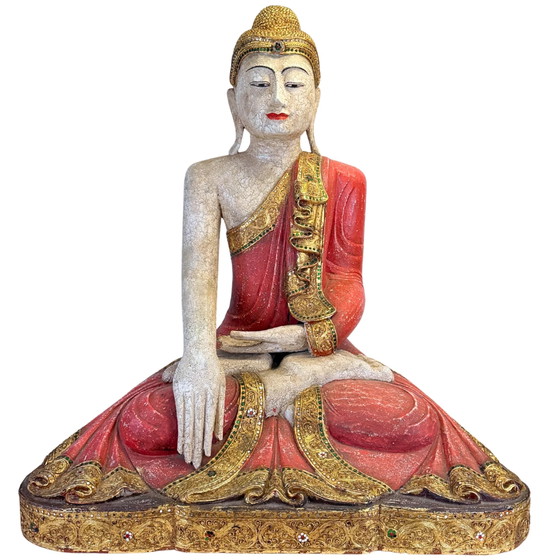
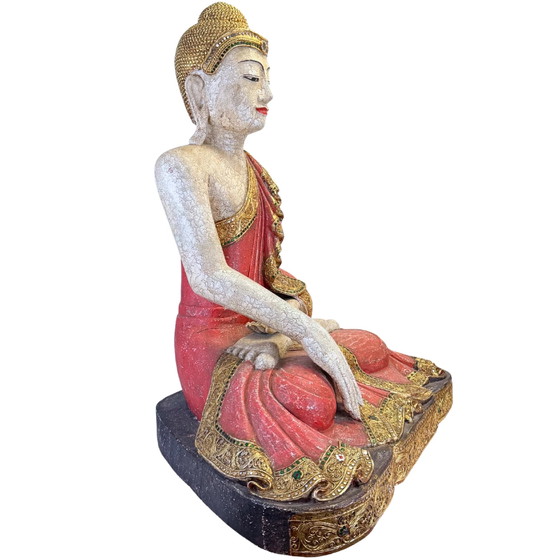
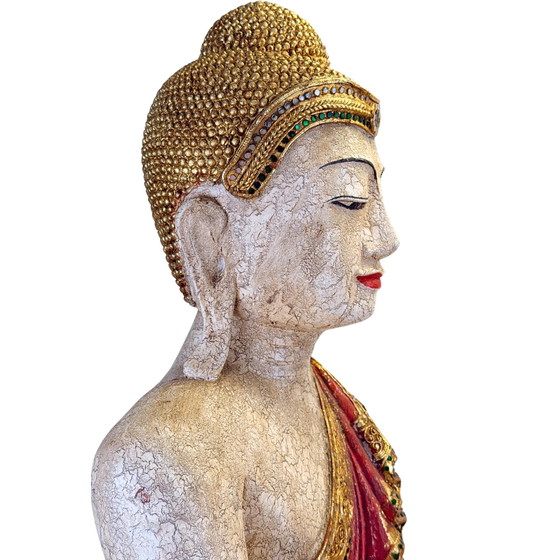
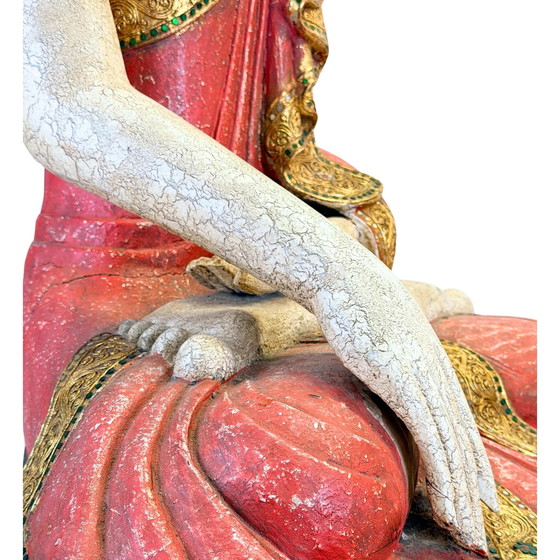
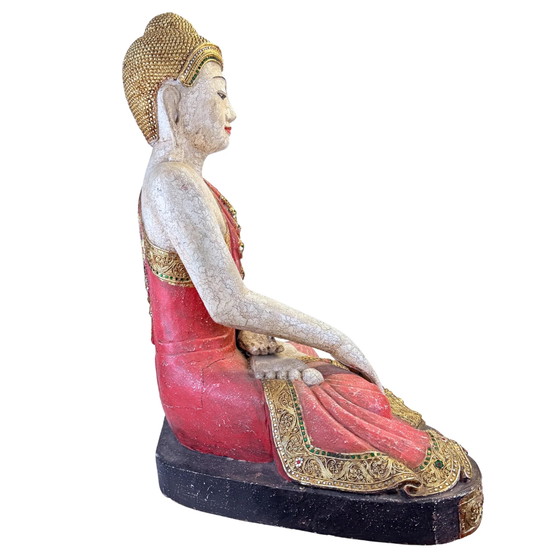
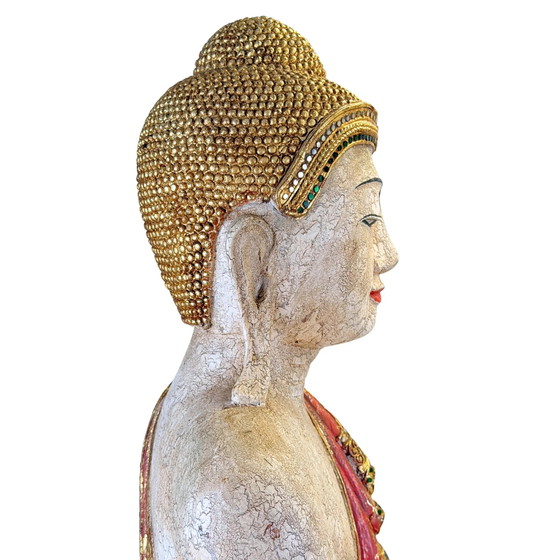
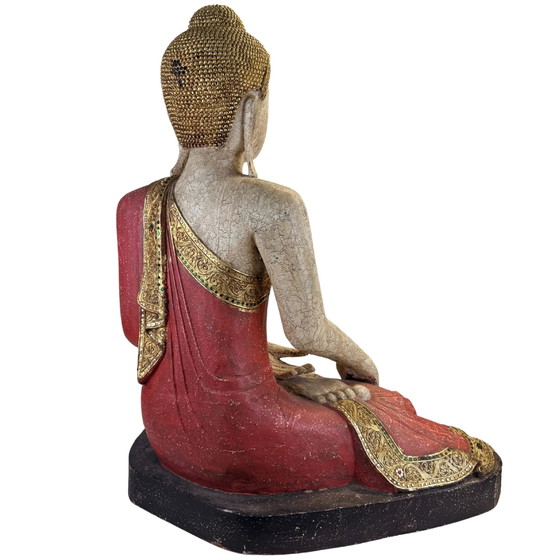
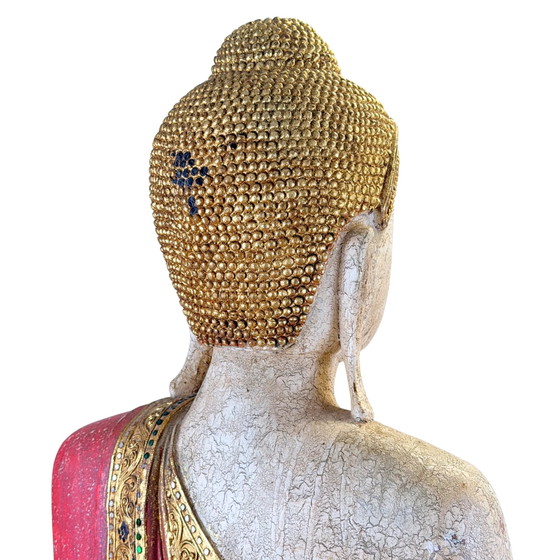
Large Burmese Mandalay Buddha with Gold Decoration – circa 1970 – 87 cm
€975Bid from €877.50
Buy with confidence
Shop & pay safely with Buyer ProtectionDesigner items curated by WhoppahWe only pay the seller once you have safely received the itemTrusted payment methods


About this seller
Private sellerDamme, GermanyOn Whoppah since February 2025 • 3 sales
Product description
Dimensions: H 87 × W 79 cm
Weight: 28.4 kg
Material: Solid wood, polychromy, gold decoration, and mirror/glass inlay
Origin: Burma / Myanmar
Style: Mandalay tradition
Dating: Circa 1970
Representation: Seated Buddha in Bhumisparsha Mudra
A large Burmese Buddha with an impressive presence
With a width of almost 80 cm and a weight of 28.4 kg, this is a particularly powerful appearance. The Buddha sits on a broad throne, with the left hand resting relaxed in the lap and the right hand pointing towards the earth. The statue is crafted in the rich decorative tradition known from Burma, present-day Myanmar. The combination of red, white, and gold is complemented by small mirror and glass elements along the robe and the base. We date the statue to around 1970. It is therefore not an antique 19th-century temple sculpture, but a beautiful and now more than fifty-year-old example of the enduring Burmese Mandalay tradition.
Richly decorated robe
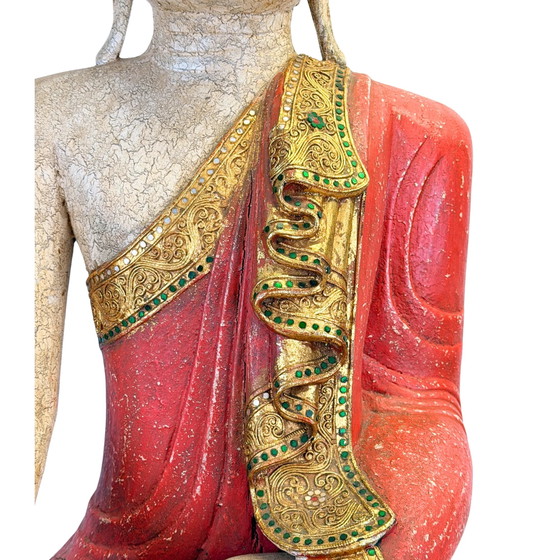
Visually, the robe forms the most important part of the sculpture. Broad red areas are interspersed with gold-colored ornaments and inlaid mirror and glass fragments. Along the edges, this creates an almost jewel-like decoration. The finish is not consistently neat or uniform everywhere. In places, decorative elements have disappeared, and wear, minor damage, and discolorations are visible. Precisely because of this, the statue currently has a much softer appearance than a newly manufactured decorative piece.
Craquelure as part of the finish
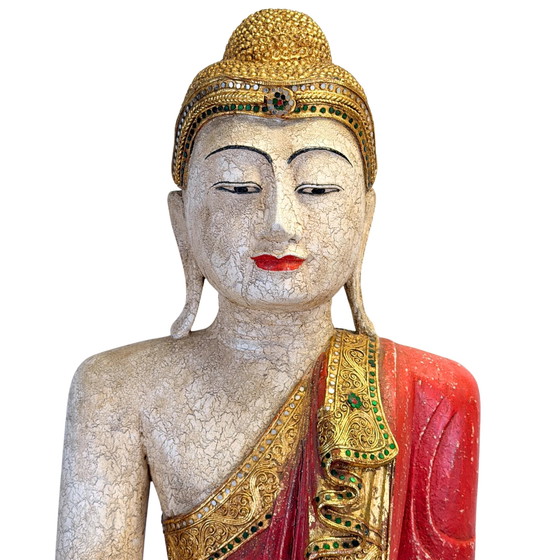
On the face, neck, arms, and hands, there is a striking light finish with strong craquelure. Under magnification, it is clearly visible how the dark underlying layer shows through the network of fine and larger cracks. We do not consider this craquelure in this statue as evidence of 19th-century age. It most likely corresponds to the decorative surface treatment and its aging during the second half of the 20th century.
Solid wood construction
The underside clearly shows how substantially the statue is actually built. The sculpture consists of several heavy parts of solid wood that together create the broad seated form. The construction largely remains visible at the bottom. Here, joints, wood structure, and traces of manual processing are clearly recognizable. It is not a light hollow decorative sculpture: at 28.4 kg, this is a substantial wooden statue.
Natural movement of the wood
In the wood, there is a clear shrinkage or drying crack that extends from the seated area. Such cracks occur when large wooden parts react over a longer period to changes in temperature and humidity. Traces of age and use are also visible elsewhere. These are not concealed and are part of the current condition and appearance of the statue.
Bhumisparsha Mudra
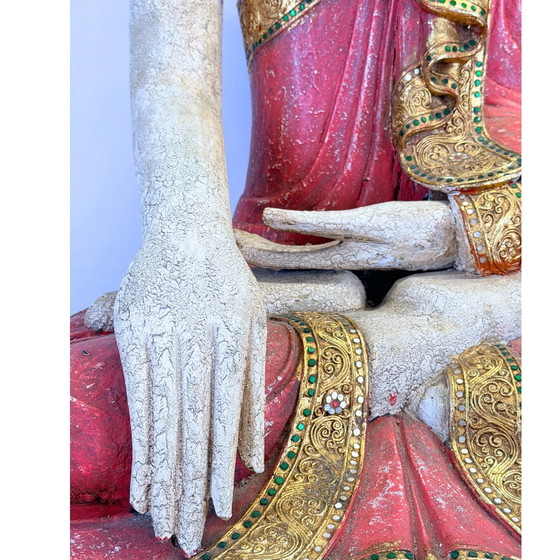
The Buddha's right hand is brought down over the knee, while the left hand rests in the lap with the palm facing upwards. This is the Bhumisparsha Mudra, literally the gesture of touching the earth. The posture refers to the moment when Siddhartha Gautama called upon the earth as a witness just before his enlightenment. The earth-touching gesture is one of the most important representations in Buddhist art and is primarily associated with steadfastness, enlightenment, and overcoming doubt.
Mandalay style from Myanmar
The broad seated posture, serene facial expression, and richly decorated clothing align with the decorative sculptural traditions that spread from Mandalay across Myanmar. Even after the classical Mandalay period ended, local workshops continued to produce Buddha statues according to the same recognizable visual language. During the 20th century, traditional forms were combined with increasingly exuberant polychromy, gilded decor, and mirror inlay. We place this example within that later tradition and cautiously date it around 1970.
Condition
The statue is in a decorative but clearly used condition. There are craquelure, shrinkage cracks, wear, localized damage, discolorations, and losses to the paintwork and decorative finish. Small parts of the mirror and glass inlay are also missing in places. The gold-colored decoration also shows wear and variations in intensity. These characteristics are consistent with the age and history of the object and are visible in the photos.
A Buddha that convinces primarily through size and decoration
The appeal of this statue does not lie in an exceptionally early dating, but in its size, weight, and distinctive Burmese decoration. At 87 cm high and 79 cm wide, the Buddha easily fills a larger space without being monumentally tall. Its broad seated posture gives it a strong presence from the front. A characterful Burmese Buddha from circa 1970 for those looking for a large, authentic, handmade object from Myanmar, without it being presented as 19th-century antique.
Additional details:
- Brand: 1stbuddha
- Style: Mandalay
- Material: Massief hout
- Material: polychromie
- Material: gouddecoratie
- Material: spiegel
- Colour: goud
- Period: 1970s
- availability: in_stock
- product_type: Beeld / sculptuur
Specifications
CategorySculptureConditionGoodColorsRed, WhiteMaterialGlassSeller locationDamme, GermanyDelivery optionsDelivery or pickup
Discover more
Seller information
About this seller
Private sellerDamme, GermanyOn Whoppah since February 2025 • 3 sales