Have it delivered hassle-freeBuyer protectionAll Designer items curated by WhoppahDownload the Whoppah App – get alerts & sell with ease.
Have it delivered hassle-free
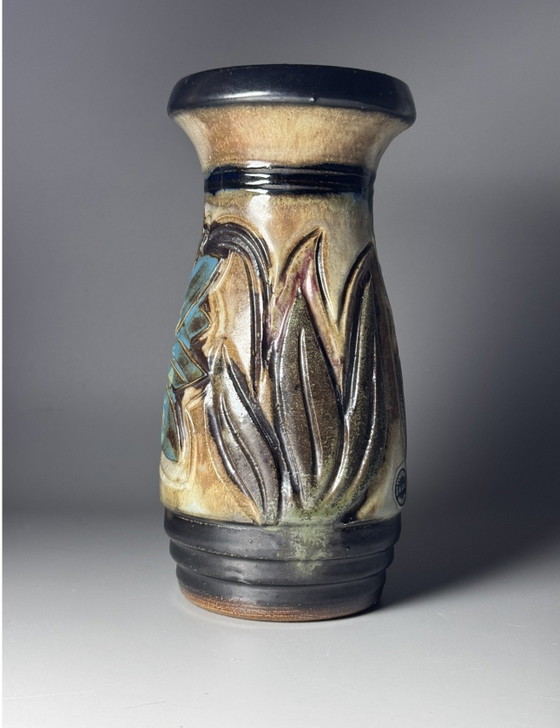
Jules Guérin – Late Art Deco Ceramic Vase, Belgium
€70Bid from €65
Buy with confidence
Shop & pay safely with Buyer ProtectionDesigner items curated by WhoppahWe only pay the seller once you have safely received the itemTrusted payment methods


About this seller
Private sellerBruxelles, BelgiumOn Whoppah since April 2024 • 96 sales
Product description
Jules Guérin – Late Art Deco Ceramic Vase, Belgium
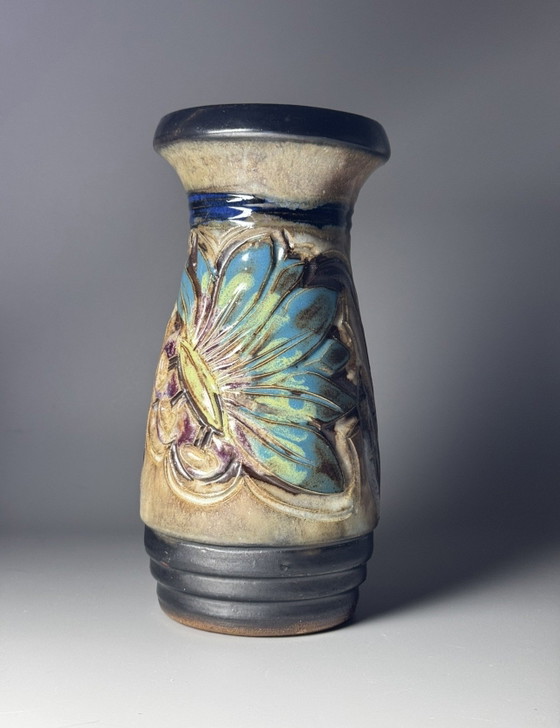
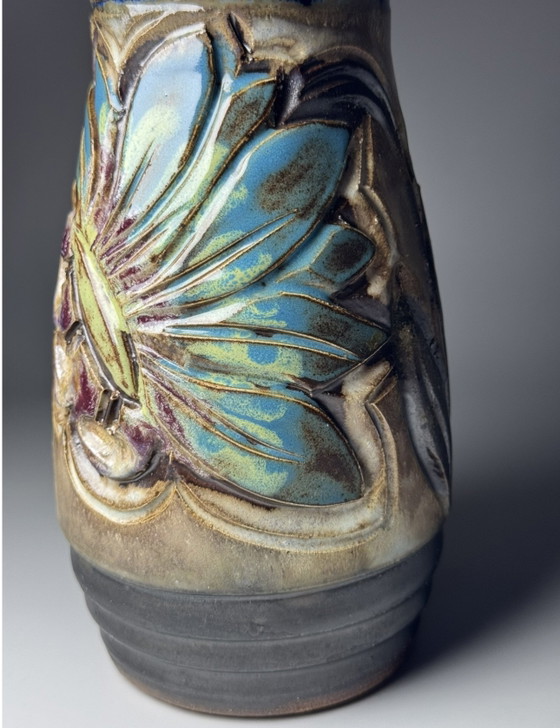
An expressive Late Art Deco ceramic vase by Jules Guérin, Belgium, entirely handcrafted and combining a strong sculptural silhouette with richly worked relief decoration and an exceptionally complex glazed surface.
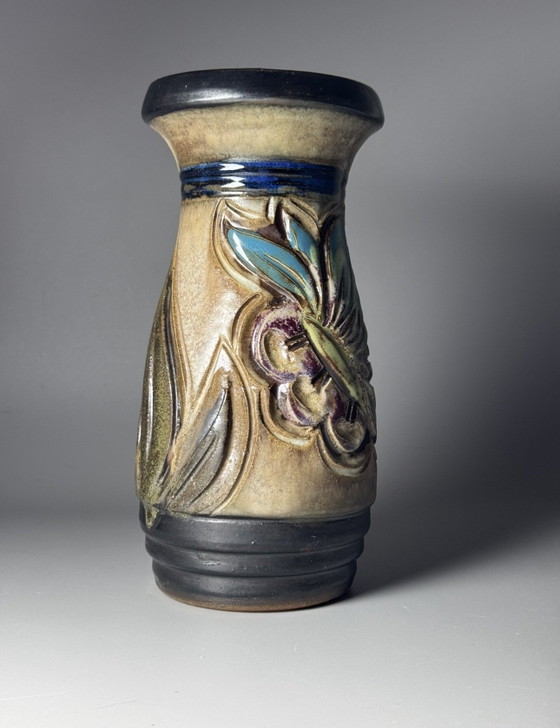
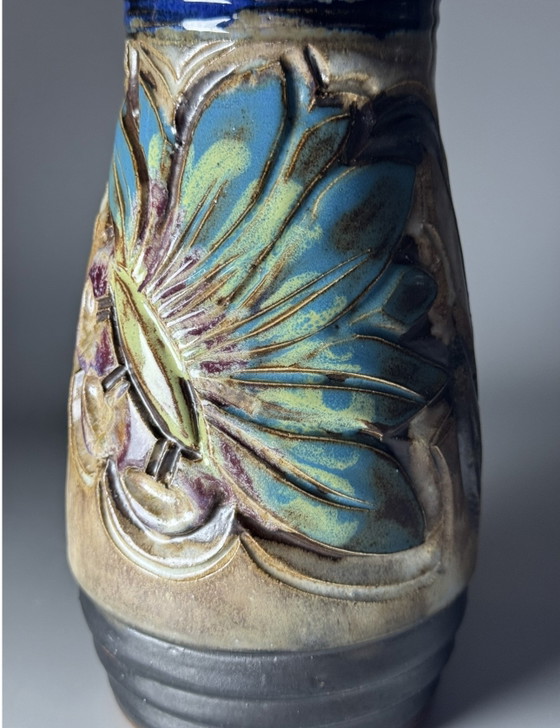
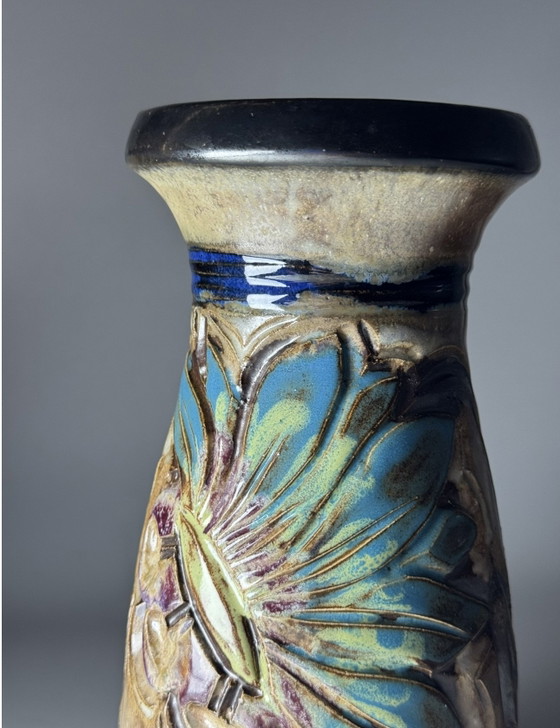
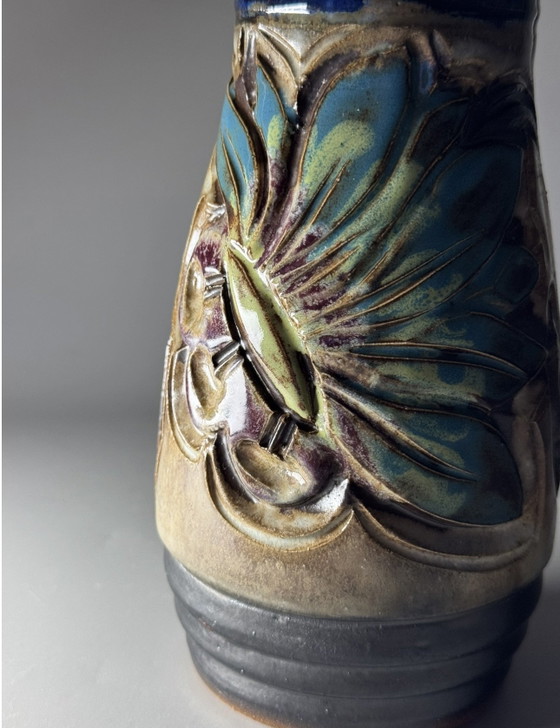
The front is dominated by a large stylized flower rendered in raised relief and surrounded by flowing organic motifs. A sophisticated combination of glazes and enamels creates vivid shades of turquoise blue, acid green, deep cobalt, aubergine, bronze and warm beige. The contrast between glossy and more matte areas gives the surface remarkable depth, while subtle variations in colour reveal the unmistakable character of a completely handmade object.
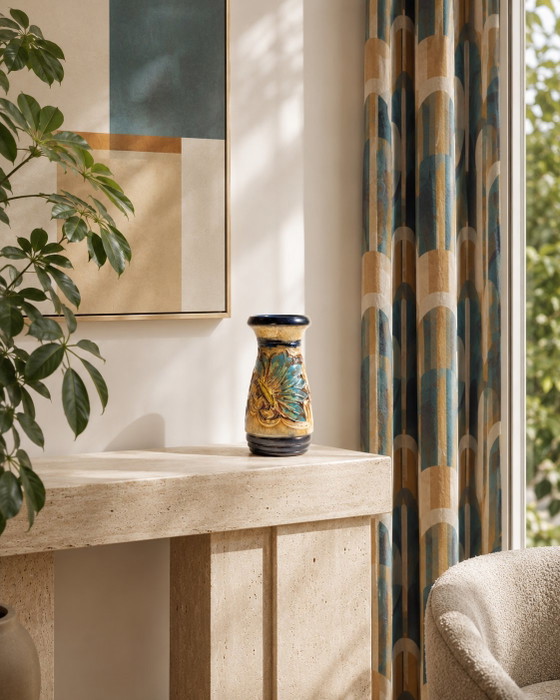
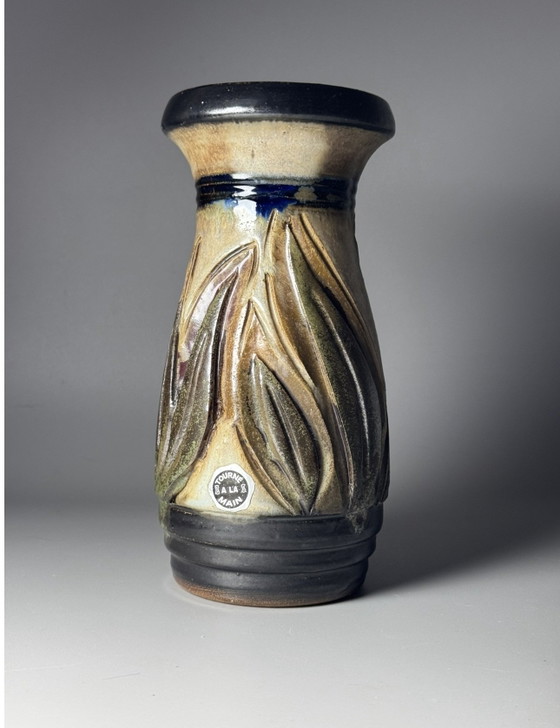
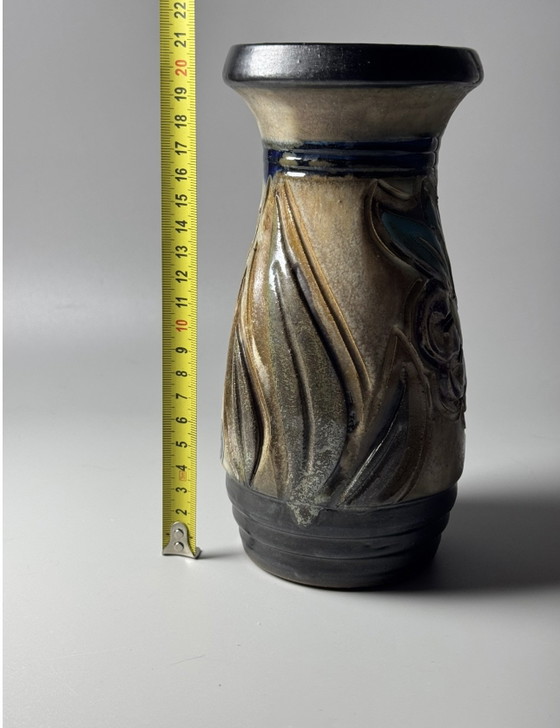
Every element was shaped, decorated and finished by hand, from the incised and modelled relief to the layered application of colour. The reverse continues the composition with elongated botanical forms, allowing the design to evolve as the vase is viewed from different angles. Characteristic of Belgian Late Art Deco studio ceramics, it combines geometric structure with highly stylized natural imagery and works equally well as a collectible object or as a striking accent in a contemporary interior.
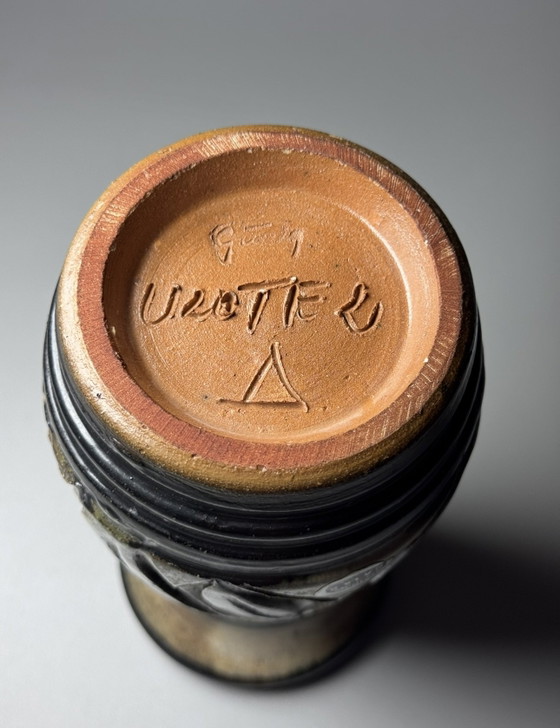
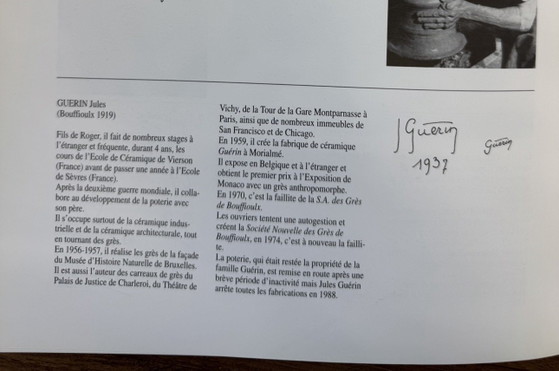
Jules Guérin, born in Bouffioulx in 1919, was the son of celebrated Belgian potter Roger Guérin and continued the important ceramic tradition of the family. He trained in France at the École de Céramique de Vierzon and the École de Sèvres before contributing to his father’s pottery after the Second World War. His career later extended into stoneware, industrial and architectural ceramics, and in 1959 he established his own ceramic factory in Monialmé. His work was exhibited in Belgium and abroad, and he also carried out important architectural ceramic commissions.
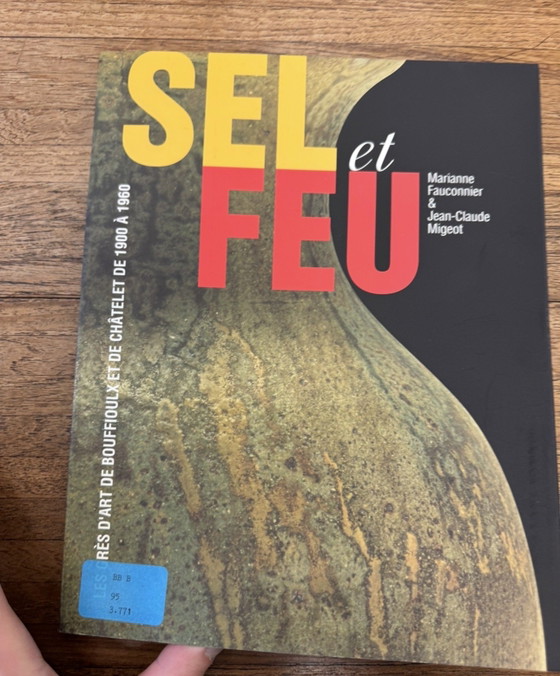
The Golden Age of Artistic Pottery in Bouffioulx and Châtelet
During the 19th century, pottery production in Bouffioulx and Châtelet was largely utilitarian, with skilled potters producing everyday objects in small workshops. By the end of the century, however, growing resistance to industrial mass production encouraged artists and craftsmen to rediscover the artistic potential of handmade ceramics.
Inspired by developments in England and France, Belgian artists and cultural figures such as Octave Maus and architect Henry Van de Velde helped promote ceramics as a genuine artistic discipline. Bouffioulx and Châtelet gradually became important centres of artistic pottery, where traditional craftsmanship was combined with increasingly ambitious artistic experimentation.
A new generation of potters explored wheel throwing, complex glazing and high-temperature firing, creating vases, sculptures and decorative objects that were shown at exhibitions in Belgium and abroad. Schools and specialised ceramic courses also contributed to the transmission of these skills to younger generations.
This period, often described as the Golden Age of pottery in Bouffioulx and Châtelet, lasted for more than half a century and produced a distinctive ceramic tradition in which technical mastery, experimentation and individual artistic expression were closely intertwined.
It will be carefully packaged and well protected for shipping.
Specifications
ConditionExcellentColorsMulti ColorMaterialCeramicNumber of items1Height21 cmWidth10 cmDepth10 cm
Discover more
Seller information
About this seller
Private sellerBruxelles, BelgiumOn Whoppah since April 2024 • 96 sales