Have it delivered hassle-freeBuyer protectionAll Designer items curated by WhoppahDownload the Whoppah App – get alerts & sell with ease.
Have it delivered hassle-free
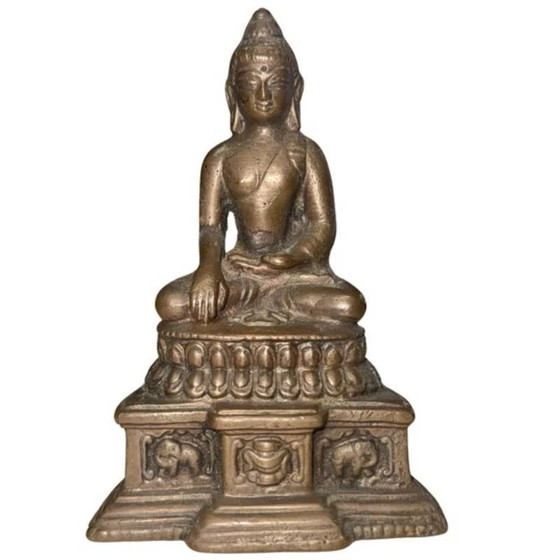
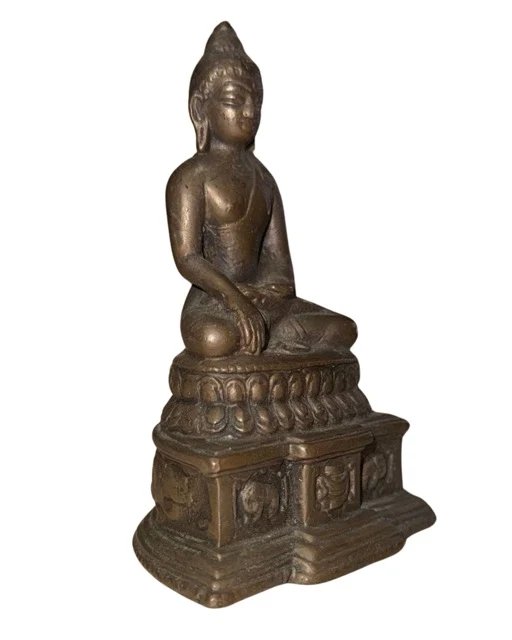
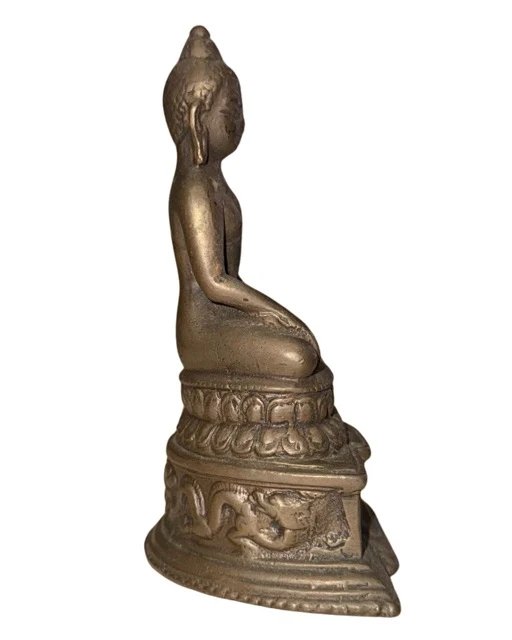
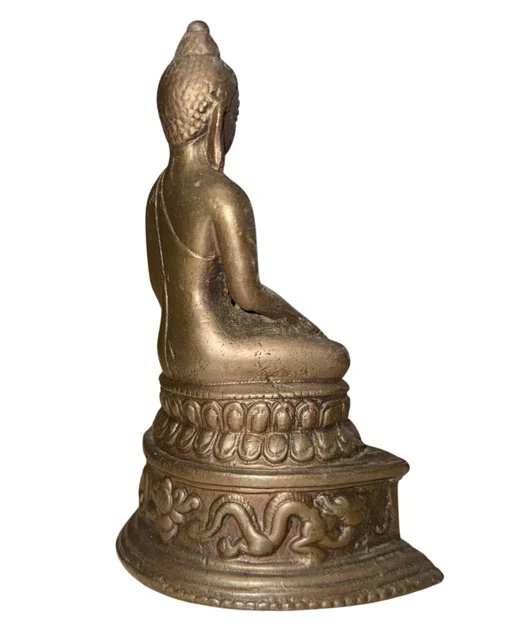
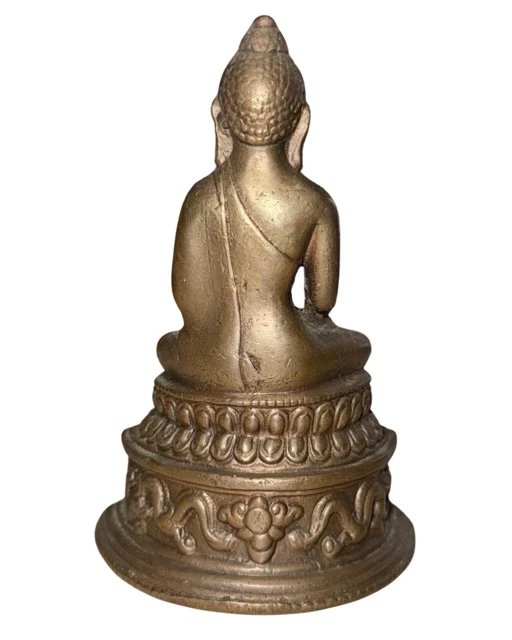
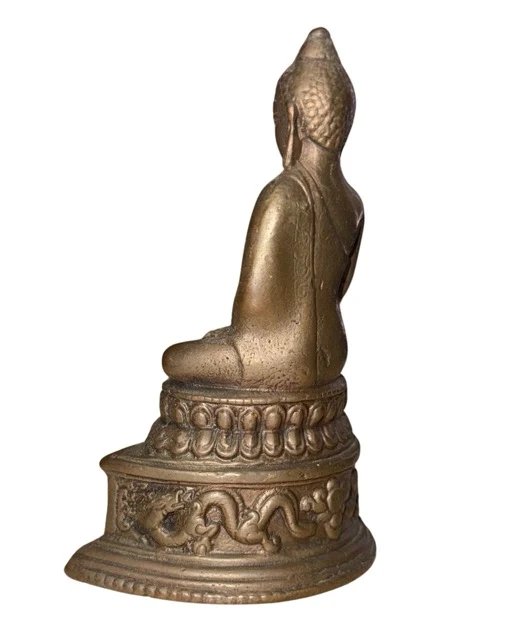
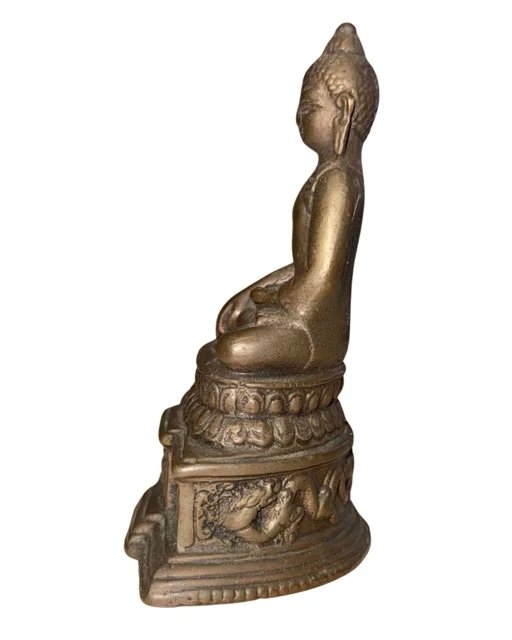
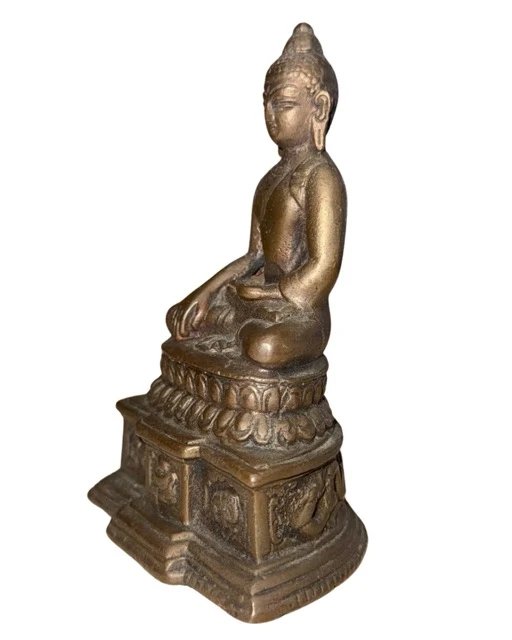
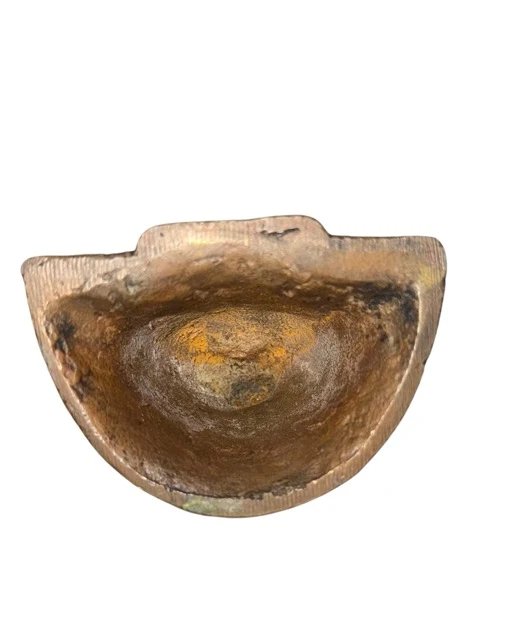
Antique Solid Bronze Pala-style Travel Altar Shakyamuni Buddha with Elephants and Makara – circa 14th-16th Century
€1,250Bid from €1,125
Buy with confidence
Shop & pay safely with Buyer ProtectionDesigner items curated by WhoppahWe only pay the seller once you have safely received the itemTrusted payment methods


About this seller
Private sellerDamme, GermanyOn Whoppah since February 2025 • 3 sales
Product description
Exclusive Antique Solid Bronze Travel Altar Shakyamuni Buddha – Pala Style with Makara Relief – approx. 14th-16th Century
Specifications: 10.5 cm high | 7.1 cm wide | 460 grams (Virtually solid, remarkably heavy master casting)
An exceptional, extremely rare, and guaranteed original antique bronze travel or amulet altar of Shakyamuni Buddha, masterfully cast in the Himalayan region (Tibet / Northeast India) during the early Pala tradition (approx. 14th-16th century or older). Despite its portable size of only 10.5 cm high, this powerful little masterpiece weighs no less than 460 grams, which testifies to a massive, thick-walled monastic casting of the highest category.
Why buy this unique altar sculpture? (Significance & Protection)
This compact, heavy bronze sculpture is not merely a decorative object; it is a historic travel altar specifically designed to accompany, bless, and protect its owner anywhere in the world. Within the Buddhist tradition, this specific sculpture carries a deep spiritual significance:
Unwavering Mental Strength: The two powerful elephants in high relief on the throne symbolize the ultimate steadfastness of the mind. They remind the owner to remain calm, centered, and mentally invincible under all circumstances — no matter how stormy.
Protection during Travel and against Obstacles: The mythical Makara on the flanks of the altar traditionally functions as a fierce, spiritual guardian. Within Himalayan culture, this being wards off negative energies, jealousy from others, and unforeseen dangers during travels and new undertakings.
The Energy of Enlightenment & Devotion: Because this figurine has been intensively held in hand for centuries during meditations and prayers, the metal has acquired a palpable, soothing soul. It brings an immediate atmosphere of ancient temple serenity, focus, and spiritual grounding to any space where it is placed.
Unique Iconography: The Elephant & Makara Altar
The Buddha is depicted in the meditative Vajrasana posture on a double lotus throne, supported by a rare, layered Vajrasana altar. Centrally beneath the Buddha hangs a traditional throne cloth in which a vertical Vajra (thunderbolt) is engraved, a direct reference to the sacred place of enlightenment in Bodh Gaya. On the side is the undeniable characteristic of the authentic Himalayan style: the beautifully cast Makara (Chu-srin). This legendary sea monster — recognizable by its characteristic upward-curling elephant's trunk — forms the traditional connection on the flanks of a classic Pala throne. This completely removes the sculpture from later, much more general Chinese spheres of influence.
Defining Characteristics of Ancient Provenance
This travel altar exhibits fabulous, natural aging that proves its pure pre-industrial quality and authenticity:
Cherished Skin-polishing: Large parts of the face (nose, lips, and chin) and the individual hair curls (ushnisha) show a silky-smooth, flowing metal wear. This mirror-smooth texture is the result of hundreds of years of human touch and devotional friction.
Petrified Temple Residue & Casting Pits: Deep in the hand-worked folds around the face is a jet-black, encrusted, and completely petrified layer of ancient incense soot and altar dust. The base shows fine, primitive micro-casting pits and manual dot-engraving along the robe's hem, typical of medieval craftsmanship.
Naturally Polished Underside: The flat bottom edge has been completely smoothed and polished to a warm golden-orange by generations of shifting and carrying through direct skin contact, while retaining the authentic shrinkage and slag marks of the early cire perdue (lost-wax) casting process.
Product Details
Culture / Style: Tibetan / Northeast Indian (Early Pala style)
Period: approx. 14th – 16th century (Early-medieval)
Material: Solid cast bronze / copper-rich monastic alloy
Dimensions: 10.5 cm (H) x 7.1 cm (W)
Weight: 460 grams
Condition: Exceptional antique condition. Fully intact, ancient patina layers and sublime, authentic traces of wear from centuries of veneration. 100% original and guaranteed authentic.
Additional details:
- Brand: 1stbuddha
- Style: Pala-stijl
- Style: Himalayastijl
- Style: Tibetaans
- Style: Noordoost-Indiaas
- Material: Koperrijke legering
- Colour: Goud-oranje
- Period: 14e-16e Eeuw
- availability: in_stock
- product_type: Beeld / sculptuur
Specifications
CategoryDecorative ObjectsConditionVery goodColorsBlackMaterialBronzeSeller locationDamme, GermanyDelivery optionsDelivery or pickup
Discover more
Seller information
About this seller
Private sellerDamme, GermanyOn Whoppah since February 2025 • 3 sales