Have it delivered hassle-freeBuyer protectionAll Designer items curated by WhoppahDownload the Whoppah App – get alerts & sell with ease.
Have it delivered hassle-free
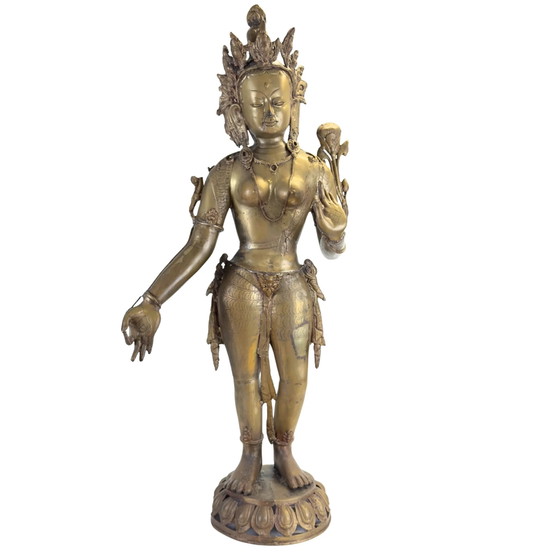
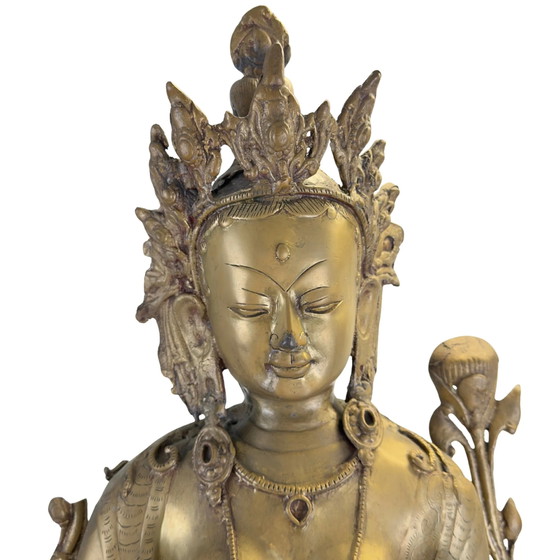
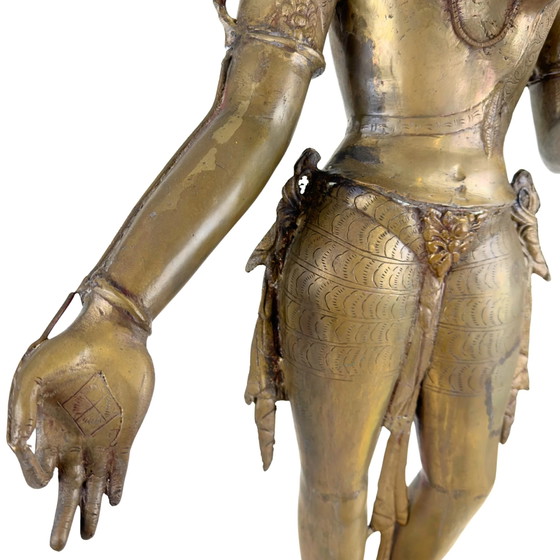
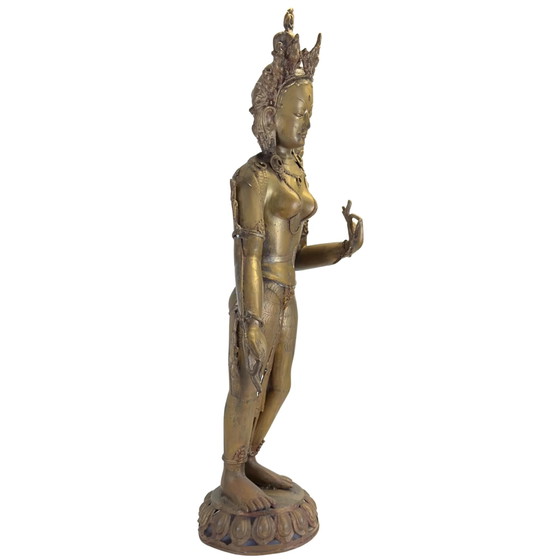
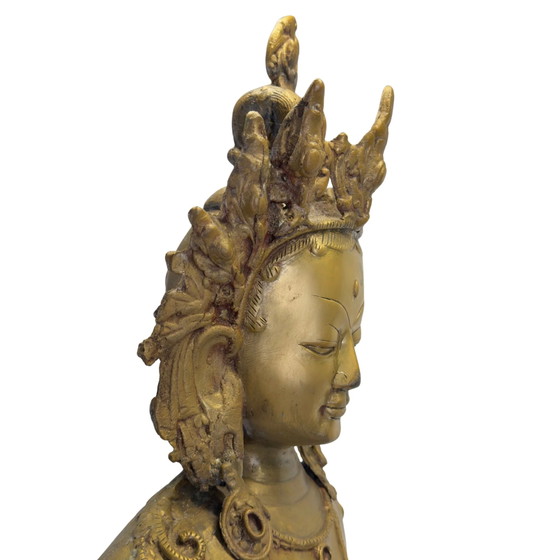
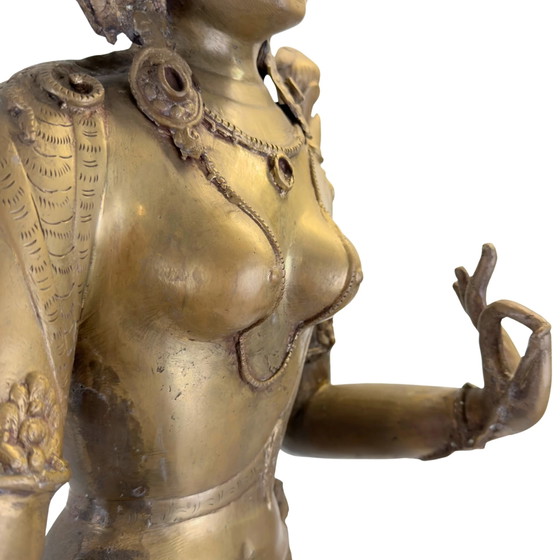
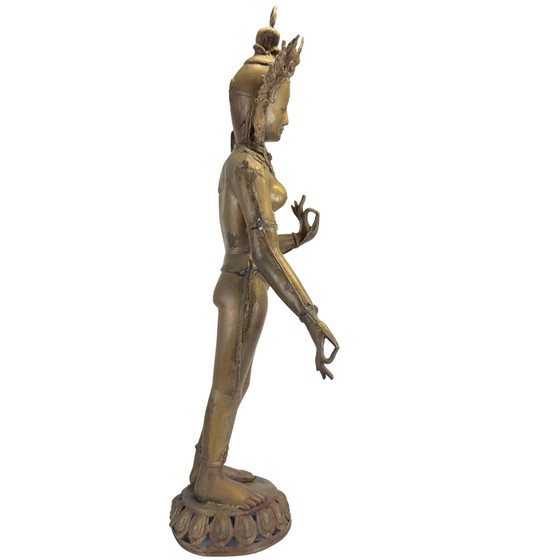
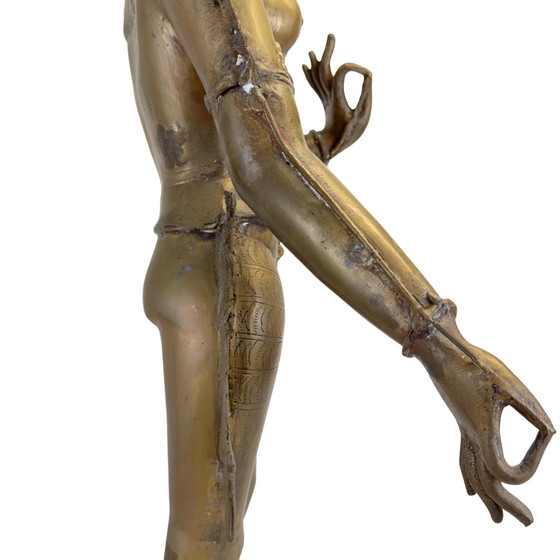
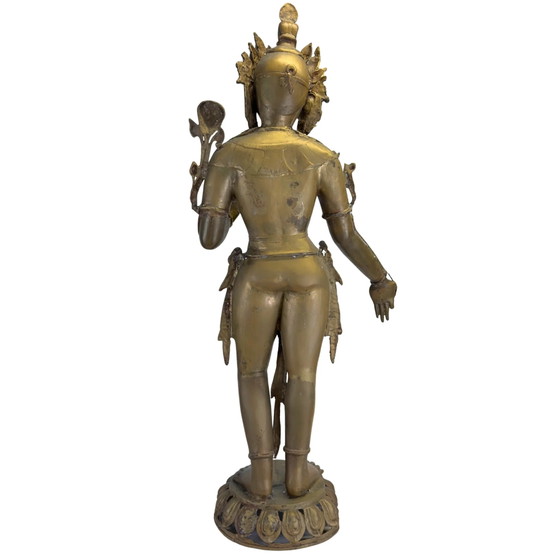
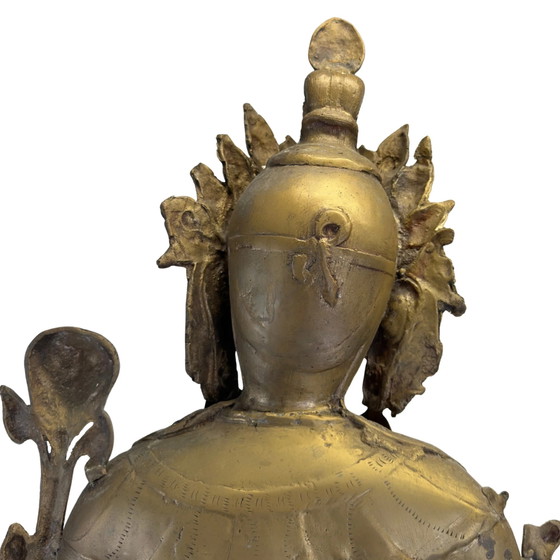
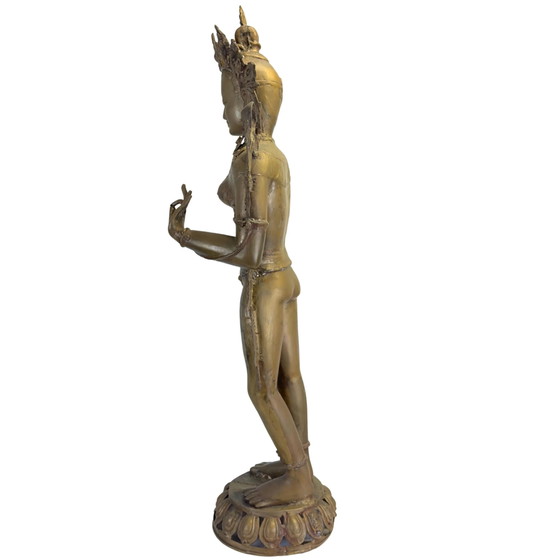
Antique Nepalese Green Tara – fire-gilded bronze, Newar tradition, 19th century, H 100 cm, 15.2 kg.
€8,685Bid from €7,816.50
Buy with confidence
Shop & pay safely with Buyer ProtectionDesigner items curated by WhoppahWe only pay the seller once you have safely received the itemTrusted payment methods


About this seller
Private sellerDamme, GermanyOn Whoppah since February 2025 • 3 sales
Product description
Monumental Antique Green Tara from Nepal – Fire-Gilded Bronze – Probably Late 18th or 19th Century
PHYSICAL DIMENSIONS
Height: 100 cm
Width: 47 cm
Depth: 7 cm
Weight: 15.2 kg
Material: Bronze with remnants of original fire-gilding
Origin: Kathmandu Valley, Nepal
Dating: Probably late 18th or 19th century
Technique: Traditional lost wax casting
A monumental example of traditional Newar bronze art
This monumental sculpture depicts Green Tara (Shyamatara), one of the most important female bodhisattvas within Mahayana and Vajrayana Buddhism. With a height of no less than one meter, this sculpture is among the larger Nepalese Tara statues still appearing on the international art market today. The sculpture was crafted using the traditional lost wax method, where the entire image is first fully modeled in wax before a clay mold is applied. During the casting process, the wax melts out of the mold, after which liquid bronze fills the created space. This technique has been used in Nepal for centuries and allows for exceptionally refined details that are hardly achievable with modern production techniques. Based on extensive research into the construction, surface, engravings, casting technique, patina, fire-gilding, and iconography, this sculpture is, in our opinion, an authentic antique Nepalese Tara. The stylistic characteristics strongly align with the traditional Newar schools from the Kathmandu Valley. Furthermore, the sculpture exhibits several features also found in older examples from the late Malla period. Because an exact dating cannot be established with complete certainty without laboratory research, a conservative 19th-century dating has been consciously chosen for valuation, despite indications that may point to an older origin.
Artistic Quality
What is immediately striking is the exceptionally elegant posture of the goddess. She stands in a classic Tribhanga, the famous three-bend S-curve considered within Nepalese and Indian sculpture as the ideal expression of feminine beauty, balance, and spiritual serenity. The body weight rests entirely on the right leg while the left hip subtly moves outwards. This creates a natural movement that makes the heavy bronze sculpture appear remarkably light. The long arms, harmonious body proportions, and serene facial expression reveal an experienced sculptor with profound knowledge of traditional iconometric prescriptions. The richly elaborated crown, jewelry, lotus stems, and hand engravings are entirely hand-finished. Under magnification, small individual chisel marks are visible, characteristic of traditional handcraft and not modern industrial production.
Dating
The sculpture possesses multiple stylistic features consistent with older Nepalese Tara sculptures from the Newar tradition. The elegant Tribhanga pose, the shape of the crown, the characteristic lotus stems, the hand engravings, and the iconography fit within a long-standing artistic tradition that continued for several centuries. Although some features do not rule out a late 18th-century origin, a cautious approach has been deliberately chosen for pricing. Therefore, the sculpture is commercially valued as a high-quality 19th-century Nepalese bronze Tara. This ensures that the valuation remains conservative and well-defensible. However, the combination of monumental dimensions, traditional construction, and existing remnants of original fire-gilding makes this an exceptional collector's item within the market for Himalayan art.
Monumental Antique Green Tara from Nepal – Fire-Gilded Bronze – Probably Late 18th or 19th Century
PHYSICAL DIMENSIONS
Height: 100 cm
Width: 47 cm
Depth: 7 cm
Weight: 15.2 kg
Material: Bronze with remnants of original fire-gilding
Origin: Kathmandu Valley, Nepal
Dating: Probably late 18th or 19th century
Technique: Traditional lost wax casting
A monumental example of traditional Newar bronze art
This monumental sculpture depicts Green Tara (Shyamatara), one of the most important female bodhisattvas within Mahayana and Vajrayana Buddhism. With a height of no less than one meter, this sculpture is among the larger Nepalese Tara statues still appearing on the international art market today. The sculpture was crafted using the traditional lost wax method, where the entire image is first fully modeled in wax before a clay mold is applied. During the casting process, the wax melts out of the mold, after which liquid bronze fills the created space. This technique has been used in Nepal for centuries and allows for exceptionally refined details that are hardly achievable with modern production techniques. Based on extensive research into the construction, surface, engravings, casting technique, patina, fire-gilding, and iconography, this sculpture is, in our opinion, an authentic antique Nepalese Tara. The stylistic characteristics strongly align with the traditional Newar schools from the Kathmandu Valley. Furthermore, the sculpture exhibits several features also found in older examples from the late Malla period. Because an exact dating cannot be established with complete certainty without laboratory research, a conservative 19th-century dating has been consciously chosen for valuation, despite indications that may point to an older origin.
Artistic Quality
What is immediately striking is the exceptionally elegant posture of the goddess. She stands in a classic Tribhanga, the famous three-bend S-curve considered within Nepalese and Indian sculpture as the ideal expression of feminine beauty, balance, and spiritual serenity. The body weight rests entirely on the right leg while the left hip subtly moves outwards. This creates a natural movement that makes the heavy bronze sculpture appear remarkably light. The long arms, harmonious body proportions, and serene facial expression reveal an experienced sculptor with profound knowledge of traditional iconometric prescriptions. The richly elaborated crown, jewelry, lotus stems, and hand engravings are entirely hand-finished. Under magnification, small individual chisel marks are visible, characteristic of traditional handcraft and not modern industrial production.
Dating
The sculpture possesses multiple stylistic features consistent with older Nepalese Tara sculptures from the Newar tradition. The elegant Tribhanga pose, the shape of the crown, the characteristic lotus stems, the hand engravings, and the iconography fit within a long-standing artistic tradition that continued for several centuries. Although some features do not rule out a late 18th-century origin, a cautious approach has been deliberately chosen for pricing. Therefore, the sculpture is commercially valued as a high-quality 19th-century Nepalese bronze Tara. This ensures that the valuation remains conservative and well-defensible. However, the combination of monumental dimensions, traditional construction, and existing remnants of original fire-gilding makes this an exceptional collector's item within the market for Himalayan art.
Green Tara – The Goddess of Compassion, Protection, and Swift Aid
Green Tara, in Sanskrit Śyāmatārā, is among the most revered female bodhisattvas within Mahayana and Vajrayana Buddhism. She is considered the female manifestation of active compassion: an enlightened presence that responds directly to the suffering of living beings. Where many Buddhist figures emphasize contemplation and inner peace, Green Tara specifically symbolizes action. She rises to offer help when it is needed. According to Tibetan tradition, Tara emerged from a tear of Avalokiteshvara (Chenrezig), the bodhisattva of infinite compassion. When Avalokiteshvara beheld the immense suffering of all living beings, a tear of compassion flowed from him, from which Tara appeared. From that moment on, she vowed to protect all beings and guide them on their spiritual path.
The meaning of the green color
Within Buddhist symbolism, the color green represents life, growth, wisdom, and active energy. Unlike White Tara, who is primarily associated with healing and longevity, Green Tara represents immediate aid. She is the bodhisattva who, according to tradition, immediately takes action when someone needs protection, courage, or guidance. For this reason, Green Tara has been invoked for centuries by travelers, monks, pilgrims, and families seeking protection from danger, illness, or uncertainty.
The iconography of this sculpture
This monumental sculpture meticulously follows the classic Nepalese iconography of Green Tara. The goddess stands in an elegant Tribhanga pose, a subtle S-shape that expresses movement, harmony, and feminine elegance. Within Newar art, this pose is considered one of the most refined body compositions. In her right hand, Tara makes the Varada Mudra, the gesture of generosity and compassion. This open hand symbolizes the granting of protection, wisdom, and spiritual abundance to all who invoke her. The left hand forms the Vitarka Mudra, the gesture of teaching and wisdom. At the same time, she holds the stem of the characteristic Utpala, the blue lotus that grows up next to her shoulder. This lotus symbolizes purity and enlightenment: even from muddy water, the flower blossoms completely untarnished.
The crown and jewelry
As is customary within the Newar tradition, Tara wears a richly adorned crown, extensive necklaces, bracelets, anklets, and a finely draped skirt. These ornaments symbolize not worldly wealth, but the perfections of an enlightened bodhisattva. Each embellishment refers to spiritual qualities such as wisdom, compassion, generosity, and inner purity. The refined hand engravings in these jewels demonstrate the high technical skill of the original maker. Under magnification, individual chisel marks are visible, indicating fully hand-finished decorations.
A sculpture for meditation and protection
For centuries, images of Green Tara were placed in temples, monasteries, and private shrines. They formed the focal point of daily meditation, mantra recitations, and offering ceremonies. As a result, many older sculptures developed characteristic natural wear, subtle sheen in frequently touched areas, and sometimes remnants of pigments, oil, or ritual deposits. This sculpture also exhibits such historical features, including natural wear, old patina, remnants of original fire-gilding, and localized red pigment residues. These traces not only indicate the age of the object but also its long-term ritual use for which it was originally made.
A rare monumental size
With a height of 100 centimeters, this sculpture is among the larger Nepalese Tara sculptures still circulating in private ownership. Such monumental bronzes were originally made for temples, larger private shrines, or wealthy patrons. The size, combined with the traditional Newar execution and the remaining traces of fire-gilding, makes this a particularly collectible item within the market for antique Himalayan art.
Research documentation
An extensive research dossier is available for this object. During the research, the construction, casting technique, surface, patina, engravings, fire-gilding, and various microscopic details, among other things, were examined and documented. To keep the description concise, not all research photos are included on this product page. With this object, we include a selection of the most important research photos, including:
* Microscopic images of the hand-engraved decorations.
* Detail photos of the original fire-gilding.
* Images of the natural patina and oxidation.
* Photos of old restorations and traditional construction details.
* Detail photos of the red pigment and lacquer residues.
* Macro images of wear consistent with long-term ritual use.
* Photos of the casting construction and separately cast components.
* UV images used during the research.
This documentation is part of 1stbuddha's internal research archive and supports the assessment of authenticity, construction, and age. Upon request, additional detail photos can be provided before purchase.
Conclusion
This monumental sculpture of Green Tara represents the rich artistic tradition of the Newar bronze casters from the Kathmandu Valley. The combination of the elegant Tribhanga pose, the traditional lost-wax construction, the manually engraved details, the natural patina, the old repairs, and the remaining traces of the original fire-gilding makes this an exceptional example of authentic Himalayan art. Based on extensive research into the construction, surface, iconography, and techniques used, we deem a dating to the late 18th or 19th century plausible. However, for pricing, a conservative 19th-century valuation has been deliberately chosen, ensuring that the offered price is carefully and realistically substantiated. For collectors of authentic Nepalese and Tibetan art, this sculpture represents an impressive object due to its monumental dimensions, high-quality artistic execution, and clear traces of centuries of history. It is a sculpture that not only possesses aesthetic value but also represents an important religious and cultural heritage.
Authenticity
At 1stbuddha, every significant object is thoroughly researched before being offered. This sculpture has been assessed for construction, casting technique, iconography, surface, patina, engravings, and historical wear. The research findings are consistent with a traditionally manufactured antique Nepalese bronze Tara from the Newar tradition. All datings and provenance statements are based on art-historical comparative material, technical research, and years of experience with antique Asian sculpture. As is customary in the art trade, such datings remain expert attributions and not absolute guarantees.
Specifications
Object: Green Tara (Śyāmatārā)
Origin: Kathmandu Valley, Nepal
Period: Probably late 18th or 19th century
Material: Bronze with remnants of original fire-gilding
Technique: Traditional lost wax casting
Height: 100 cm
Width: 47 cm
Depth: 7 cm
Weight: 15.2 kg
Condition: Good antique condition with normal signs of age, natural patina, old restorations, and remnants of original fire-gilding.
Shipping
Due to its dimensions and weight, this sculpture will be professionally packaged and shipped fully insured. Collection by appointment is also possible. International shipping is available; the shipping method will be tailored to the destination and the nature of the object. If you have questions about the provenance, research, or wish for additional detail photos or a video inspection, we are happy to assist you.
Additional details:
- Brand: 1stbuddha
- Style: Newar
- Style: Himalayan
- Material: Vuurverguld
- Period: 19e eeuw
- availability: in_stock
- product_type: Beeld / sculptuur
Specifications
CategorySculptureConditionVery goodMaterialBronzeSeller locationDamme, GermanyDelivery optionsDelivery or pickup
Discover more
Seller information
About this seller
Private sellerDamme, GermanyOn Whoppah since February 2025 • 3 sales