Have it delivered hassle-freeBuyer protectionAll Designer items curated by WhoppahDownload the Whoppah App – get alerts & sell with ease.
Have it delivered hassle-free
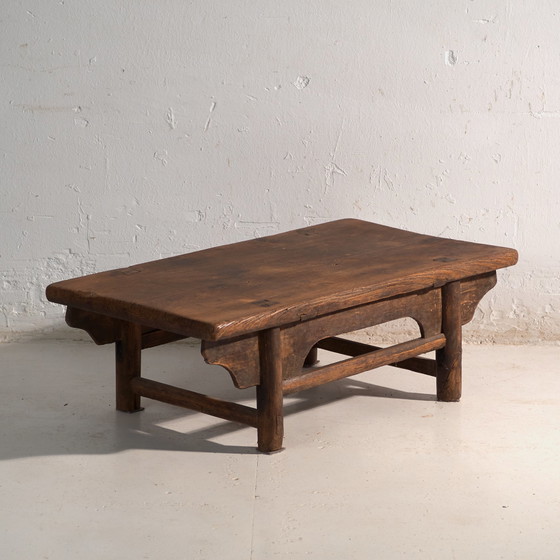
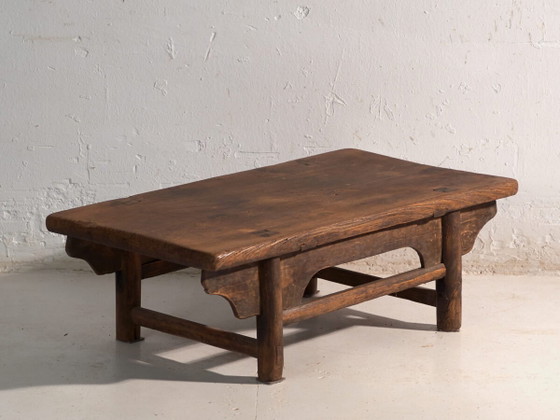
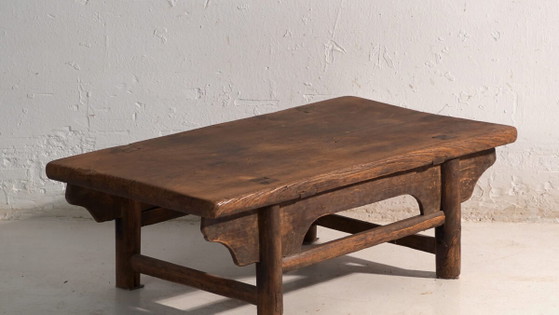
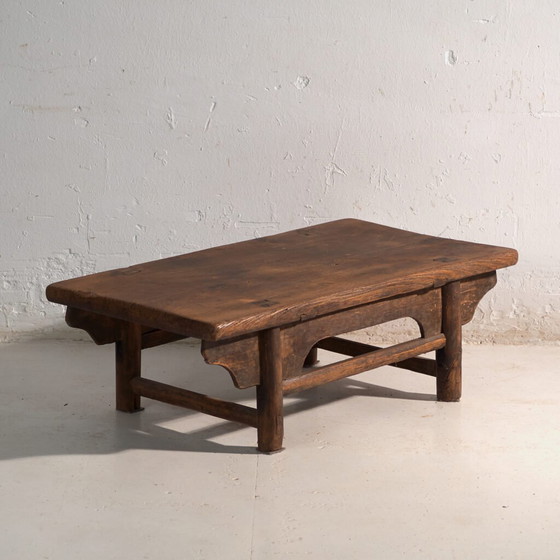
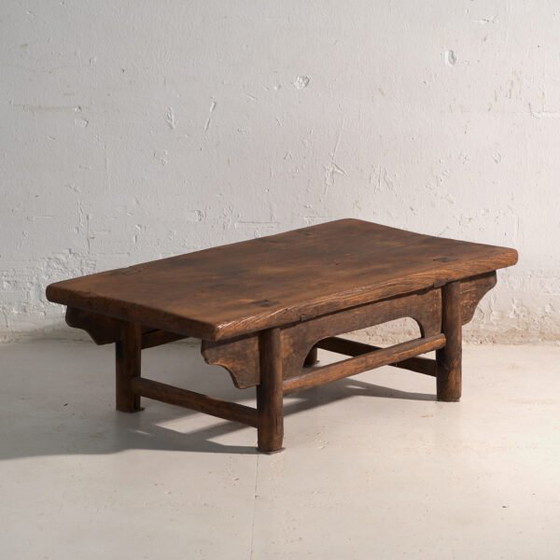
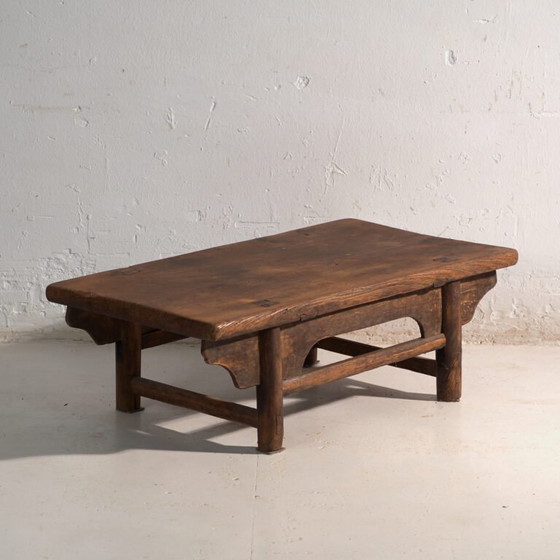
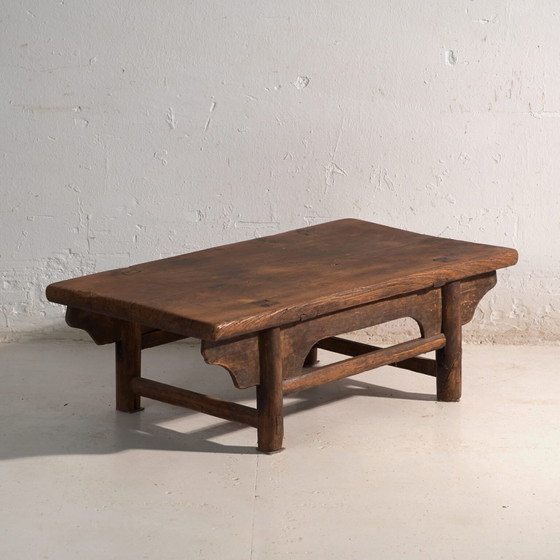

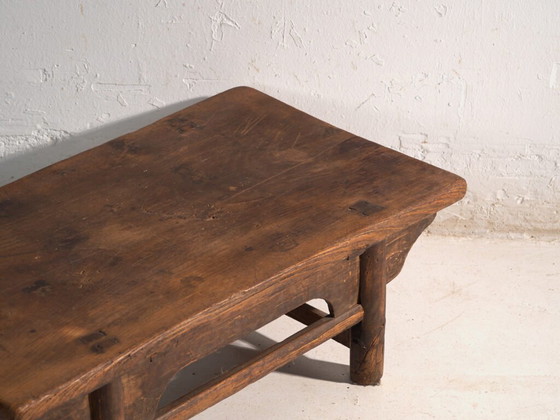
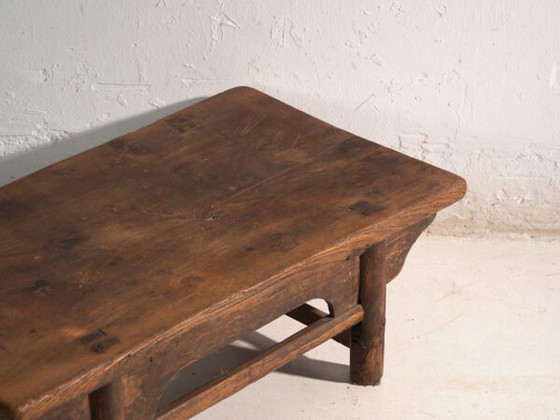
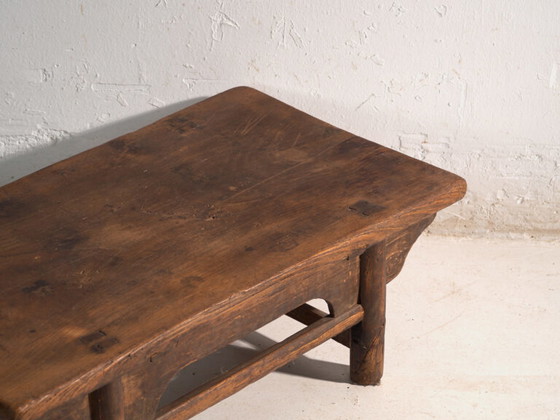
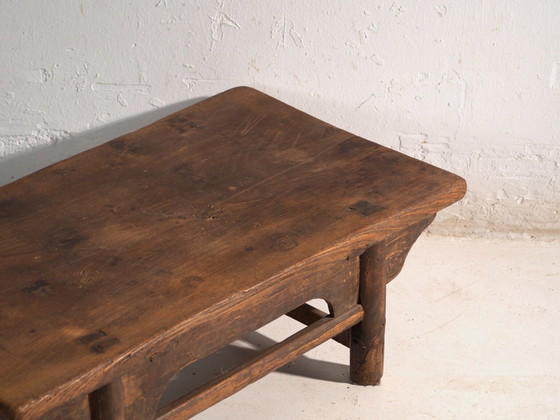

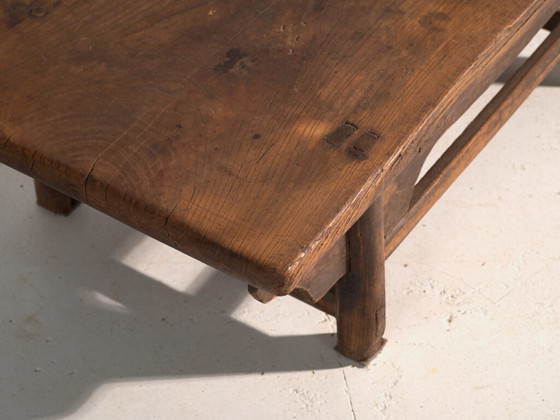
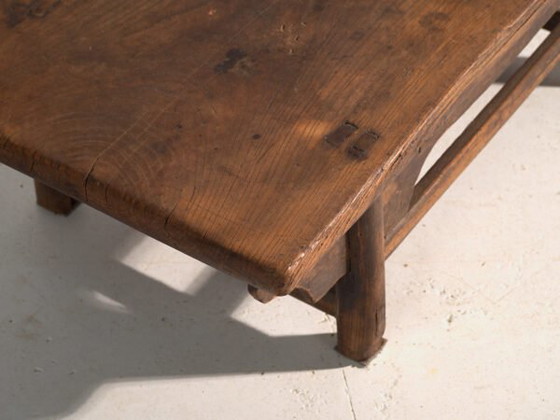
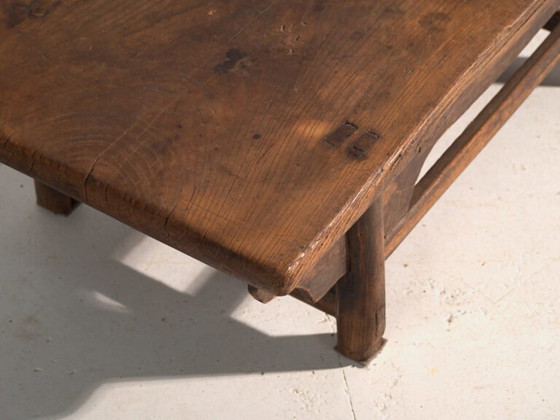


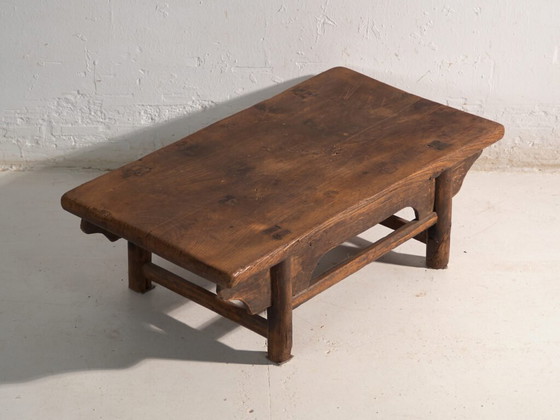
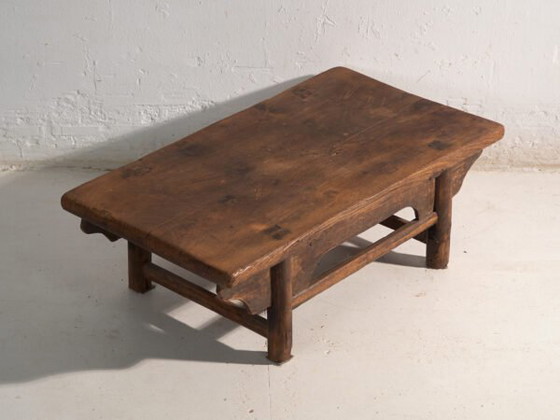
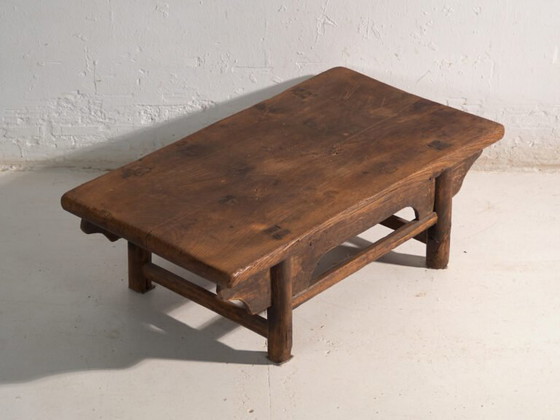
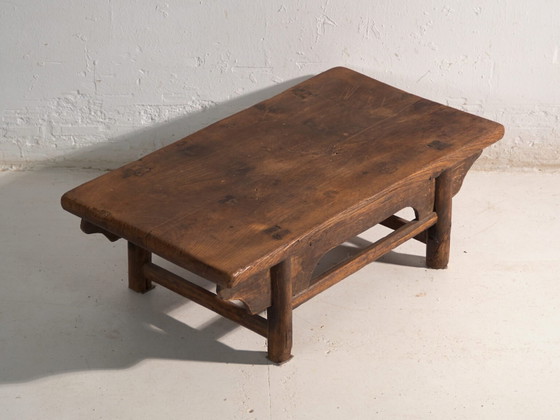

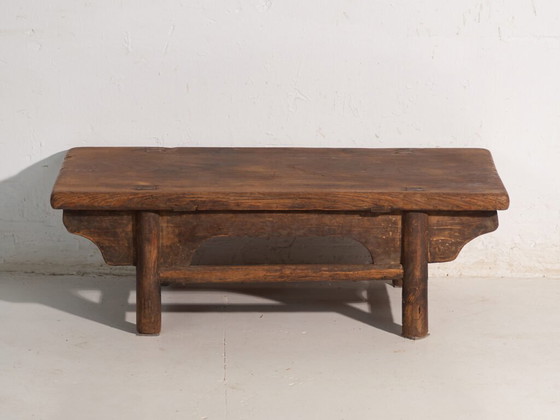
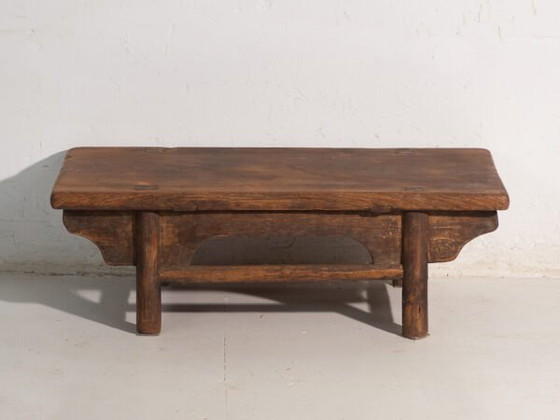
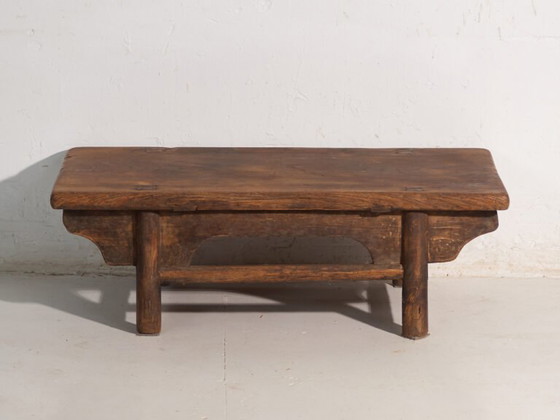
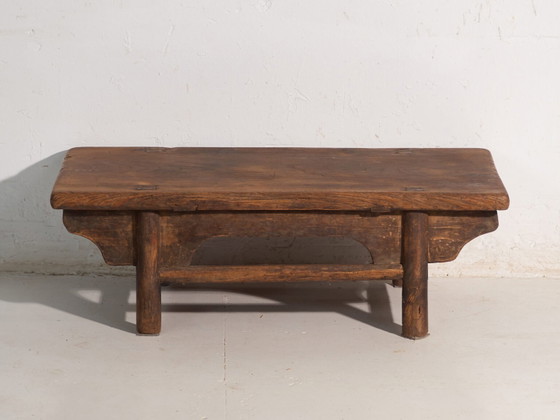

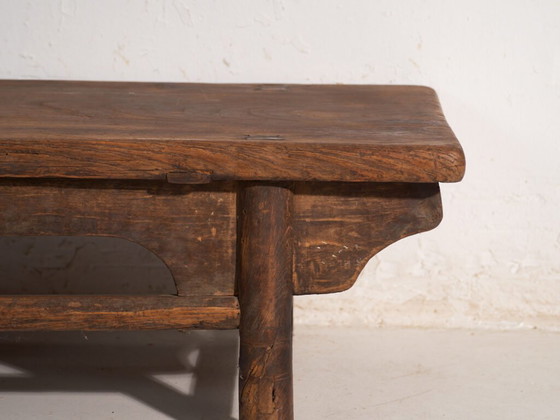
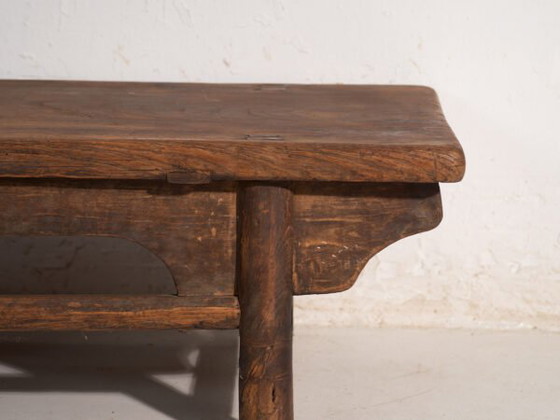
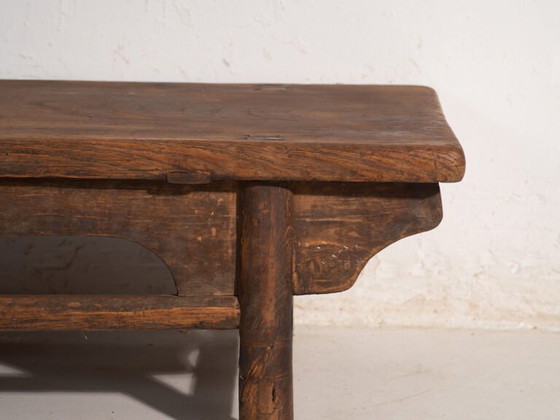
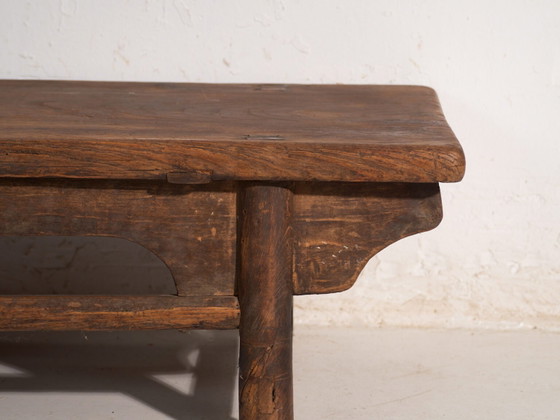

Antique low table in elm wood – China, circa 1900
€390Bid from €351
Buy with confidence
Shop & pay safely with Buyer ProtectionDesigner items curated by WhoppahWe only pay the seller once you have safely received the itemTrusted payment methods


About this seller
ProfessionalProduct description
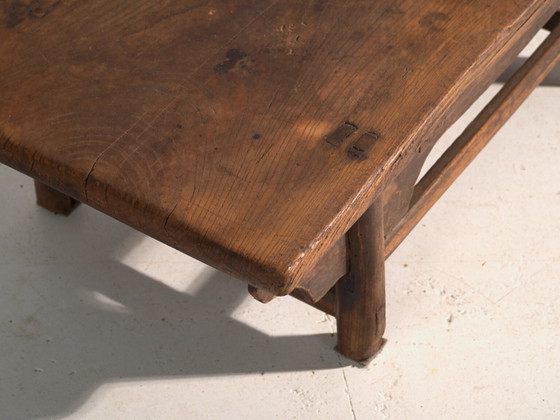
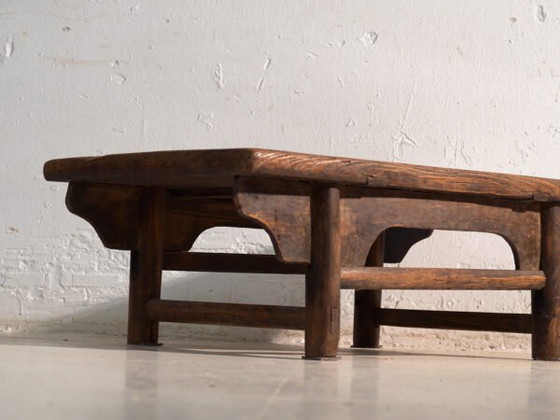
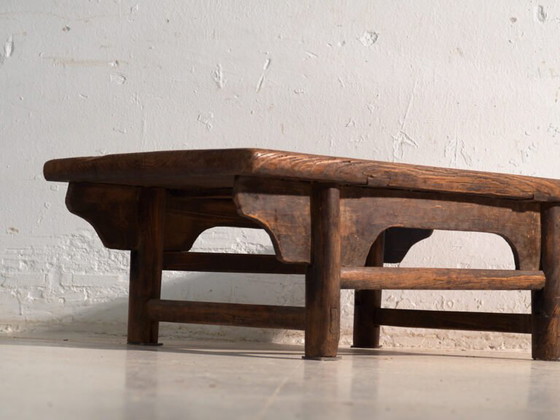
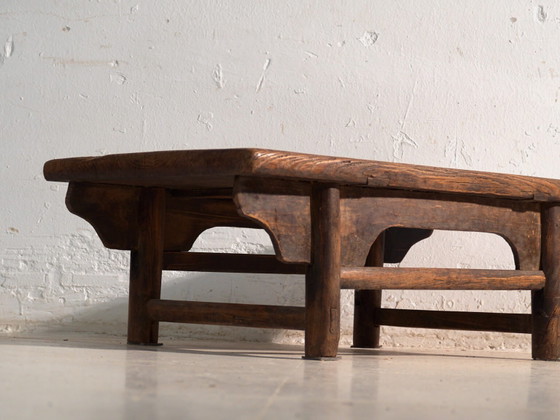
This antique low table in elm wood is a Chinese kang table with a solid top and shaped aprons, raised on four round legs joined by stretchers. It originates from China, from the late Qing dynasty, where elm was worked with mortise-and-tenon joinery.
Kang tables were used on the heated platform of the Chinese home, as a low surface for tea, meals and reading. Their reduced height answered to a domestic life close to the floor.
The top is solid elm, set on round-section legs braced by stretchers, with shaped aprons beneath the edge. The joints are mortise-and-tenon, fitted by hand, and the wood keeps its tool marks.
The patina is warm and uneven, a chestnut tone with the grain visible beneath soft wear. Small marks and stains from use run across the surface and confirm its authenticity.
For its low height and contained proportion, it serves as a coffee table before a sofa or as an Asian-feeling tea table. It fits wabi-sabi, japandi and contemporary rustic interiors, where it brings a serene presence.
Details
Ref.: AM34014-4
Dimensions: Length 85 cm – Width 46 cm – Height 28 cm
Style: Qing dynasty
Materials and techniques: Solid elm; traditional Chinese mortise-and-tenon joinery.
Place of origin: China
Period: Late Qing dynasty
Date of manufacture: Circa 1900
Condition: Good. Honest patina and wear on the elm, with marks and stains consistent with use. Wear consistent with age and use.
This piece is part of the curated collection of Amaru Antiques, Barcelona.
ONE OF A KIND PIECE
Additional details:
- Brand: AMARU
- Style: Qing Dynasty
- Style: wabi-sabi
- Style: japandi
- Style: contemporary rustic
- Material: elm wood
- Material: solid elm
- Colour: chestnut
- Period: Late Qing dynasty
Specifications
ConditionGoodHeight85 cmWidth46 cmDepth28 cm
Discover more
Seller information
About this seller
ProfessionalGelida (Barcelona), SpainOn Whoppah since July 2026 • 0 sales