Have it delivered hassle-freeBuyer protectionAll Designer items curated by WhoppahDownload the Whoppah App – get alerts & sell with ease.
Have it delivered hassle-free
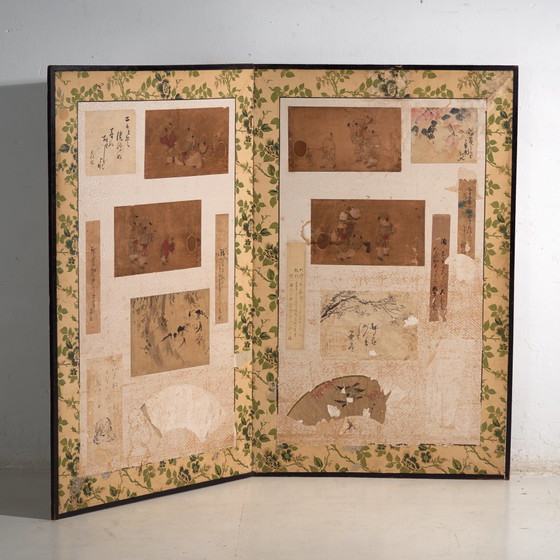
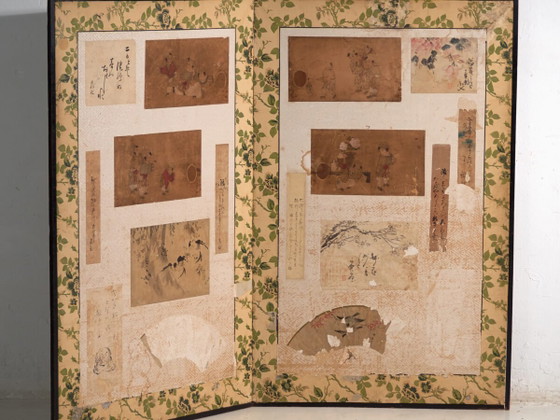
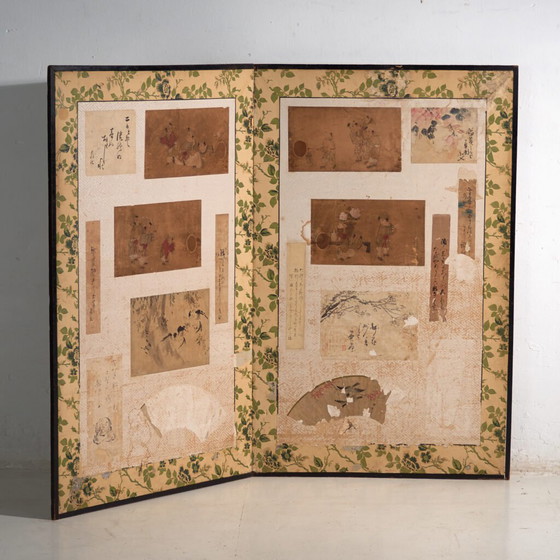
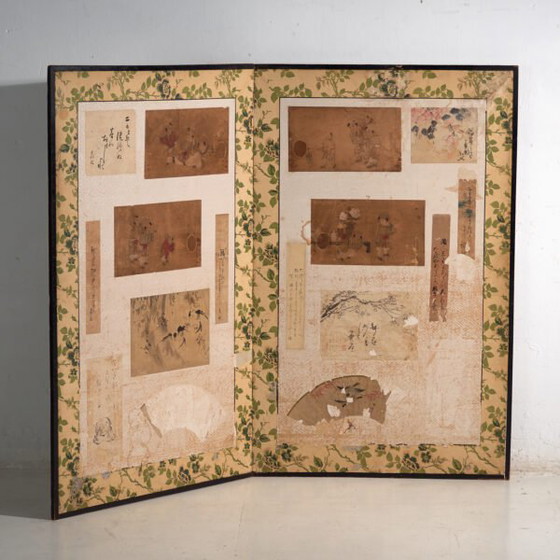
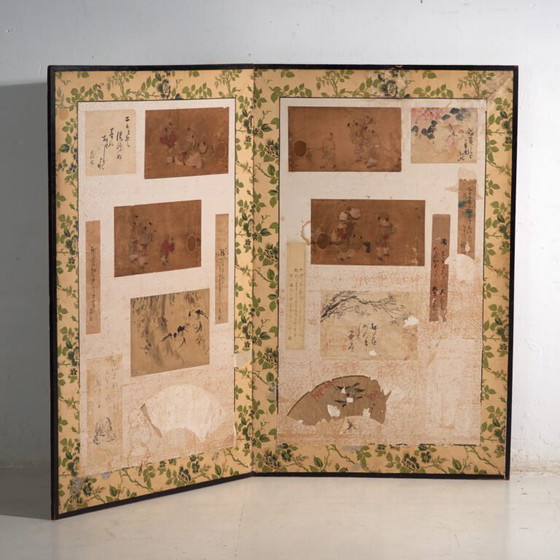
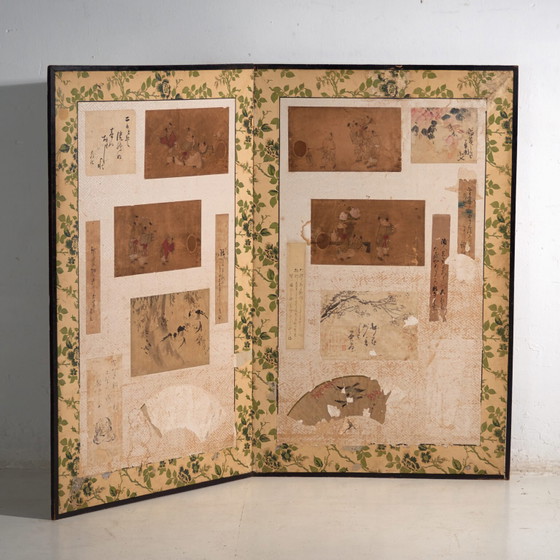
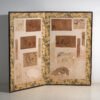

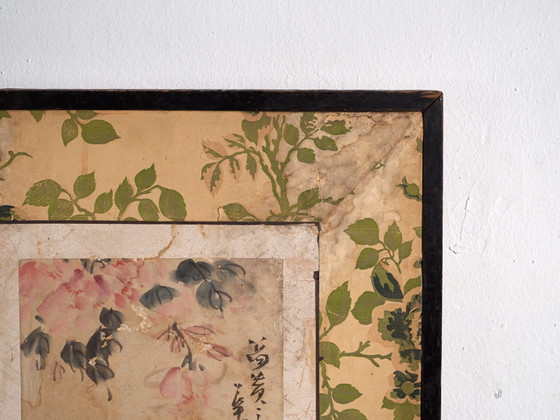

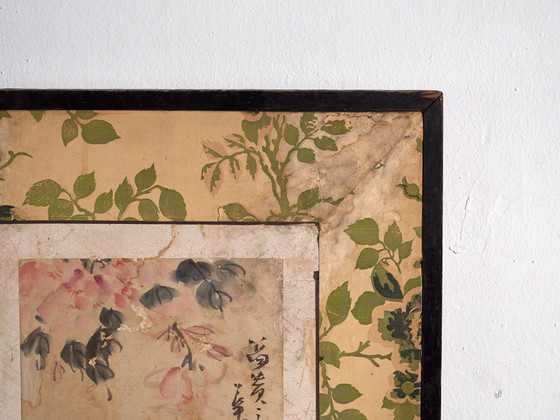
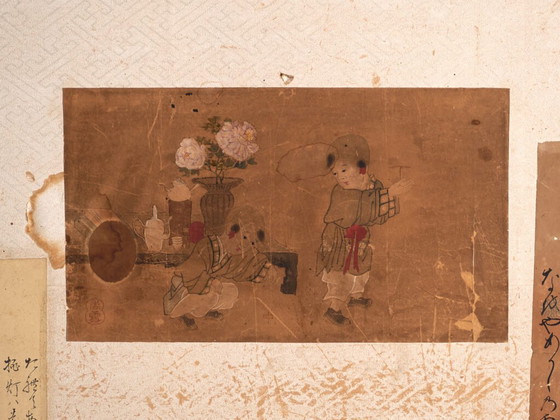
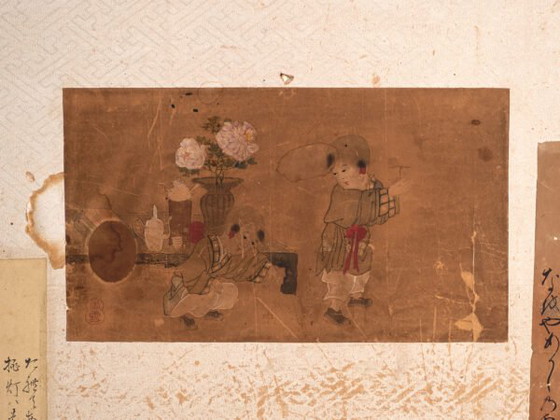
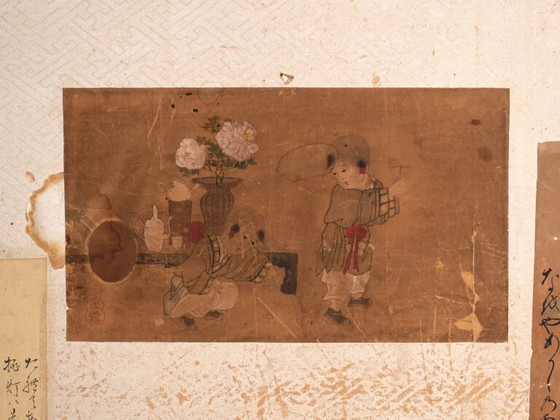
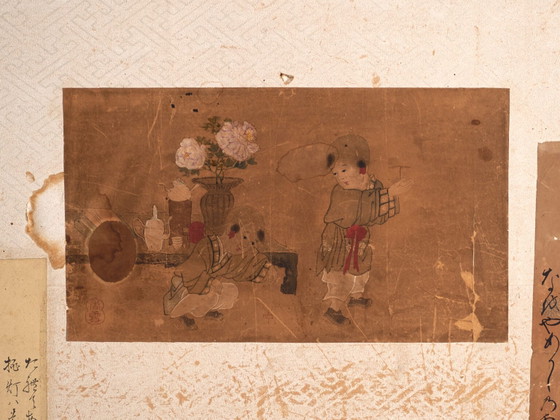

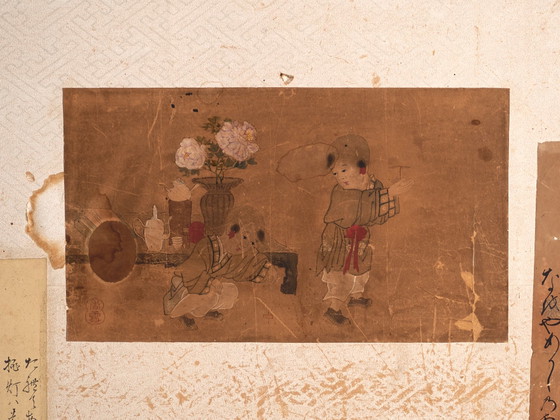
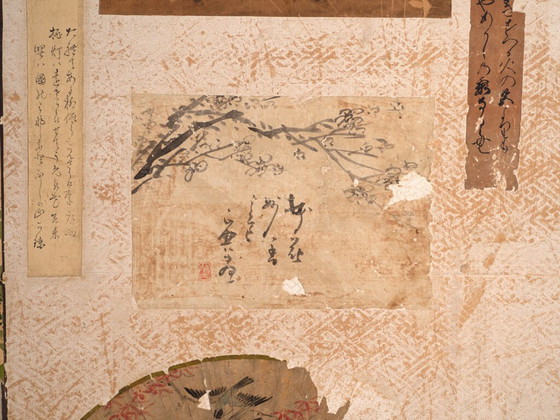
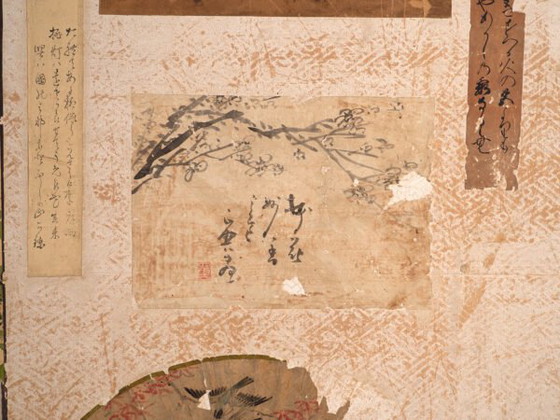
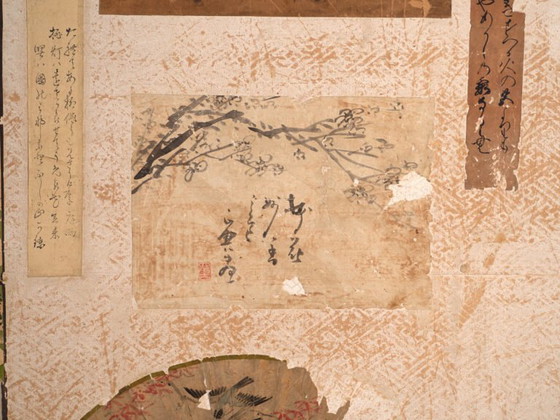
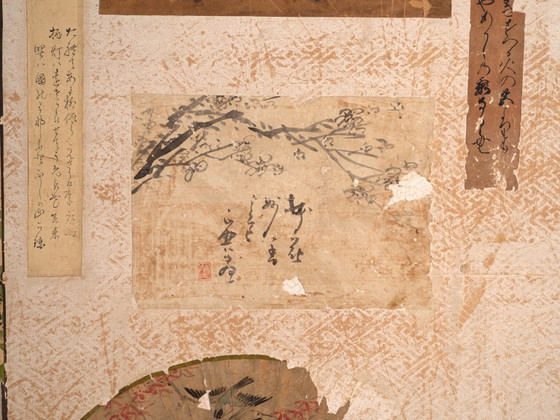

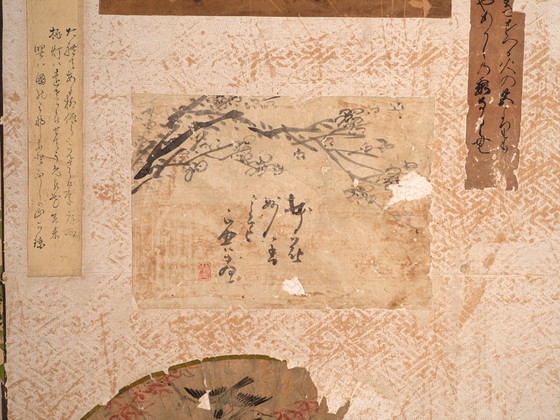

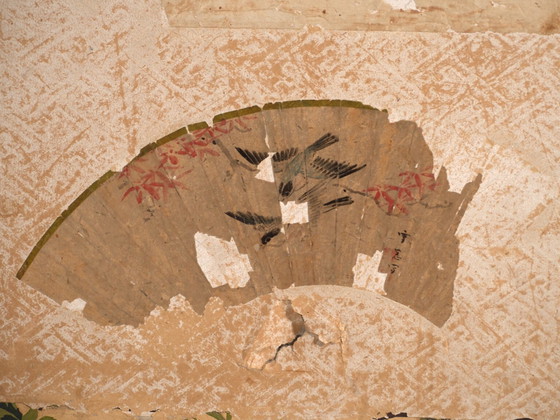

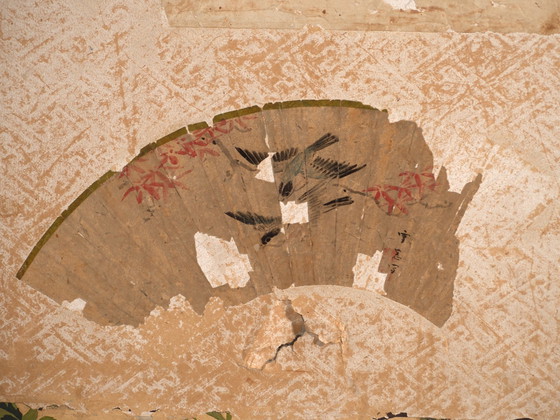
Antique Japanese two-panel screen with painting collage – Japan, circa 1900
€885Bid from €796.50
Buy with confidence
Shop & pay safely with Buyer ProtectionDesigner items curated by WhoppahWe only pay the seller once you have safely received the itemTrusted payment methods


About this seller
ProfessionalProduct description
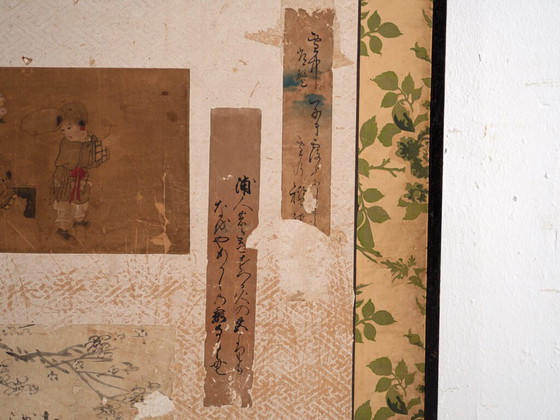
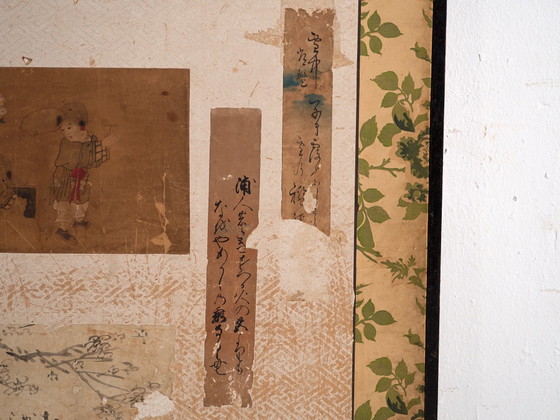
This antique Japanese two-panel screen is a byōbu in harimaze mounting, with pasted paintings and calligraphy on the ground. It originates from Japan, from the Meiji period, when works by different hands were gathered on a single screen.
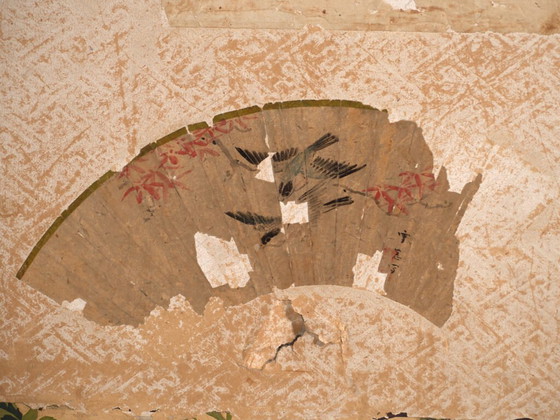
The harimaze screen gathered paintings, calligraphy and fans of varied origin, mounted together on a common ground. It was a way to keep and display a collection of small works.
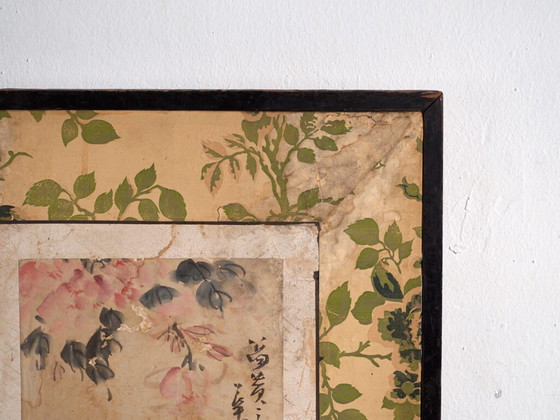
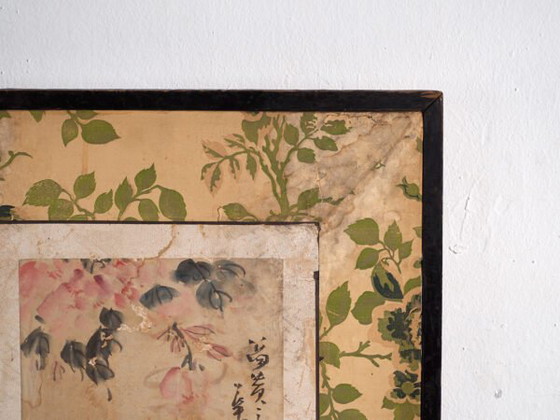
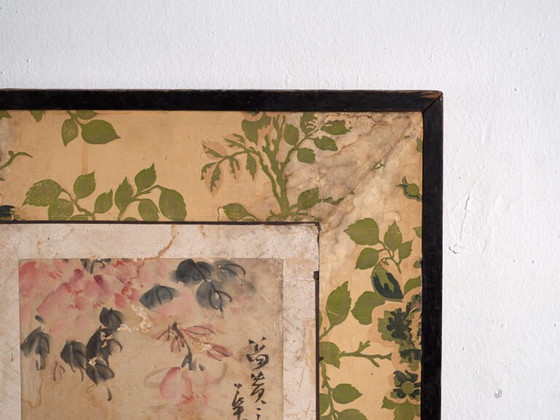
The two panels are paper over a wooden lattice, joined by paper hinges, with a dark frame. On a floral-patterned paper ground, the various works were pasted in rectangular, fan and column formats.
The composition gathers figurative scenes, painted fans and columns of calligraphy, of several hands and formats. The whole reads as a mosaic of small works mounted on a single surface.
For its two-panel format, it serves as a decorative backdrop or a wall piece with collection value. It fits wabi-sabi, japandi and eclectic interiors, where it brings texture and narrative.
Details
Ref.: AM30034
Dimensions: Length 176 cm – Width 2 cm – Height 139 cm
Style: Traditional Japanese
Materials and techniques: Paper and pasted paintings (harimaze) over wooden lattice; paper hinges; wooden frame.
Place of origin: Japan
Period: Meiji period
Date of manufacture: Circa 1900
Condition: Good. Harimaze mounting with water stains and missing pieces consistent with age. Folded dimensions: Length 88 cm – Width 4 cm – Height 139 cm. Wear consistent with age and use.
This piece is part of the curated collection of Amaru Antiques, Barcelona.
ONE OF A KIND PIECE
Additional details:
- Brand: AMARU
- Style: Traditional Japanese
- Style: Wabi-sabi
- Style: Japandi
- Style: Eclectic
- Colour: Dark
- Period: Meiji period
Specifications
ConditionGoodMaterialPaper, WoodHeight176 cmWidth2 cmDepth139 cm
Discover more
Seller information
About this seller
ProfessionalGelida (Barcelona), SpainOn Whoppah since July 2026 • 0 sales