Have it delivered hassle-freeBuyer protectionAll Designer items curated by WhoppahDownload the Whoppah App – get alerts & sell with ease.
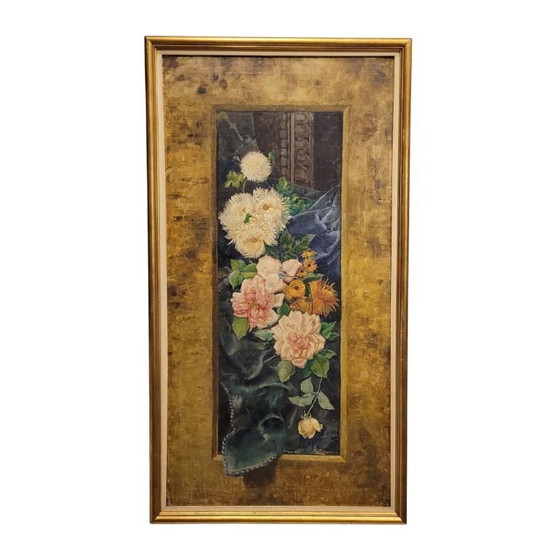
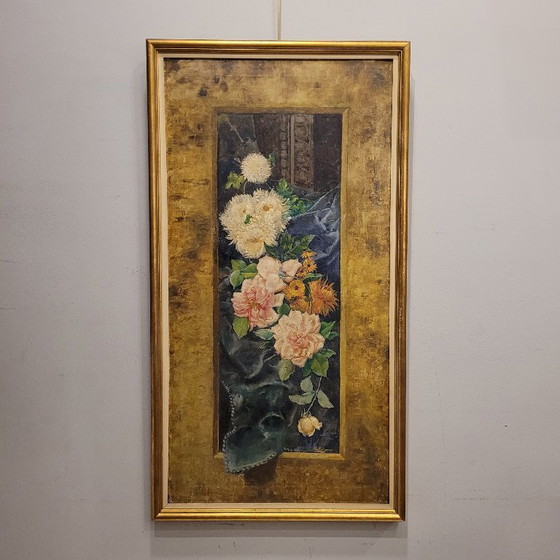
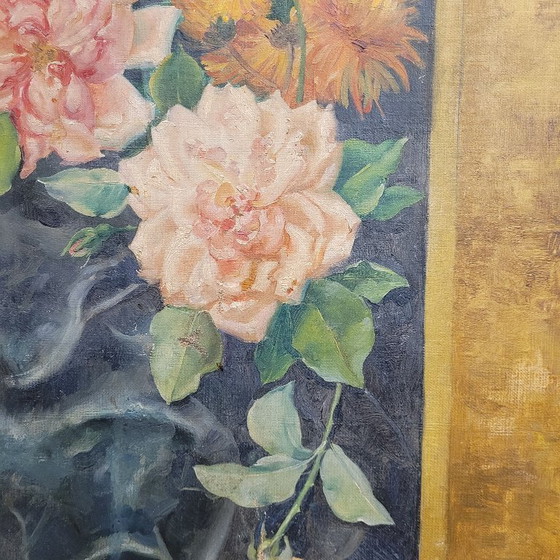
“Flowers” Fernando García Camoyano, early 20th century – Spain
€1,400Bid from €1,250
Buy with confidence
Shop & pay safely with Buyer ProtectionDesigner items curated by WhoppahWe only pay the seller once you have safely received the itemTrusted payment methods


About this seller
ProfessionalProduct description
“Flowers” by Fernando García Camoyano, early 20th century – Spain
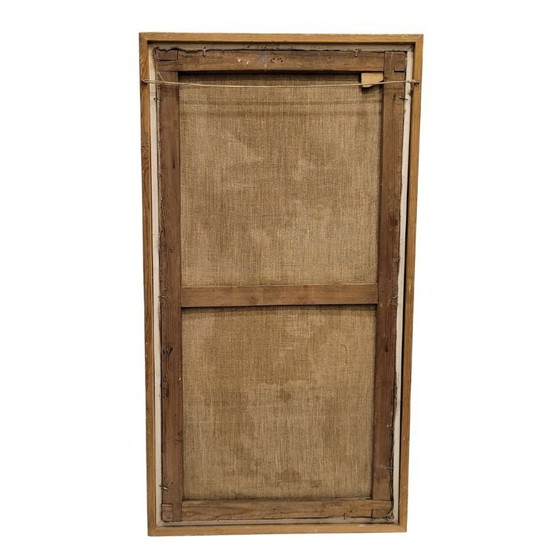
Technique: Oil on canvas
Title: “Flowers”
Artist: Fernando García Camoyano (1867-1930)
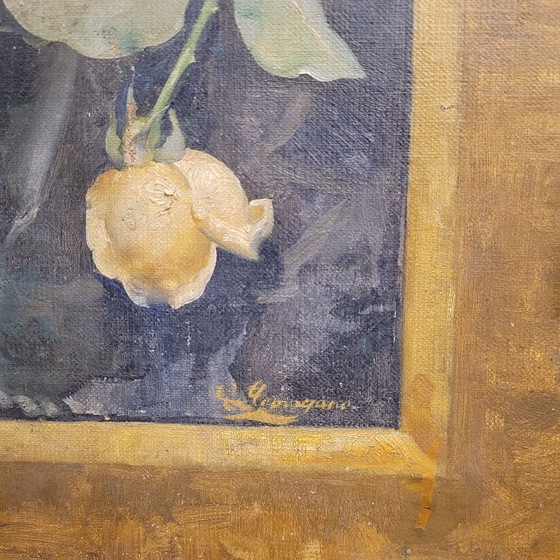
Signed
Period: Early 20th century
Good condition for its age and use
Overall dimensions: 111 x 60 x 5 cm
Dimensions without frame: 104 x 52 cm
This delicate oil on canvas by Fernando García Camoyano depicts an elaborate bouquet of flowers, including large white and pink peonies, as well as smaller flowers in warm colors. All are arranged on a dark canvas, full of folds that add depth and contrast to the composition. Furthermore, the composition is framed by a thick gold border, which seems to simulate a window frame or opening through which the fabric enveloping the flowers protrudes slightly, creating a trompe l'oeil effect, as if it were emerging from the frame itself. This work manifests its theatrical character. The rich floral composition emerges dramatically from the darkness, directly illuminated, thus creating an effect of depth and emphasizing the contrast of light and shadow.
It exhibits the characteristic style of the genre to which it belongs, as it is, after all, a still life, realistic and meticulous, which gradually gained prominence in the history of art. The great artist Caravaggio (1573-1610) was one of the first artists to depict still lifes with the awareness of them as works of art, but many others employed this technique at some point in their careers. With origins in antiquity and very popular in Western art since the 17th century, the still life gives the artist more compositional freedom than other pictorial genres such as landscape or portraiture. Before 1700, still lifes often contained religious and allegorical symbolism related to the objects they depicted. Also known as nature morte, they typically feature animals, flowers, fruits, food, plants, and so on. Their development is part of a growing appreciation for painting and a surge of interest in naturalism and the imitation of nature that began to develop at the end of the previous century.
Fernando García Camoyano (1867-1930), known as "The Painter of Flowers," was a Spanish painter and draftsman born in Badajoz. From a young age, he began his artistic training, first in Badajoz under the tutelage of Felipe Checa y Delicado, and later in Seville with Manuel de la Rosa Sampedro, where he completed his formal education.
Throughout his career, Camoyano actively participated in important national and international exhibitions. In 1887 and 1890, he presented his works at the National Exhibition of Fine Arts in Madrid, marking the beginning of his career in the national art scene. From 1892 onward, he gained international recognition, receiving an honorable mention at the International Fine Arts Exhibition in Madrid and winning medals at events such as the World's Columbian Exposition in Chicago in 1893.
At the end of the 19th century, Camoyano moved to America, where his career flourished. He exhibited successfully in New York and Buenos Aires, which allowed him to establish a solid financial position. His international success continued with exhibitions in Brussels, Paris, and other European cities, and in 1895 he began teaching painting in Santander, where his studio became a popular haunt for the local aristocracy.
During the early years of the 20th century, Camoyano experienced a period of great productivity. His work encompassed a wide variety of genres, from landscapes and portraits to genre and everyday scenes, distinguished by his delicate use of color and light, especially in his paintings of flowers and female figures.
Throughout his career, Camoyano's work was recognized both in Spain and abroad. In 1901, he was the artistic director of the Revista Veraniega (Summer Magazine) in Santander, and from 1905 onwards, his paintings of flowers and Andalusian scenes gained great popularity. Throughout his life, he also worked on religious commissions and portraits, among which the Portrait of Marcelino Menéndez Pelayo (1912) stands out.
In his later years, Camoyano continued to be a prominent figure in the Santander and Madrid art scene. His health was affected by heart problems, and he died in 1930 at the age of 62, leaving a legacy of works that reflected the influence of Spanish academic painting and a taste for the Romantic tradition.
Shipping costs will be paid by the buyer according to the dimensions, weight, and destination. We will contact you to arrange shipping and agree on a quote. Shipping costs include custom-made professional packaging and personalized delivery with tracking and a guarantee.
The frame protecting the artwork is offered as a gift, but it has intrinsic value. It is provided at no extra cost so that when your artwork arrives at your home or destination, it can be displayed immediately. Any damage to the frame itself, which does not affect the integrity of the artwork, cannot be accepted as a valid reason for filing a claim or requesting a cancellation.
Specifications
ConditionVery goodColorsBlack, Creme, GoldMaterialCanvasNumber of items1OrientationPortraitArt sizeLargeHeight111 cmWidth60 cmSigns of usageScratches
Discover more
Seller information
About this seller
ProfessionalValladolid, SpainOn Whoppah since October 2024 • 1 sale