Mies van der Rohe (with Lilly Reich): less is more, made into furniture
Mies designed the Barcelona chair in 1929 with Lilly Reich for the German Pavilion. Almost a century later, it's still produced by Knoll and still represents the disciplined modernism Mies built his architecture around.

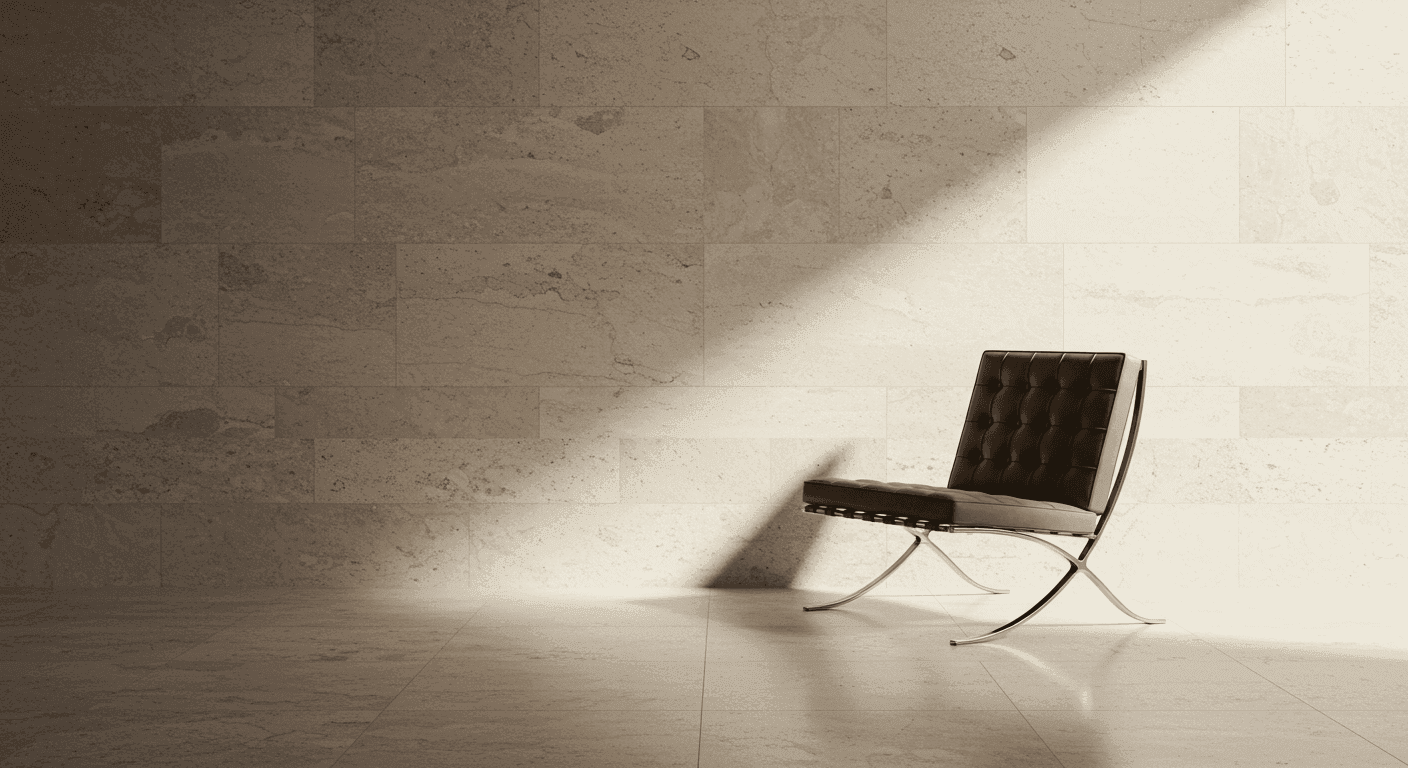
Ludwig Mies van der Rohe (1886 to 1969) turned 'less is more' into furniture in a handful of pieces designed with Lilly Reich, and their Barcelona chair, created for the German Pavilion at the 1929 Barcelona International Exposition, is still the definitive modernist lounge chair. It has been in continuous Knoll production since 1953: on Whoppah, an authentic vintage Knoll Barcelona from the first two decades of production sits at €4,000 to €8,000, while newer Knoll editions from the 1990s run €2,000 to €3,500. Barcelona and Brno chair listings are some of the most carefully reviewed pieces our curators handle; the authorised Knoll production has specific identifiers we look for, and unmarked pieces require additional provenance. Here's the story, and how to authenticate.
The architect, and his collaborator
Ludwig Mies van der Rohe (1886 to 1969) is one of the four most important architects of the 20th century. His furniture is sparse: a handful of pieces, designed in collaboration with Lilly Reich, mostly during their work at the Bauhaus and at the German Pavilion for the 1929 Barcelona International Exposition. Reich (1885 to 1947) was his partner in both design and life for two decades, and the furniture catalogues now name her on most of these pieces. That correction is overdue and welcome.
What they made
The Barcelona chair (1929) is the famous one. Designed for the German Pavilion at the Barcelona Expo, specifically for the King and Queen of Spain to sit on during the opening ceremony. Chrome-plated steel frame, hand-tufted leather cushions, perfect proportions. The chair has been in continuous Knoll production since 1953. An authentic vintage Knoll Barcelona from the first two decades of production (1953 to 1975) in pristine cognac leather sits at €4,000 to €8,000 on Whoppah. Newer Knoll editions from the 1990s run €2,000 to €3,500.
The Barcelona stool, ottoman and daybed are the matching pieces. Less iconic individually, but together they make up the seating set for an entire room.
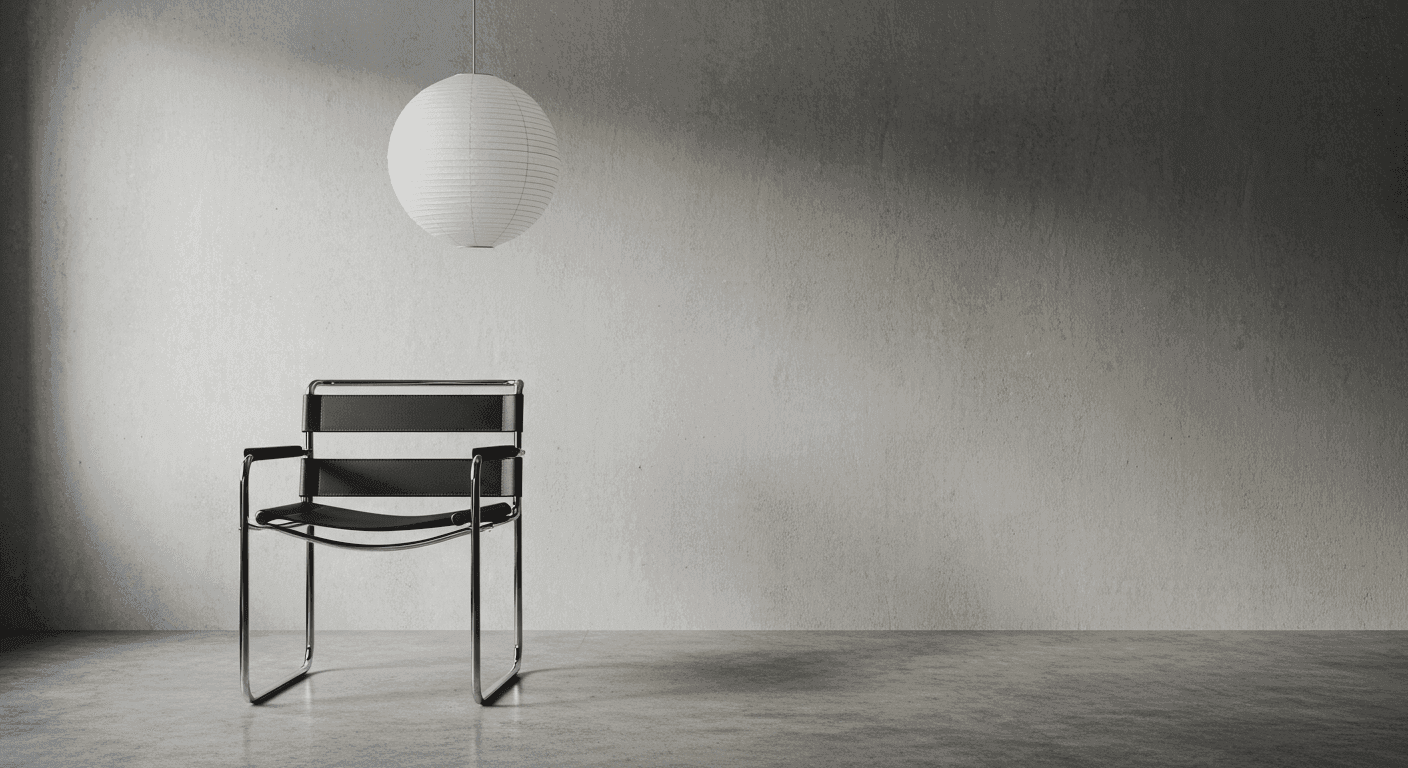
The MR10 cantilever chair (1927), in chromed tubular steel with leather or caned seat, was Mies and Reich's earlier Bauhaus-era work. It's in production by both Knoll and Thonet today. Authentic vintage examples sit at €600 to €1,400 on Whoppah.
The Brno chair (1930), designed for the Tugendhat House in Brno, Czechoslovakia, is the cantilever piece with the deeper seat and the flat-bar steel frame. €700 to €1,800 used.
Why do Mies van der Rohe's chairs feel different from other Bauhaus furniture?
Most Bauhaus tubular-steel work, even Marcel Breuer's celebrated Wassily and Cesca, has an experimental quality. The MR10 and Barcelona pieces feel resolved. The proportions are pulled to a final, calm state, and you can see why Mies became the architect of the Seagram Building. He wasn't experimenting any more. He was finishing.
How do you authenticate a Knoll Barcelona chair?
Real Knoll Barcelona chairs have a hand-stitched leather label sewn into one of the cushions and a metal serial-number plate on the underside of the frame. The leather should be saddle-thickness, with no creases that look "too clean". The chrome should have weight; you can feel a real Knoll frame is dense when you lift one corner.
Italian unauthorised copies are everywhere. The cheapest tell is the cushion buttoning: Knoll uses 40 hand-tied buttons per Barcelona cushion in a specific pattern. Copies often use fewer, in less precise positions.
If you're buying a Barcelona, message us before you commit. Authentication on a four-figure piece is worth the five minutes.