Have it delivered hassle-freeBuyer protectionAll Designer items curated by WhoppahDownload the Whoppah App – get alerts & sell with ease.
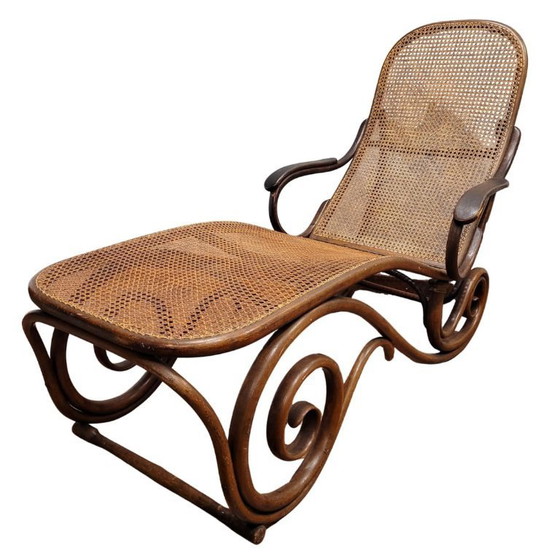
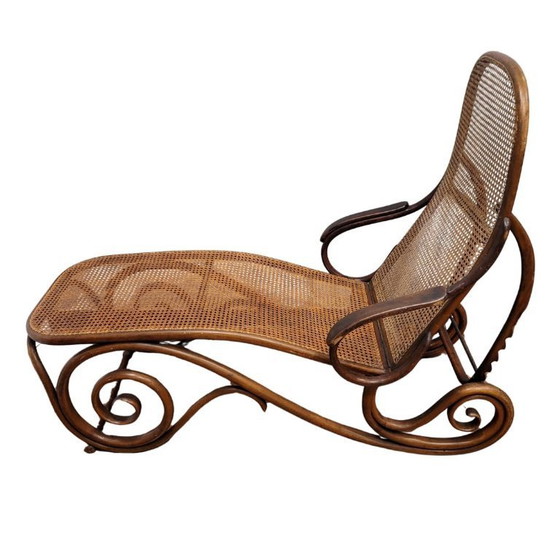
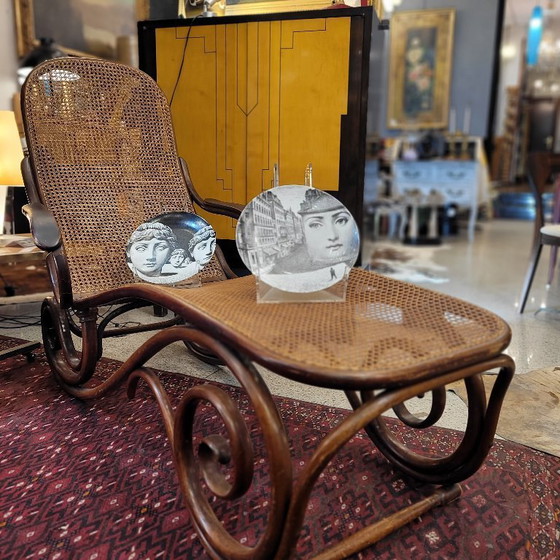
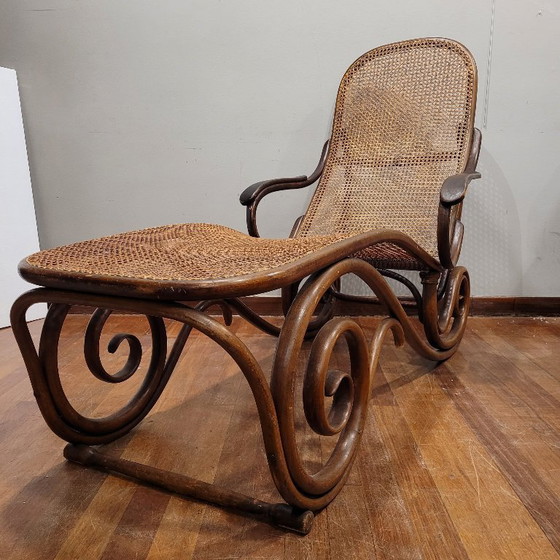
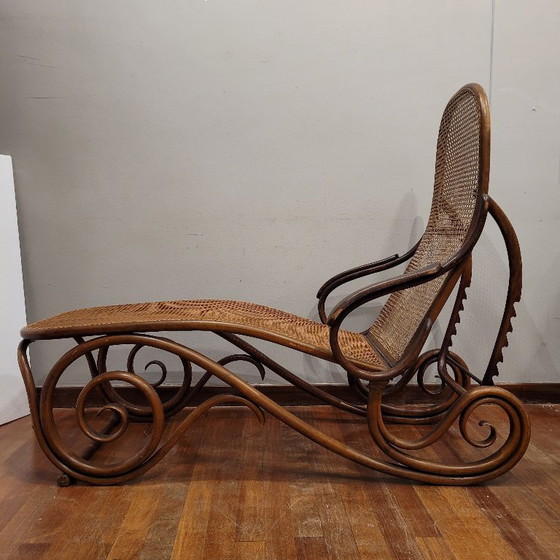
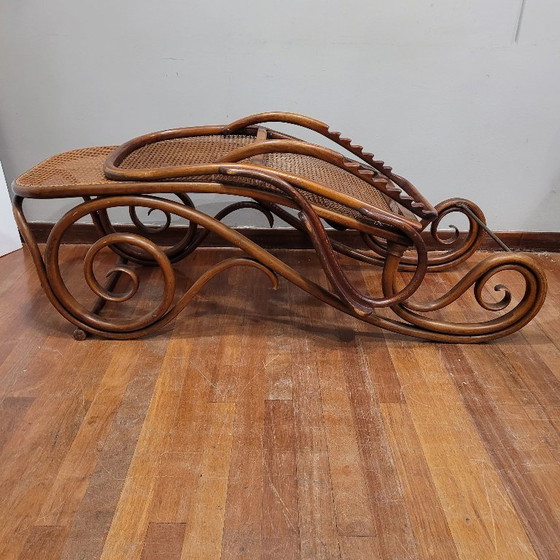
Reclining chaise longue armchair, bent beech wood, signed Thonet, Art Nouveau, 1879 - Austria
€4,300Bid from €3,900
Buy with confidence
Shop & pay safely with our Buyer ProtectionDesigner items curated by WhoppahWe only pay the seller once you have safely received the itemTrusted payment methods



About this seller
ProfessionalProduct description
Reclining chaise longue armchair, bent beech wood, signed Thonet, Art Nouveau, 1879 - Austria
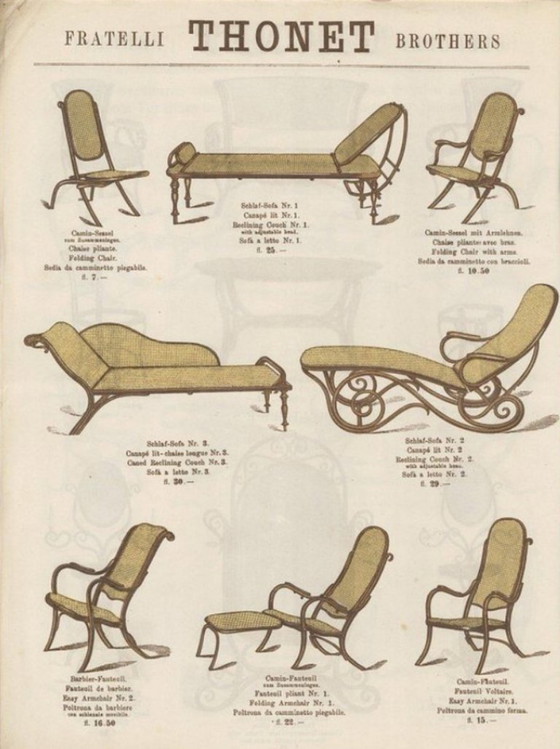
Model: Schlaf-sofa no. 2, canape lit no. 2, sofa bedstead no. 2, sofa a letto no. 2
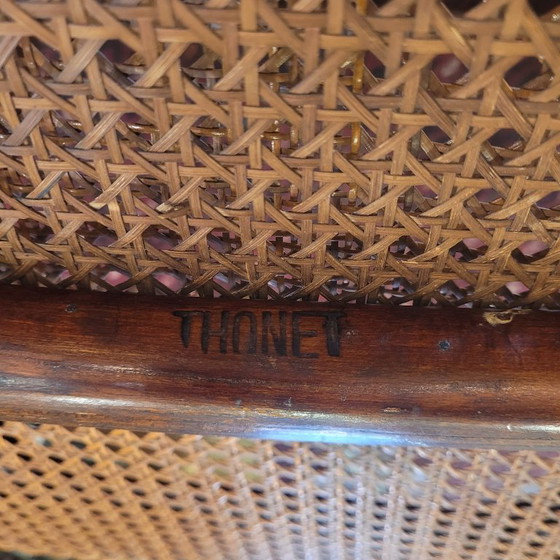
Signature: Thonet Brothers
Style: Art Nouveau
Materials: Bent beech wood
Year: 1879 Catalogue
Country of origin: Austria
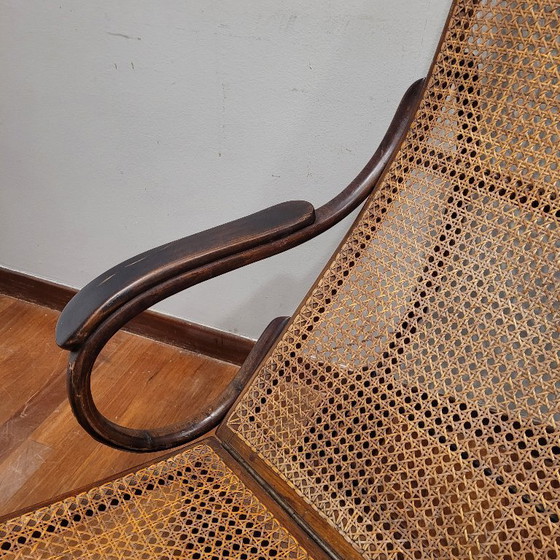
Good condition considering its age and use
Maximum dimensions: 80 x 170 x 70 cm
Dimensions when closed: 58 x 150 x 70 cm
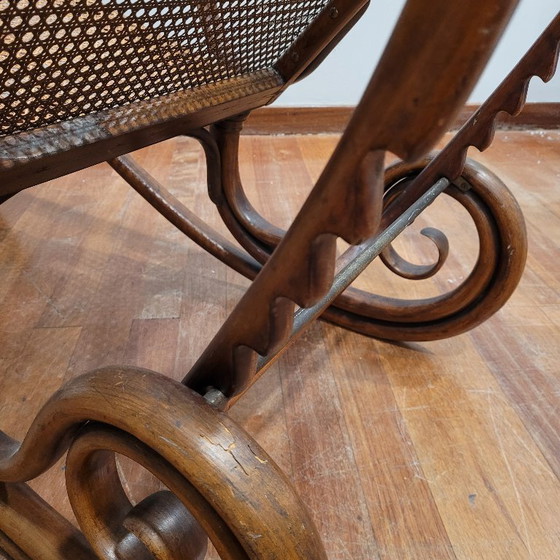
Exceptional chaise longue or sofa bed no. 2, designed by the Thonet brothers and included in their 1879 catalogue, signed on the back. This is a beautifully harmonious piece of bentwood furniture, with an adjustable or reclining backrest thanks to its toothed mechanism, finished with a cane for added comfort. A true classic of bentwood furniture, it is highly valued in the collectors' market. It also showcases the purest Art Nouveau style of the late 19th century. With its delicate forms, the bentwood lends a complex yet light appearance, giving it an elegance and slenderness visible in every part of the piece.
The bentwood process was developed by the German designer Michael Thonet in the mid-19th century to manufacture functional and attractive furniture efficiently and economically. In fact, he patented the system in 1841, but other manufacturers in Austria-Hungary entered the field when the patent expired in 1869, such as the firm J. & J. Kohn, which had already been developing models with their own distinct character since 1867, becoming his main competitor. Bentwood designs became ubiquitous as seating for cafes and gardens and, later, as elaborate and upholstered domestic furniture. Economical, durable, lightweight, and ideal for export, because the components could be assembled after shipping. This was a highly innovative technique for the time, as the furniture was manufactured by steaming the wooden pieces to bend them and place them in metal molds to create the desired curve, hardening them again by drying in kilns. They were then assembled with fittings, instead of the traditional hand-carved joints. The idea of standardized elements revolutionized the principles of furniture production.
The story of the Thonet family and the Thonet brothers
One of the most important moments in furniture history was when Michael Thonet (Boppard, Germany, July 2, 1796 – Vienna, Austro-Hungarian Empire, March 3, 1871) revolutionized furniture making. Since founding his first workshop in Boppard-on-Rhin (Germany), the Thonet name has been synonymous with high-quality, innovative, and elegant furniture. His first major success was the Boppard chair (Bopparder Schichtholzstuhl) in 1836, and in 1841 he was invited to work on the interior decoration of Liechtenstein Palace. In 1842, thanks to the support of Austrian Chancellor Klemens von Metternich, Thonet moved to Vienna with his family. There he perfected his method and officially founded the company. These were the first steps in the industrial design of furniture. Among his most famous creations is the "chair of chairs," or café chair (or Chair No. 14). In Le Corbusier's words: "Nothing more elegant and better conceived, more precise in its execution and more excellently functional has ever been created." This design, from 1859, is reduced to just six pieces of wood. It represented a revolution in furniture production, reducing labor, time, and packaging, as well as the cost for the buyer. All this was thanks to a simple technique: he subjected the beech wood to steam baths with glue to improve its flexibility and then placed it in bronze presses where it was shaped. He then assembled the wood using screws. This process resulted in greater durability of the wood and provided the pieces with great robustness. This change in mindset earned him a gold medal at the 1867 Paris Exposition.
The company was officially named Gebrüder Thonet (Thonet Brothers) in 1853, when his five sons joined the business. This gave it international reach, opening branches throughout Europe, and later in America as well. At the height of the Industrial Revolution, Michael Thonet was undoubtedly a man of his time.
After World War I and the fall of the Austro-Hungarian Empire, the company fragmented into different subsidiaries in Germany and Austria. However, the brand survived and continued operating. In Germany, the company was reorganized as Thonet GmbH, currently headquartered in Frankenberg.
Shipping costs will be paid by the buyer according to the product's dimensions, weight, and destination. Shipping costs include professional, custom-made packaging and personalized shipping with tracking and warranty.
The buyer is responsible for paying any import duties and associated taxes in the destination country. Please note the seller's exemption from liability regarding any customs charges, as these are levied in the destination country and the amount payable is determined by that country's customs authority. If an export permit is required, the buyer is responsible for the associated costs. The cost of this permit varies depending on the value of the artwork being exported.
Specifications
ConditionVery goodColorsBrownMaterialWoodNumber of items1BrandThonetHeight80 cmWidth170 cmDepth70 cmSeat height43 cmSigns of usageScratches
Seller information
About this seller
ProfessionalValladolid, SpainOn Whoppah since October 2024 • 1 sale