Have it delivered hassle-freeBuyer protectionAll Designer items curated by WhoppahDownload the Whoppah App – get alerts & sell with ease.
Have it delivered hassle-free
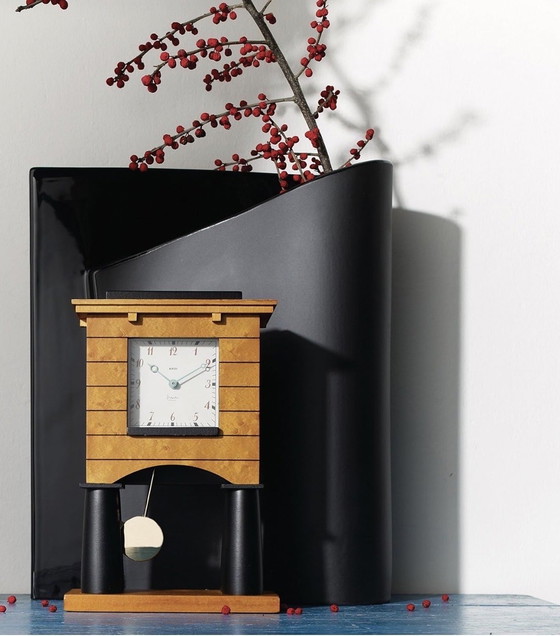
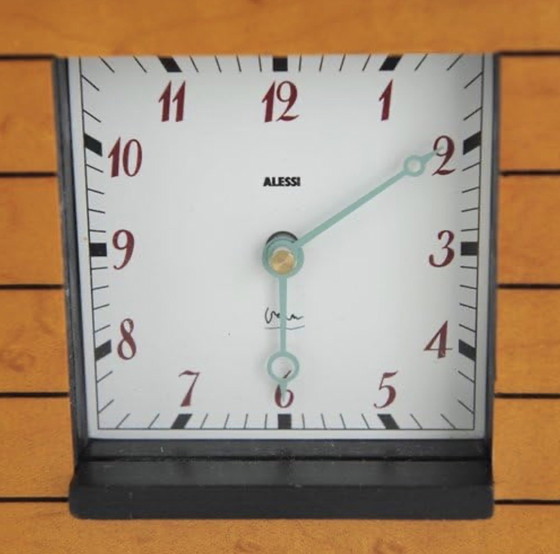
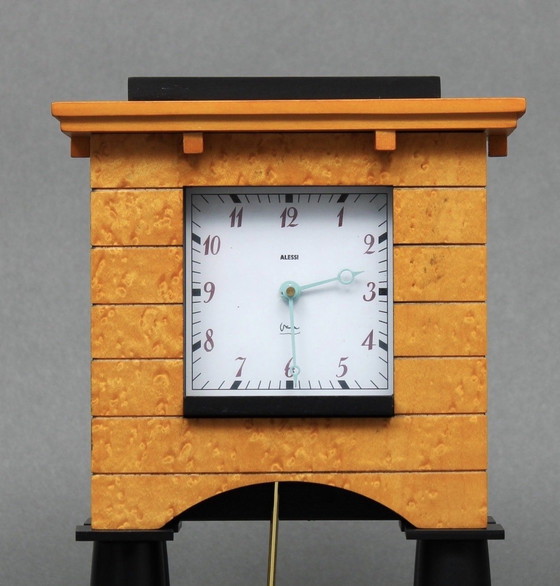
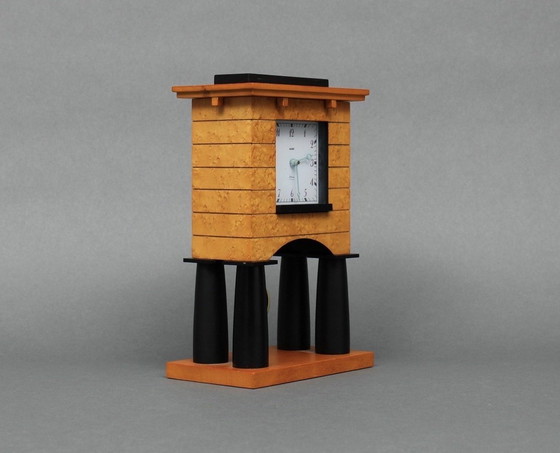
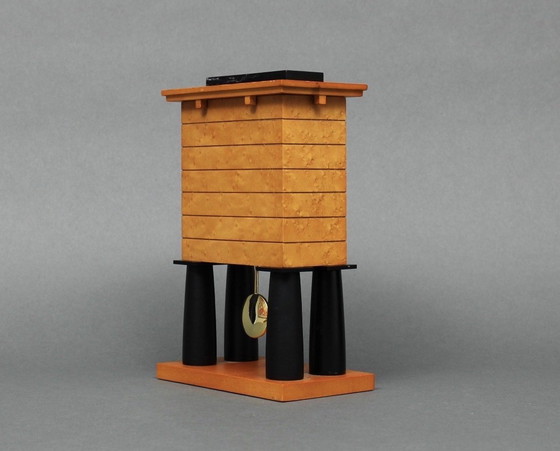
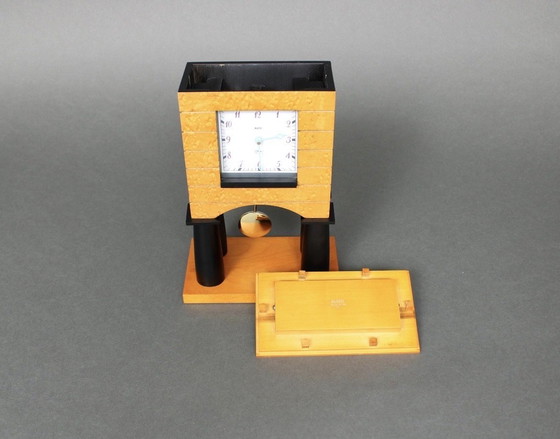
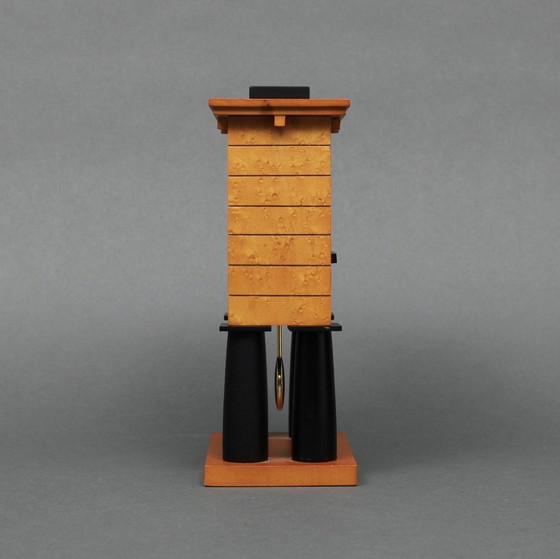
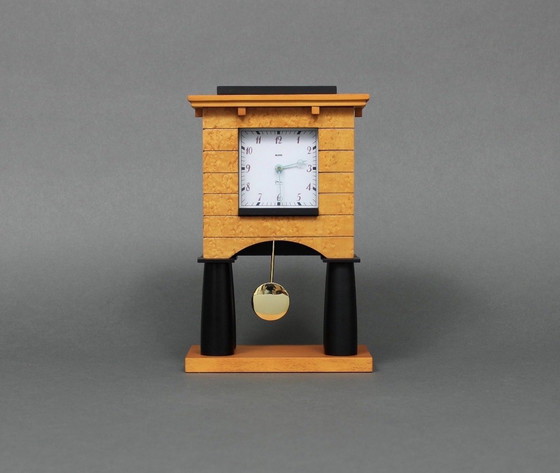
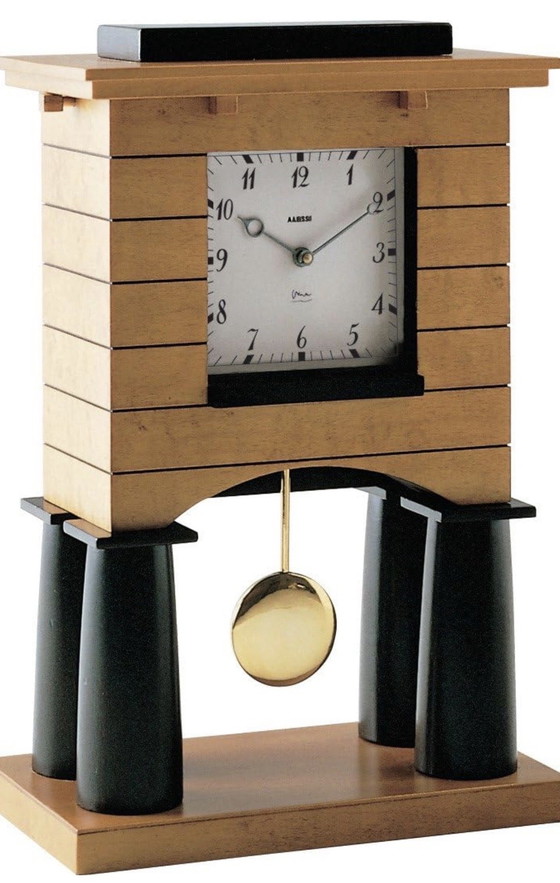
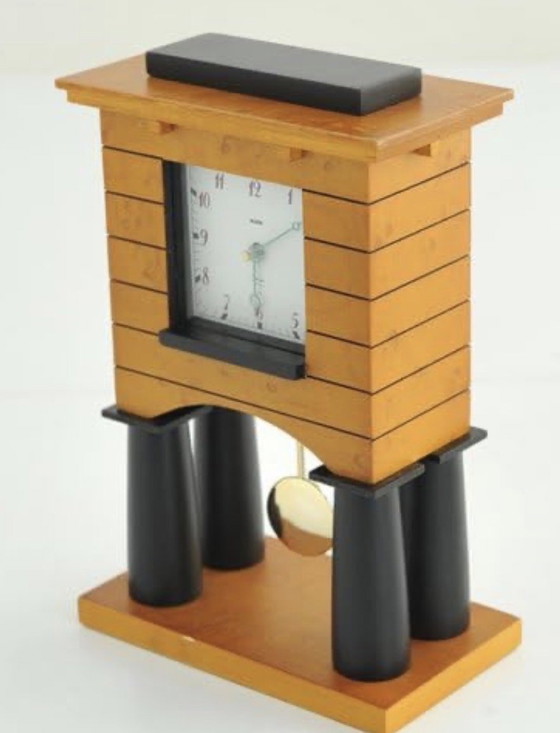
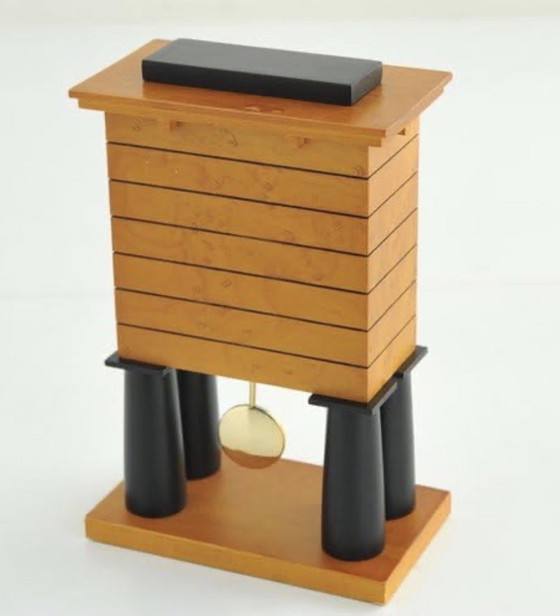
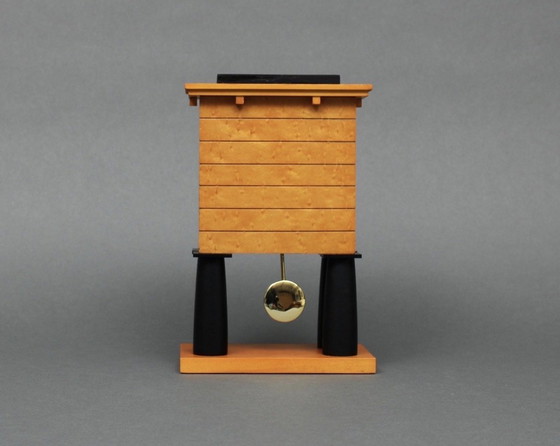
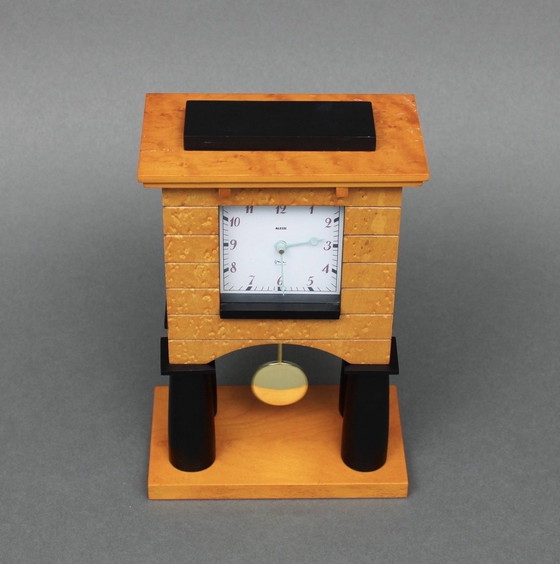
ALESSI MANTEL CLOCK TABLE CLOCK BY MICHAEL GRAVES MEMPHIS POSTMODERN
€950Bid from €650
Buy with confidence
Shop & pay safely with Buyer ProtectionDesigner items curated by WhoppahWe only pay the seller once you have safely received the itemTrusted payment methods


Private seller: no right of withdrawal, but you get your money back if the item significantly differs from the description. Return policy
About this seller
Private sellerProduct description
A rare table clock by the Italian manufacturer Alessi, designed by Michael Graves in 1989.
A special and rare collector's item of postmodernism.
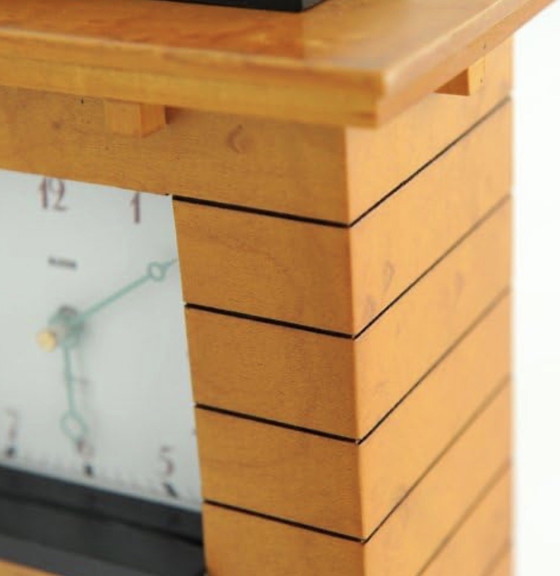
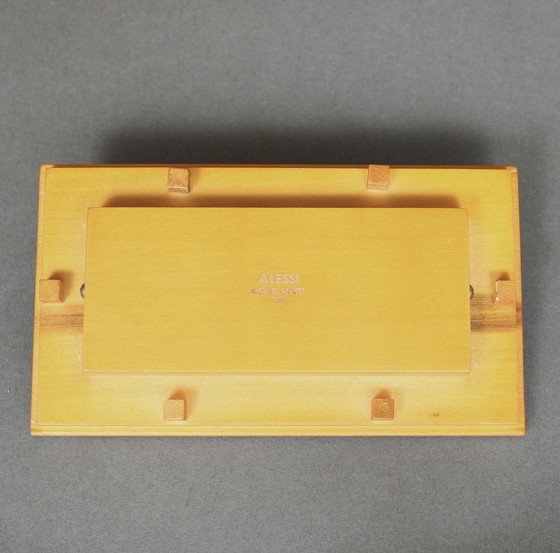
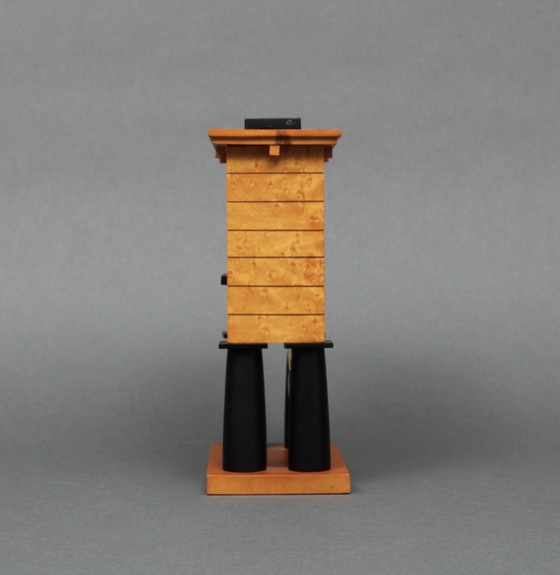
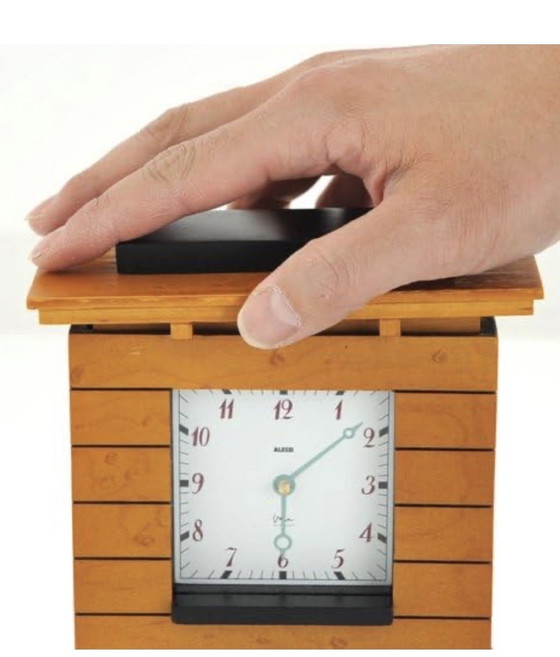
The Mantel Clock is a miniature architectural masterpiece. Graves combines structural and decorative details of classical architecture in a functional object for the interior. The clock case, containing the clock mechanism, rests on four tapered columns atop a base. The classical columns with capitals, the arch, and the horizontal joints are elements borrowed from traditional architecture and interpreted or referenced here. A gleaming gold pendulum swings between the black columns. The black of the columns is echoed in the upper edge of the lid. The lid can be removed to access the clock mechanism. The Alessi and Graves logos are engraved on the inside of the lid. Due to their complexity, these clocks were handcrafted at the time. The Mantel Clock was only produced until 1999 and is now correspondingly rare.
The Mantel Clock went into production in 1988 and remained in Alessi's product line until 1999.
This clock, which displays a beautiful layer of maple veneer, is a wonderful example of Michael Graves's enormous talent at the height of his postmodern period (in this case, with a strong nod to his preferred Biedermeier style).
The clock measures 24 cm high, 16 cm wide, and 9 cm deep.
Handcrafted mantel clock made of natural maple veneer and black lacquered wood with a quartz movement.
The clock is part of several museum collections, including: Philadelphia Museum of Art, Museum of Applied Arts and Sciences, Sydney, and Museum Boijmans van Beuningen, Rotterdam.
The American architect Michael Graves is considered one of the most prominent postmodern architects of the 20th century, and his extensive body of work, encompassing office buildings, shops, hospitals, and household products, continues to resonate today. Throughout his career, he designed over 350 buildings and over 2,500 products.
He was born in 1934 in Indianapolis, Indiana. In 1958, he received a Bachelor of Architecture degree from the University of Cincinnati. He then earned a Master of Architecture degree from Harvard University in 1959. In 1960, Graves was awarded the Rome Prize and subsequently spent the next two years studying architecture at the American Academy in Rome. Upon returning to the United States, he took up a teaching position at Princeton University, which he held for 39 years. In 1964, he founded his own architecture firm, Michael Graves & Associates, in Princeton, New Jersey.
During the 1970s, Graves gained recognition as one of the “New York Five,” a group of young New York architects who championed a new and authentic form of modernism, drawing inspiration from Le Corbusier’s minimalist aesthetic of the 1920s and 30s. Alongside members such as Peter Eisenman (born 1932), Charles Gwathmey (1938–2009), John Hejuk (1929–2000), and Richard Meier (born 1934), Graves embodied this aesthetic in works like the Snyderman House in Fort Wayne, Indiana (1972)—a single-family home hailed by critics and architects alike as a refreshing and novel example of modernism.
In the 1980s, Graves helped shift the discussion about architecture from pure form to a new, mixed formal language: postmodern design. He advocated a humanistic approach and reintroduced color and art into architecture. It was in this context that the renowned Italian architect Ettore Sottsass approached Graves and invited him to join his artistic collective, Memphisan. This group consisted of radical, like-minded designers who challenged conventional views on design and significantly shaped the postmodern style. Graves made a significant contribution to Memphis with several designs, including the Plaza dressing table (1981) and the Stanhope bed (1982). Graves' groundbreaking work was exhibited at the opening of the Portland Building in Oregon in 1982. Despite mixed reviews, the building eventually received recognition for its historical significance and was honored with an award from the American Institute of Architects in 1983.
In the 1990s, Graves collaborated with the American retail chain Target on a collection of homeware, reinforcing his belief that great design should be accessible to everyone. Some of his contemporaries interpreted this collaboration as a purely commercial endeavor. Graves, however, saw design as a way for companies to establish an aesthetic identity. When asked if he wasn't afraid this could damage his reputation, he simply replied, "On the contrary. That's what I wanted to achieve." In the following years, many well-known designers, including Dror Benshetrit, Marcel Wanders, and Karim Rashid, followed his example and also partnered with Target.
In 2003, Graves suffered a spinal cord injury that left him paralyzed from the waist down. Shortly thereafter, he became an advocate for health-conscious design. As part of his efforts to use design to improve healthcare for patients, families, and physicians, he was named one of the Top 25 Most Influential People in Healthcare Design by the Center for Health Design. In 2013, he was appointed by President Obama to the United States Access Board, which is dedicated to accessibility for people with disabilities.
Graves' most significant architectural projects include the Humana Building in Louisville, Kentucky (1982), the Team Disney Building in Burbank, California (1986), the Detroit Institute of Arts in Michigan (1990), the Ministry of Health, Welfare and Sport in The Hague (1993), the Denver Public Library (1995), the Indianapolis Art Center (1996), and an expansion of the Whitney Museum of American Art in New York, which was proposed in the mid-1980s but never realized.
He also oversaw extensive projects for major companies such as Dansk, Disney, JC Penney, Swid Powell, and many other internationally renowned brands. His most famous collaboration was with the Italian brand Alessi. This partnership, which spanned decades, resulted in 150 product designs by Graves. His iconic 9093 Kettle (1985), featuring a whistling bird, became a bestseller for Alessi, with over two million units sold to date. Throughout his career, Graves received numerous prestigious awards and distinctions, including the National Medal of Arts from President Clinton in 1999, the AIA Gold Medal in 2001, the Richard H. Driehaus Prize in 2012, and the National Design Award for Lifetime Achievement in 2015. Graves was the first architect inducted into the New Jersey Hall of Fame in 2010 and the first recipient of the Michael Graves Lifetime Achievement Award from the New Jersey AIA. He received 14 honorary doctorates and was a member of both the American Academy of Arts and Letters and the American Institute of Architects.
Graves died in Princeton in 2015 at the age of 80.
Specifications
CategoryClocksConditionVery goodColorsBrown, Black, GoldMaterialWood, MetalNumber of items1BrandAlessiFirst ownerYesHeight25 cmWidth16 cmDepth9 cmSeller locationFuchstal, GermanyDelivery optionsDelivery or pickup
Discover more
Seller information
About this seller
Private sellerFuchstal, GermanyOn Whoppah since March 2023 • 0 sales