Whoppah explores: Frank Lloyd Wright
Frank Lloyd Wright was one of the most influential architects of the twentieth century. It's high time to find out more about this world architect!

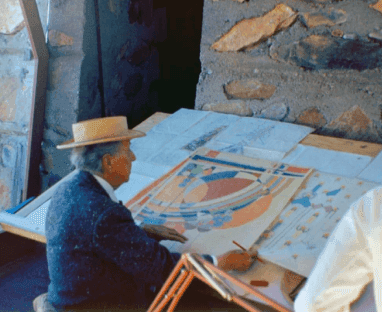
Frank Lloyd Wright was one of the most influential architects of the twentieth century. He grew up in Wisconsin and studied civil engineering at the University of Wisconsin. After that, Wright moved to Chicago and found a job as a technical draftsman. In the following years he worked for various architectural firms, including Louis Sullivan, of which he was an assistant. In 1893 he opened his own office in Chicago. This is where his glorious career began. It's high time to know more come across this world architect!
Master of "Organic Architecture"
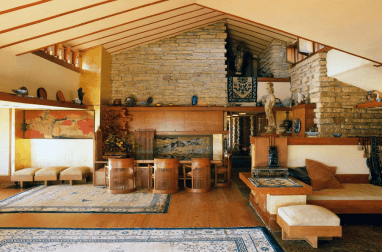
Wright was inspired for his designs by the maxim 'form follows function', coined by fellow architect Louis Sullivan. Nature was also an important source of inspiration: architecture had to arise from 'the laws of nature', whereby form and material may not conflict with the environment. He called this philosophy "organic architecture". Around 1897, for example, he designed a number of pavilions in his unique style, also known as Prairie Houses.
The structures mainly consist of horizontal lines and natural materials such as stone and wood. With this typical architectural style, Wright wanted to emphasize the natural beauty of the surrounding Midwestern prairies. For the interior spaces, he used soft, natural colors and few partitions to keep the space as light as possible. Other well-known architectural masterpieces by Wright are the Guggenheim Museum in New York and the Imperial hotel in Tokyo.
Each building as a “complete work of art”
While many will remember Frank Lloyd Wright as an architect, Wright's interest was not limited to architecture alone. From furniture design to lighting and glassware, Wright aspired to turn each of his prairie homes into a 'complete work of art'. Here too, Wright applied the same principle as with the exterior of his buildings: the environment and function were leading for the design. Although Wright developed a lot of furniture, chairs were his most sought after designs. For example, he designed heavy oak furniture with stately, vertical shapes – simplistic, but revolutionary for the time. He later experimented with slimmer and futuristic shapes – the forerunners of modern, minimalist furniture design.
A few pieces of most designs appeared, but in 1955 Wright collaborated with the Heritage Henredon furniture partnership on a collection for the American middle class market. This “Taliesin Collection”, with a lot of oak and straight shapes, did not catch on at the time, because it did not fit with the then current styles such as space age, which made extensive use of plastic. Nowadays these items are real collector's items. Lucky you if you can pick one up!