Have it delivered hassle-freeBuyer protectionAll Designer items curated by WhoppahDownload the Whoppah App – get alerts & sell with ease.
Have it delivered hassle-free
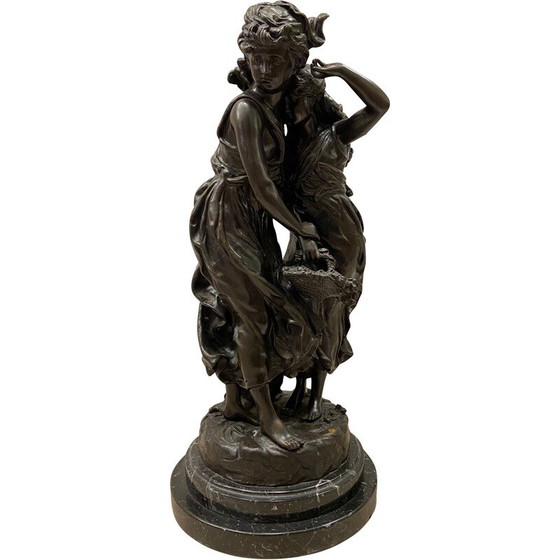
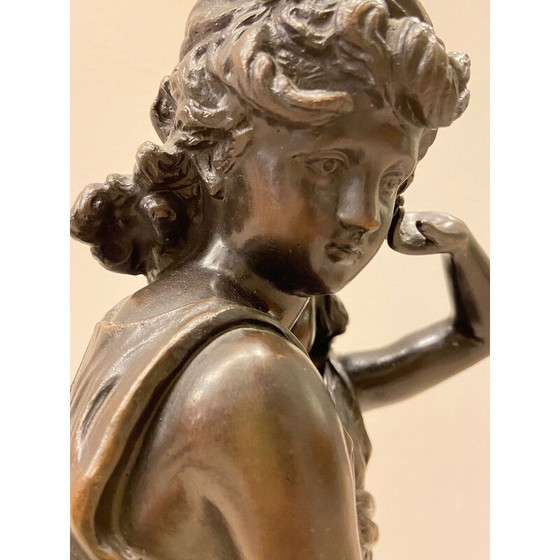

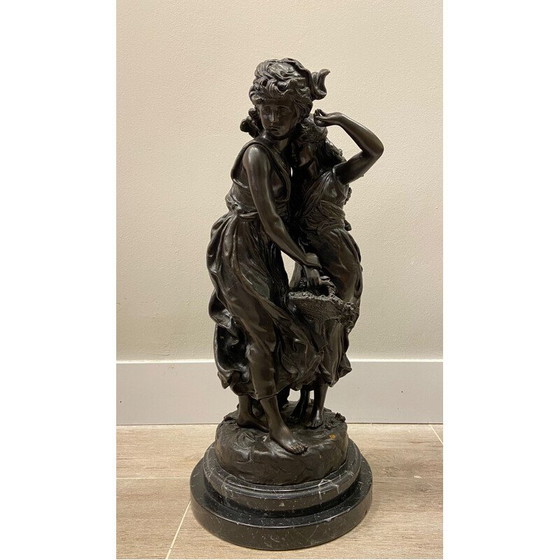
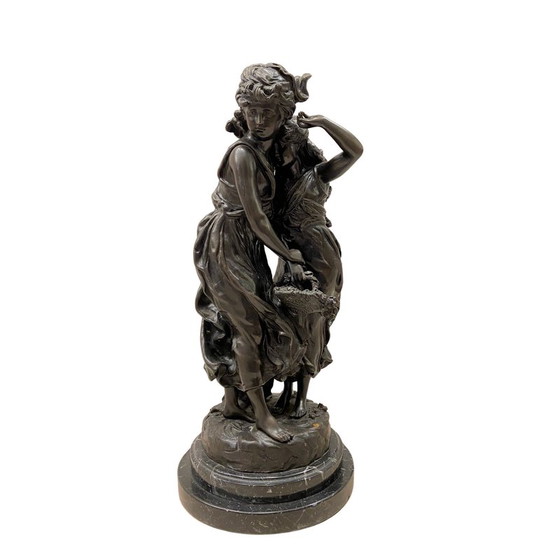
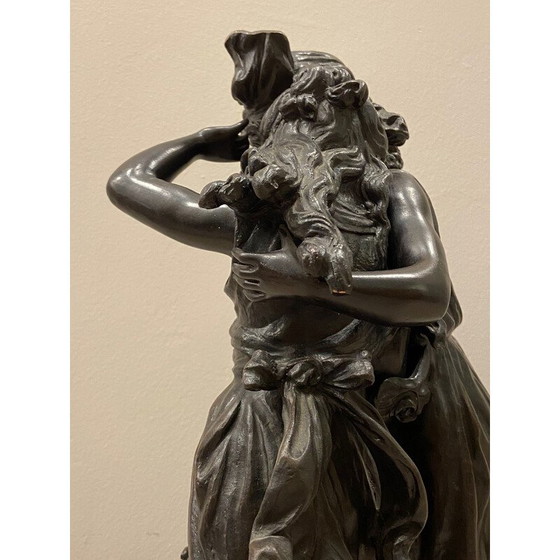
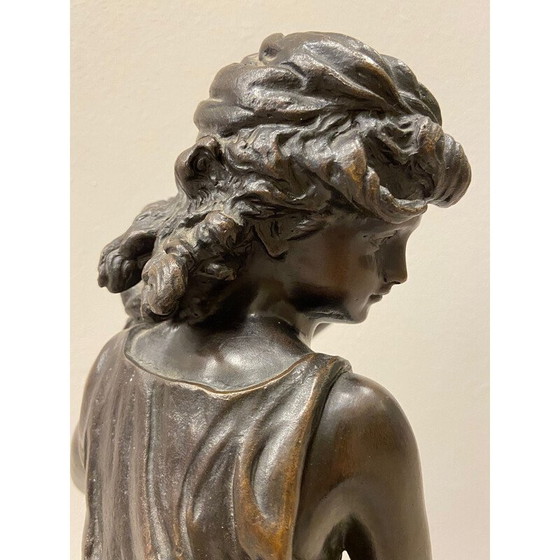
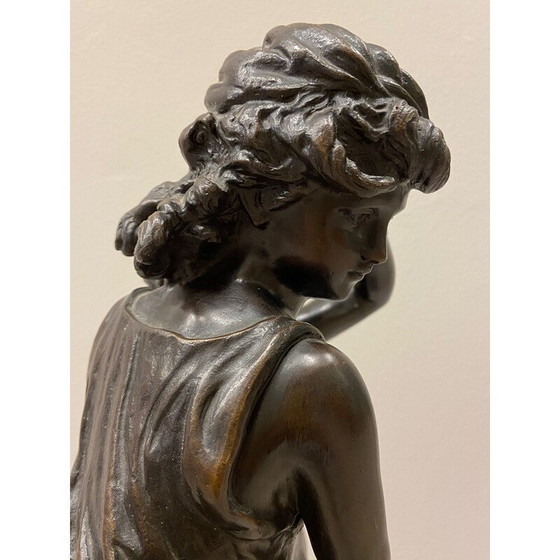
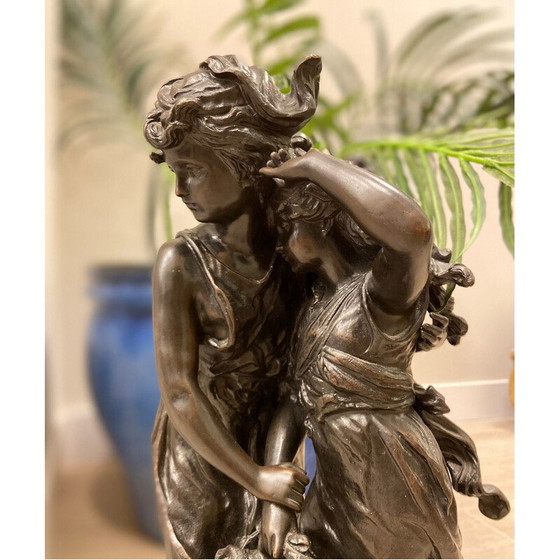
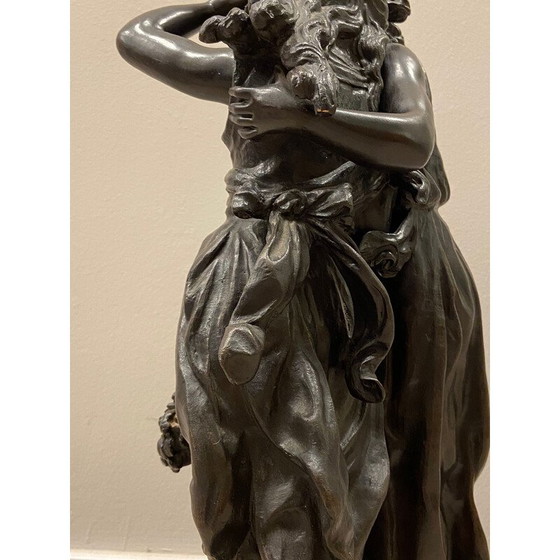
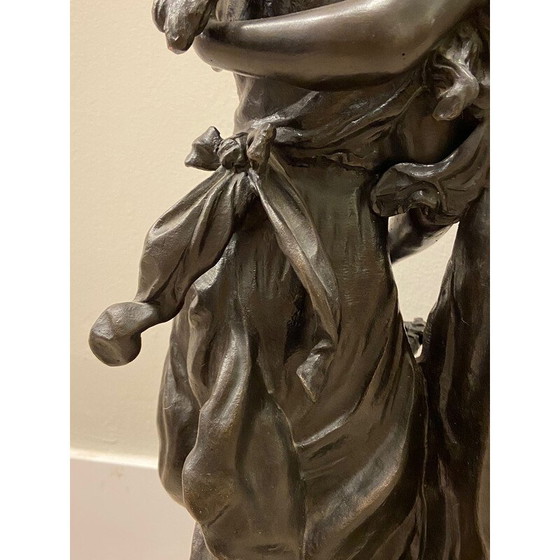
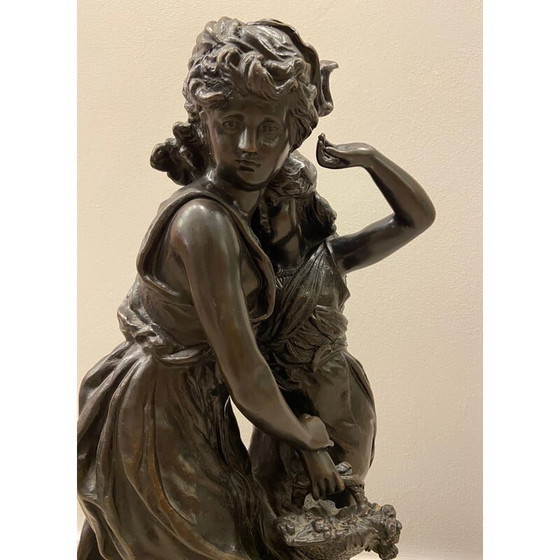
Vintage sculptural group in paved bronzes by Hyppolyte F. Moreau, France
€1,600€1,440-10%Bid from €1,125
Buy with confidence
Shop & pay safely with Buyer ProtectionDesigner items curated by WhoppahWe only pay the seller once you have safely received the itemTrusted payment methods


About this seller
ProfessionalProduct description
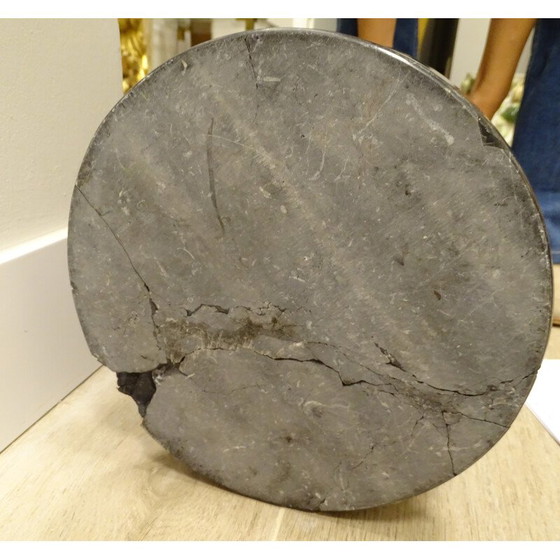
An extraordinary sculptural ensemble of French origin, cast in burnished bronze in the 19th century. The piece, originally from the south of France and belonging to a private collection, bears the signature of the celebrated sculptor Hippolyte François Moreau (H. Moreau) on its base, which is formed by two pieces of black marble. The sophisticated representation, enveloped in astonishing tenderness, is very much in keeping with the taste of the French sculptor, who was accustomed to creating scenes featuring figures of immense beauty and femininity. While the draperies of both figures harmoniously define their bodies and provide a magnificent compositional balance to the small sculptural complex, one of them embraces the man who becomes her protector as danger threatens. The slightly frightened expression of the bodies contrasts with the idealization of their faces. The attention to detail with which each of the parts that make up the entire surface of the bronze is treated is also worth highlighting. Furthermore, on their base, at the height of their feet, they appear accompanied by subtle vegetation that further reinforces the idyllic character of the scene. Hippolyte François Moreau Hippolyte François Moreau, famous for his statuettes of young women, was a sculptor born in 1832 in Dijon, France. Son of the equally renowned sculptor Jean-Baptiste Moreau, he spent his childhood learning in his father's workshop. While still young, Moreau moved to Paris to continue his studies, in this case with François Jouffroy, at the École Nationale Supérieure des Beaux-Arts. In 1826, he exhibited for the first time at the Salon of French Artists and continued to show his work there until 1914. He won several medals for his work at the Universal Exposition in Paris, both in 1878 and in 1900. These award-winning works consisted of vases or statuettes, that is, large-scale decorative pieces. Among the most notable is the 1880 work of the famous French mathematician Alexis Clairaut, which currently hangs permanently on one of the facades of Paris City Hall. He died in Neuilly-sur-Seine, France, in 1927, and today, a large amount of his work is housed in the Musée des Beaux-Arts in Dijon. About the technique: Blueing is a process primarily used in the metalworking industry, in which a layer of oxide is applied to a piece of metal. This not only protects it from corrosion, but also improves its appearance and gives it a specific hue or finish. Its name comes from the similarity between the blue of a turkey's feathers and the resulting color after applying this technique. Among the various bluing methods (depending mainly on the size of the piece), immersion bluing consists of immersing the pieces in a solution composed of sodium and potassium nitrates at very high temperatures, which is then washed with soap also heated to a high temperature. The final result gives the work a dark or bluish tone, and for this reason, the process is also known as bluing. On the other hand, heat bluing is somewhat more artificial and requires much more extreme temperatures, reaching 400 degrees Celsius for the piece, inside a kiln, to achieve the desired finish. Dimensions: 56 (height) x 25 cm (base diameter) / Base: 7.5 cm. The base has a small loss, but it is barely noticeable overall. However, it is in good quality considering its age and use.
Specifications
ConditionGoodBrand / designerMackintosh (Charles Rennie)OrientationPortraitArt sizeMediumHeight56 cmWidth25 cmDepth25 cm
Discover more
Seller information
About this seller
ProfessionalValladolid, SpainOn Whoppah since October 2024 • 1 sale