Have it delivered hassle-freeBuyer protectionAll Designer items curated by WhoppahDownload the Whoppah App – get alerts & sell with ease.
Have it delivered hassle-free
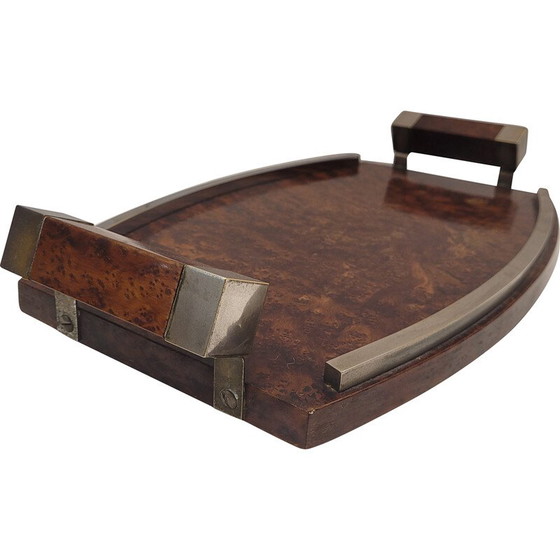
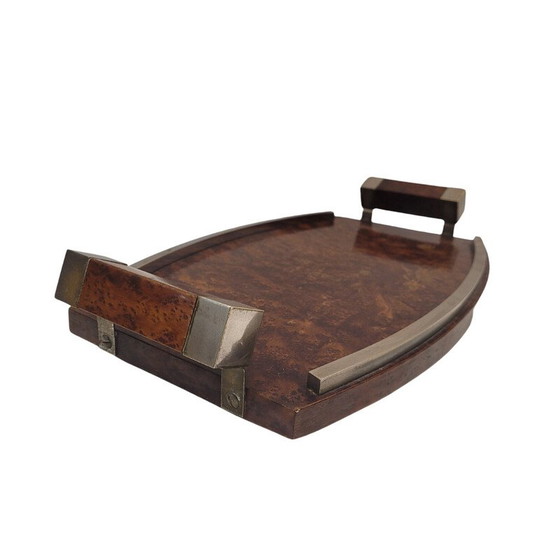
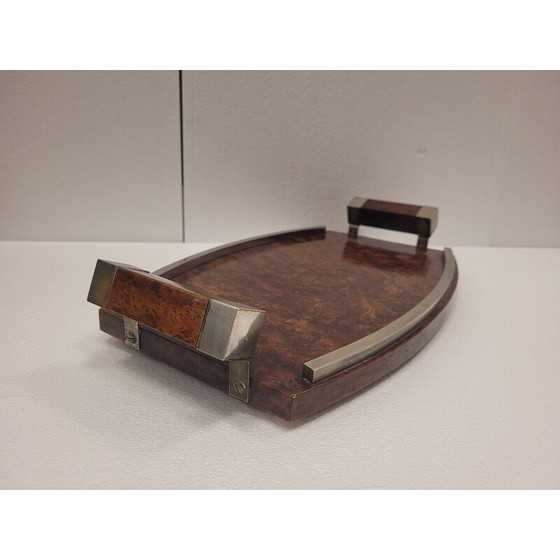
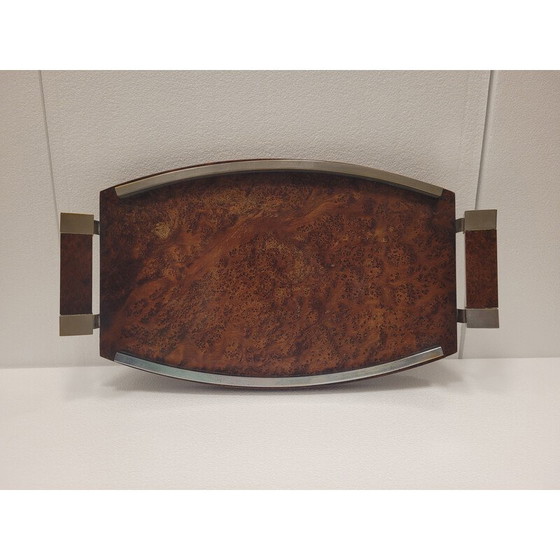
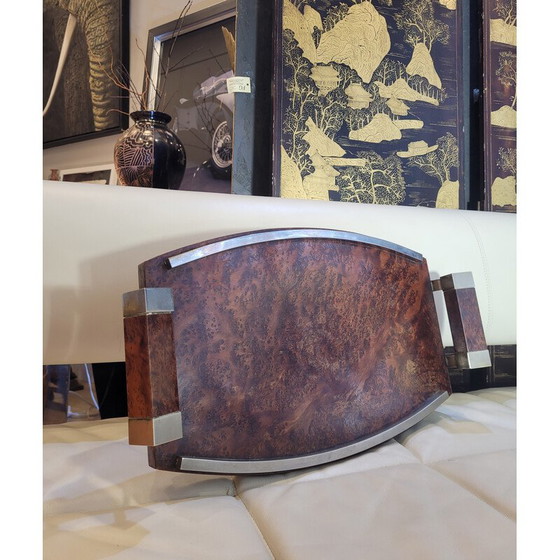
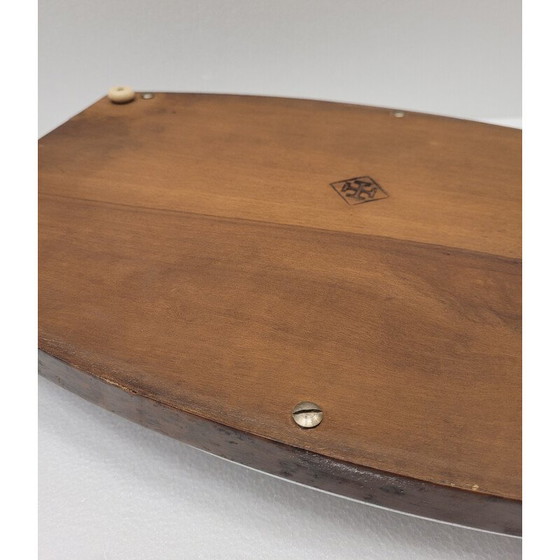
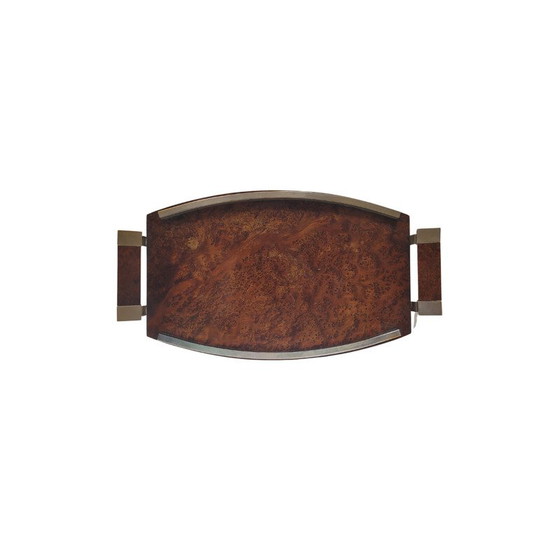
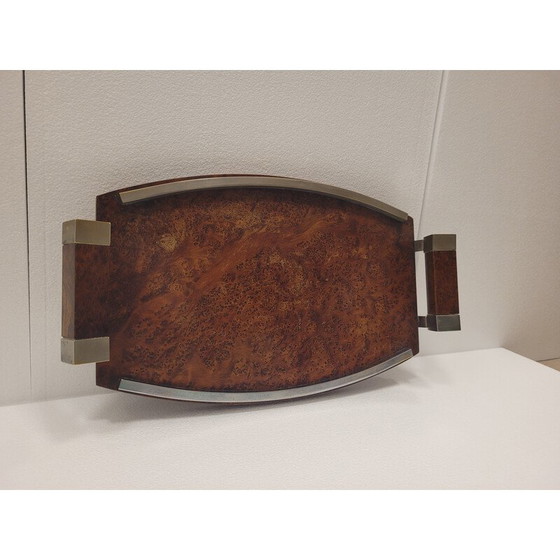
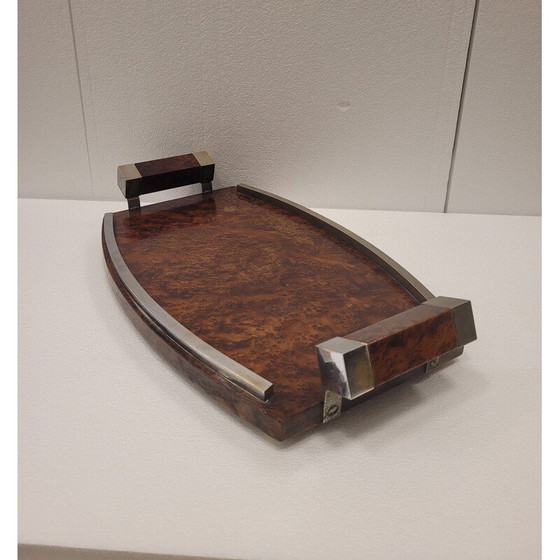
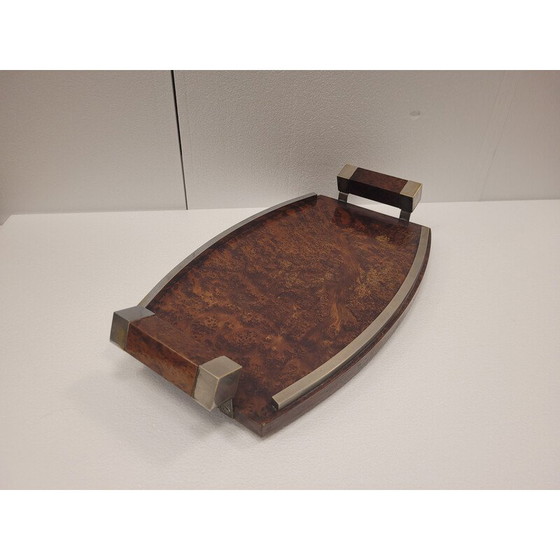
Vintage art deco serving tray in root or lupia wood and chrome steel, France 1930
€580Bid from €522
Buy with confidence
Shop & pay safely with Buyer ProtectionDesigner items curated by WhoppahWe only pay the seller once you have safely received the itemTrusted payment methods


About this seller
ProfessionalProduct description
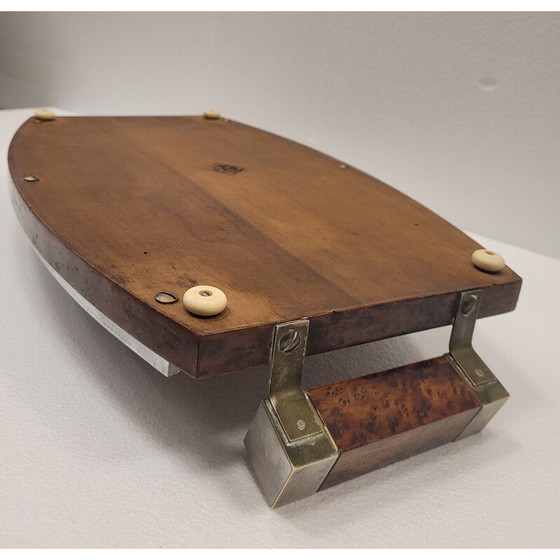
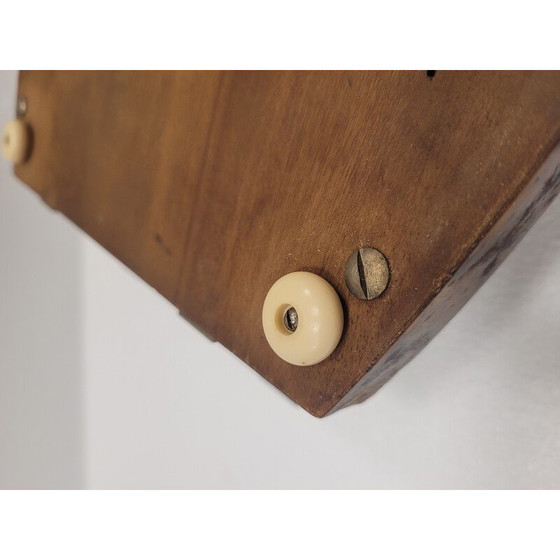
Extraordinary Art Deco serving tray, made of burl or lupia wood, with chrome-plated steel details on the handles and sides. The lower part features four small, flattened, spherical legs made of bone. The structure is made of geometric shapes and straight lines, except for the widening on the sides. This type of burl wood is known as lupia or lobanillo, and has nothing to do with the root of the tree, but rather with the deformations that the tissue can suffer along the stem. These irregularities that appear in the wood have been of interest in cabinetmaking and have become a highly sought-after part due to their undoubted value, as they are extremely dense and resistant woods. Furthermore, the whimsical shapes drawn on their surface have given rise to a great appreciation for this material, sparking great interest within movements such as Art Deco, as they yearned to have this peculiar burl wood, endowed with a unique beauty. About Art Deco Art Deco, short for the French term Arts Décoratifs, and sometimes simply called Déco, is a style of visual arts, architecture, and product design that first appeared in France in the 1910s (just before World War I) and flourished especially in the United States, but also in Europe, during the 1920s and 1930s. Art Deco combined modern styles with fine craftsmanship and rich materials. During its height, it stood for luxury, glamour, exuberance, and a faith in social and technological progress. From its beginnings, Art Deco was influenced by the bold geometric forms of Cubism and the Vienna Secession; the vivid colors of Fauvism and the Ballets Russes; the updated craftsmanship of furniture from the eras of Louis XVI and Louis-Philippe I; and the exotic styles of China, Japan, India, Persia, ancient Egypt, and Mayan art. It featured rare and expensive materials, such as ebony and ivory, and exquisite craftsmanship. The Empire State Building, the Chrysler Building, and other New York City skyscrapers built during the 1920s and 1930s are monuments to the style. Streamline Moderne, meanwhile, was a later offshoot of Art Deco, inspired by aerodynamic forms and emerging during the Great Depression that ravaged the United States in the 1920s. It proposed a formal change in keeping with the emerging new world, influenced by Futurism. Aerodynamics began to be applied in the most diverse fields of design and architecture.
Specifications
CategoryDecorative ObjectsConditionGoodHeight10 cmWidth45 cmDepth26 cmSeller locationValladolid, SpainDelivery optionsDelivery or pickup
Discover more
Seller information
About this seller
ProfessionalValladolid, SpainOn Whoppah since October 2024 • 1 sale