Have it delivered hassle-freeBuyer protectionAll Designer items curated by WhoppahDownload the Whoppah App – get alerts & sell with ease.
Have it delivered hassle-free
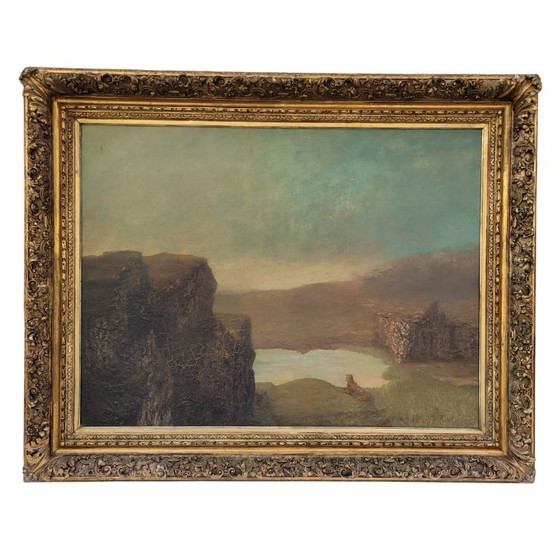
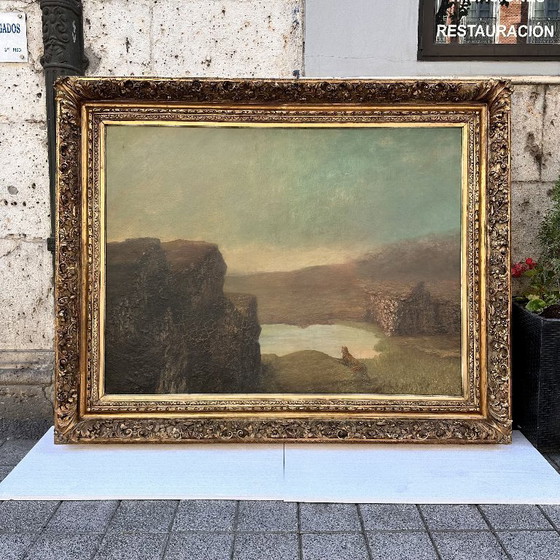
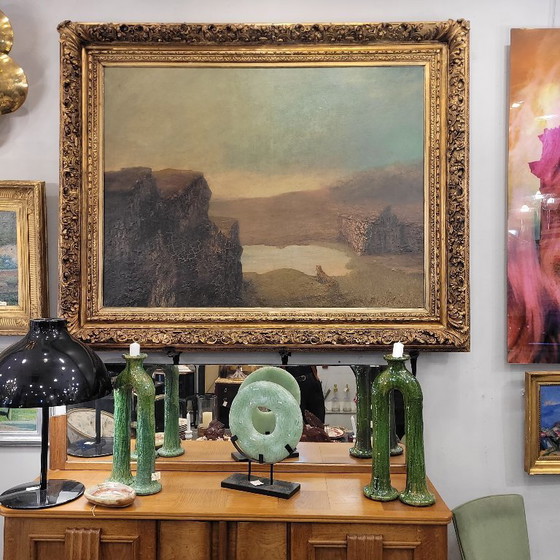
"Tiger in front of a dreamlike landscape", Romanticism, 19th century - England
€7,050Bid from €6,500
Buy with confidence
Shop & pay safely with Buyer ProtectionDesigner items curated by WhoppahWe only pay the seller once you have safely received the itemTrusted payment methods


About this seller
ProfessionalProduct description
"Tiger in front of a dreamlike landscape", Romanticism, 19th century - England
Technique on support: Oil on canvas
Title of the work: "Tiger in a romantic landscape".
Period: 19th century
Country of origin: England
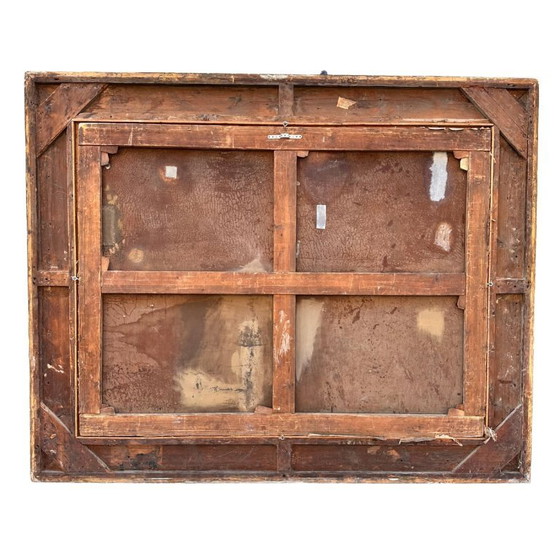
Good condition according to its age and use / Recently restored frame.
Overall dimensions: 150 x 184 x 12 cm.
Dimensions without frame: 110 x 145 cm.
Exceptional romantic landscape of English origin and large format. It is a very powerful work, of melancholic and contemplative character, in which nature rises as the absolute protagonist, typical of the romantic spirit.
The emergence of Romantic painting is framed as a response to the rationalism of the Enlightenment and the academic rigidity of Neoclassicism. Inspired by the ideals of freedom, the exaltation of the individual and the power of the imagination, Romantic artists sought to express intense and subjective emotions, moving away from formal perfection to exalt the dramatic, the sublime and the spiritual. Nature became a stage charged with symbolism, and painting became a means to explore both the grandeur and the fragility of the human condition.
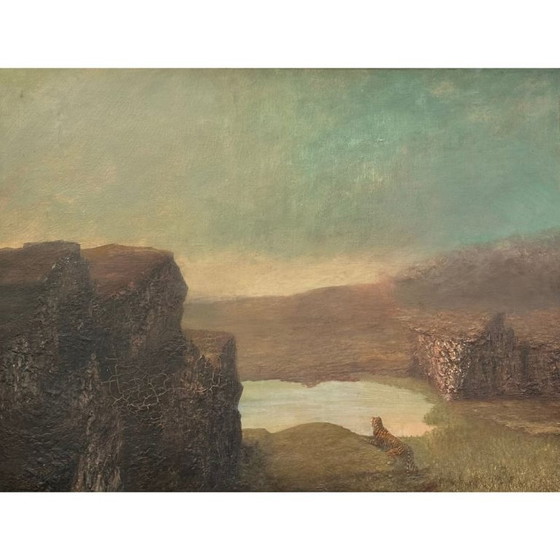
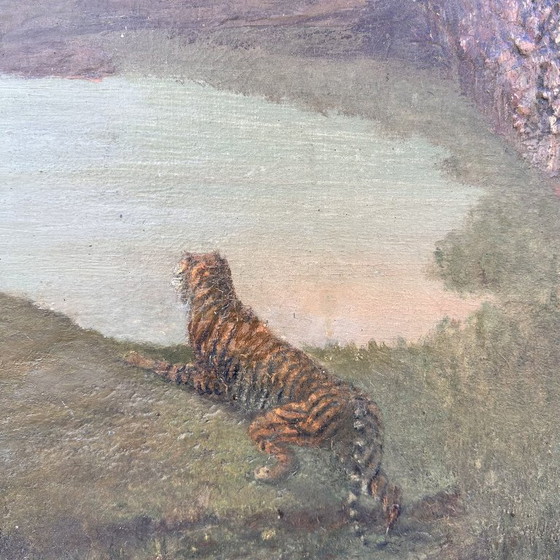
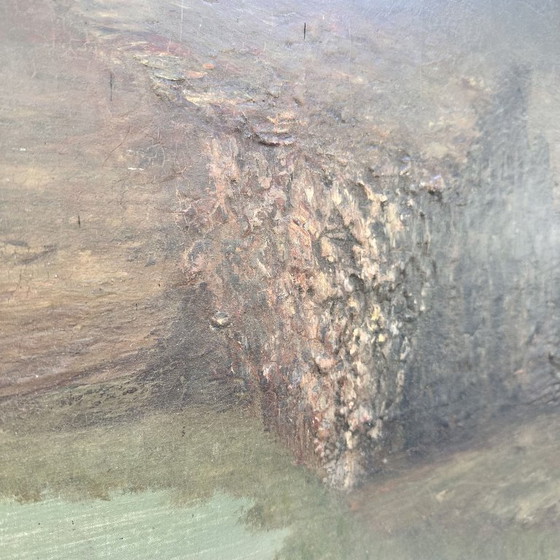
In this case, the composition is organized from a foreground dominated by rock formations opening onto a dimly lit valley, where a small lake appears. Near the lighter area next to the water, the figure of a tiger lying down can be distinguished. The horizon, bathed in golden tones that merge with a greenish blue sky, suggests a transitory moment of the day, probably a sunrise or sunset, which contributes to the romantic vision of the landscape as an emotional and spiritual space. The contrast between the shadows of the cliffs and the clarity of the horizon also stands out.
As for the chromatic range, an earthy and sober palette predominates, based on earth tones, ochers and muted or slightly saturated greens, which contrast with the soft luminosity of the sky, where a diffuse and golden atmosphere can be appreciated, reinforcing the introspective and melancholic character of the scene. This creates an even dreamlike landscape. The brushstroke is soft, diffused in the sky and denser in the rock formations, creating a balance between the solid and the ethereal. This gives a sensation of very realistic spatial depth that requires great mastery on the part of the painter.
A particularly significant detail is the presence of the tiger, whose incorporation transforms the reading of the work. Far from being a simple naturalistic element, the animal introduces a symbolic nuance: it represents the wild and the instinctive, forces that coexist with the apparent calm of the landscape. This resource intensifies the mysterious and allegorical character of the scene, inviting the viewer to reflect on (perhaps) human fragility in the face of the untamed and wild.
At this point it is important to note that, during Romanticism (late eighteenth to mid-nineteenth century), literature and painting were deeply connected, sharing themes, styles and a worldview marked by emotion, and subjectivity, inspiring each other. Many painters were inspired by literary works (especially Shakespeare, Goethe or Byron), while painters described their landscapes or scenes with an almost pictorial tone. Both were committed to a symbolic and subjective representation.
There are several literary passages in which a tiger is mentioned in a landscape and that could have inspired this work, but "The Tyger", William Blake (1794), is the most famous poem about a tiger in English literature. It is also worth mentioning "The Gold of Tigers" by Jorge Luis Borges, in which a tiger is described in a dreamlike environment that could remind us of this painting.
For all these reasons, the work is mainly ascribed to Romanticism, in that it exalts nature as a sublime force and generates a melancholic atmosphere that transcends the descriptive. However, the inclusion of the tiger introduces a symbolist component, as it functions as a metaphor for the occult and the instinctive, very much in keeping with the spirit of that period. This painting invites the viewer to stop and contemplate the immensity of the landscape, evoking feelings of human smallness in the face of the grandeur of nature.
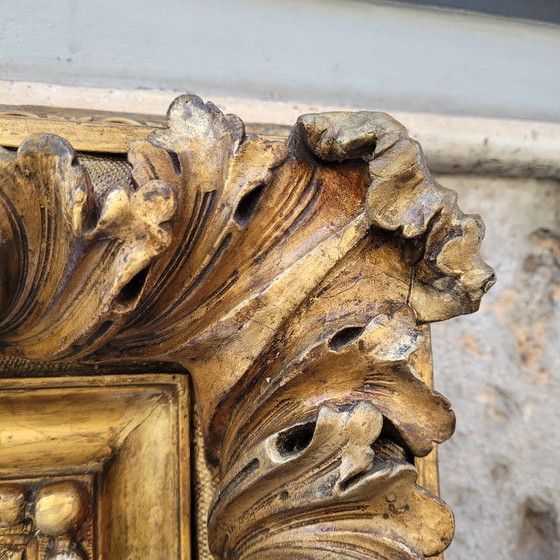
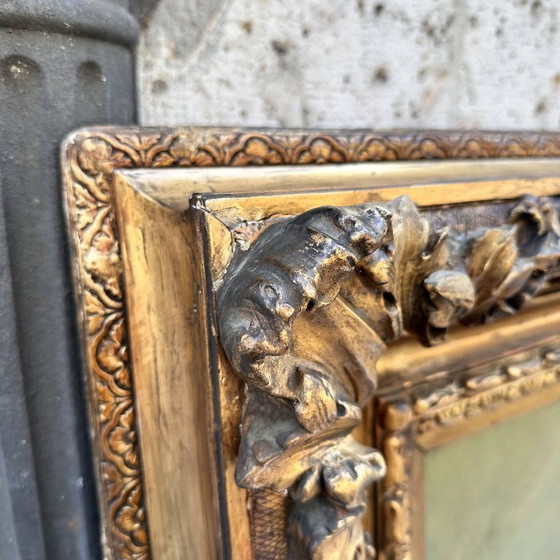
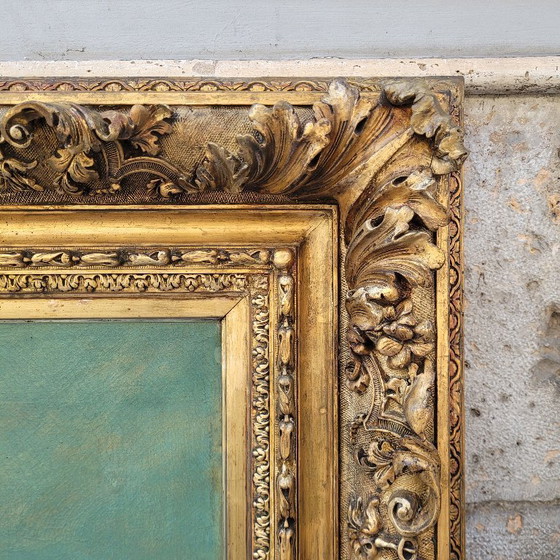
The ornate frame highlights the importance of the work. It has been recently restored to its original gilding.
The shipping of the product will be paid by the buyer according to the dimensions, weight and destination. We will contact you to arrange it and agree on the budget. The shipping costs include professional custom-made packaging; and personalized shipping, with tracking number and guarantee.
The frame that protects the artwork is offered as a gift, but has value in itself. It is provided at no additional cost so that when your artwork arrives at your home or destination it can be displayed immediately. Any damage to the frame itself, which does not affect the integrity of the artwork, cannot be accepted as valid grounds to open a claim or request a cancellation.
The buyer will be responsible for paying import duties and associated taxes in the destination country, if any. Please note the seller's disclaimer with regard to possible customs charges, as they are levied in the country of destination and the amount payable is determined by customs in that country. Should it be necessary to apply for an export permit, the costs are borne by the buyer. The cost depends progressively on the value of the work to be exported.
Good condition according to its age and use / Newly restored frame
Good condition according to its age and use / Newly restored frame
Specifications
ConditionVery goodColorsGold, Green, Brown, BeigeMaterialCanvasNumber of items1OrientationLandscapeArt sizeLargeHeight150 cmWidth184 cm
Discover more
Seller information
About this seller
ProfessionalValladolid, SpainOn Whoppah since October 2024 • 1 sale