Have it delivered hassle-freeBuyer protectionAll Designer items curated by WhoppahDownload the Whoppah App – get alerts & sell with ease.
Have it delivered hassle-free
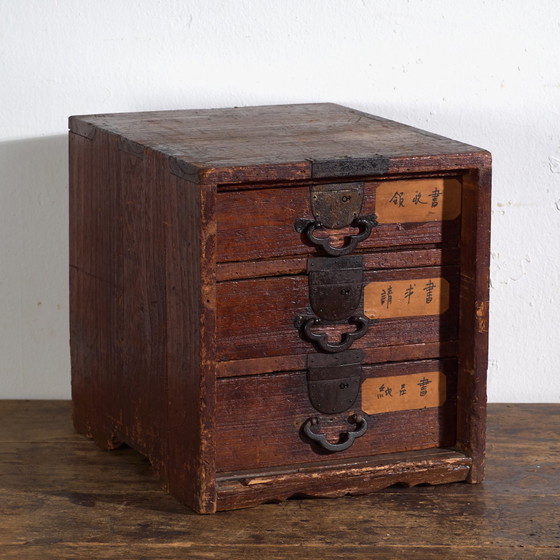
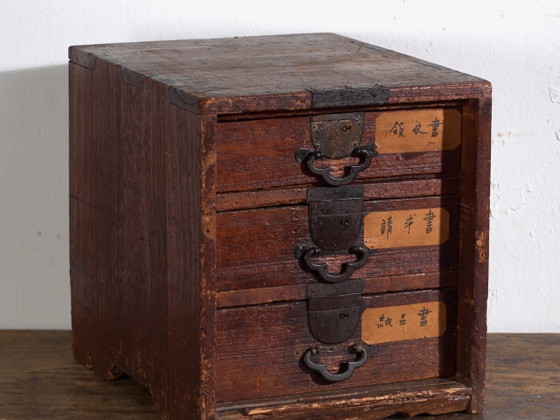
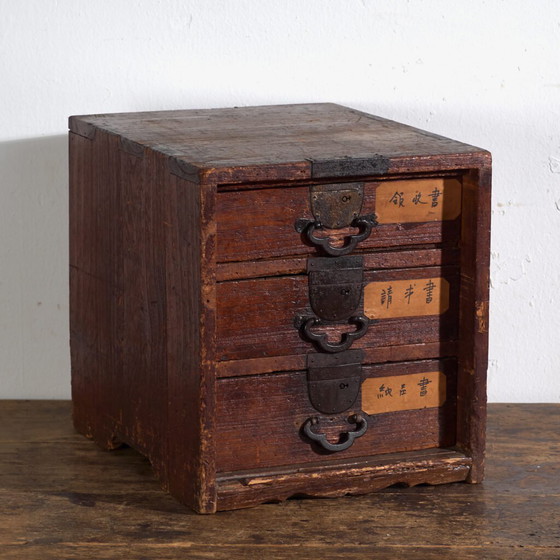

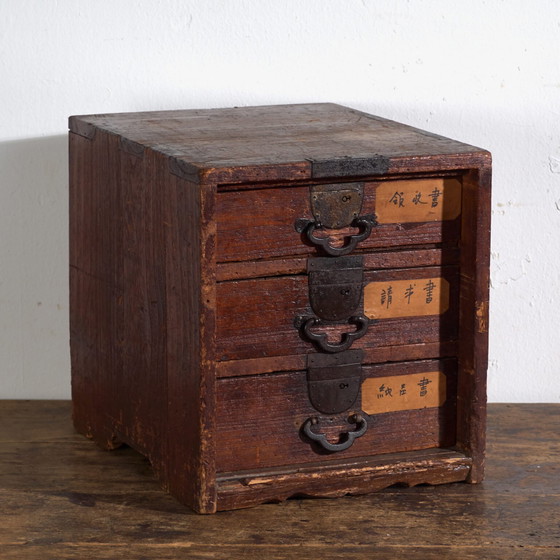
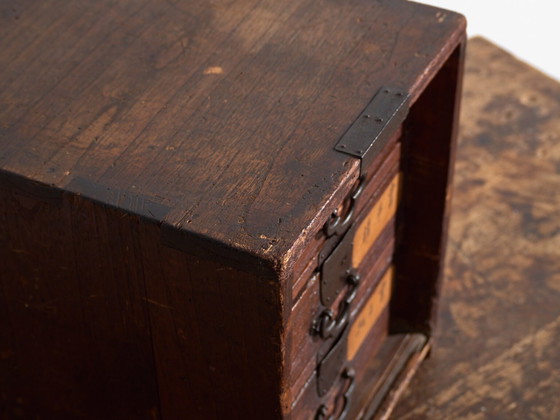

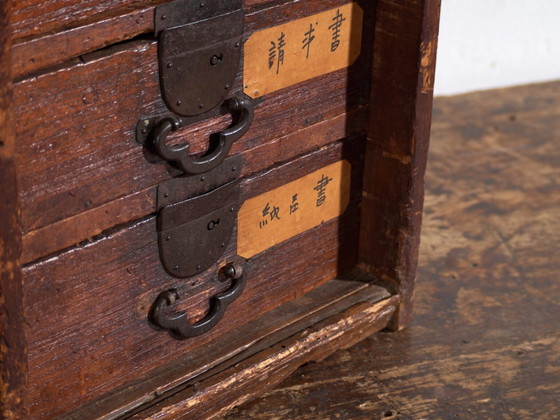

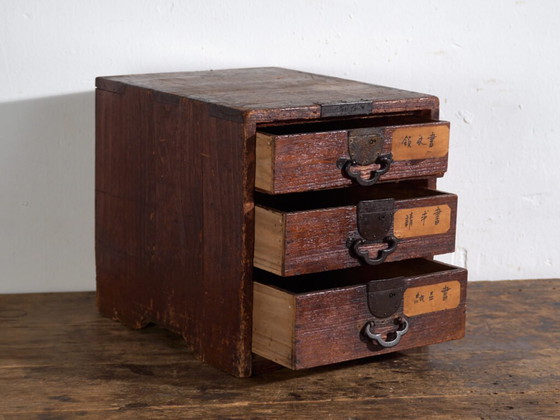
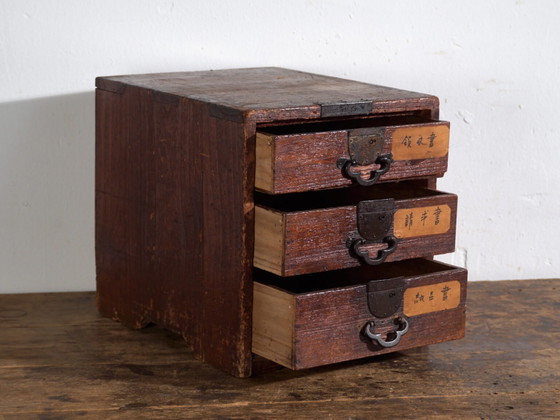

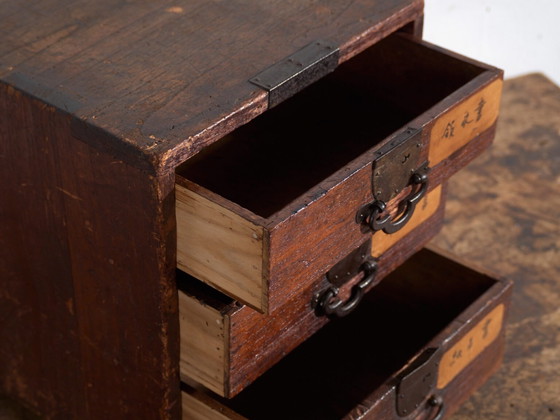

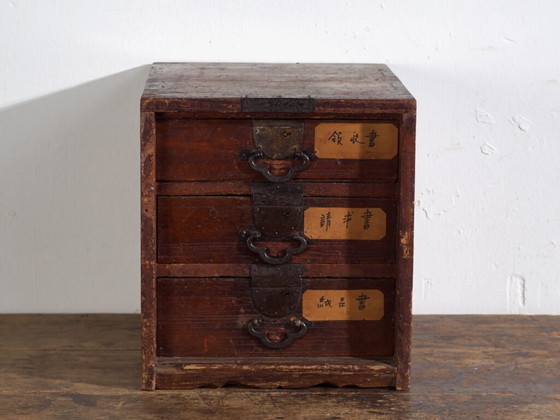
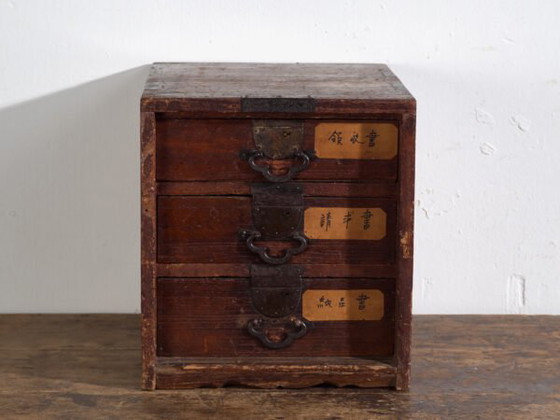
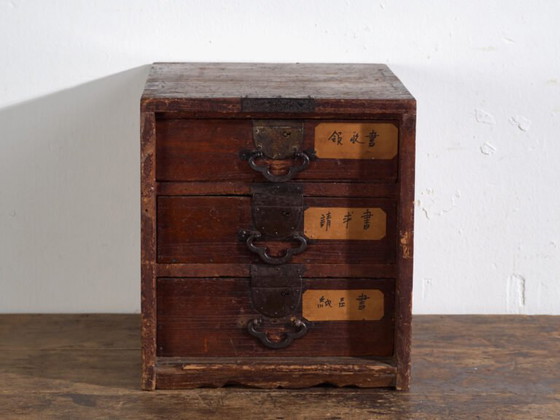
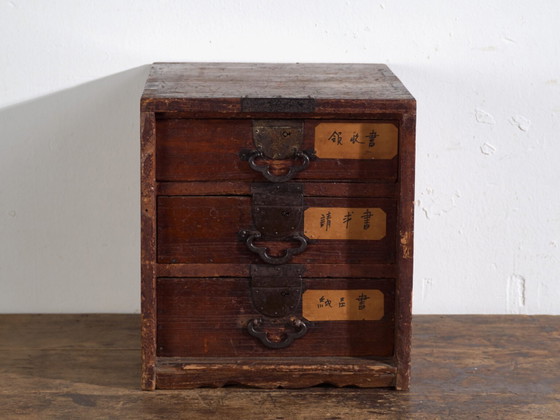

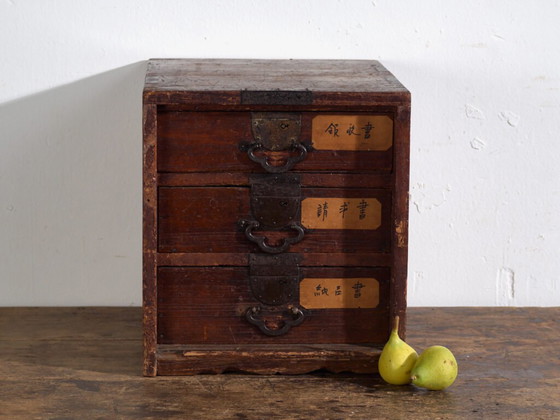
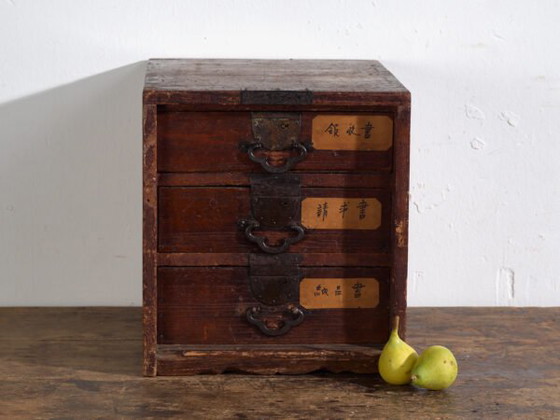
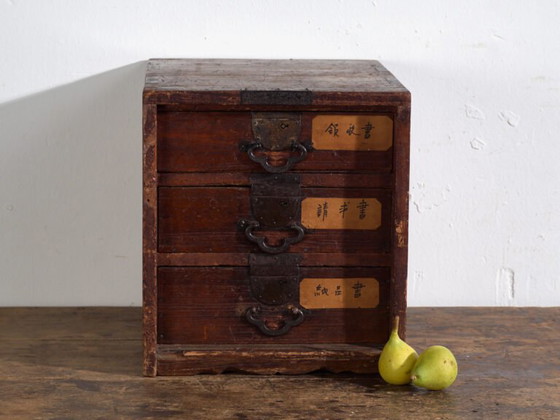
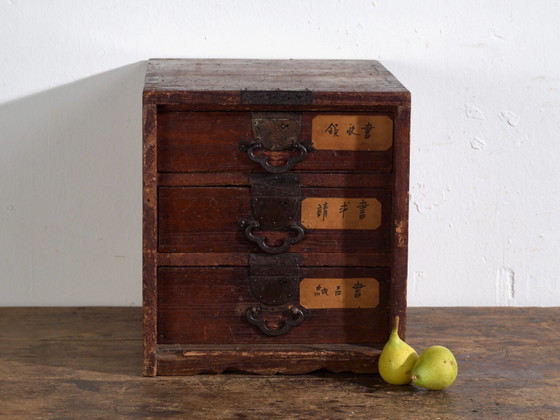

Small ko-dansu chest of drawers in paulownia with kanji labels – Japan, Meiji period, circa
€635Bid from €571.50
Buy with confidence
Shop & pay safely with Buyer ProtectionDesigner items curated by WhoppahWe only pay the seller once you have safely received the itemTrusted payment methods


About this seller
ProfessionalProduct description
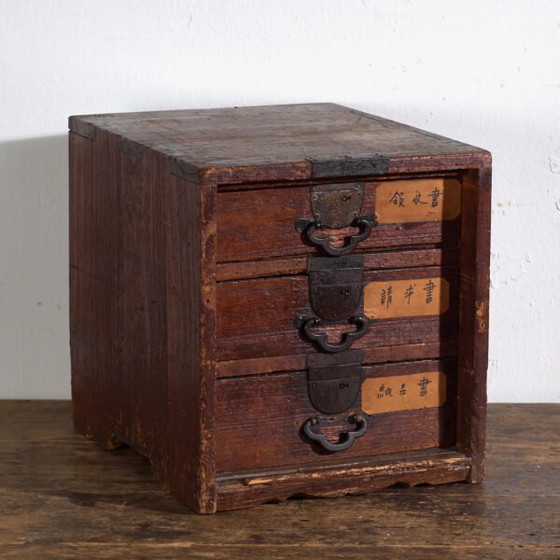
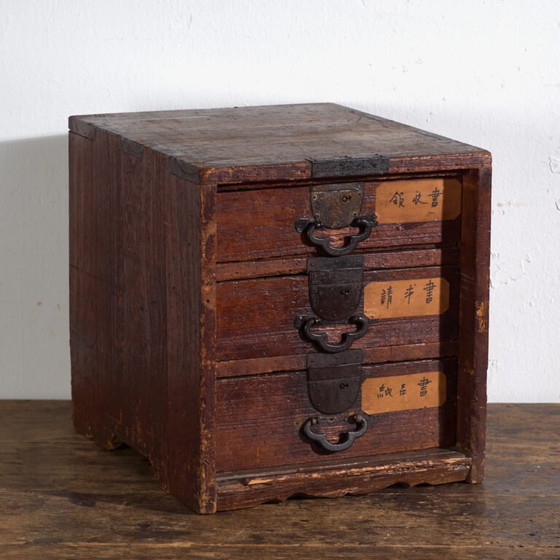
Small Japanese three-drawer chest (ko-dansu) in paulownia wood, originating from Japan and dating from the Meiji period (1868–1912). A desktop or tabletop piece, halfway between a document chest and an auxiliary cabinet, representative of the artisanal Japanese furniture of the Meiji era.
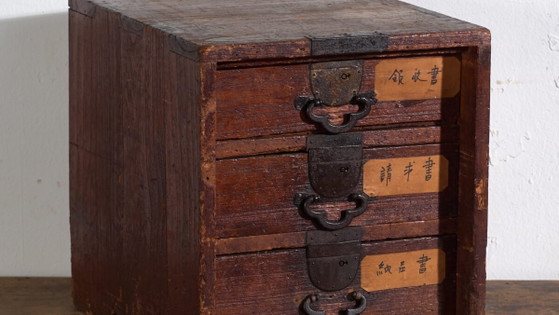
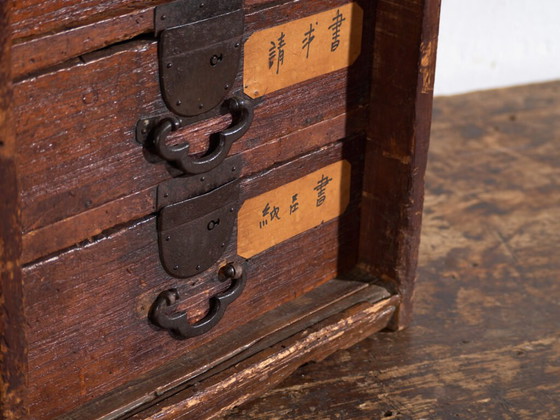
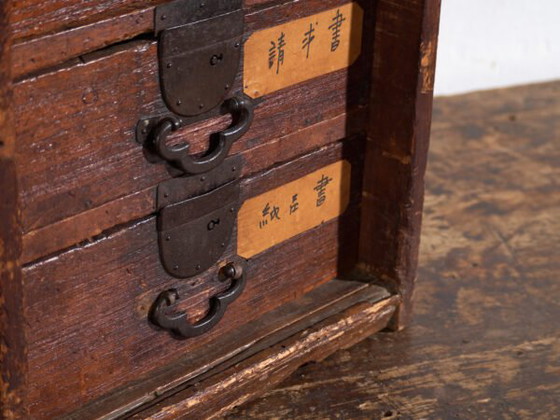
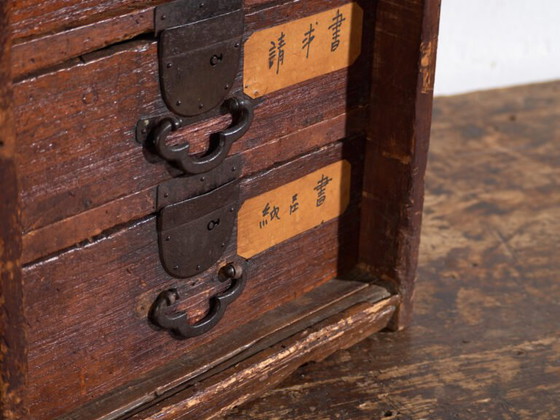
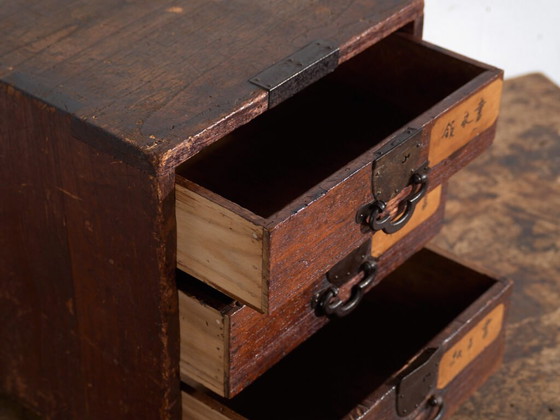
During the Edo and Meiji periods, small domestic chests — generically called tansu — became widespread in the homes of merchants, scribes and well-off families. Reduced-format models like this one were used to store papers, correspondence, books or small personal objects on a desk or a chigaidana shelf. The original sumi-ink paper labels still present on each drawer, bearing the character 書 (sho, “document” or “book”), confirm this use as an organizer for writings.
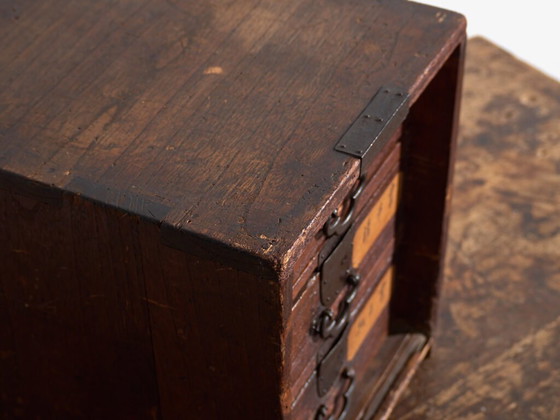
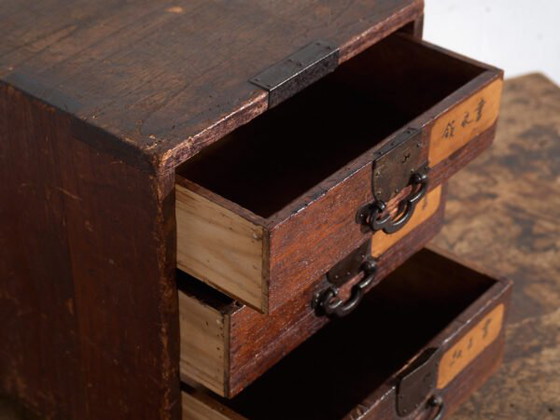
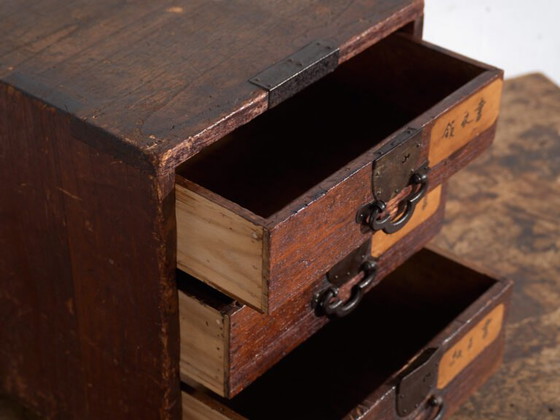
It is built in paulownia (kiri), the wood of choice in the tansu tradition for its lightness, stability and natural ability to regulate humidity — a prized quality for preserving paper. The drawers are assembled with rebated joints and slide on wooden runners without internal hardware. The front retains its original wrought-iron fittings: stirrup-shaped pulls (warabite-gata) and lock plates with small decorative escutcheons, typical of the late-19th-century tansu repertoire.
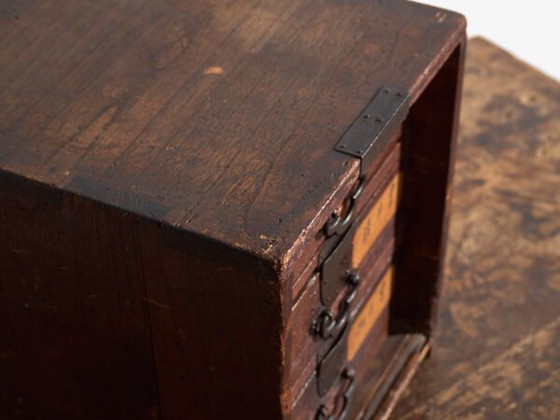
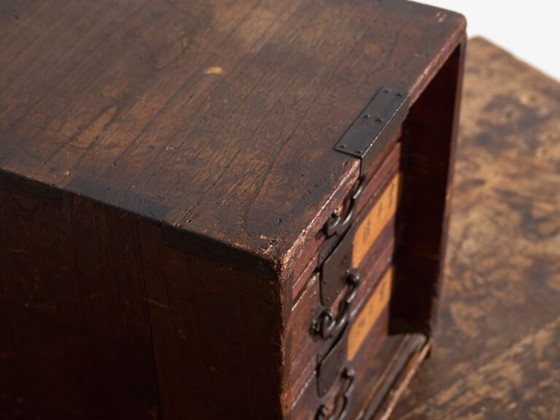
The patina is dark and even across the front, with the kiri grain visible beneath a veil of use. The edges show soft wear, the hardware retains its stable oxidation and the paper labels have aged without coming unstuck. Small handling marks and slight dings to the corners confirm an authentic piece that truly belonged to a Japanese study before reaching the gallery.
Because of its small scale and its restrained silhouette, it fits naturally into wabi-sabi, japandi or minimalist interiors, where it works as a desk organizer, a tabletop cabinet beside a laptop, a bedroom jewellery chest or a paper storage piece in a living room. Its cubic proportions and dark hardware introduce a Japanese accent without saturating the space.
Details
Ref.: AM27102
Dimensions: Width: 34 cm Depth: 41 cm Height: 37 cm
Style: Japanese tansu, Meiji period
Materials and techniques: Paulownia wood (kiri); traditional Japanese joinery; original wrought-iron hardware; paper labels inscribed in sumi ink with kanji
Place of origin: Japan
Period: Meiji period
Date of manufacture: Circa 1868–1912
Condition: Good. Retains its original hardware and paper labels. Wear consistent with age and use, no invasive restoration
This piece is part of the curated collection of Amaru Antiques, Barcelona.
ONE OF A KIND PIECE
Additional details:
- Brand: AMARU
- Style: Meiji period
- Style: Japanese tansu
- Style: wabi-sabi
- Style: japandi
- Style: minimalist
- Material: Paulownia wood
- Material: Kiri
- Material: Wrought-iron
- Material: Sumi ink
- Colour: Dark
- Period: Meiji period
Specifications
ConditionGoodMaterialPaperHeight34 cmWidth41 cmDepth37 cm
Discover more
Seller information
About this seller
ProfessionalGelida (Barcelona), SpainOn Whoppah since July 2026 • 0 sales