Have it delivered hassle-freeBuyer protectionAll Designer items curated by WhoppahDownload the Whoppah App – get alerts & sell with ease.
Have it delivered hassle-free
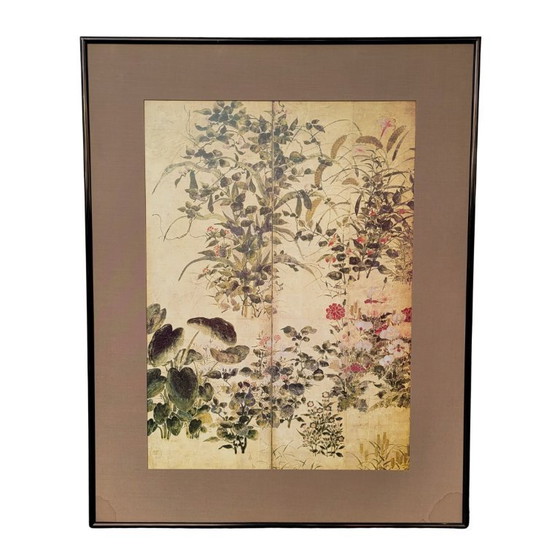
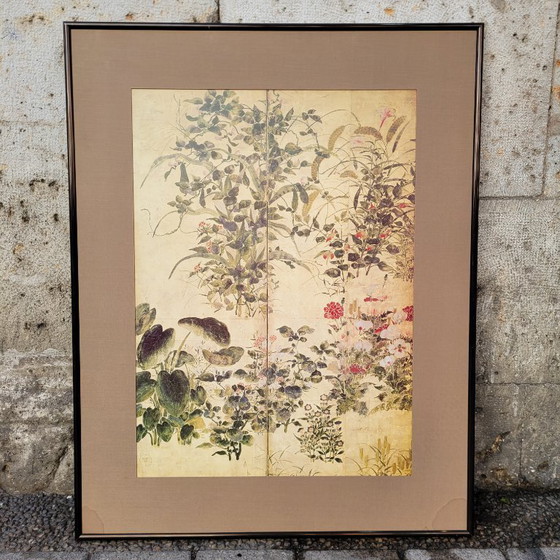
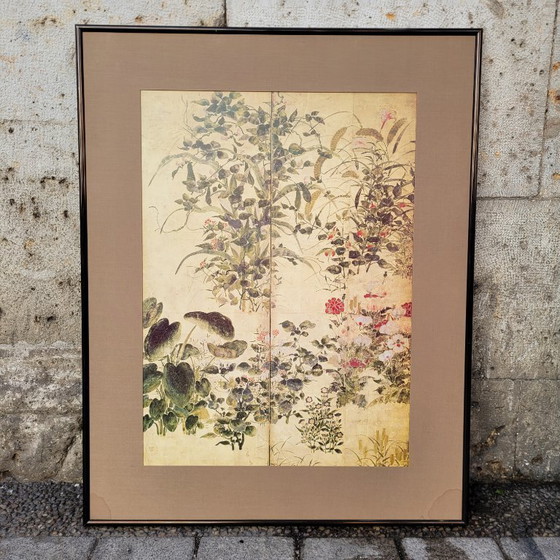
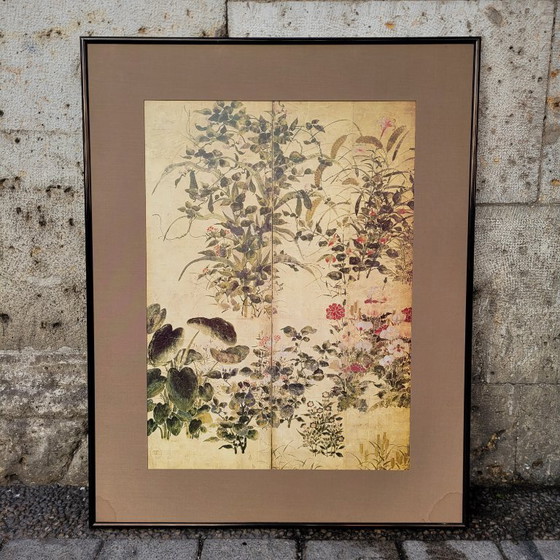
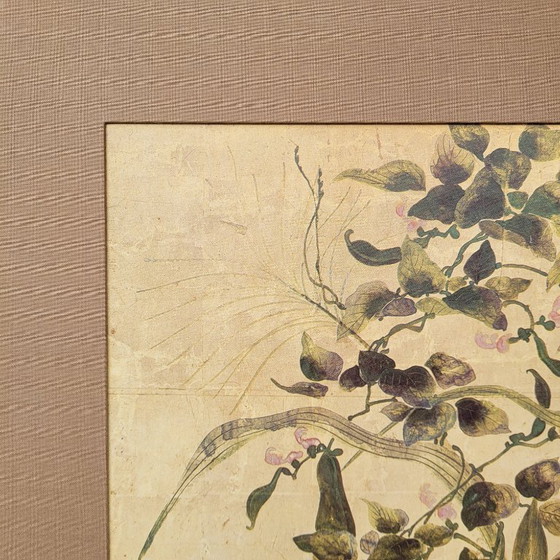
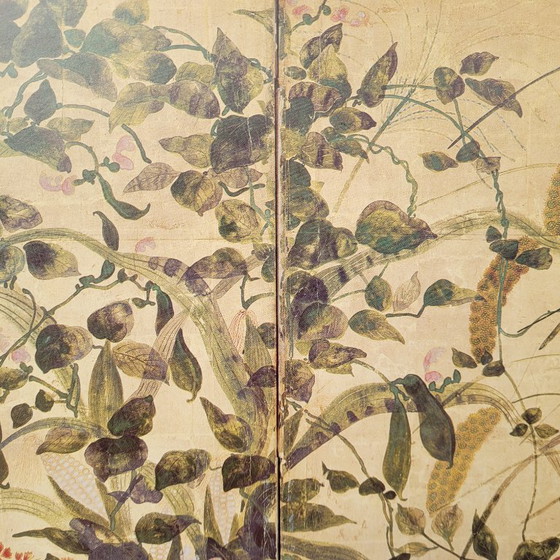
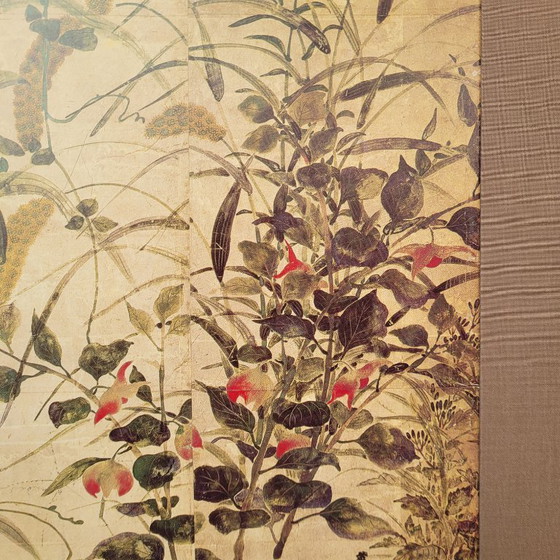
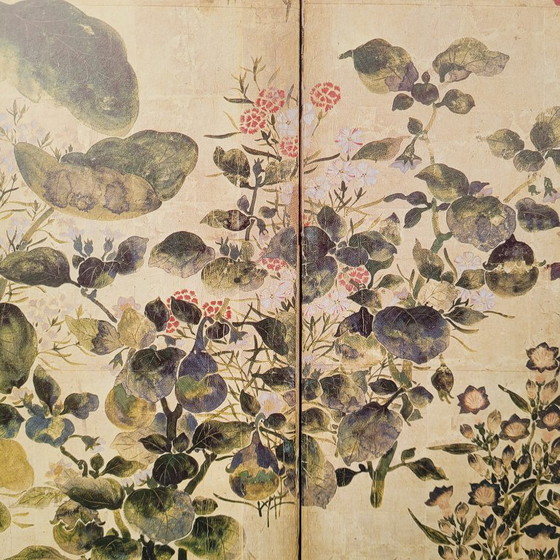
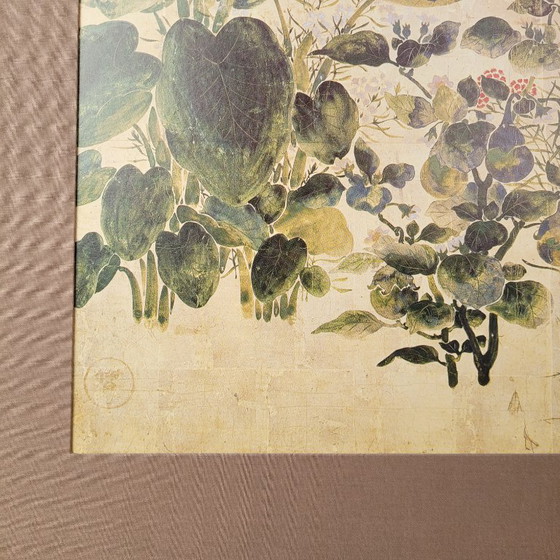
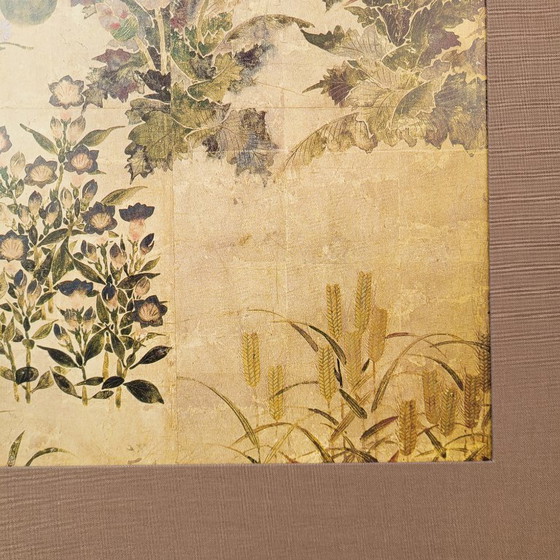
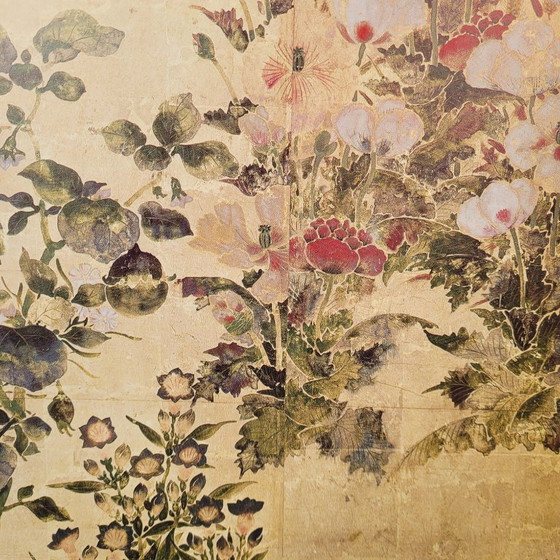
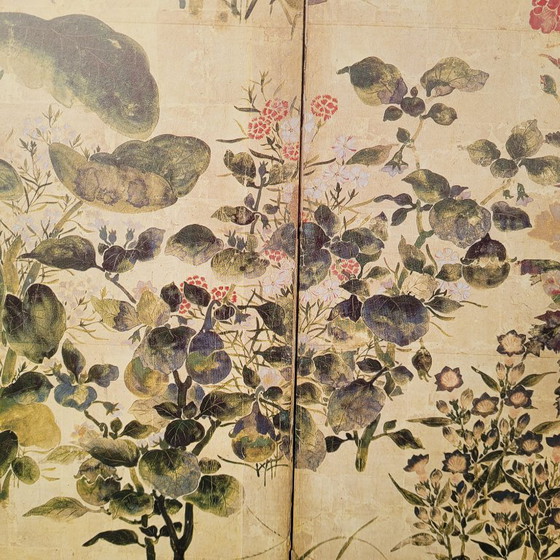
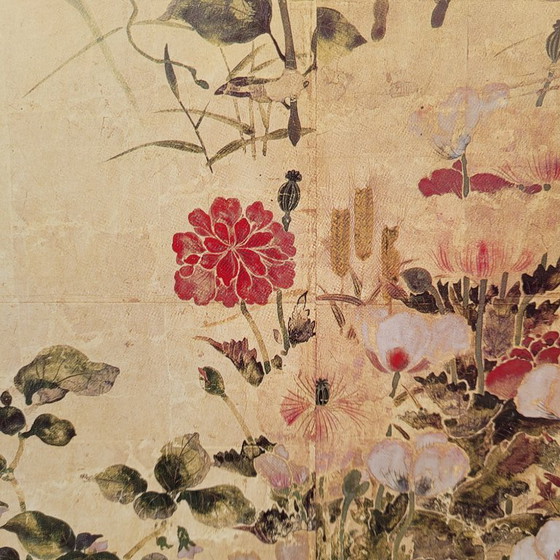
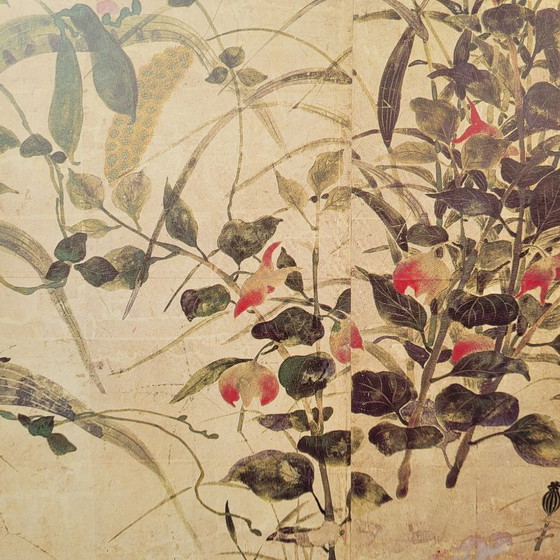
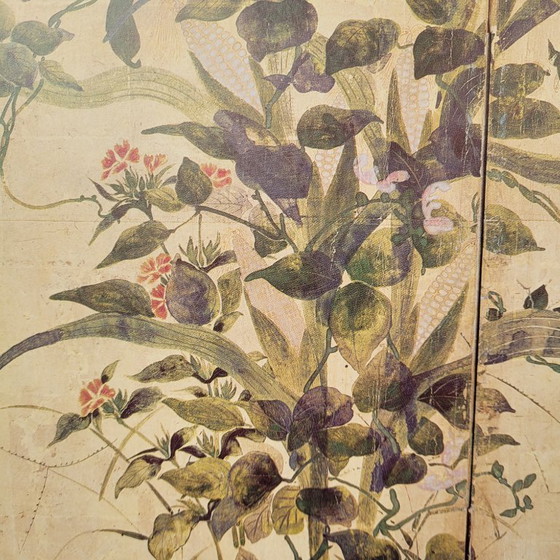
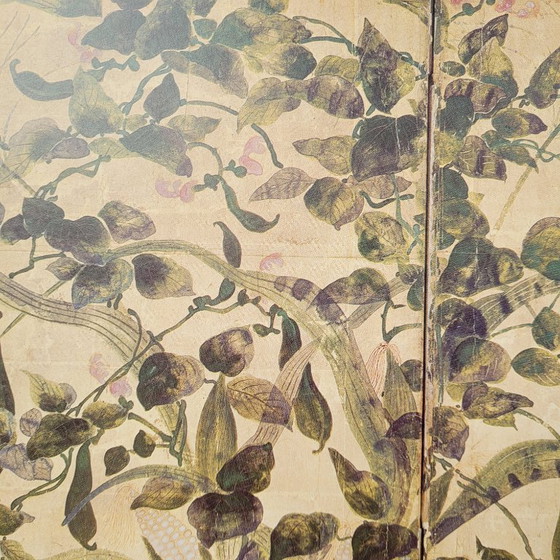
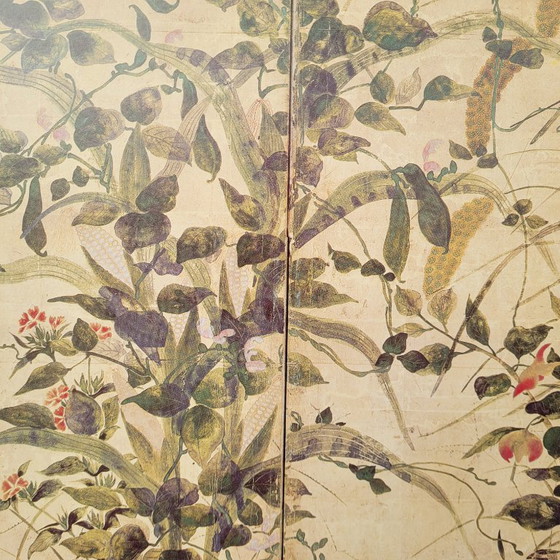
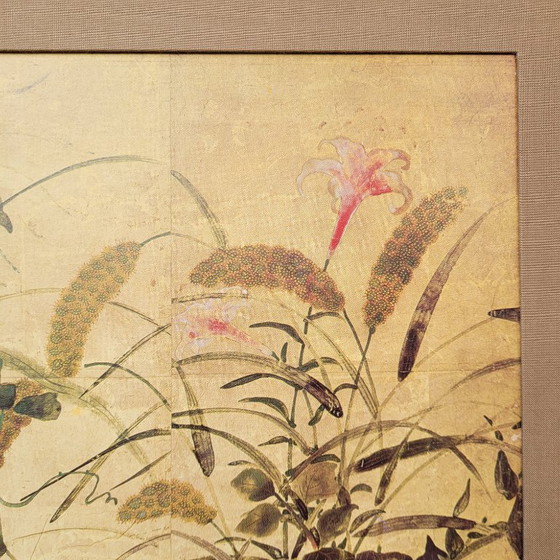
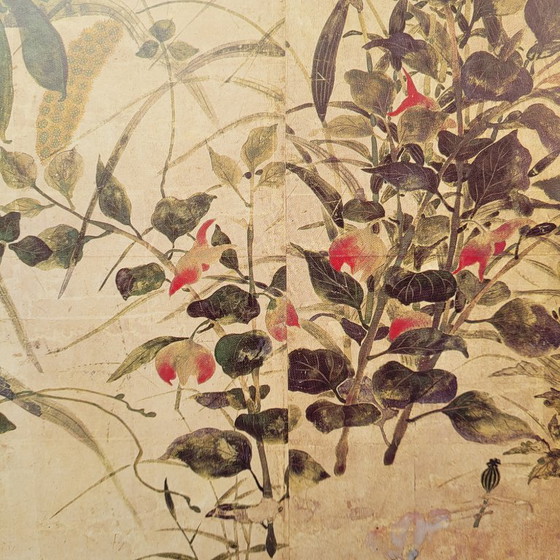
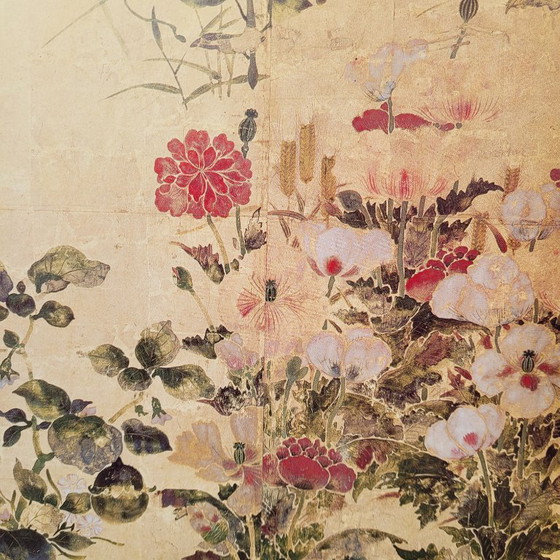
Print on paper, fragment of “Summer and Autumn Flowers”, Tawaraya Sōtatsu, Rimpa school, 90s - Japan
€450Bid from €375
Buy with confidence
Shop & pay safely with Buyer ProtectionDesigner items curated by WhoppahWe only pay the seller once you have safely received the itemTrusted payment methods


About this seller
ProfessionalProduct description
Print on paper, fragment of "Summer and Autumn Flowers," Tawaraya Sōtatsu, Rimpa school, 1990s - Japan
Support technique: Print on paper
Title of work: "Summer and Autumn Flowers"
Period: 1990s
Country of origin: Japan
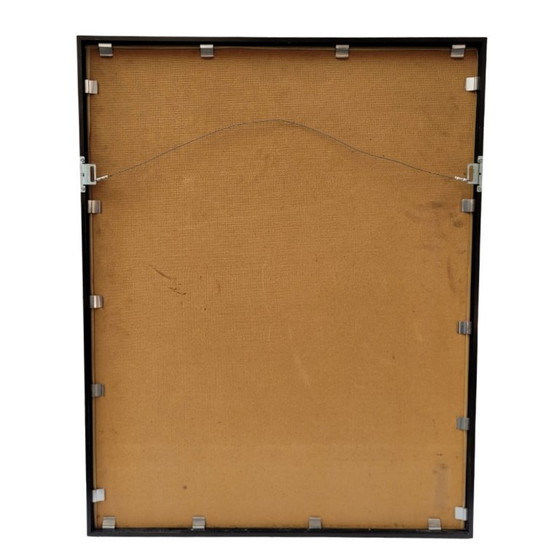
Good condition commensurate with age and use
Overall dimensions: 101 x 79 x 3.5 cm
Unframed dimensions: 75 x 54 cm
Stunning print on paper of a fragment of the screen "Summer and Autumn Flowers," an original work by Tawaraya Sōtatsu, founder of the Rimpa school, from the 17th century. The piece corresponds to the left side of the composition and focuses on the representation of a varied array of plants arranged against a gold background.
The work features ears of wheat, ears of corn accompanied by reddish flowers that may be poppies, lilies, and other unidentified flowers, including swamp rhubarb leaves and kerria. The entire screen conveys a temporal progression: from species associated with spring, such as swamp rhubarb and kerria, to the fullness of summer, with wheat and corn, interspersed with flowers associated with the autumn period.
The original screen from which this fragment belongs is now housed in the collection of the Smithsonian Institution's National Museum of Asian Art.
The Importance of the Screen in the Edo Period
During the Edo period (1603–1868), in a context of peace and cultural isolation, screens took on a central role in daily and ceremonial life. Beyond their practical function as space dividers, they were symbols of social prestige, commissioned by courtiers, samurai, and wealthy merchants. Their workmanship, using wood, silk, or paper, and the addition of gold backgrounds, reinforced their sumptuous character.
About Tawaraya Sōtatsu and the Rimpa School
Active in Kyoto between approximately 1600 and 1640, Sōtatsu founded a workshop specializing in decorative painting and luxury objects. He began his career working on fans and artistic stationery, and soon gained prestige collaborating with the calligrapher Hon'ami Kōetsu. Among his most notable commissions was the decoration of the Yōgen-in temple (1621), where he produced remarkable painted doors. Around 1630, he achieved a high rank as a Buddhist priest. He was able to reinterpret Japanese pictorial traditions with an ornamental language in which nature, gold backgrounds, and asymmetrical compositions became identifying elements. His influence lasted throughout the Edo period and defined the Rimpa aesthetic.
The Rimpa school, of which Sōtatsu founded along with Hon'ami Kōetsu, was primarily responsible for consolidating a new visual language. Tarashikomi is a distinctive technique of the school based on applying overlapping wet pigments to generate blurred edges and subtle tonal gradations. This method gave the screens a vibrant and luminous appearance that became the school's representative style.
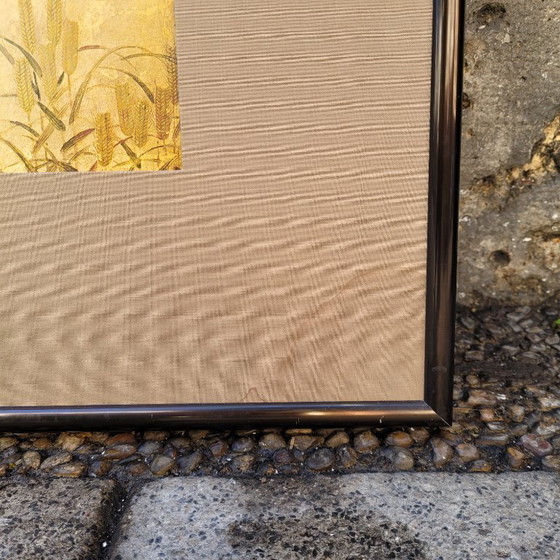
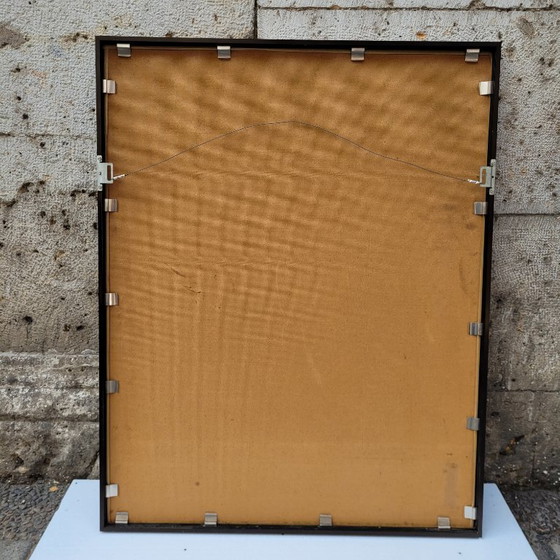
Shipping of the product will be paid by the buyer according to the dimensions, weight, and destination. We will contact you to arrange it and agree on a quote. Shipping costs include custom-made professional packaging and personalized shipping, with tracking number and warranty. The frame that protects the artwork is offered as a gift, but has value in itself. It is provided at no additional cost so that when your artwork arrives at your home or destination, it can be immediately displayed. Any damage to the frame itself, which does not affect the integrity of the artwork, cannot be accepted as a valid reason to open a claim or request a cancellation. The buyer will be responsible for paying any import duties and associated taxes in the destination country. Please note the seller's disclaimer regarding possible customs charges, as these are levied in the destination country, and the amount due is determined by that country's customs office.
Specifications
ConditionGoodColorsMulti Color, Orange, Pink, Yellow, GreenMaterialGlassNumber of items1OrientationPortraitArt sizeLargeHeight101 cmWidth79 cmSigns of usageScratches
Discover more
Seller information
About this seller
ProfessionalValladolid, SpainOn Whoppah since October 2024 • 1 sale