Have it delivered hassle-freeBuyer protectionAll Designer items curated by WhoppahDownload the Whoppah App – get alerts & sell with ease.
Have it delivered hassle-free
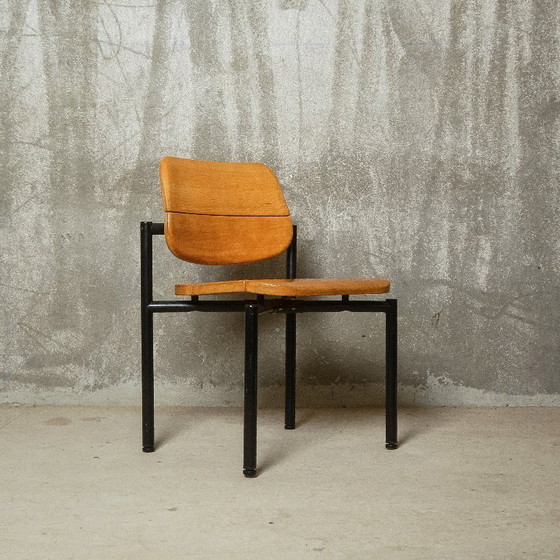
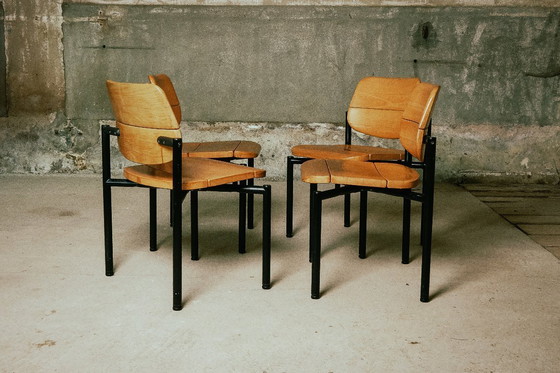
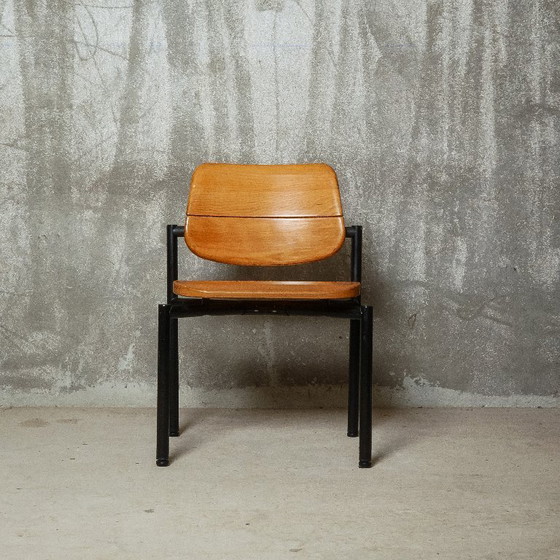
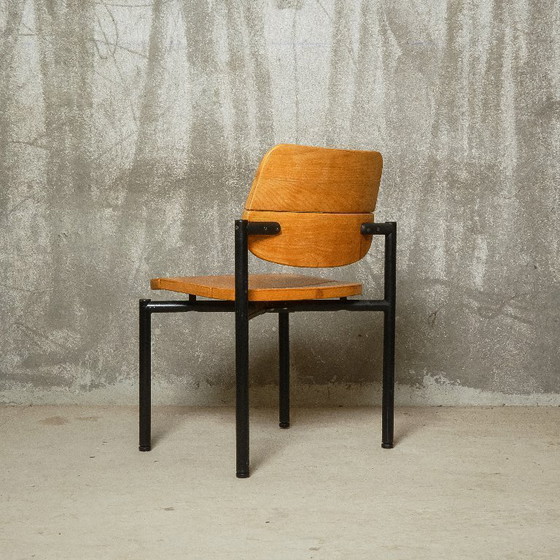
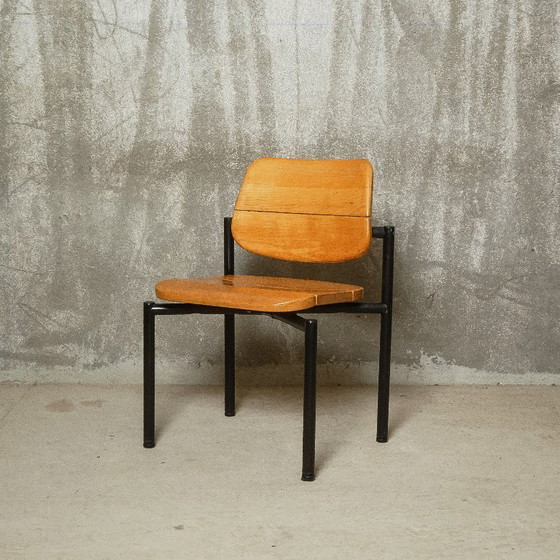
Martin Stoll – Set of Four Dining Chairs in Beech and Black Epoxy Steel – c. 1980 – Germany
€1,870
Buy with confidence
Shop & pay safely with Buyer ProtectionDesigner items curated by WhoppahWe only pay the seller once you have safely received the itemTrusted payment methods


About this seller
ProfessionalProduct description
The first glance captures the obvious: a line that is clear, taut, uncompromising. Nothing clamors, nothing insists. Beauty arrives later - through use, through time. It is born of a form that yields nothing, of a material that embraces its patina, of a comfort that quietly astonishes. In a world saturated with fleeting temptations, with passing objects, this quartet imposes another rhythm: that of durability, of just the right weight, of presence without emphasis. It is German design at its noblest: function as language, form as consequence. The result is here - silent, restrained, and yet full. Rarely so precise.
They carry something of an architect’s furniture, in their affirmed sobriety, in that refusal to add anything beyond the first line. Something of a unique gesture, laid once and never needing correction. A drawing one cannot redo. Because it is obvious. Because it cannot stand otherwise.
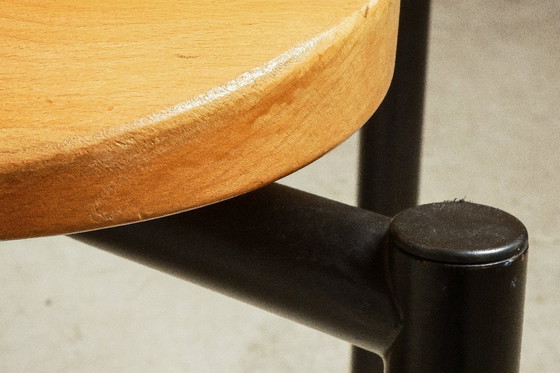
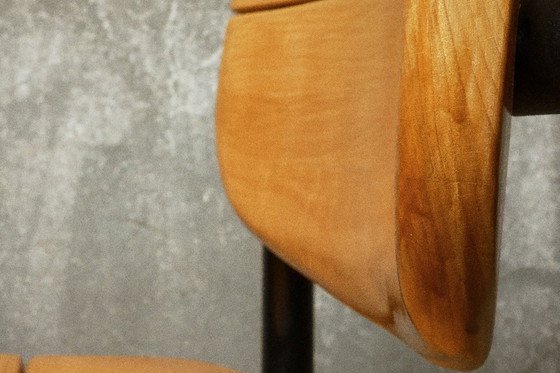
At first glance, one might take them for austere. The line is strict, the profile stern, the tone restrained. Yet the moment you sit, doubt dissolves. The hand follows the wood, traces the curve, feels the warmth. The object opens, in the quiet certainty of things well made. The grain is there, tangible, alive. Blonde wood, aged but breathing. Nothing slick, nothing cold. And that black - matte, deep - speaking of rigor, affirming its stance. There is a dialogue here: between materials, between eras. Warmth and coolness. Flexibility and strength. Solid and hollow. Everything is tension, but tension mastered. The wood carries the years; the metal holds the present. One ages, the other sustains. And within that contrast lies a sense of balance. A posture. A way of being in the world. Grounded, upright, without arrogance. Just enough to make you forget the rest.
Then comes the seat itself. The body understands before the mind. The curve welcomes. The pelvis finds its axis. Nothing forces, everything aligns. A posture true, a natural bearing, and warmth as well. It is a clear comfort. Comfort without softness. It resists abandonment, calls us back to the present. It does not lull - it supports. In its own way, it keeps watch.
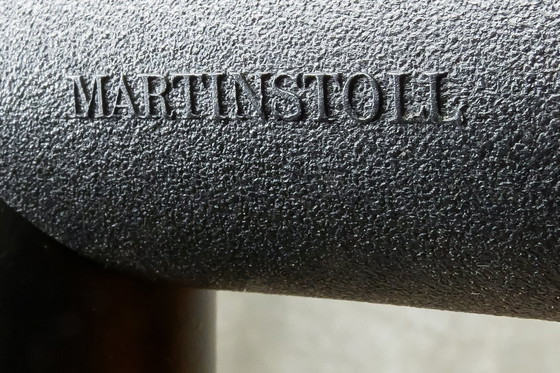
These chairs do not lie. They do not play at mystery. Their story is known, their lineage certain - Martin Stoll (1920–2012), West Germany, at the dawn of the 1980s. And before him, a house founded in 1871 by a grandfather cabinetmaker, passed down, enriched, never losing its compass.
A house that stayed far from the spotlights of Milan or Paris, faithful instead to a single mantra. No extravagance. Only an ideal, pursued through three generations - a culture of clarity, of precise line, of exact comfort. A culture of use, a morality of form. An ethic of making, never of appearing. And these four pieces, rare heirs of a vanishing savoir-faire, extend the gesture of the origins. They still bear the mark of a hand guided by discipline, of an eye trained to the right detail. These are pieces that are no longer found - or very rarely.
They can be counted. Literally. A single comparable set, in lesser condition, on the market today. Nothing more. And that is enough to place this ensemble where it belongs: as an exception.
An extinction unfolding. A fleeting apparition. And perhaps that is, in the end, the ultimate sign of a great design.
--
Dimensions (cm): 80.5 (H) x 56.5 (W) x 50 (D) x 46 (Seat height)
Weight (per chair): 11.6 kg
Origin & Period: Martin Stoll – West Germany, c. 1978/82
Overall Condition: Solid, well-preserved condition – close to Very Good (7.2/10)
Grading based on our internal evaluation scale. Full criteria available upon request via our messaging service.
Overall Condition: Solid, well-preserved condition – close to Very Good (7.2/10) Grading based on our internal evaluation scale. Full criteria available upon request via our messaging service.
Overall Condition: Solid, well-preserved condition – close to Very Good (7.2/10) Grading based on our internal evaluation scale. Full criteria available upon request via our messaging service.
Specifications
ConditionVery goodColorsBlack, BrownMaterialWood, MetalNumber of items4BrandMartin StollHeight80 cmWidth56 cmDepth50 cmSeat height46 cmSigns of usageStains, Scratches, Chipped
Discover more
Seller information
About this seller
ProfessionalSaint-Martin-Lestra, FranceOn Whoppah since November 2024 • 3 sales