Have it delivered hassle-freeBuyer protectionAll Designer items curated by WhoppahDownload the Whoppah App – get alerts & sell with ease.
Have it delivered hassle-free
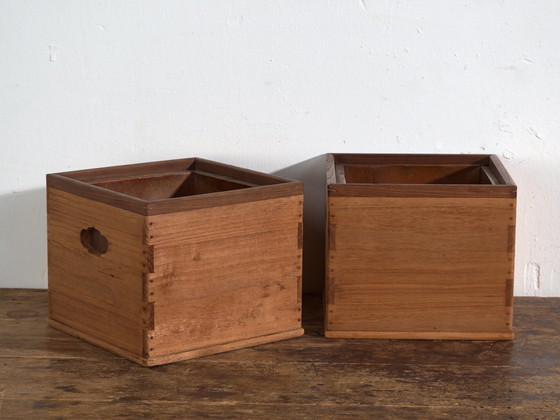
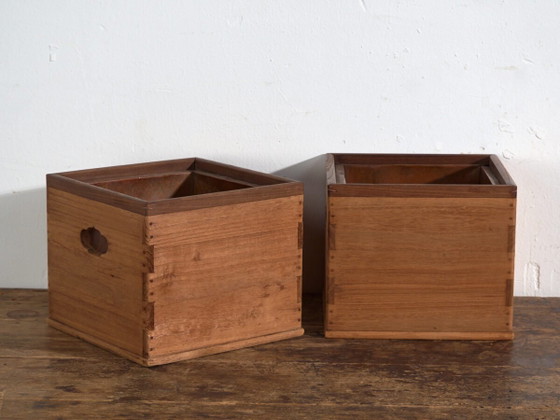
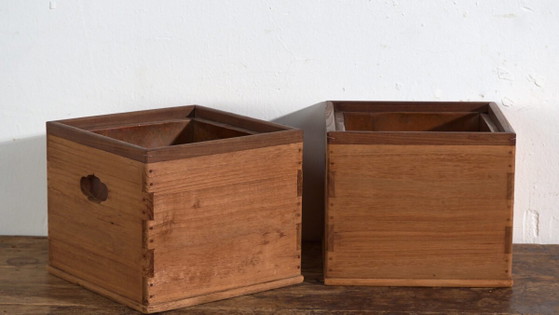
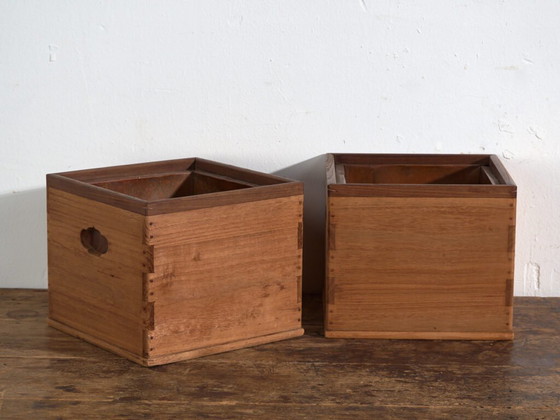
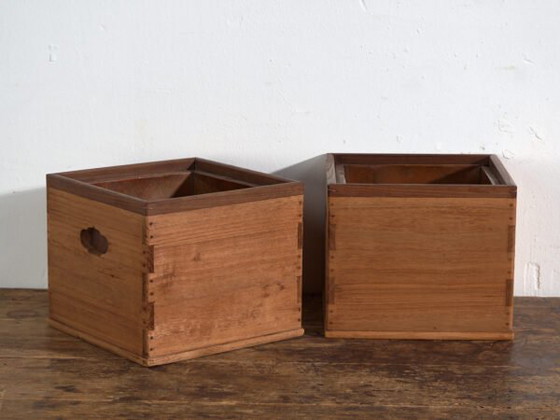

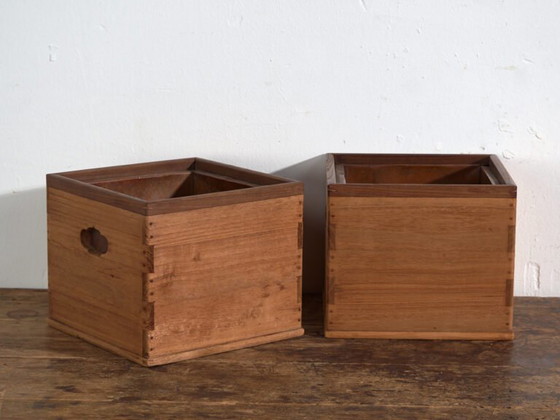
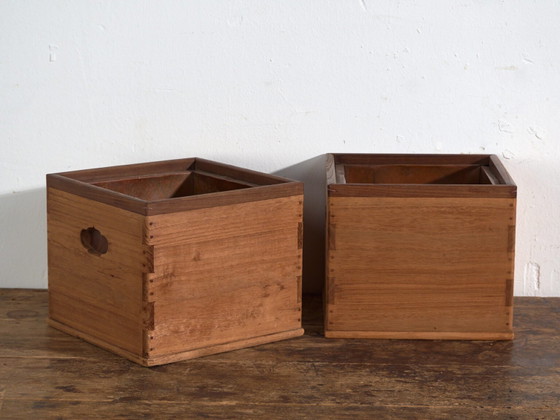
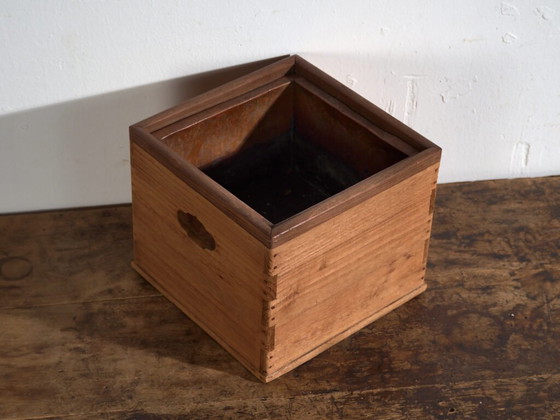
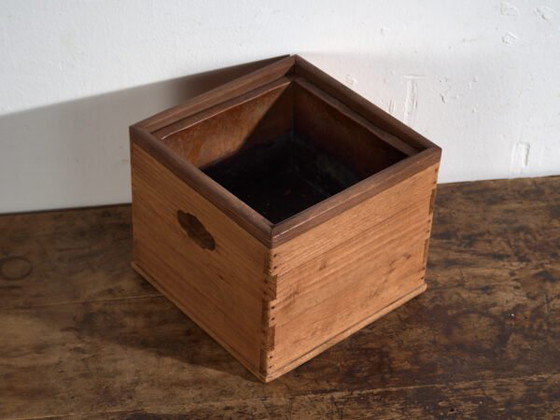
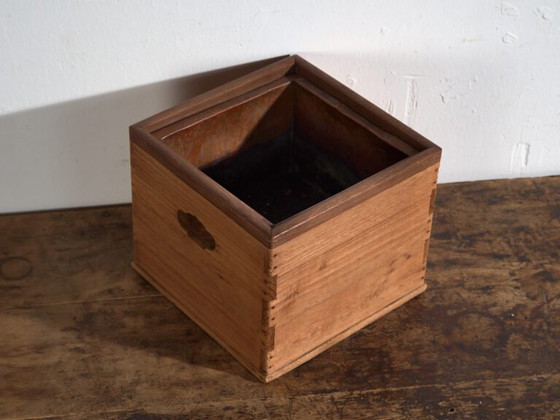
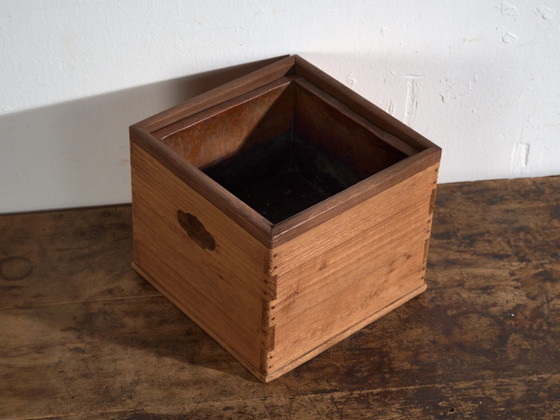


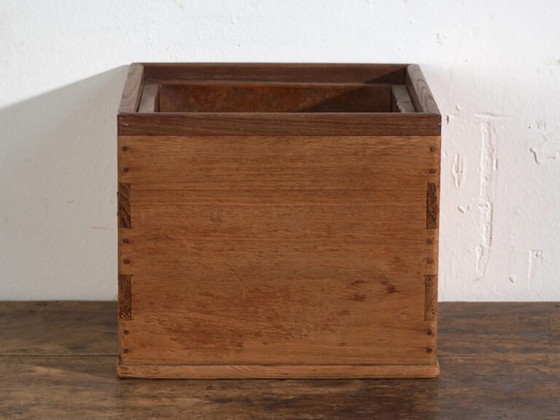
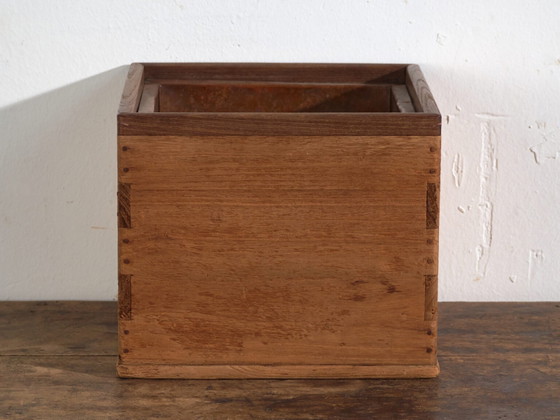

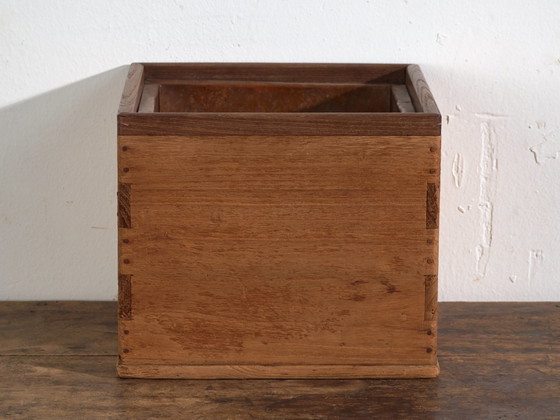

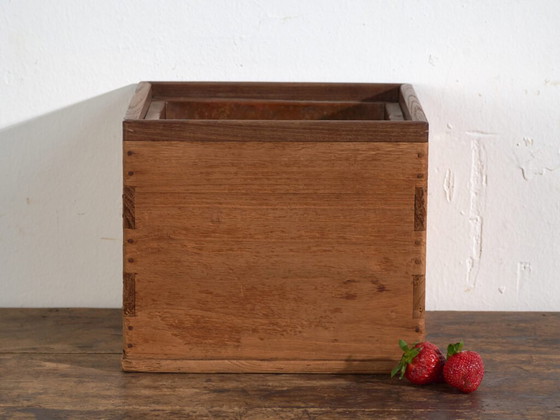
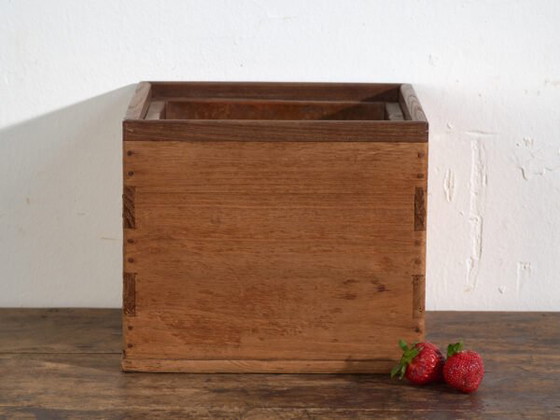
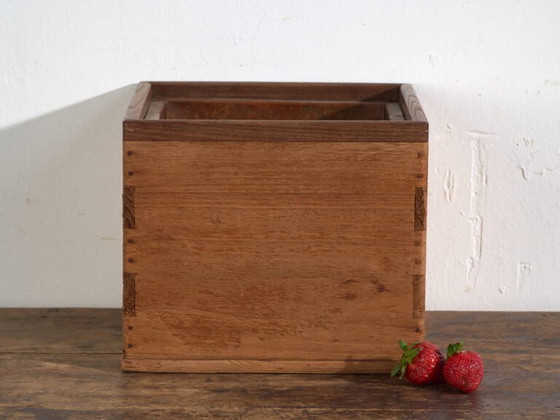
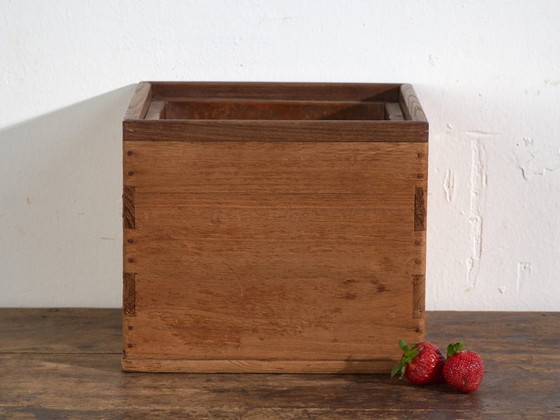

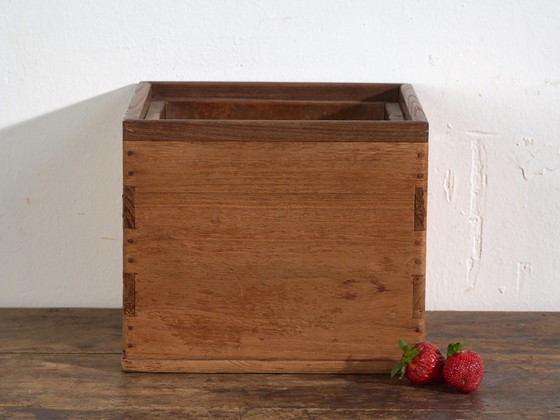
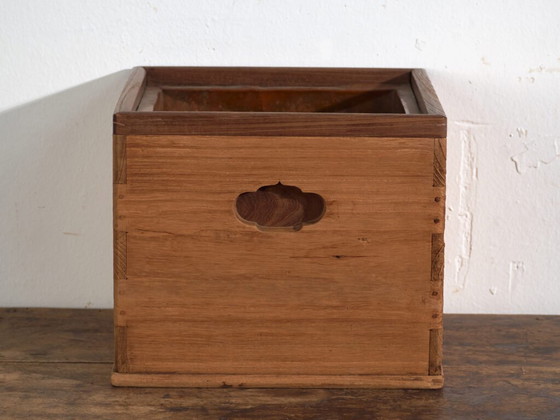
Japanese hibachi brazier box – Japan, Taishō or Early Shōwa period, circa . Set of two pieces
€350Bid from €315
Buy with confidence
Shop & pay safely with Buyer ProtectionDesigner items curated by WhoppahWe only pay the seller once you have safely received the itemTrusted payment methods


About this seller
ProfessionalProduct description
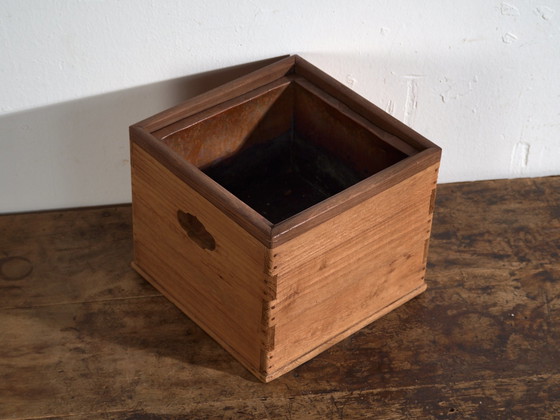
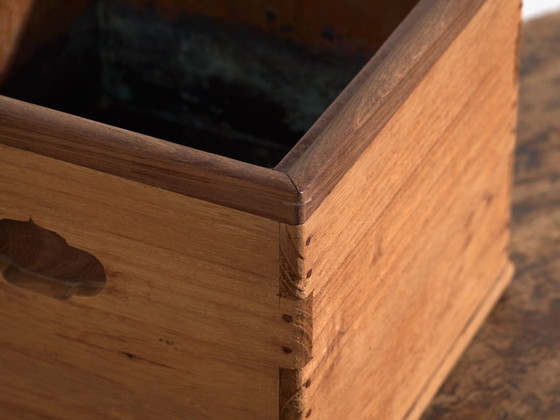
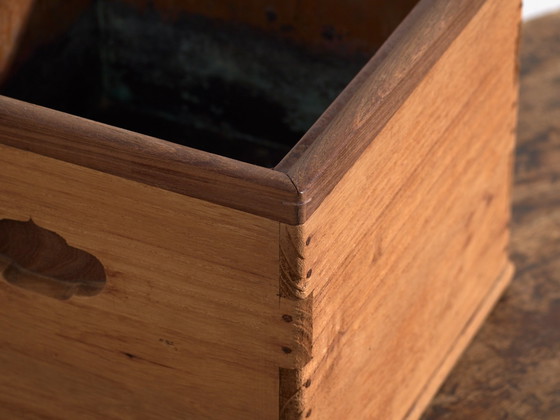
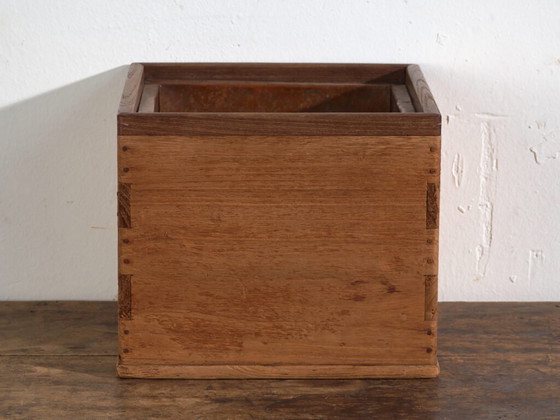
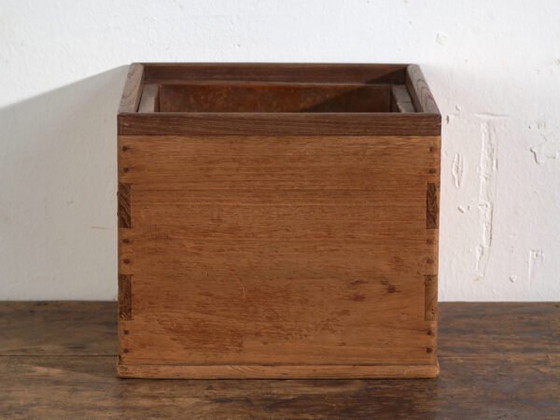
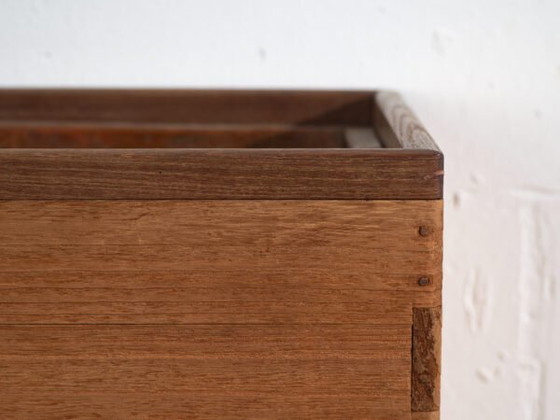
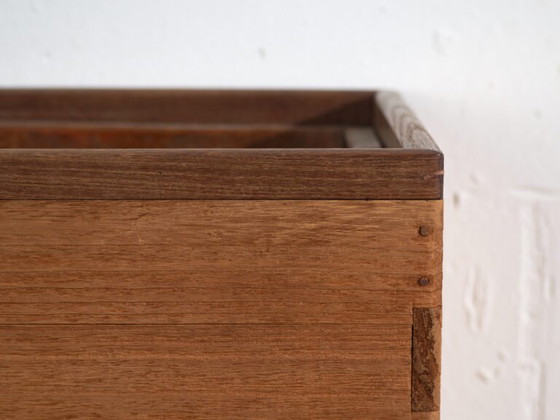
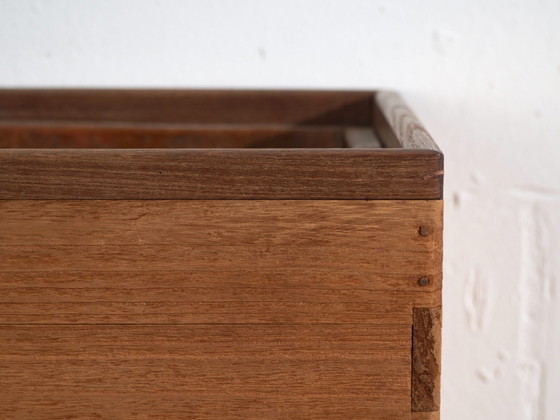
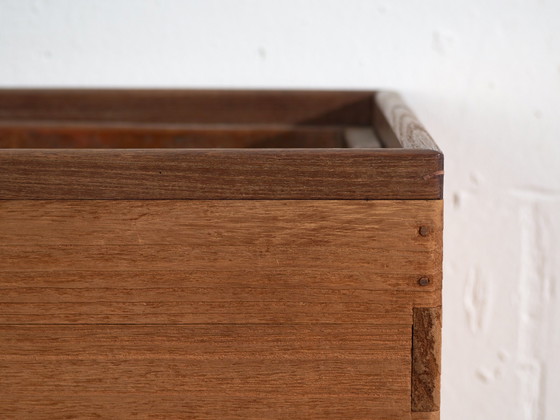
Set of two Japanese hibachi brazier boxes made of wood and copper, with exposed dovetail joints at all four corners, made in Japan in the Taishō or Early Shōwa period. A utilitarian piece halfway between a merchant box (kakebako) and a kitchen household box, representative of 20th-century Japanese carpentry in its most honest reading.
In the Japanese tradition, open wooden boxes were used in kitchens, workshops and shops as versatile containers: for salt, flour, small tools, stationery or weights. The hollow handle carved by hand on one of the sides allowed it to be lifted with a single hand. Its ostensible construction — joints exposed, never hidden — reflects the Japanese principle of revealing the quality of the craft rather than concealing it.
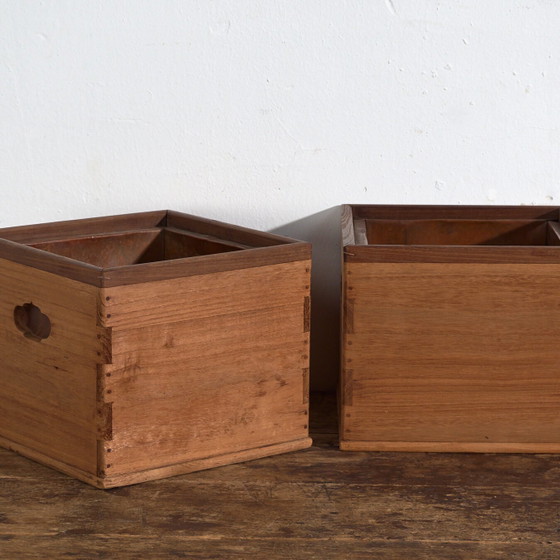
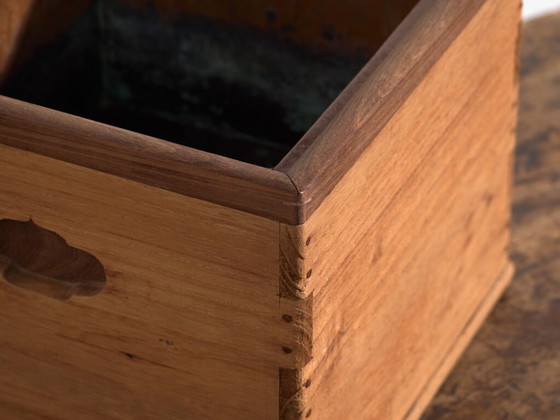
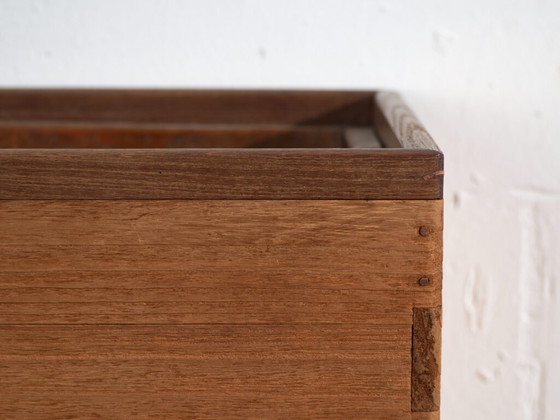
It is built in light wood (probably paulownia or sugi) with the four corners assembled with exposed dovetails, internal corner reinforcements and a recessed base that acts as a plinth. The lateral handle, drop-shaped, is carved directly from the board and keeps its original thickness without losing solidity. The surface carries no more than an oil finish, applied to seal the wood without hiding it.
The patina is warm and very even: the wood has taken on a settled honey tone, with the grain entirely legible and the dovetail heads reading as small darker trapezoids that visually order the corners. The interior retains the trace of its former contents, giving the piece the character of a lived object. The structure is completely firm.
Thanks to its domestic scale and constructional honesty, it sits naturally in wabi-sabi, japandi, minimalist, contemporary Mediterranean or rustic-kitchen interiors, where it works as a storage basket, a planter for small plants, a utensil organiser in an open kitchen or a decorative piece on a shelf. Its exposed joints are its best ornament.
Details
Ref.: AM27061-S2
Dimensions: Width: 29 cm Depth: 29 cm Height: 24 cm
Style: Japanese utilitarian box and brazier, Taishō or Early Shōwa period
Materials and techniques: Light wood (probably paulownia or sugi); exposed dovetail joints; copper interior; handle carved directly from the board; oil finish
Place of origin: Japan
Period: Taishō or Early Shōwa period
Date of manufacture: Circa 1910–1945
Condition / Notes: Good. Warm natural patina. Use marks consistent with age.
This piece is part of the collection of Amaru Antiques, Barcelona.
ONE OF A KIND PIECES
Additional details:
- Brand: AMARU
- Style: Taishō period
- Style: wabi-sabi
- Style: japandi
- Style: minimalist
- Style: contemporary Mediterranean
- Style: rustic-kitchen
- Style: Taishō or Early Shōwa period
- Style: Japanese utilitarian box and brazier
- Material: paulownia
- Material: sugi
- Colour: honey
- Period: Taishō or Early Shōwa period
Specifications
ConditionGoodMaterialWood, CopperHeight29 cmWidth29 cmDepth24 cm
Discover more
Seller information
About this seller
ProfessionalGelida (Barcelona), SpainOn Whoppah since July 2026 • 0 sales