Have it delivered hassle-freeBuyer protectionAll Designer items curated by WhoppahDownload the Whoppah App – get alerts & sell with ease.
Have it delivered hassle-free
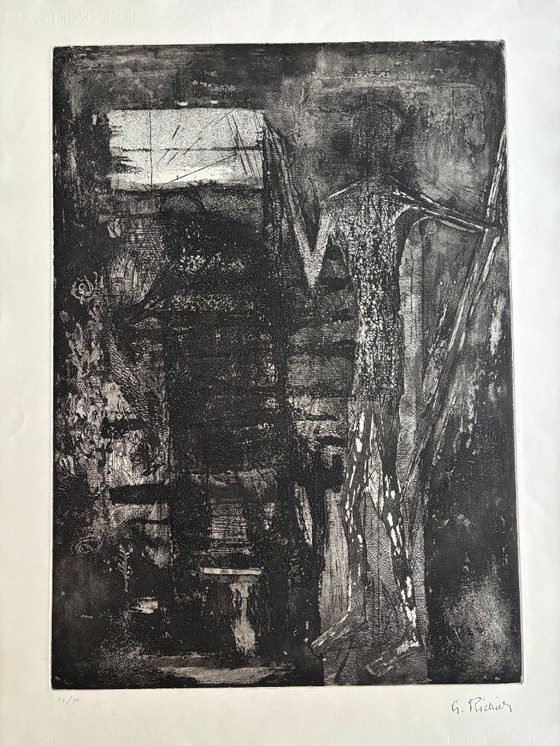
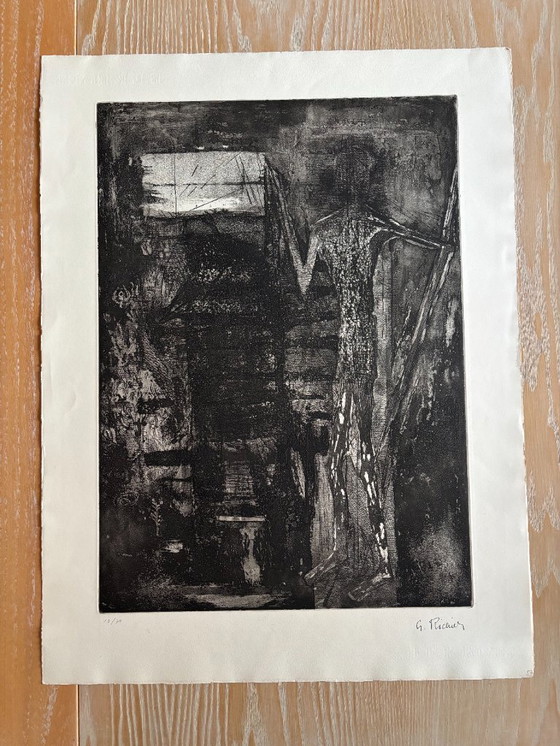
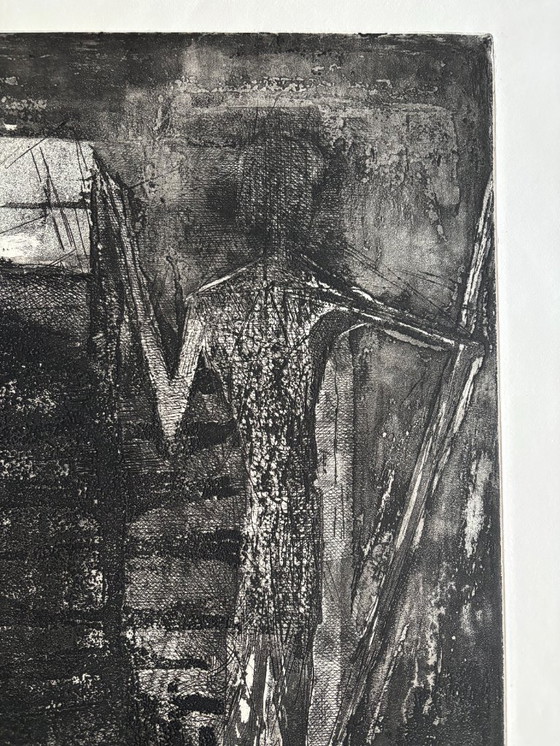
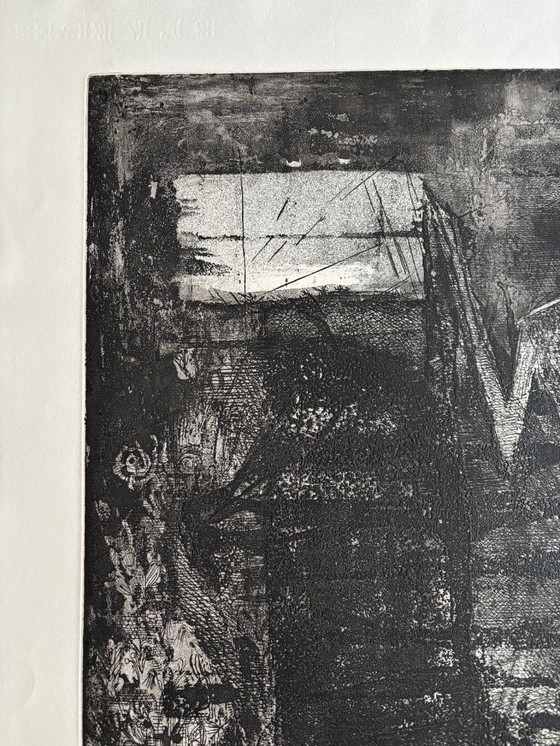
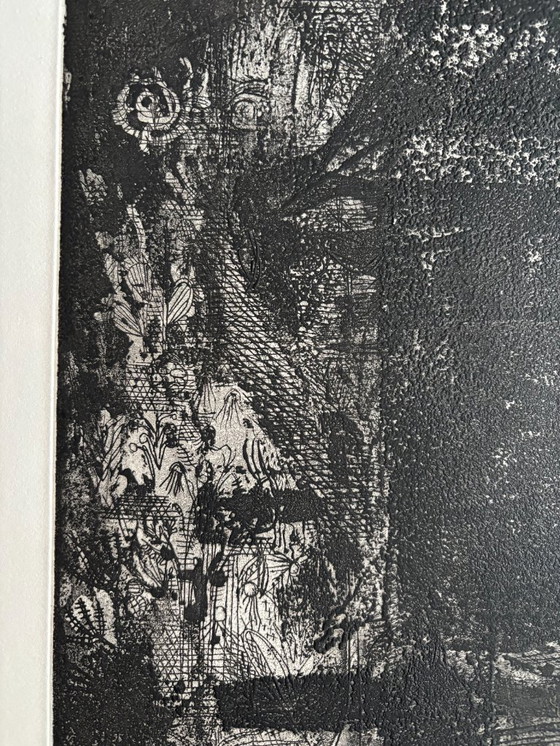
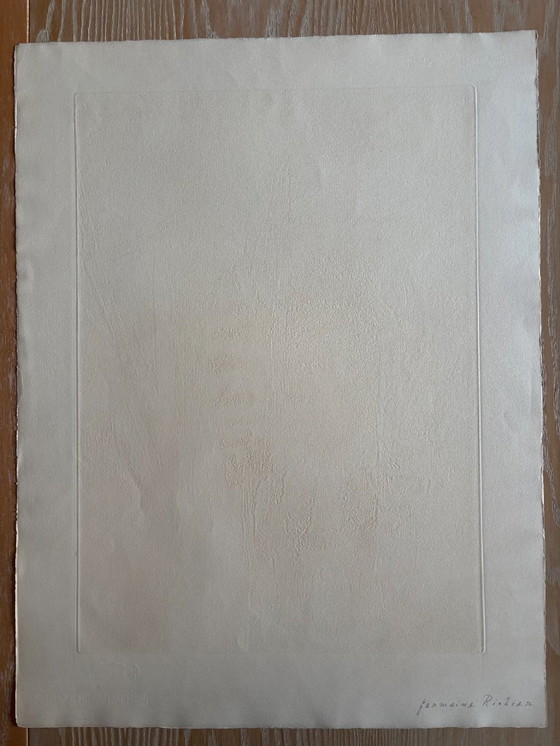
Germaine Richier — Don Quichotte
€5,800€5,220-10%
Buy with confidence
Shop & pay safely with Buyer ProtectionDesigner items curated by WhoppahWe only pay the seller once you have safely received the itemTrusted payment methods


About this seller
ProfessionalSaint-Didier, FranceOn Whoppah since January 2022 • 8 sales
Product description
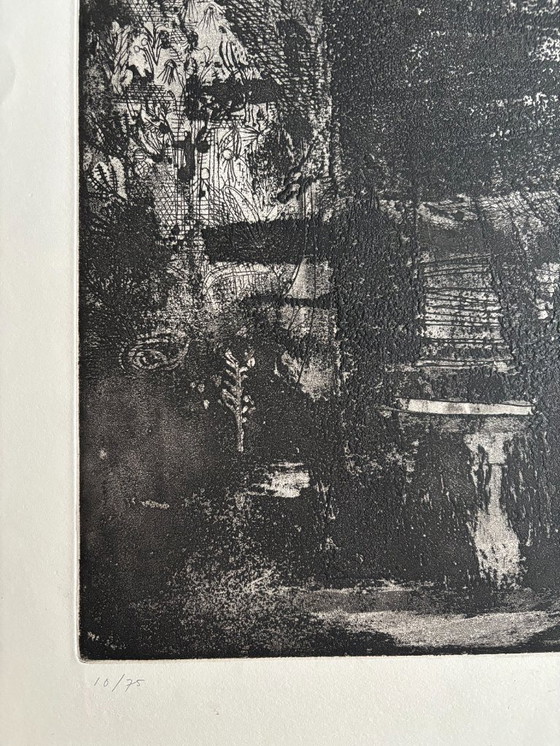
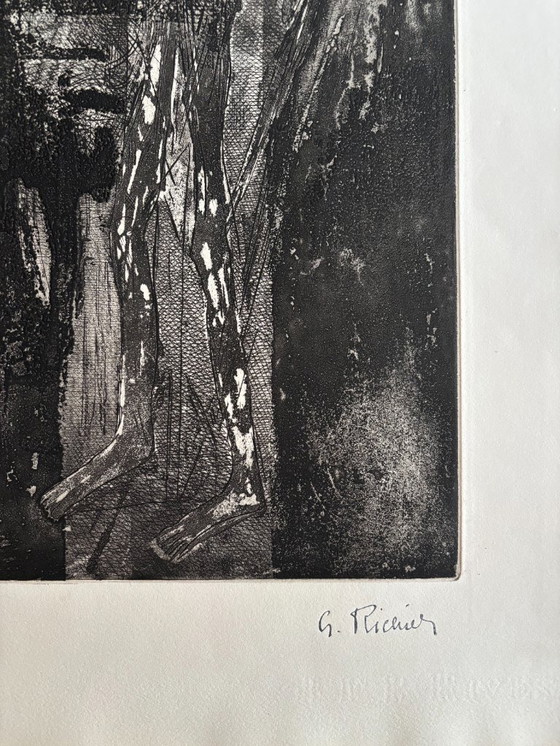
Rare signed and numbered print by the renowned sculptor Germaine Richier, whose work has been increasingly re-evaluated through the rediscovery of women artists and who is often described as the creative alter ego of Alberto Giacometti. Created in the 1950s, this etching (66 × 50 cm) depicts one of the artist’s most significant subjects: Don Quichotte.
This figure, which also exists as a sculptural masterpiece, marks the emergence of a new stylistic phase in Richier’s work — a long, slender aesthetic. In contrast to her earlier dense, massive figures such as L’Ogre, Don Quichotte inaugurates a series of attenuated, fragile silhouettes that seem poised on the verge of rupture. Its inaugural character pushes beyond the ordinary limits of the human figure, establishing Don Quichotte as a major work.
Shortly before, Richier had worked on the figure of Christ for the Church of Assy, a commission in which corporeality is stretched to an extreme, almost dissolving into concept. Don Quichotte belongs to the same austere and idealist vein: Cervantes’ wandering knight moves away from romantic picaresque tradition and, in Richier’s vision, acquires an authentic nobility. The raised left arm suggests an attraction toward the sky, while the virile diagonal of the lance anchored in the base conveys determination. Richier’s Don Quichotte is no facile hero; like Sisyphus, he appears as a conqueror, striding through forests on long, gnarled legs modeled after tree branches.
Together with the half-human, half-vegetal left arm, these legs reveal glimpses of Richier’s almost pantheistic imagination — a world less fantastical than dramatic, where natural elements merge in the service of beauty. Don Quichotte thus acquires a universal dimension, standing alongside Giacometti’s L’Homme qui marche.
Germaine Richier is one of the major sculptors of the twentieth century, alongside Alberto Giacometti, Henry Moore, Barbara Hepworth, Alexander Calder, Pablo Picasso, Constantin Brancusi, Henri Matisse, and Jean Dubuffet. She occupies a central place in the history of modern sculpture, forming a link between Rodin and the generation leading to César. Trained in the tradition of Auguste Rodin and Antoine Bourdelle, Richier developed, over a career of just over twenty-five years between the 1930s and her premature death in 1959, a profoundly original and radical sculptural language. Major themes — the human figure, the animal world, and myth — nourished her practice. Like Giacometti, she contributed decisively to the post-war renewal of the human figure, forging new images of men and women in modern sculpture.
Specifications
ConditionVery goodColorsBlack, WhiteMaterialPaperNumber of items1OrientationPortraitArt sizeMediumHeight66 cmWidth50 cm
Discover more
Seller information
About this seller
ProfessionalSaint-Didier, FranceOn Whoppah since January 2022 • 8 sales