Have it delivered hassle-freeBuyer protectionAll Designer items curated by WhoppahDownload the Whoppah App – get alerts & sell with ease.
Have it delivered hassle-free
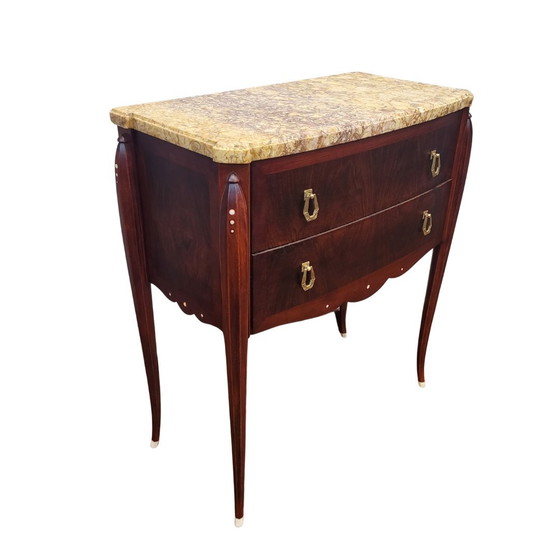
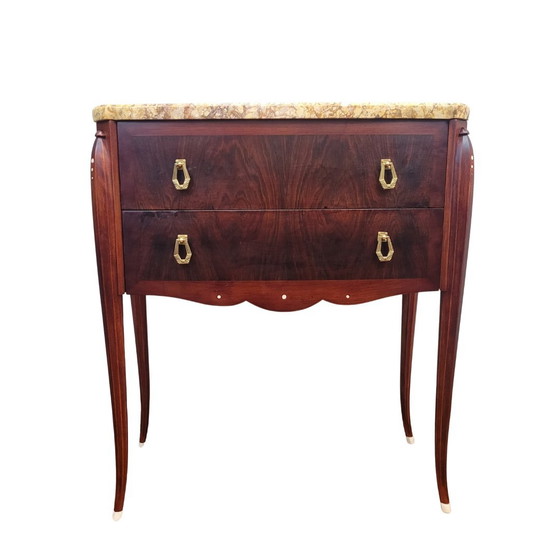
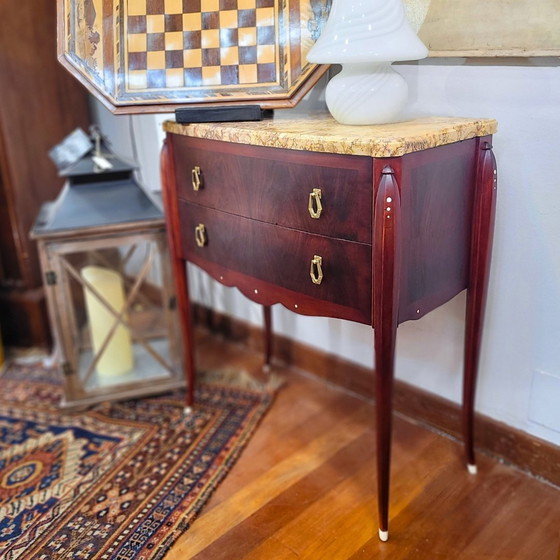
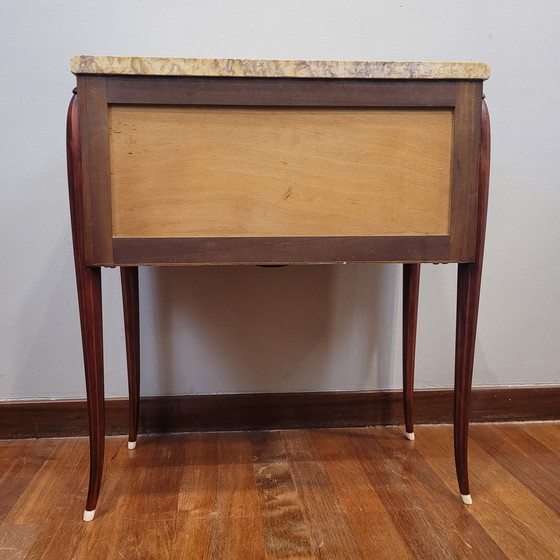
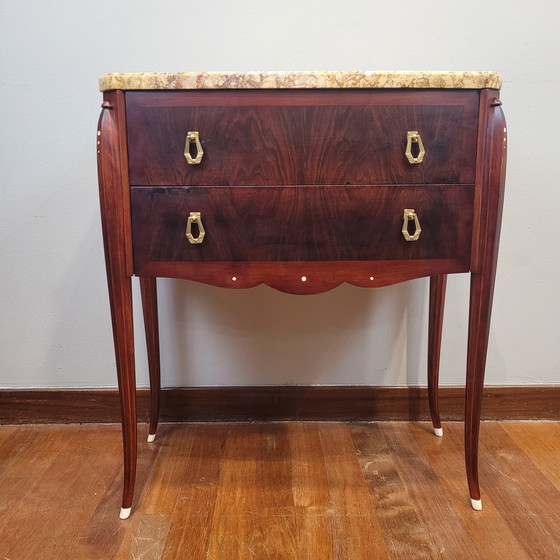
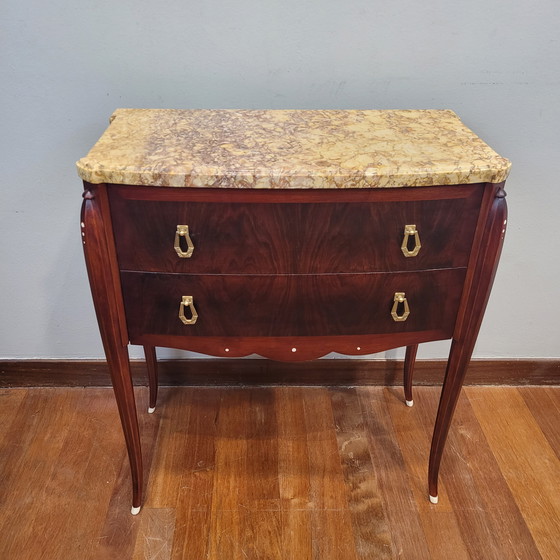
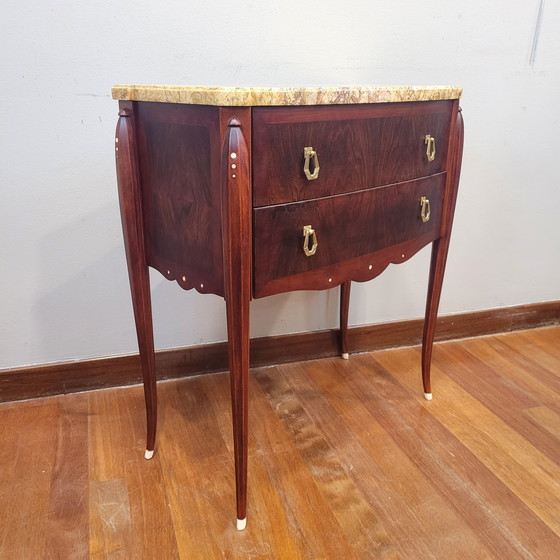
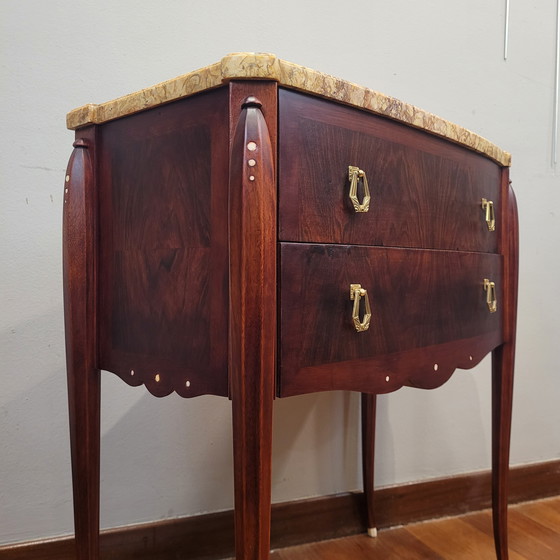
Art Deco Chest of Drawers, After JE Ruhlmann, Wood and Bone, 40's – France
€2,990€2,691-10%Bid from €2,600
Buy with confidence
Shop & pay safely with Buyer ProtectionDesigner items curated by WhoppahWe only pay the seller once you have safely received the itemTrusted payment methods


About this seller
ProfessionalProduct description
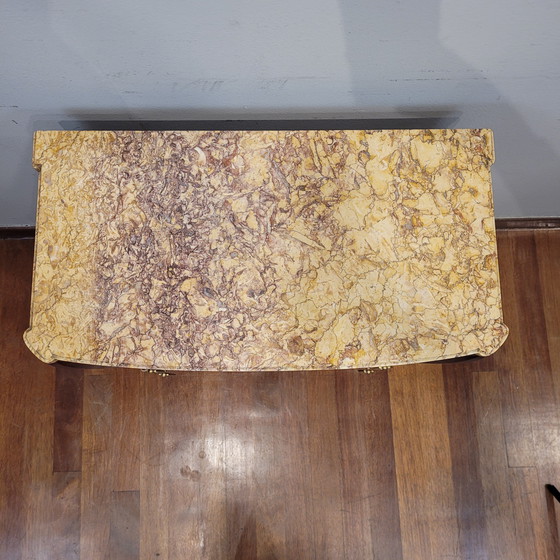
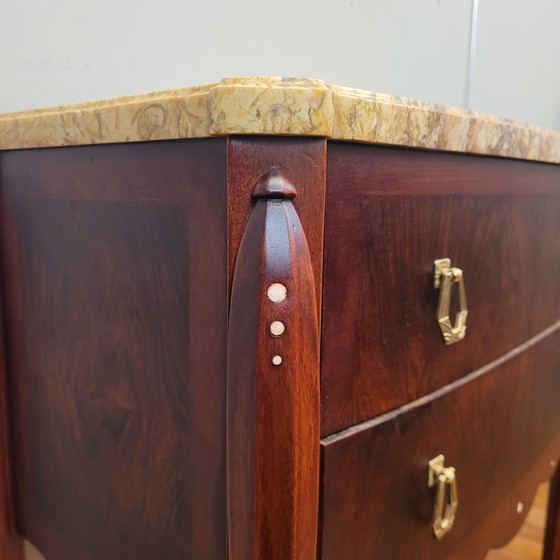
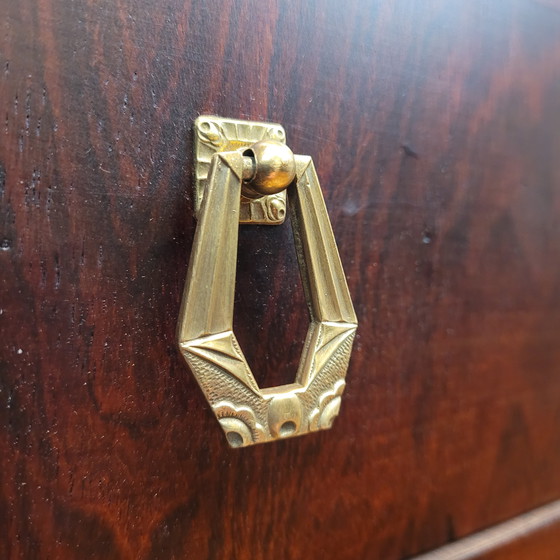
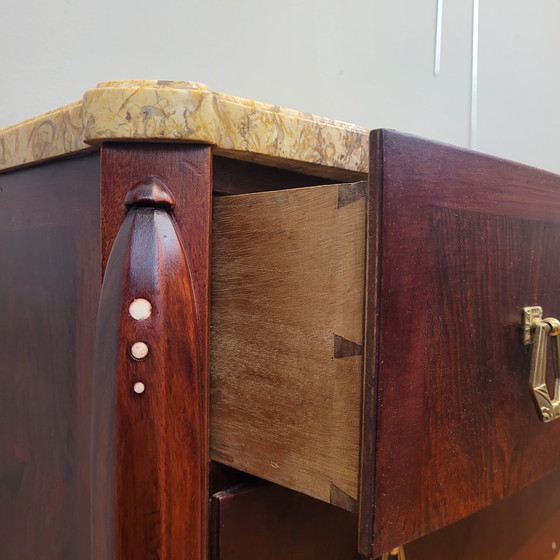
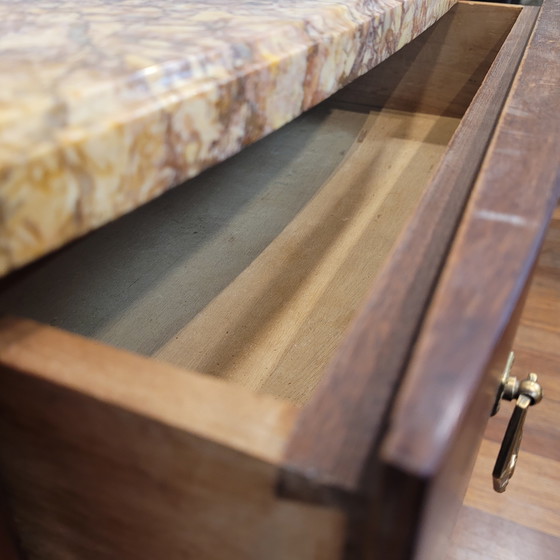
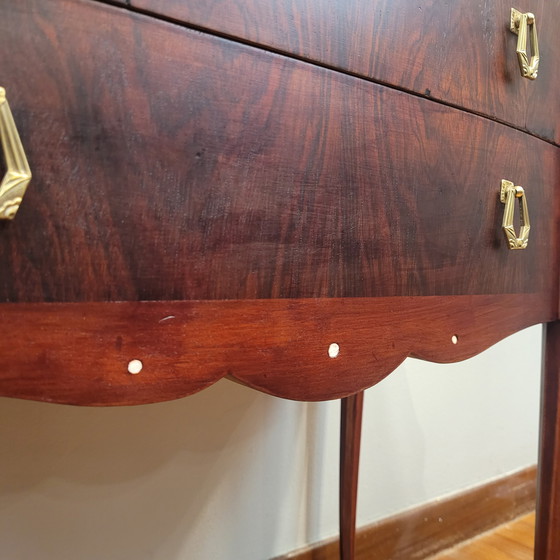
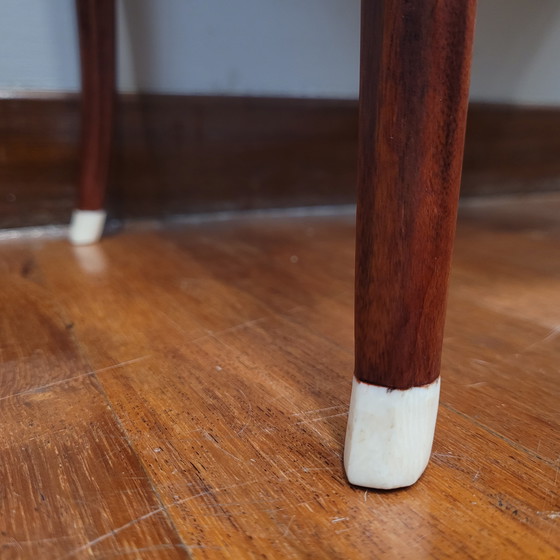
Exquisite chest of drawers in precious wood with delicate bone inlays resembling small bubbles on the top of the legs and on the small skirt that extends down the sides. Its rectangular body features two registers with bronze handles. The legs are elevated as the main protagonists of the piece's design; they are tall, slender, and faceted, and are attached to the main body, from which they elegantly protrude with a slightly galve-like shape that ends in a small bone border. The top is in ochre marble with reddish veins and a dove-breast-shaped edge with chamfered corners. It closely follows the designs of Jacques Émile Ruhlmann (1879-1933), a renowned French furniture designer and interior decorator during the Art Deco period. From 1911, his exquisite, elegant, and refined furniture, along with various decorative objects, were exhibited at the Salons d'Automne in Paris. He was the most prominent furniture designer at the 1925 Exposition des Arts Decoratifs. He used only the rarest and most exotic materials, such as tortoiseshell, ivory, and tropical woods. His furniture was inspired by classic Louis XVI-style designs but reinterpreted and simplified them. In this case, the inspiration is clear from the shape of the legs (common in the chests of drawers designed by Ruhlmann) and the inlay of small bone details. About Art Deco Art Deco, short for the French term Arts Décoratifs, and sometimes simply called Déco, is a style of visual arts, architecture, and product design that first appeared in France in the 1910s (just before World War I) and flourished especially in the United States, but also in Europe, during the 1920s and 1930s. Art Deco combined modern styles with fine craftsmanship and rich materials. During its heyday, it represented luxury, glamour, exuberance, and a faith in social and technological progress. From its beginnings, Art Deco was influenced by the bold geometric forms of Cubism and the Vienna Secession; the vivid colors of Fauvism and the Ballets Russes; the updated craftsmanship of furniture from the eras of Louis XVI and Louis-Philippe I; and the exotic styles of China, Japan, India, Persia, ancient Egypt, and Mayan art. It featured rare and expensive materials, such as ebony and ivory, and exquisite craftsmanship. Style: Art Deco, after J.E. Ruhlmann Materials: Wood, bone, marble top Period: 1940s Country of Origin: France Good condition commensurate with age and use Dimensions: 72 x 62 x 31 cm Shipping costs will be paid by the buyer depending on the dimensions, weight, and destination. We will contact you to arrange the delivery and agree on a quote. Shipping costs include custom-made professional packaging and personalized shipping with tracking and a warranty.
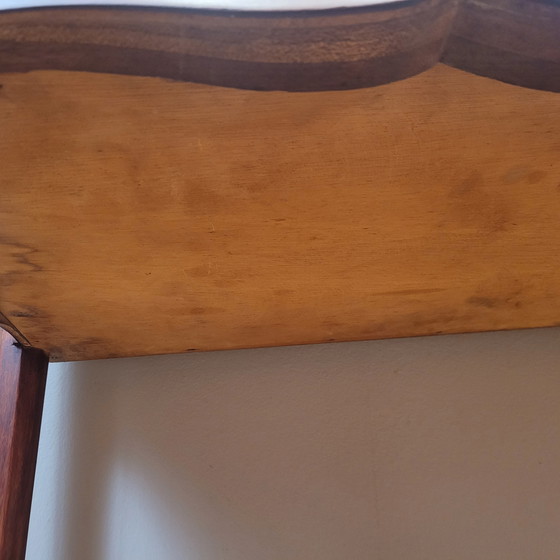
Good condition according to its age and use
Good condition according to its age and use
Specifications
ConditionVery goodColorsTaupe, Beige, Brown, CremeMaterialMarble, WoodNumber of items1Height72 cmWidth62 cmDepth31 cm
Discover more
Seller information
About this seller
ProfessionalValladolid, SpainOn Whoppah since October 2024 • 1 sale