Have it delivered hassle-freeBuyer protectionAll Designer items curated by WhoppahDownload the Whoppah App – get alerts & sell with ease.
Have it delivered hassle-free
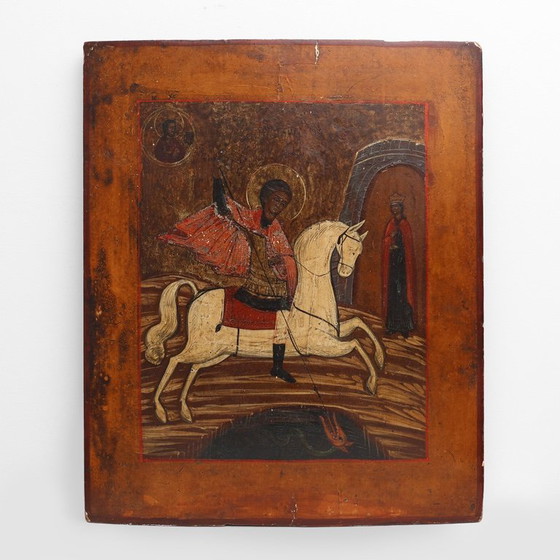
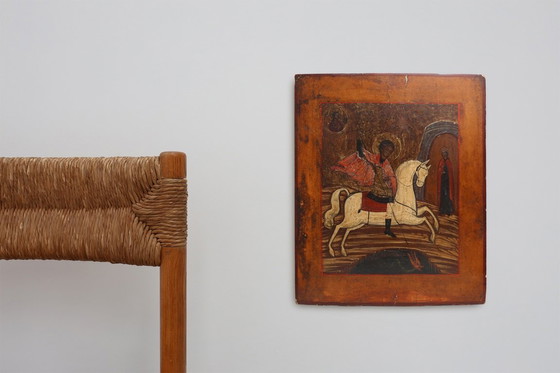
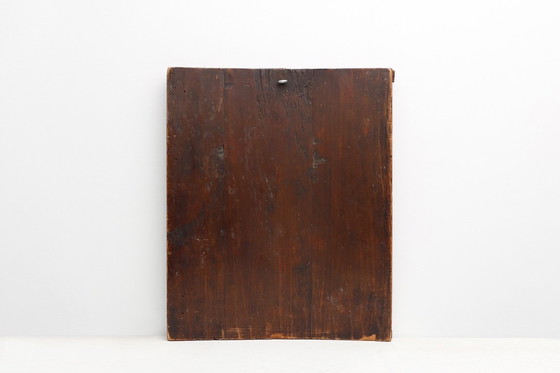
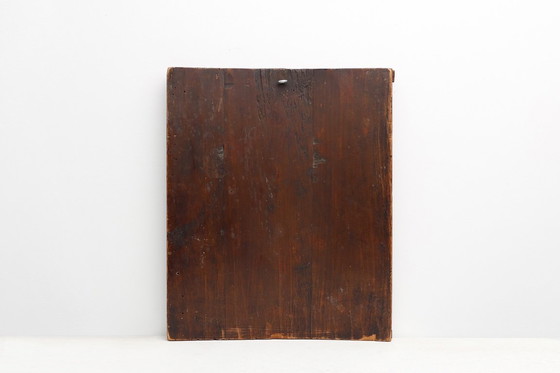
19th-Century Russian Religious Icon of Saint George and the Dragon, Hand-Painted on Wood
€1,350
Buy with confidence
Shop & pay safely with Buyer ProtectionDesigner items curated by WhoppahWe only pay the seller once you have safely received the itemTrusted payment methods


About this seller
ProfessionalMeulebeke, BelgiumOn Whoppah since August 2022 • 10 sales
Product description
Russia / 19th Century / Religious Icon of St George and the dragon / wood / Antique
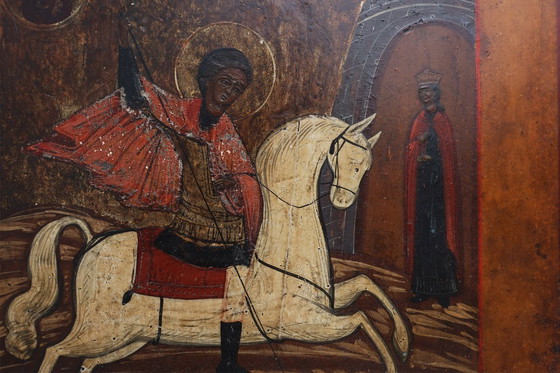
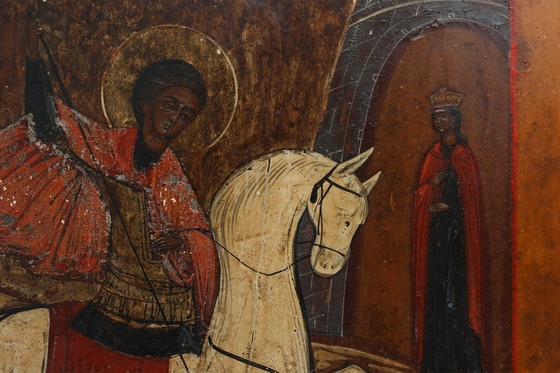
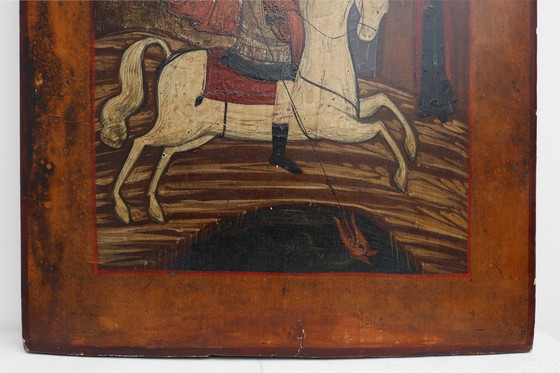
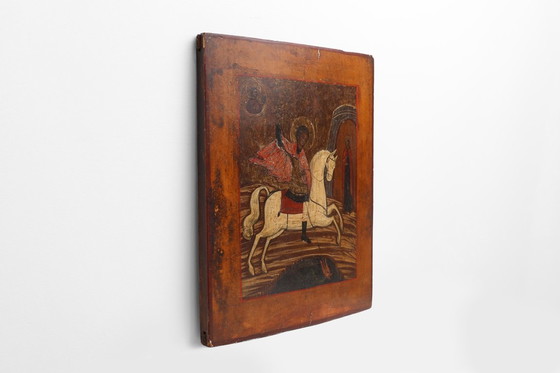
A compelling 19th-century Russian Orthodox icon depicting Saint George and the Dragon, finely hand-painted in tempera on a wooden panel. This powerful composition captures the saint mounted on a white horse, in the act of slaying the dragon, an enduring symbol of faith’s triumph over evil.
Rendered in the traditional Russian style, the scene is framed by a warm cinnabar border, with gilded highlights emphasizing the divine presence. The figure of Saint George is depicted with remarkable vigor and poise, his crimson cloak flowing dramatically as he delivers the decisive blow. In the background stands a crowned princess, witnessing the miracle, a classic element of the narrative drawn from Byzantine tradition.
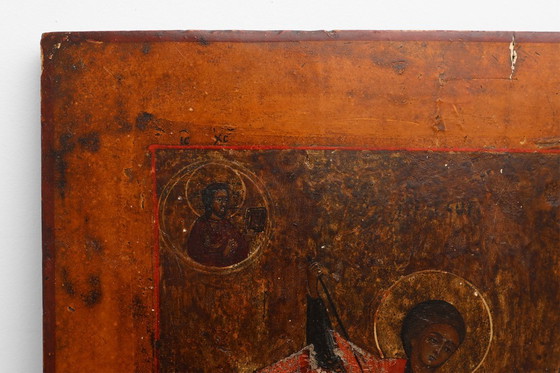
The icon retains its original surface with beautiful craquelure and patina, reflecting both age and devotional use. Its vibrant pigments and spiritual symbolism make it a distinguished example of 19th-century Russian religious art.
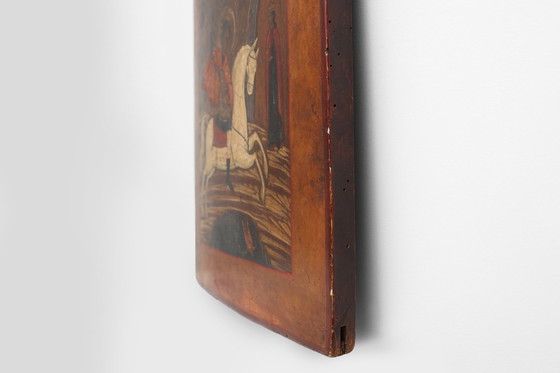
Good antique condition with age-appropriate surface wear and patina. An evocative and finely preserved example of Russian icon painting — a symbol of courage, faith, and divine protection.
Background:
Saint George lived in the late 3rd century, under Diocletian's rule of the Roman Empire, an emperor who harshly persecuted Christians. He joined the Roman army at a very young age, and found much success in the military, progressing to a high rank. In the year 303 A.D, Diocletian called an assembly with some of his top generals, Saint George being among them and asked them to make pagan sacrifices as an act of allegiance to Diocletian and the Roman Empire. While the other generals pledged themselves to paganism and the Roman Empire, Saint George proclaimed his faith in Jesus Christ. After enduring several horrendous acts of torture, Saint George was beheaded. In this icon, Saint George is shown slaying a dragon. The story states that the dragon terrorized the city of Atalia and that the citizens were forced to sacrifice a girl to the dragon annually. Saint George subdued the dragon and placed it under the control of the king. The fathers of the Church believe that this portrayal of Saint George represents him conquering evil and Diocletian as the dragon.
Ref. 25-0433
Specifications
ConditionGoodColorsMulti Color, BrownMaterialWoodNumber of items1OrientationPortraitArt sizeSmallHeight31 cmWidth26 cmSigns of usageScratches
Discover more
Seller information
About this seller
ProfessionalMeulebeke, BelgiumOn Whoppah since August 2022 • 10 sales