Thonet: the Austrian house that invented bentwood and produced the most-sold chair in history
Thonet has been making bentwood furniture since 1853. The No. 14 chair has sold over 50 million units. Mies van der Rohe's MR10 cantilever is still in Thonet production. Here's the short story.

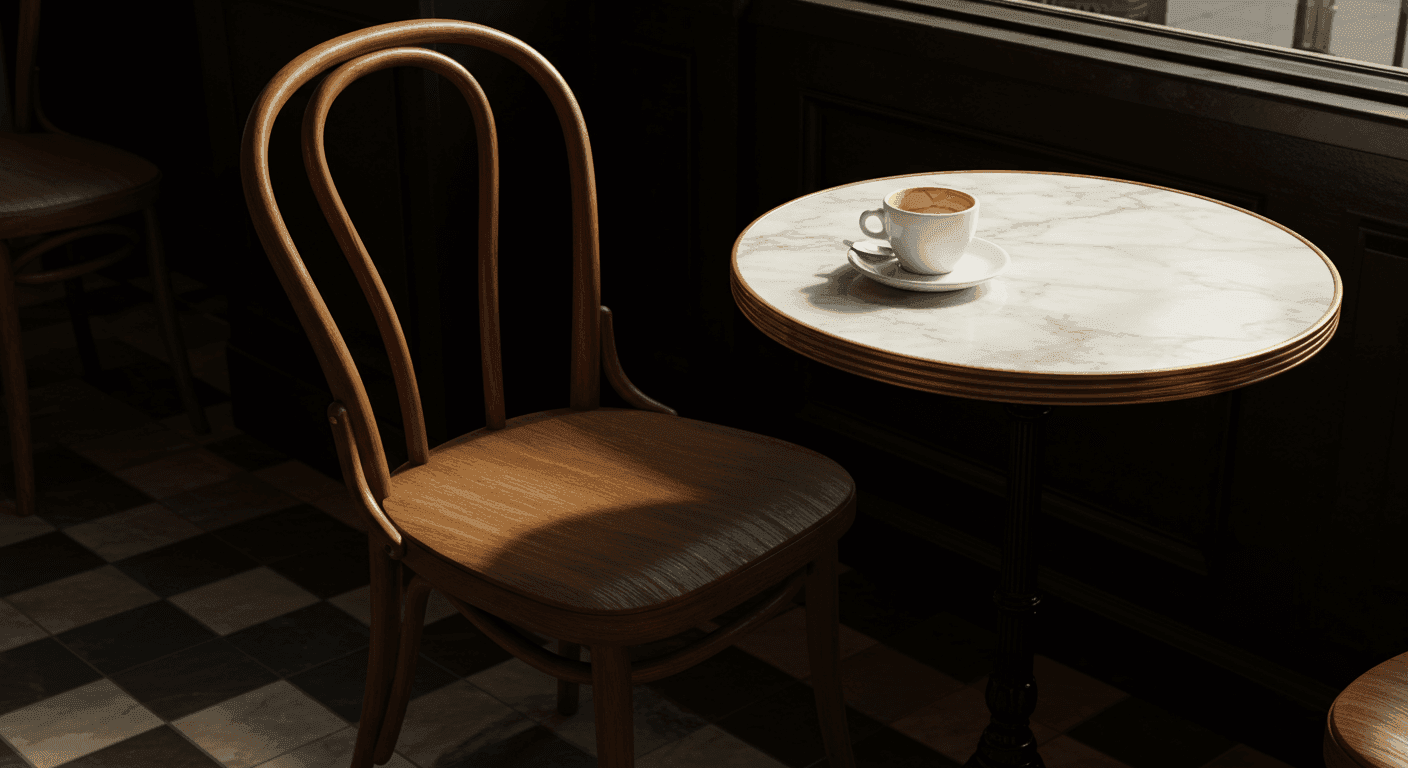
Thonet listings, both the original bentwood pieces and the later tubular steel productions, are some of the longest-running designs our curators handle. Authentication relies on the under-seat markings and production-period details.
Thonet was founded in 1819 in Boppard, Germany, by Michael Thonet, a master carpenter who developed the technique of steam-bending solid wood into curved shapes. The technique made it possible to mass-produce chairs from bent components rather than carved blocks, which transformed furniture manufacturing in the 19th century.
The No. 14 chair (1859) is the headline product. A six-component chair (two front legs, a single curved piece for the back and rear legs, a circular seat, a brace, and the connecting screws) that can be packed into a small shipping box and assembled at destination. The No. 14 was the world's first mass-produced piece of flat-pack furniture, and it has sold over 50 million units since 1859. Café chairs around Europe are mostly No. 14s or close relatives.
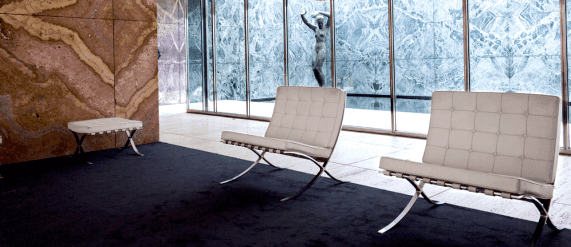
In the 20th century, Thonet became one of the producers of Bauhaus tubular-steel furniture alongside Knoll. Mies van der Rohe's MR10 cantilever chair (1927) is still in Thonet production. So is Mart Stam's S43 cantilever (1931) and Marcel Breuer's B9 stool (1925).
What to look for on the secondhand market: authentic Thonet bentwood pieces from the 19th and early 20th century carry a Thonet stamp burned into the underside of the seat. Post-WWII production typically has a paper label that may have worn off, in which case the construction quality is the second-best verification.
A genuine 19th-century Thonet No. 14 in good condition (the chair has been in continuous production for 165 years, so most vintage examples have some wear) sells on Whoppah at €120 to €350. Currently-produced Thonet 214 (the No. 14 was renumbered) retails at around €450. Vintage examples are excellent value for what they are.
The MR10 chair in Thonet production from the 1970s and 80s sits at €400 to €900 on Whoppah. Knoll also produces the MR10 under licence; both are authentic, just from different manufacturers.
Copies of the No. 14 are abundant. The fastest tell is the bentwood quality: Thonet bends solid beech with no visible joins; copies often use laminated bends that show seams at the curve.