Louis Poulsen: the Danish lighting company that made Poul Henningsen's PH series an icon
Louis Poulsen has been producing Poul Henningsen's PH lamp series since 1925. The PH lamps are the reason 'Danish design' became a global phrase. Here's the short field guide.

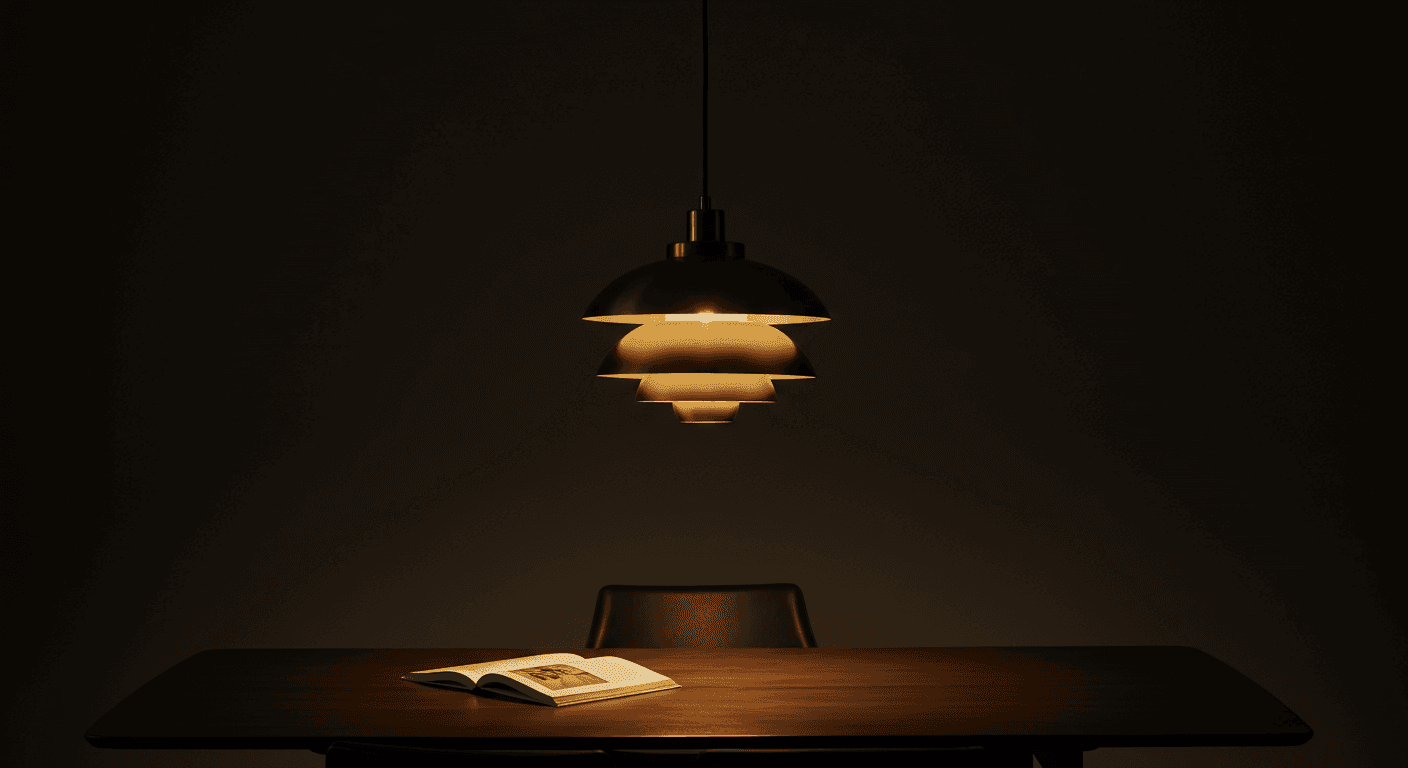
Louis Poulsen listings, especially the PH series, are some of the most consistently demanded lighting designs on Whoppah. Our curators look closely at the wiring date and the metalwork condition, which together signal the production era.
Louis Poulsen was founded in 1874 in Copenhagen as a wine importer (it's a long story). By 1906 it had pivoted to electrical supplies, and in 1924 it commissioned a young architect named Poul Henningsen to design a series of lamps for the 1925 Paris International Exhibition. The lamps Henningsen designed became the PH series, and the PH series is still the spine of the Louis Poulsen catalogue 100 years later.
The PH design principle is simple and elegant: multiple shades arranged so that no light source is ever directly visible from any normal viewing angle, but light spreads evenly into the room. Henningsen worked out the geometry mathematically, then refined it by eye. The result is lighting that doesn't dazzle and doesn't cast harsh shadows, which is much harder than it sounds.
The PH 5 (1958) is the residential workhorse, the lamp you'll see in countless Danish kitchens and dining rooms. The PH Artichoke (1958), with its 72 individually-mounted leaves, is the museum-grade statement piece. The PH 2/1 wall lamp (1931), the PH 3/2 table lamp (1927), and the PH 4/3 pendant (1966) round out the most-recognised pieces.
Beyond Henningsen, Louis Poulsen produces Arne Jacobsen's AJ lamp series (designed for the Royal Hotel in 1958), Verner Panton's Flowerpot (1968, now made by &Tradition), and Vilhelm Lauritzen's classic 1940s and 50s designs.
What to look for on the secondhand market: every authentic Louis Poulsen piece carries the company stamp, usually on the inside of the top shade or on the lamp's mounting hardware. Vintage 1950s and 60s PH 5 lamps sell on Whoppah for €350 to €800; current Louis Poulsen retail is around €700. The PH Artichoke is in a different league: vintage pieces from the 1960s and 70s sit at €4,000 to €12,000 depending on size and finish.
Copies of the PH series are abundant. The fastest tell is the spinning quality: genuine Louis Poulsen shades are spun aluminium or copper, with a specific edge curl. Copies often use stamped sheet metal that doesn't curl correctly.