Flos: the Italian lighting company that made the Castiglioni brothers famous
Flos was founded in 1962 specifically to manufacture Achille and Pier Giacomo Castiglioni's Arco. They have since become the most influential Italian lighting brand of the past 60 years. Here's the short story.

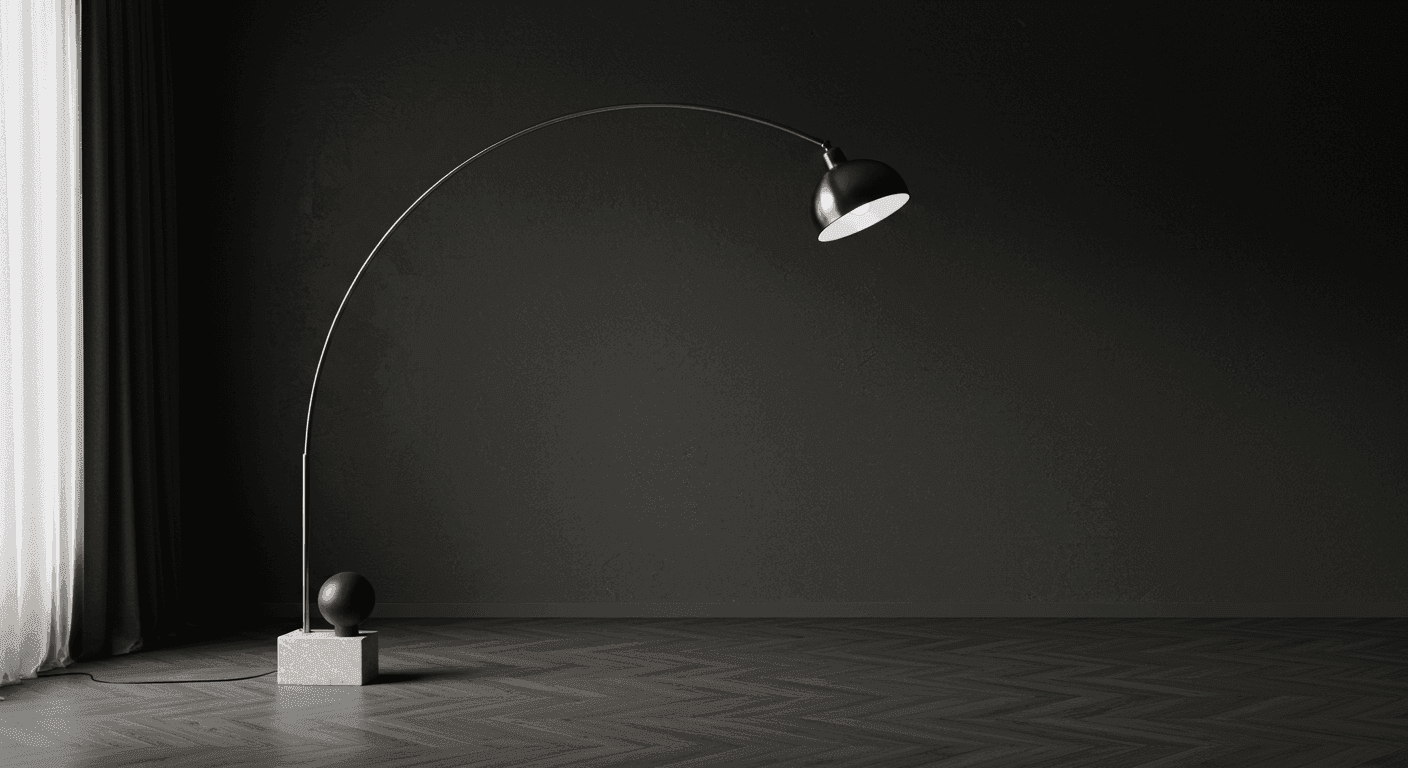
Flos is the Italian lighting house founded in 1962 in Brescia with one specific goal: putting Achille and Pier Giacomo Castiglioni's Arco floor lamp into production. It worked, and Flos went on to become one of the defining brands of Italian post-war design. For secondhand buyers the Arco is still the anchor: vintage Flos Arcos from the 1970s and 80s sell on Whoppah at €2,000 to €4,500, against a current retail around €3,500, because original production holds its value. Flos listings span the full range from Castiglioni-era classics to contemporary designs, and our curators verify the Flos production markings on each one; the brand's stable identification system makes authentication relatively clean. Here's the short story.
Flos was founded in 1962 in Brescia, Italy, by Dino Gavina and Cesare Cassina, with the specific goal of putting Achille and Pier Giacomo Castiglioni's Arco floor lamp into production. The Arco worked. Flos became the manufacturer of the Castiglioni brothers' lighting catalogue, and through them became one of the defining brands of Italian post-war design.
Beyond the Castiglionis, Flos has produced Tobia Scarpa (the Foglio sconce, 1966), Gae Aulenti (in collaboration with the Castiglionis), Philippe Starck (the Romeo Moon series, 1996), Jasper Morrison (the Glo-Ball series, 1998), Marcel Wanders, Konstantin Grcic, Ronan and Erwan Bouroullec, and Patricia Urquiola. The current catalogue is one of the most ambitious in contemporary lighting.
How do you recognise an authentic Flos lamp?
What to look for on the secondhand market: every authentic Flos piece carries Flos branding, typically on the metal hardware or on a paper label inside the diffuser. On the Arco, the Flos identifier is on the underside of the marble base, alongside a model number.
The Arco (1962) is heavily copied. Real Flos Arcos have specific markers: the marble base is Carrara with characteristic veining (copies often use stained granite or composite stone), the marble weighs 65 kilograms and has a hole drilled through for a broomstick to lift it (always present on real Arcos, frequently skipped on copies), the polished stainless arm is a specific gauge (copies often use chrome-plated mild steel that pits over time), and the Flos label is on the marble underside.
What does a vintage Flos Arco cost on Whoppah?
Vintage Flos Arcos from the 1970s and 80s sell on Whoppah at €2,000 to €4,500. Current Flos retail is around €3,500, so the vintage premium is real for original production.
The Snoopy table lamp (1967), the Toio floor lamp (1962), and the Fucsia pendant cluster (Castiglioni, 2005) are the other Flos pieces I see most often on Whoppah. All carry Flos labels and are reasonably easy to authenticate from listing photos.