Have it delivered hassle-freeBuyer protectionAll Designer items curated by WhoppahDownload the Whoppah App – get alerts & sell with ease.
Have it delivered hassle-free
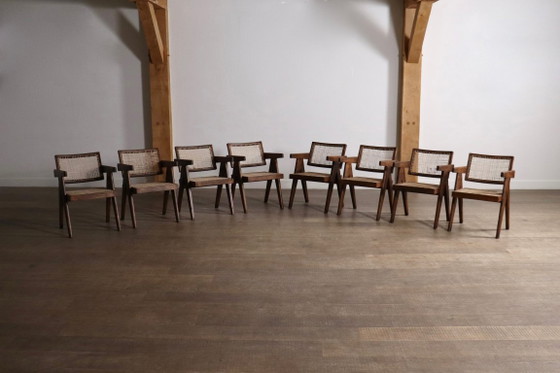
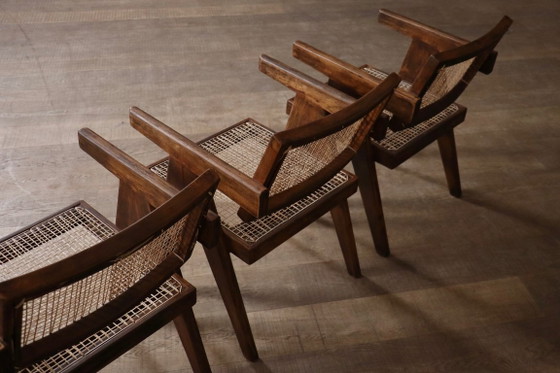
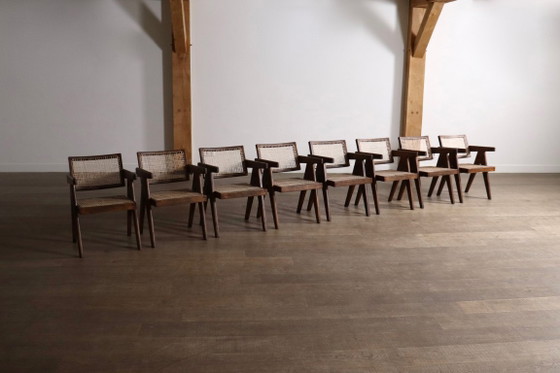
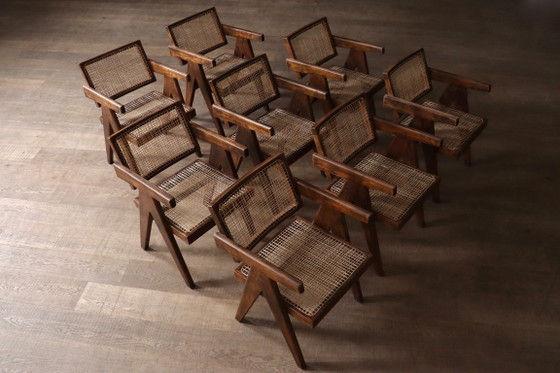
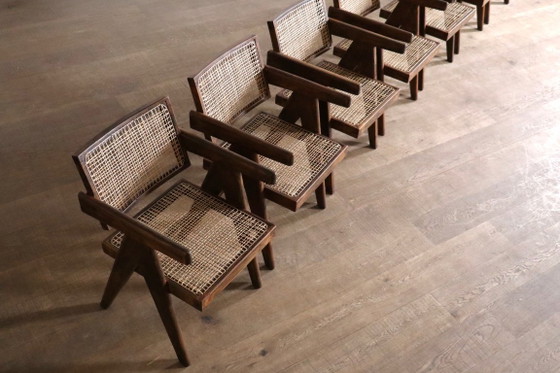
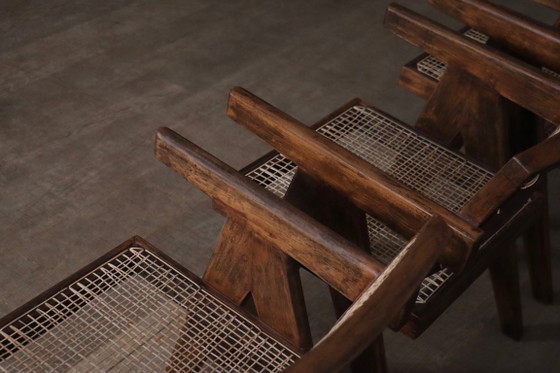
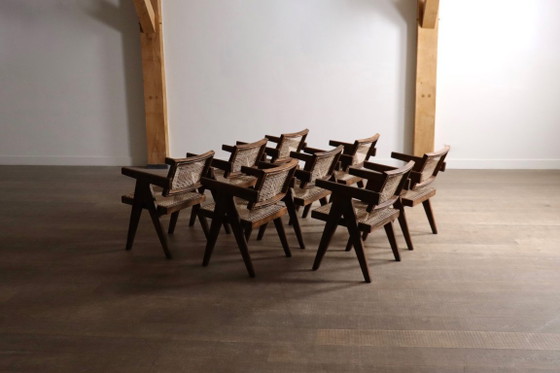
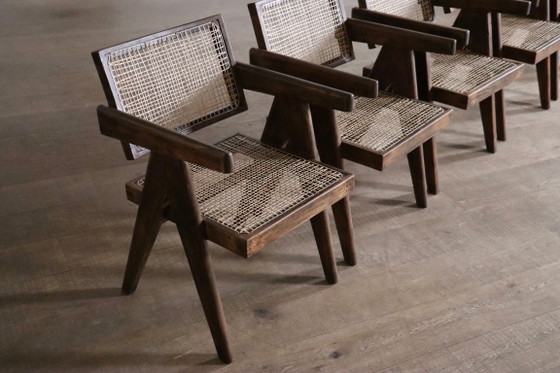
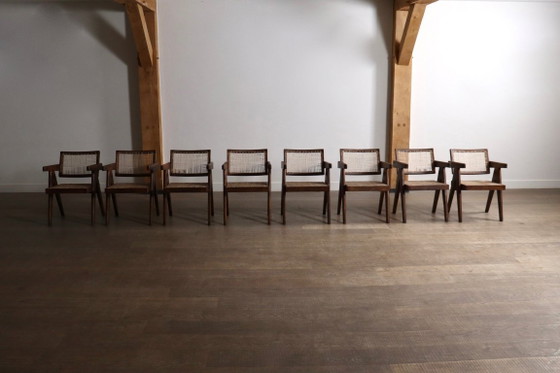
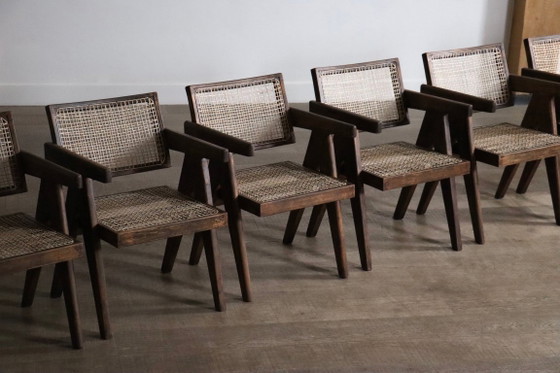
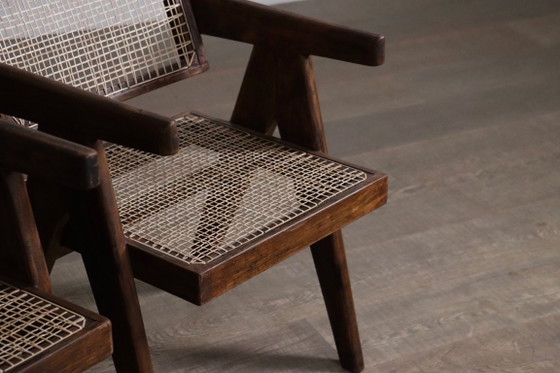
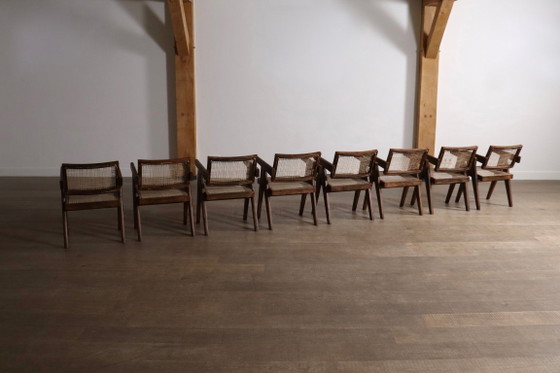
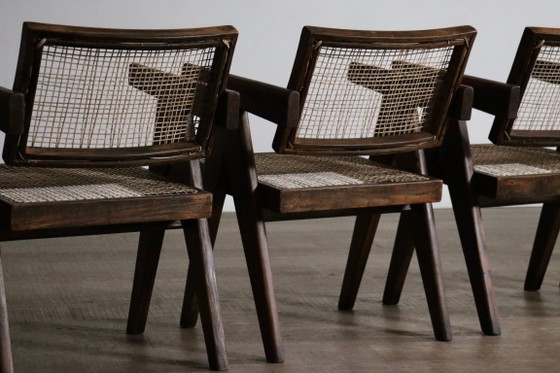
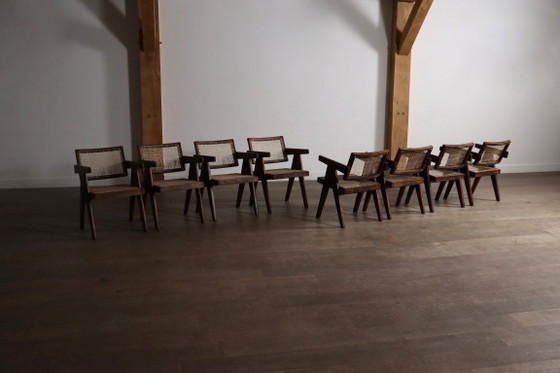
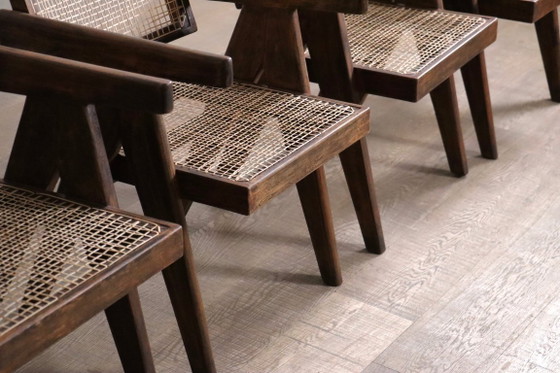
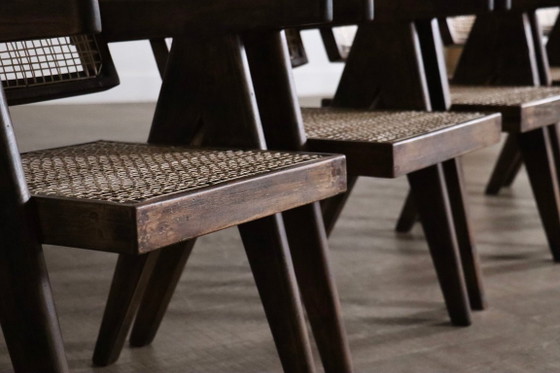
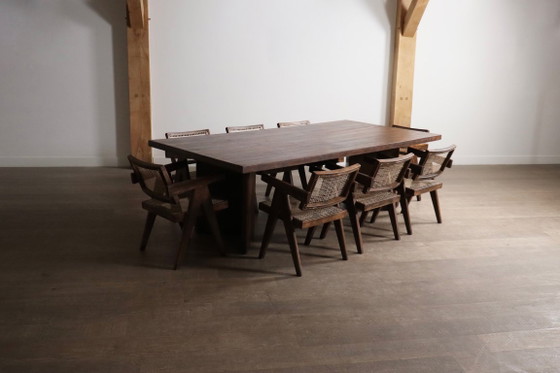
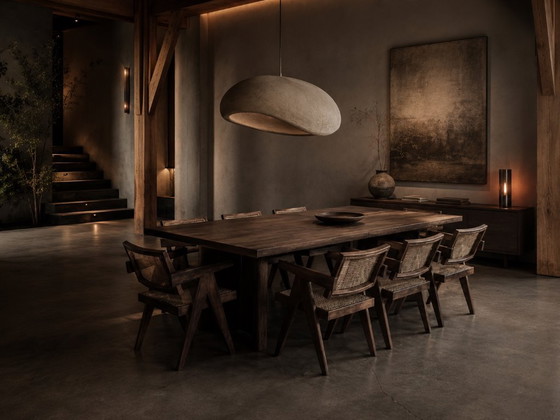
Set of 8 Pierre Jeanneret Office Cane Chairs, India 1950s
€38,600Bid from €35,000
Buy with confidence
Shop & pay safely with Buyer ProtectionDesigner items curated by WhoppahWe only pay the seller once you have safely received the itemTrusted payment methods


About this seller
ProfessionalProduct description
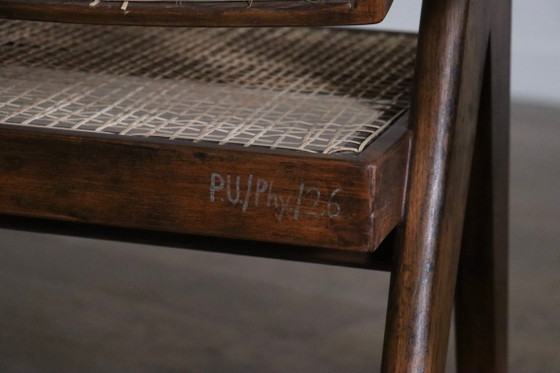
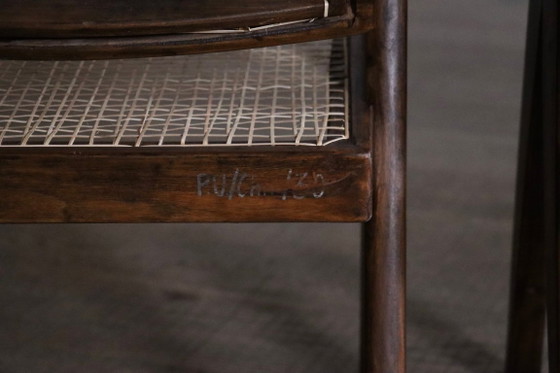
Pierre Jeanneret “Office Cane Chair” created in the 1950s for the city of Chandigarh in India, the utopian city designed by his cousin Le Corbusier.These iconic chairs, made of solid teak with a seating and backrest in woven cane. Tilted backrest and asymmetric flat profiled “compass”-type double side leg assembly, with the legs connected by a crosspiece and supporting the armrests.Their balanced proportions allow these chairs to work as dining chairs, desk chairs or individual accent pieces in any interior.An important example midcentury modern design and one of the most recognised furniture models associated with Pierre Jeanneret and the Chandigarh project.Pierre Jeanneret (1896-1967) is recognised as a pivotal figure in modernism. His collaborations with his cousin Le Corbusier are especially significant, particularly their codification of modernist architectural principles in Five Points Towards a New Architecture (1926). Towards the end of their careers the pair also designed a utopian modernist city in India – Chandigarh, and Jeanneret designed some of his most celebrated furniture designs for the administrative buildings in the city.Appears in the literature: “Le Corbusier, Pierre Jeanneret: Chandigarh, India,” Galerie Patrick Seguin, pp. 248 – 249, 288 and “Le Corbusier, Pierre Jeanneret: The Indian Adventure,” Touchaleaume and Moreau, p. 572.Provenance: Punjab University, chemistry department and physics department, Chandigarh, IndiaCane is renewed, wood has remained original patina
Specifications
ConditionVery goodColorsBrownMaterialWoodNumber of items1Height78 cmWidth53 cmDepth54 cmSeat height45 cm
Discover more
Seller information
About this seller
ProfessionalAbcoude, NetherlandsOn Whoppah since February 2022 • 17 sales