Have it delivered hassle-freeBuyer protectionAll Designer items curated by WhoppahDownload the Whoppah App – get alerts & sell with ease.
Have it delivered hassle-free
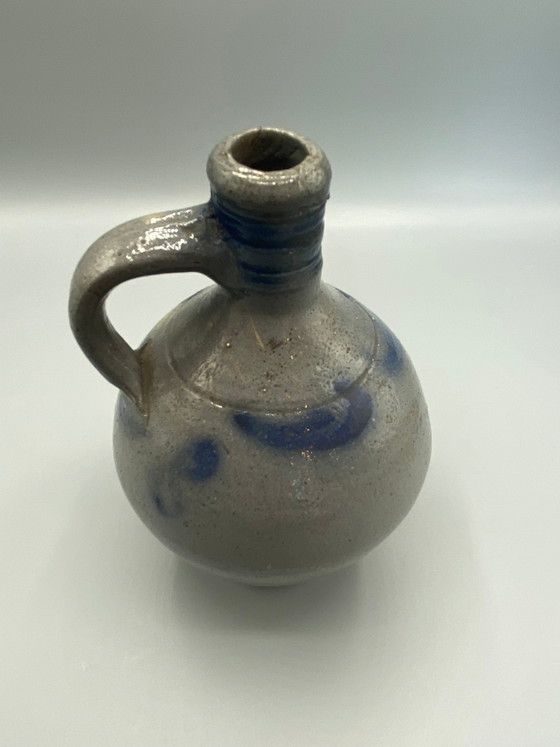
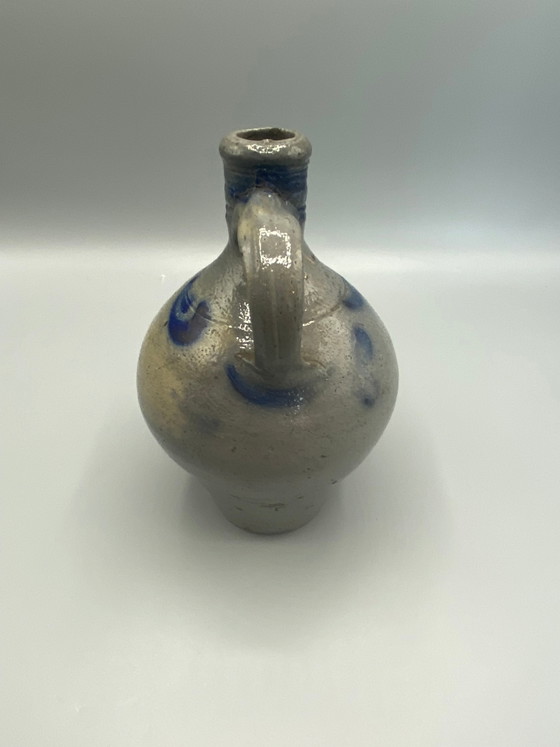
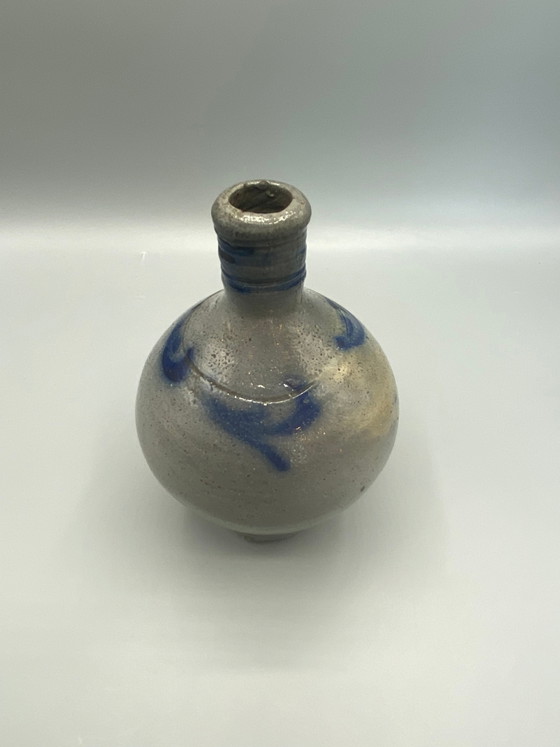
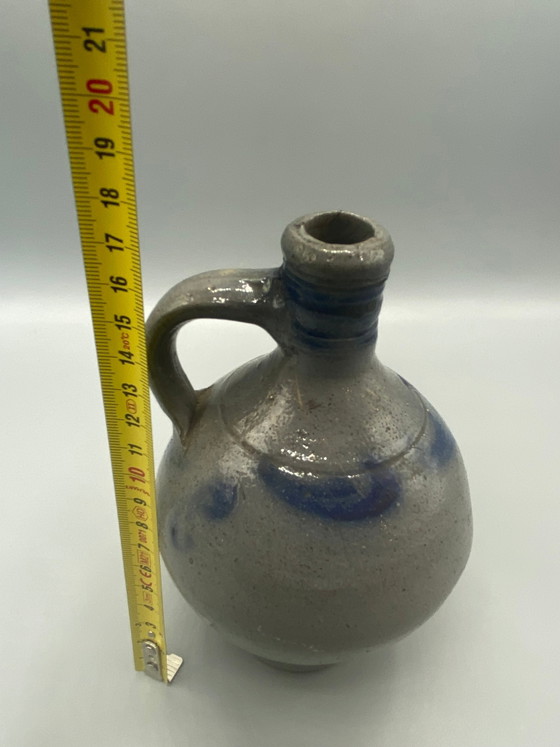
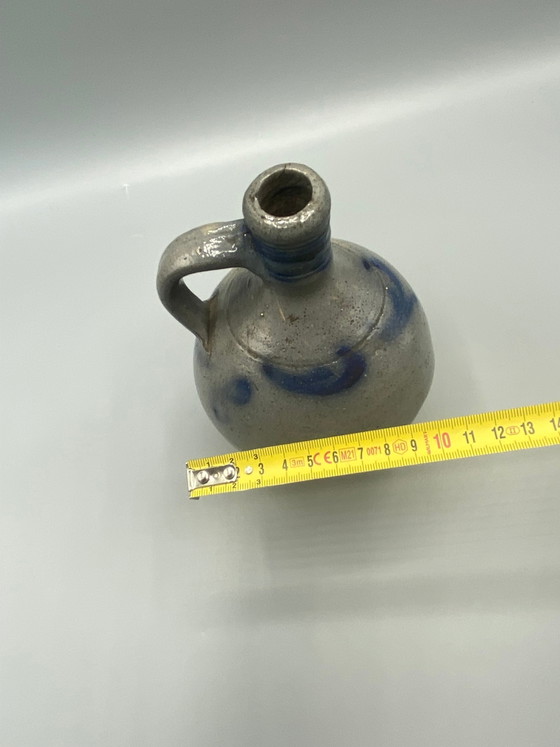
Rhenish Westerwald stoneware jug, globular body, brushed cobalt decoration
€25Bid from €22.50
Buy with confidence
Shop & pay safely with Buyer ProtectionDesigner items curated by WhoppahWe only pay the seller once you have safely received the itemTrusted payment methods


About this seller
ProfessionalProduct description
This jug has the oldest and purest form of Rhenish stoneware. The spherical body, almost perfectly round, the short neck ringed with three well-defined ridges, the ribbon handle attached midway up: everything here points to a pottery tradition dating back to the 16th century in the Westerwald region, between Koblenz and Siegen, in the heart of Rhenish Germany. The stoneware is ash-grey, dense, and resonant. The salt glaze, obtained by projecting salt into the high-temperature kiln, gives the surface that slightly grainy texture, shiny in places and matte in others, which is the inimitable signature of Rhenish stoneware. On the body, strokes of vivid cobalt blue are freely brushed, without a precise pattern, with the speed and casualness of a potter decorating in an assembly line fashion. Scrolls, spots, splashes of blue on grey: a gestural, almost abstract decoration, which has all the charm of folk craftsmanship. This jug dates from the late 19th or early 20th century, a time when Westerwald workshops partially mechanized their production while retaining hand-throwing. The regular glaze and homogeneous firing testify to the introduction of gas kilns, but the handle and neck still bear the marks of the potter's hand. It measures 16 cm in height with a body diameter of 12 cm. In a country kitchen, on a bookshelf, or placed alone on an antique piece of furniture, it brings that quiet, solid presence of objects that have been used and have endured. Good general condition. Normal signs of use, intact glaze, solid handle. Some lime deposits inside the neck.
Additional details:
- Brand: Westerwald
- Style: Artisanat populaire
- Material: Grès
- Material: Glaçure au sel
- Material: Cobalt
- Colour: Gris cendré
- Colour: Bleu vif
- Period: fin du XIXe siècle ou du début du XXe
Specifications
ConditionGoodColorsBlue, Grey
Discover more
Seller information
About this seller
ProfessionalSaint symphorien des bois, FranceOn Whoppah since August 2026 • 1 sale