Have it delivered hassle-freeBuyer protectionAll Designer items curated by WhoppahDownload the Whoppah App – get alerts & sell with ease.
Have it delivered hassle-free
Polychrome Enameled Opaline Vase with Pink and Gold Scalloped Neck – Napoleon III Period
€125Bid from €112.50
Buy with confidence
Shop & pay safely with Buyer ProtectionDesigner items curated by WhoppahWe only pay the seller once you have safely received the itemTrusted payment methods


About this seller
ProfessionalProduct description
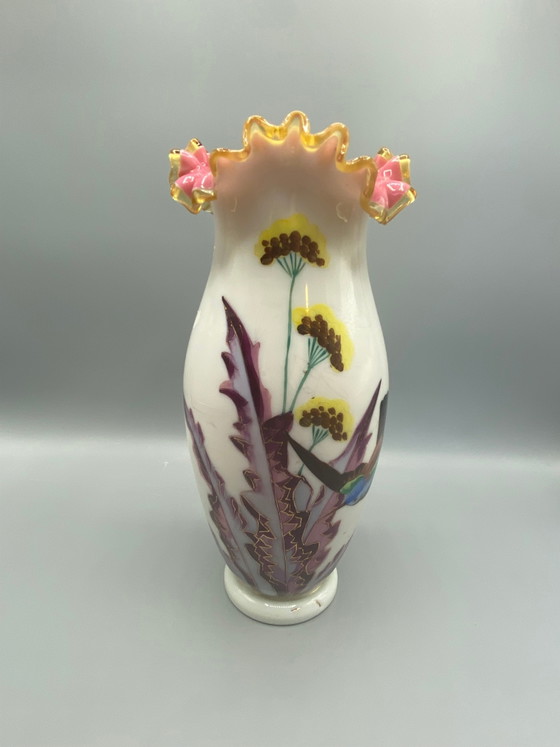
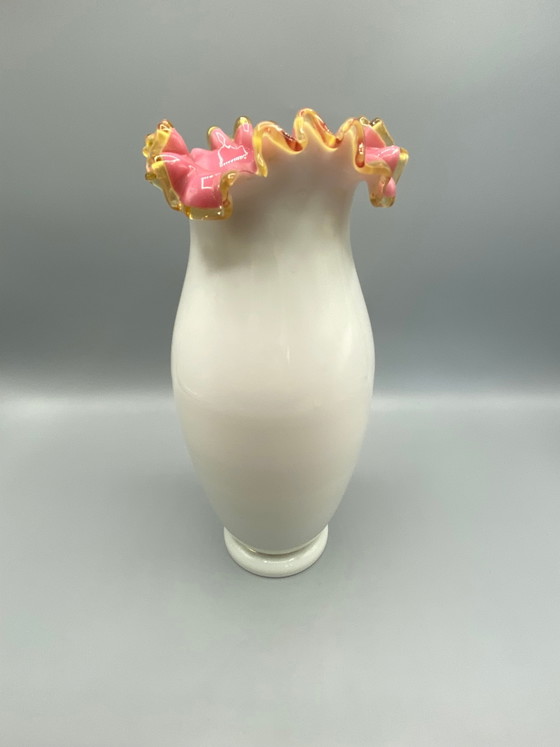
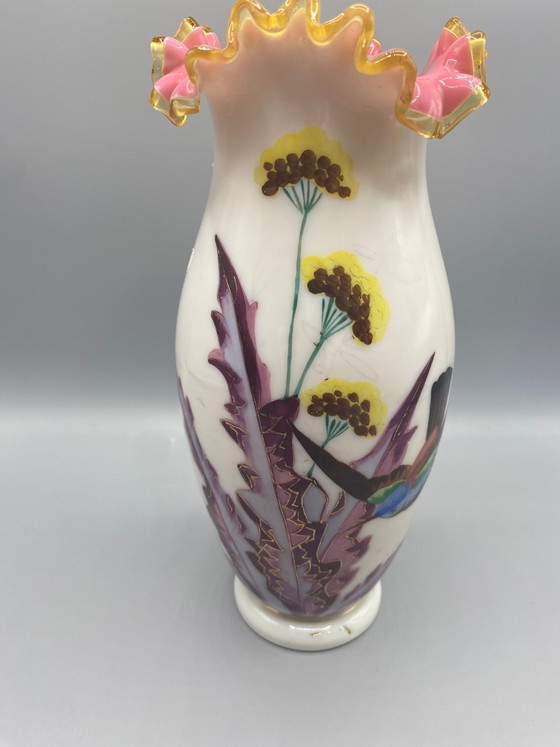
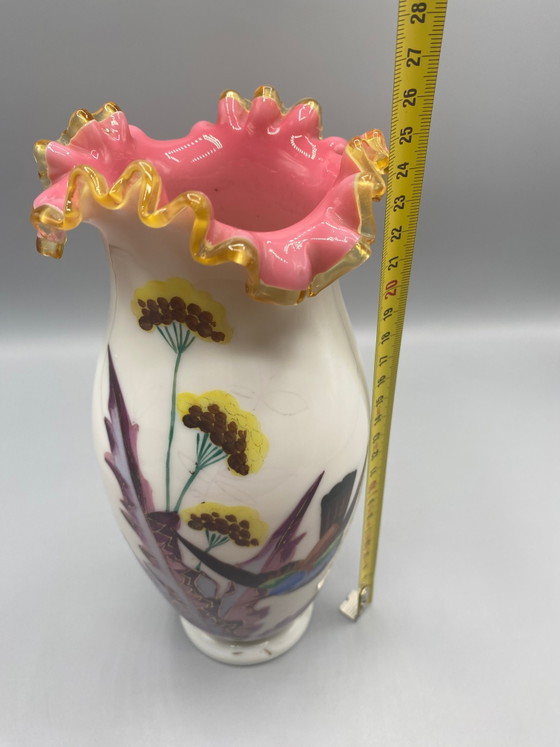
There are some objects that seem to have retained something of the homes they've passed through. This opaline vase transports us back to the second half of the 19th century, to the era of Napoléon III interiors, when decorative arts brought a profusion of colors, precious materials, and nature-inspired forms into drawing-rooms. Its slender body is crafted from beautiful white opaline, soft and luminous, upon which an astonishing polychrome decoration unfolds. Large leaves in violet and mauve tones unfurl from the base, highlighted with fine gilded accents. Between them appear long green stems bearing yellow and brown umbel-shaped flowers, echoed by touches of blue and green. Nature here is not reproduced with the precision of a herbarium. It is interpreted, transformed, almost dreamed, as 19th-century decorators loved to do.
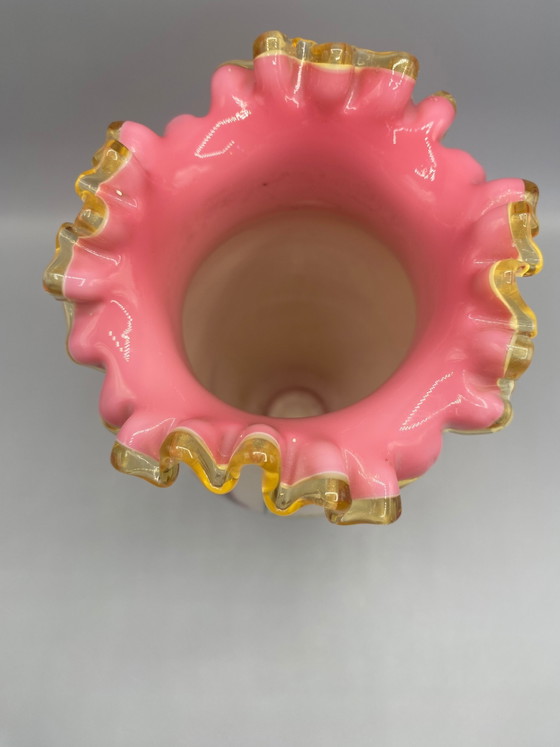
But the entire personality of this piece is revealed in its extraordinary collar. The glass opens into a wide, deeply scalloped corolla, worked in successive waves and folds. The interior is adorned with a deep, almost luscious pink, while the tips of the undulations become translucent and take on a delicate amber-yellow hue. Light then passes through the glass differently with every shift of the gaze. The opaline remains soft and milky, the pink becomes vibrant, and the amber edges catch the light like a net of gold. This highly theatrical construction fully belongs to the taste of the second half of the 19th century, when glassmakers no longer sought merely to create a container, but a true display object.
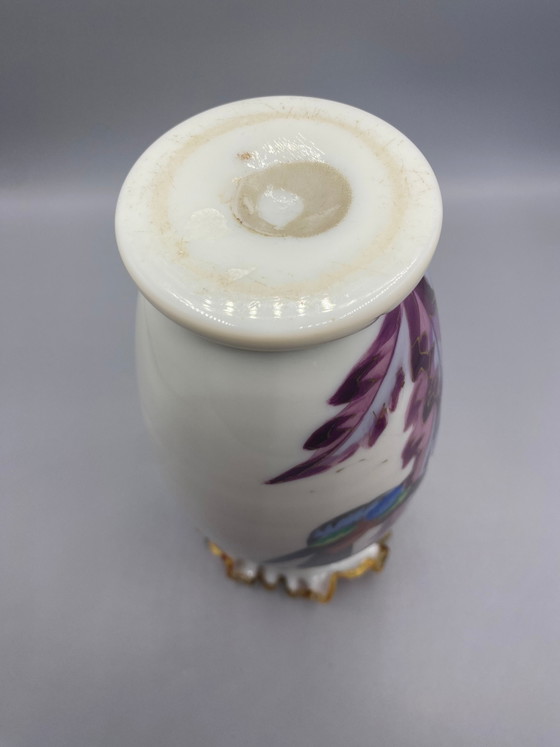
A detail beneath the base adds a small enigma to its history. Traces of an old attachment can be observed there, suggesting that the vase was once displayed on a metallic mount or plinth, now missing. This type of pairing between opaline and bronze was particularly appreciated in the 19th century. We naturally approach this interpretation with caution, as no mount has survived with the piece. The absence of a signature does not allow the vase to be definitively attributed to a particular manufacturer. Its craftsmanship, its enamelled decoration, its gilded highlights, and this spectacular glass collar point towards European production from the second half of the 19th century, around .
At 25 cm in height, the piece has a remarkable presence without being monumental. Far from the ornate drawing-rooms where it originated, its exuberance completely changes character. It is no longer simply a 19th-century opaline. It almost becomes a glass sculpture, a large artificial flower frozen for over a century in pink, amber, violet, and gold.
Additional details:
- Brand: Manufacture européenne
- Style: Napoléon III
- Material: opaline
- Material: émail
- Colour: polychrome
- Colour: or
- Colour: mauve
- Colour: brun
- Colour: ambre
- Period: Napoléon III
Specifications
ConditionGoodColorsPink, Purple, Blue, Yellow, White, GreenMaterialGold, Glass
Discover more
Seller information
About this seller
ProfessionalSaint symphorien des bois, FranceOn Whoppah since August 2026 • 0 sales