Have it delivered hassle-freeBuyer protectionAll Designer items curated by WhoppahDownload the Whoppah App – get alerts & sell with ease.
Have it delivered hassle-free
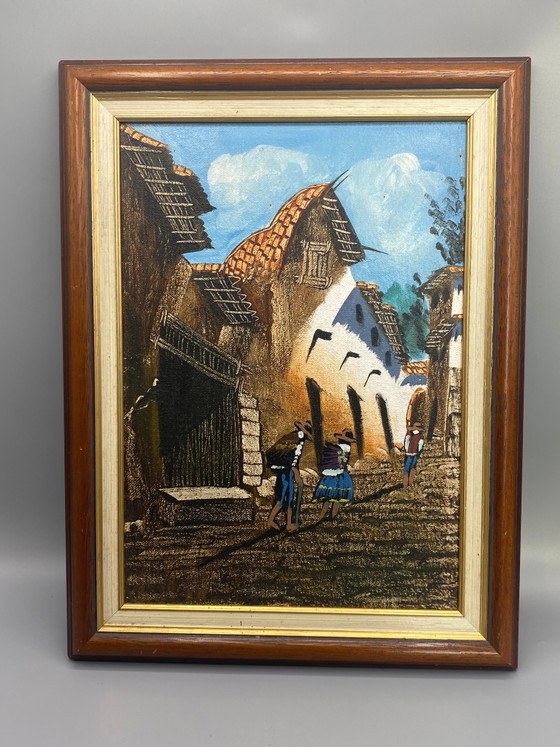
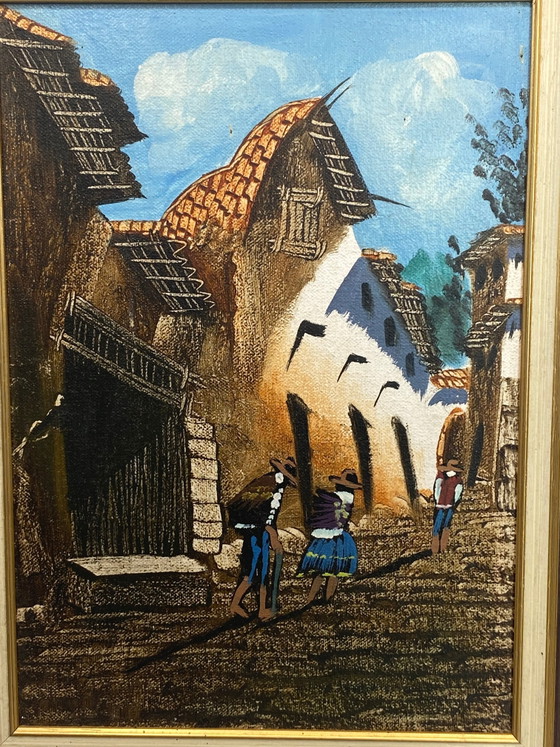
Peruvian Costumbrista painting on canvas, Andean street scene, Centro Artesanal Magdalena, Lima
€185Bid from €166.50
Buy with confidence
Shop & pay safely with Buyer ProtectionDesigner items curated by WhoppahWe only pay the seller once you have safely received the itemTrusted payment methods


About this seller
ProfessionalProduct description
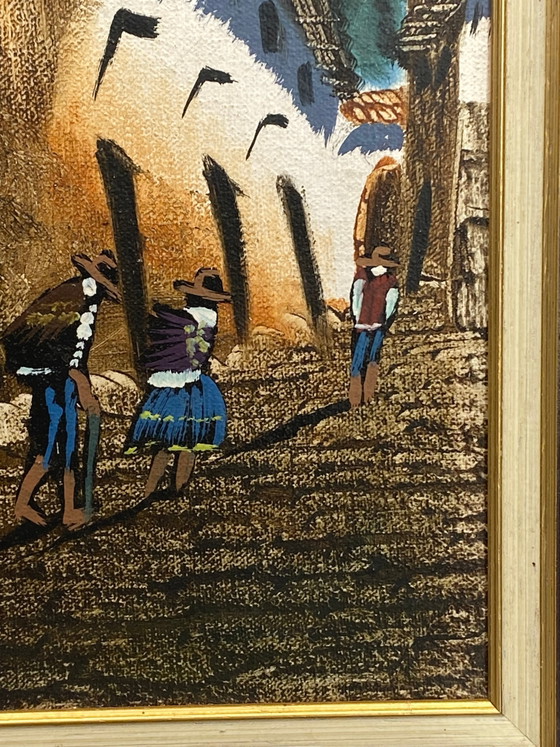
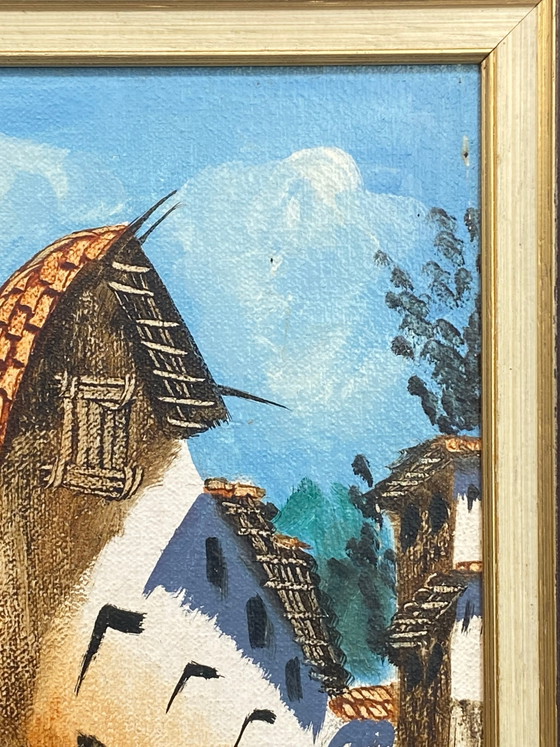
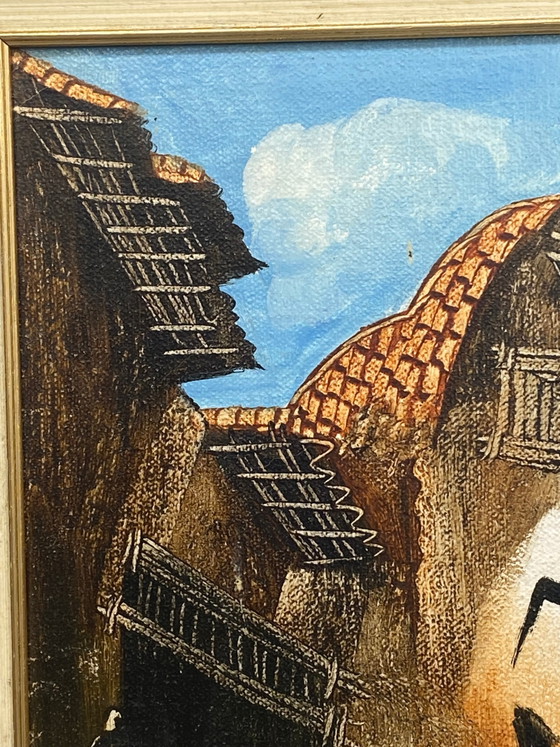
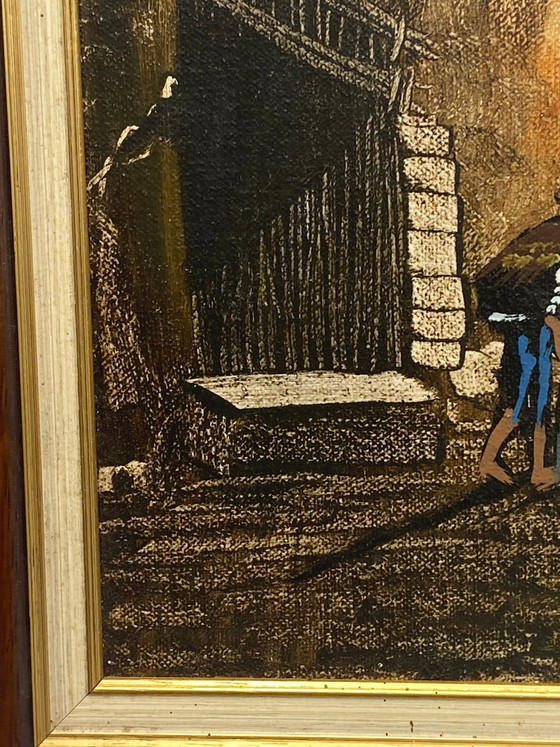
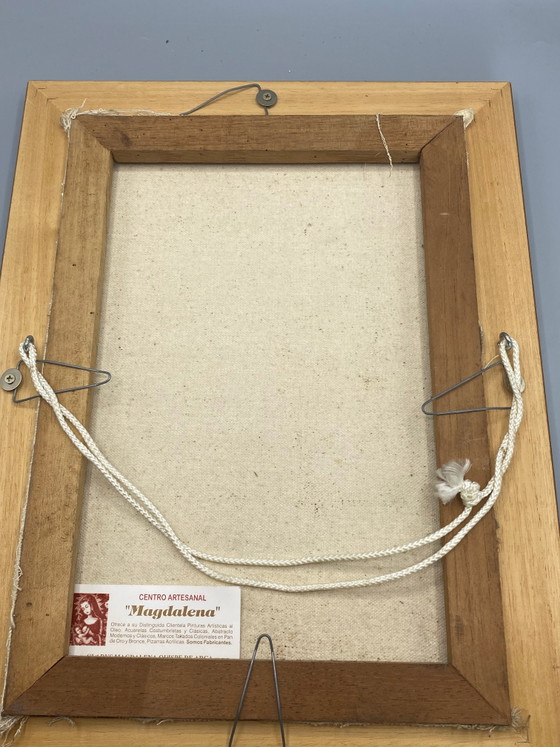
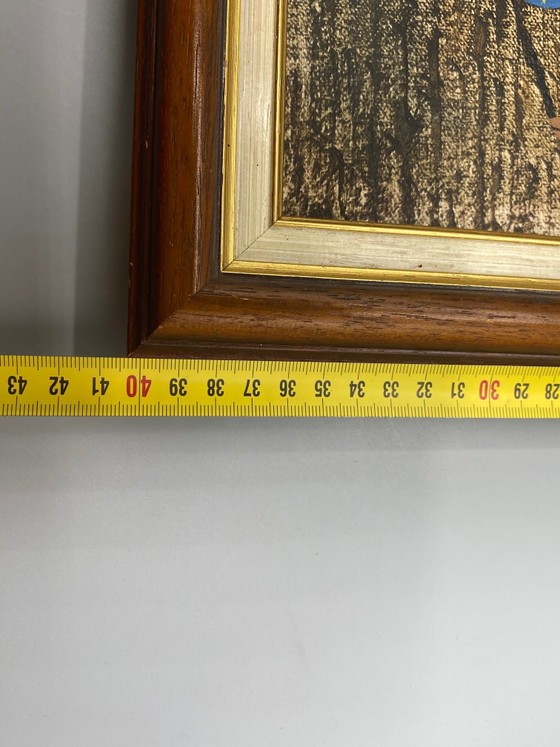
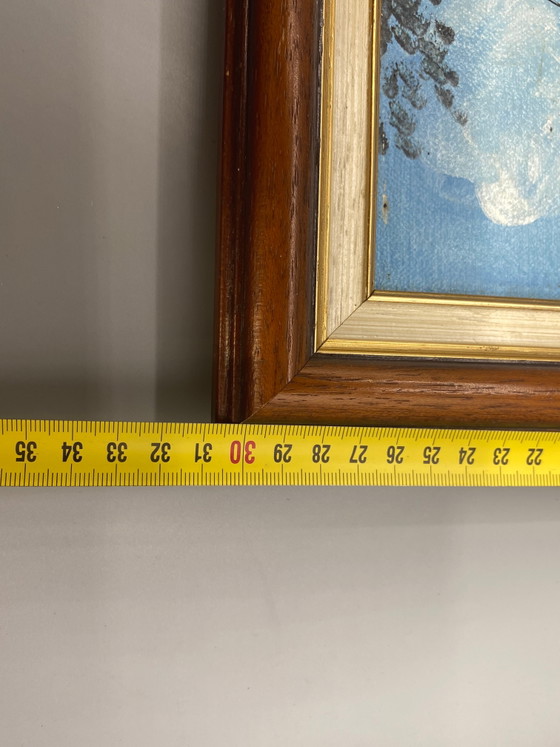
A street climbs between white houses. Three figures advance slowly under an immense blue sky. At first glance, it is a peaceful scene of Andean life. But when the painting is turned over, its history reappears: it has retained on its back the label of the studio-gallery from which it originates, in Miraflores, Lima. This provenance transforms this painting into a true testament to a Peruvian artistic universe of the late 20th century. The composition fits within the *costumbrista* tradition, deeply committed to representing landscapes, architecture, clothing, and scenes of daily life. Here, the painter chooses a steep street lined with traditional houses. The whitewashed facades seem to have been sculpted by light as much as by the brush. The irregular walls, stone foundations, tiled roofs, balconies, and wooden overhangs gradually make up the village. The perspective is particularly well executed. The street originates almost at the edge of the painting then rises between the buildings, giving this relatively contained format an astonishing impression of depth. In the foreground appear three figures in traditional Andean clothing. Their silhouettes are small compared to the houses, but their colors—red, blue, yellow, green—immediately become the focal points for the eye. Close-up photographs allow observation of the canvas weave and the direct handling of the pictorial material. The treatment of the buildings is particularly interesting: the painter layers strokes, touches, and variations of ochres, browns, grays, and whites. The stones are suggested by small, successive touches. The tiles appear as quick, nervous lines. The sky, on the other hand, opens up the composition. Its intense blue contrasts with the mineral tones of the village and further accentuates this sensation of high-plateau light. The reverse still bears its significant original commercial label, identifying the Centro Artesanal Magdalena, Miraflores, Lima, and mentioning Gladys Magdalena Quispe de Arca and Jorge Alfredo Arca Pineda. The establishment could be found in old professional directories of Miraflores, at the same address, under the name Galeria de Arte Magdalena. In the absence of a visible individual signature on the canvas, we do not personally attribute it to either of the artists. Its wooden frame, with its successive warm-toned moldings and discreet gilded touches, still accompanies the painting. Some marks of time are visible and contribute to the history of a piece that has traveled through years and continents. Dimensions of the framed piece: approximately 40 × 30 cm. Peru, late 20th century.
Additional details:
- Brand: Centro Artesanal Magdalena
- Style: costumbrista
- Colour: blanches
- Colour: ocres
- Colour: bruns
- Colour: dorées
- Period: fin du XXe siècle
Specifications
ConditionGoodColorsRed, Grey, Blue, Yellow, GreenMaterialWood, Canvas
Discover more
Seller information
About this seller
ProfessionalSaint symphorien des bois, FranceOn Whoppah since August 2026 • 0 sales