Have it delivered hassle-freeBuyer protectionAll Designer items curated by WhoppahDownload the Whoppah App – get alerts & sell with ease.
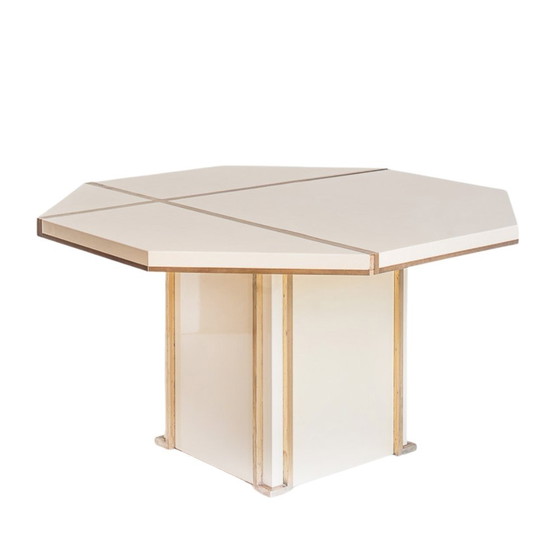
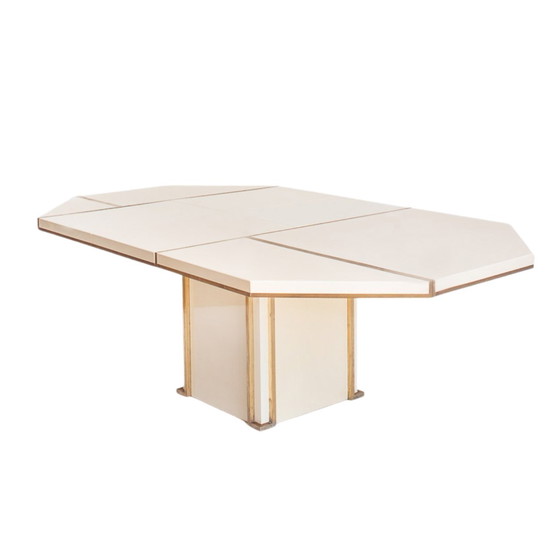
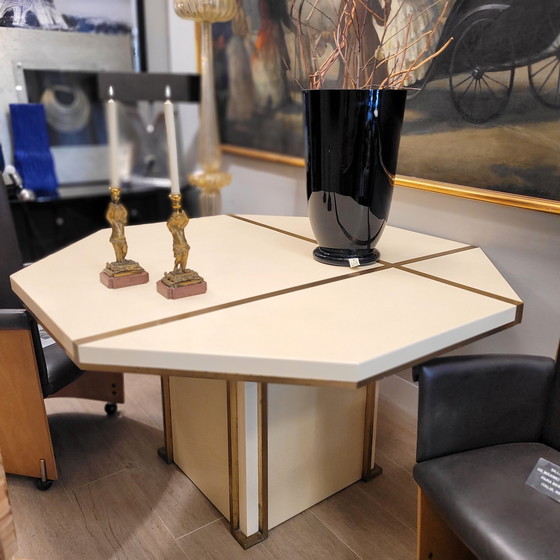
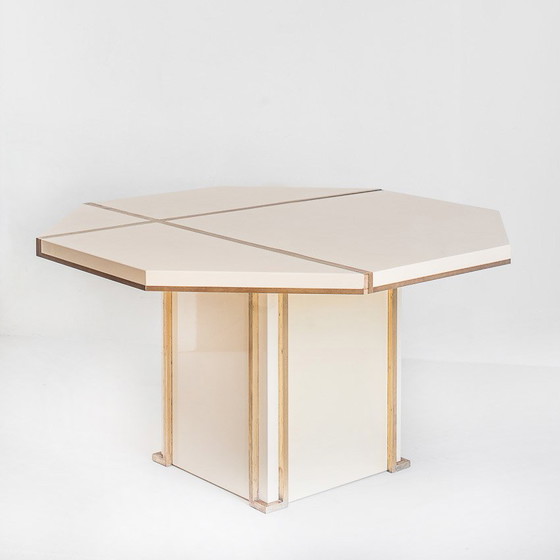
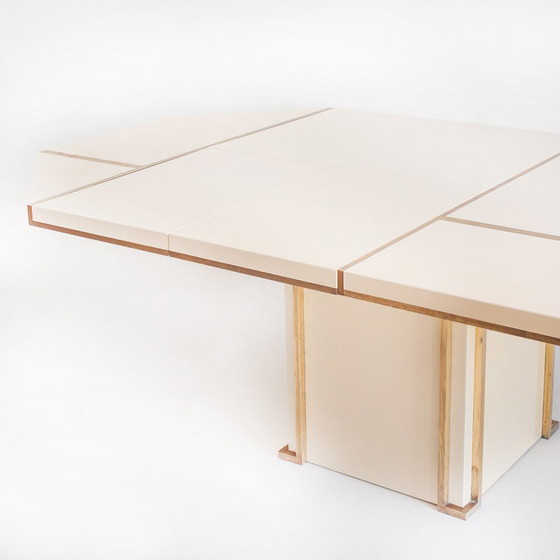
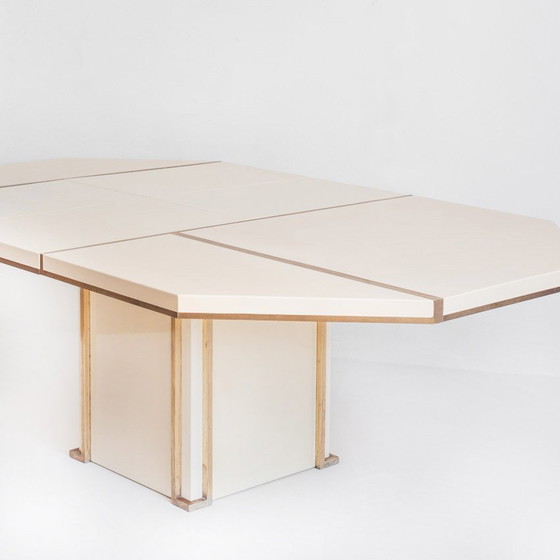
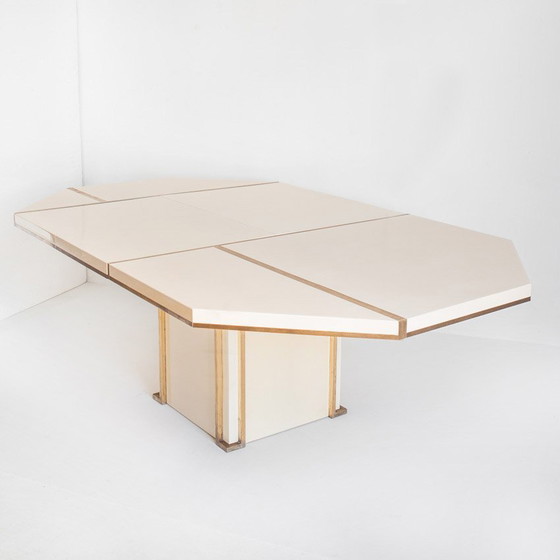
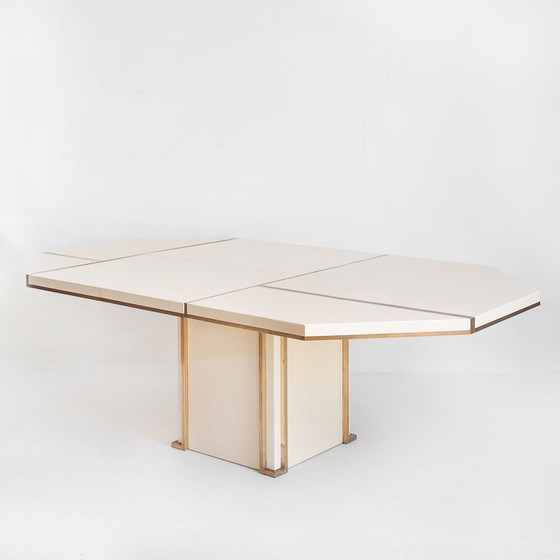
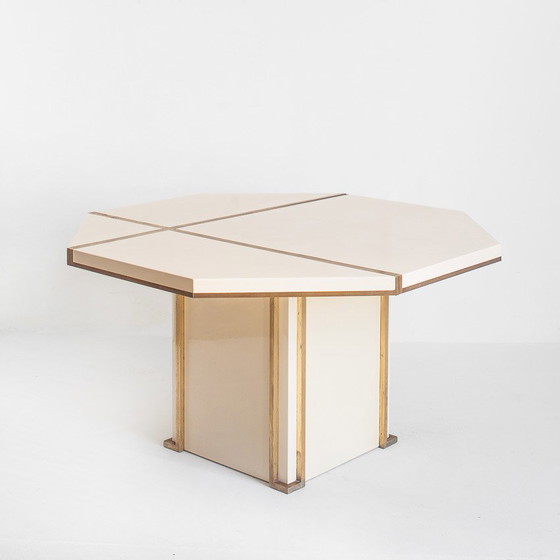
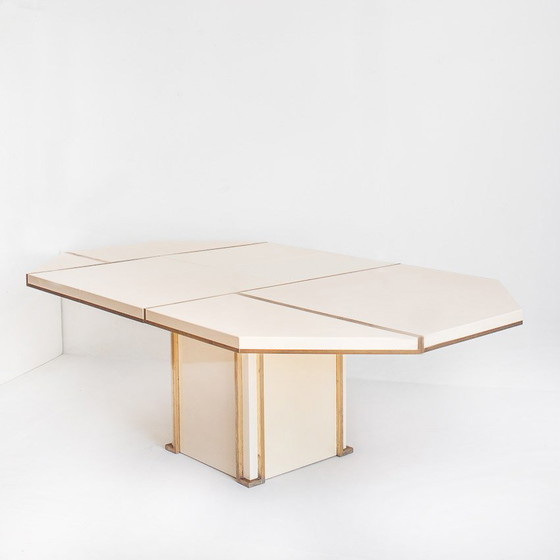
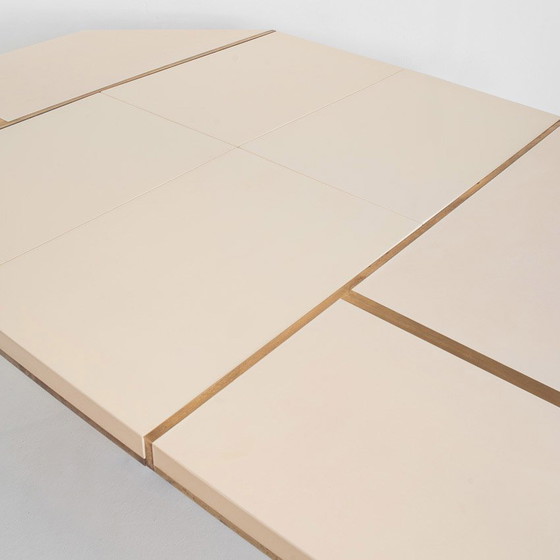
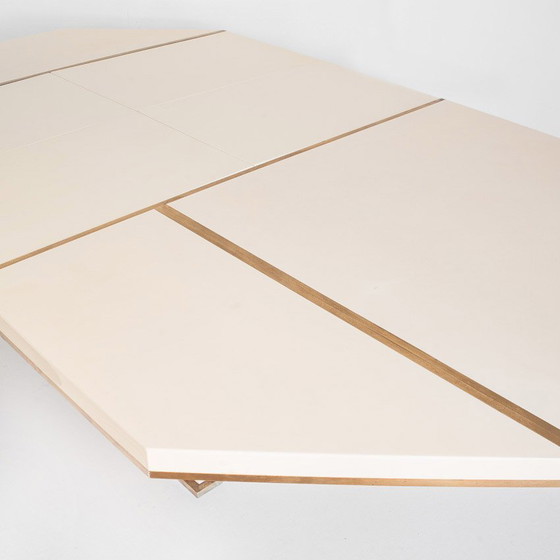
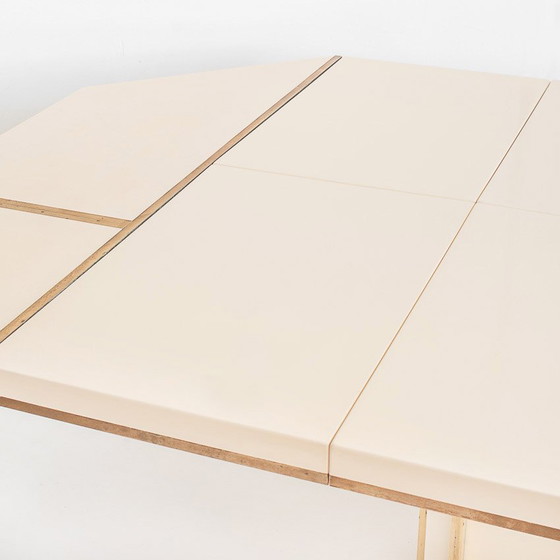
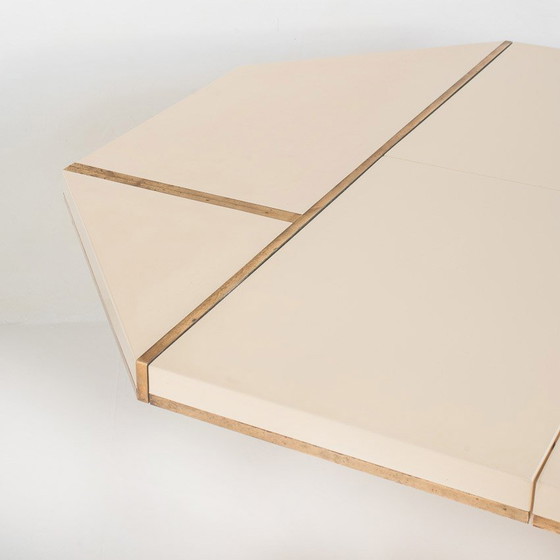
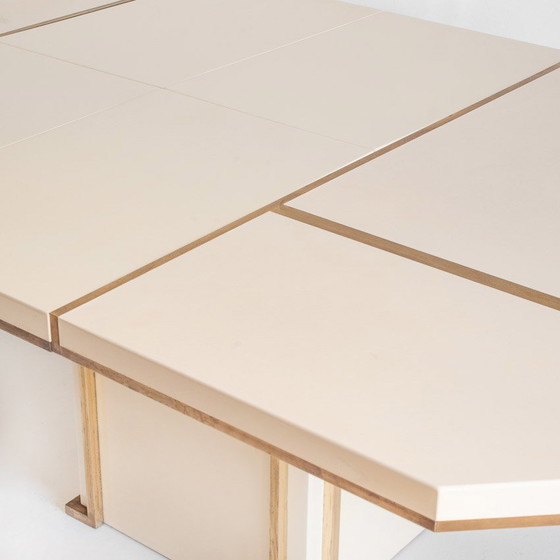
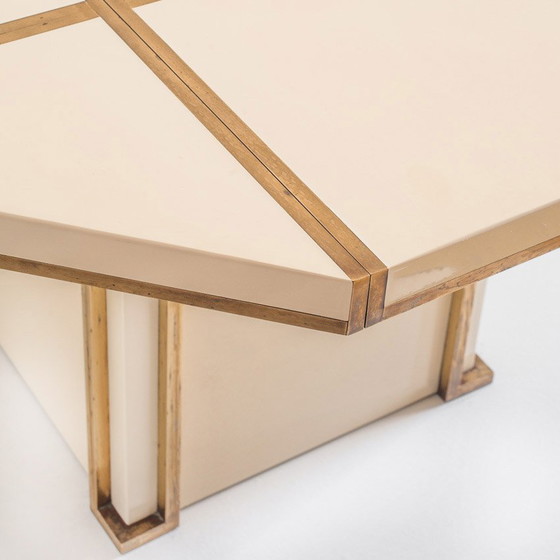
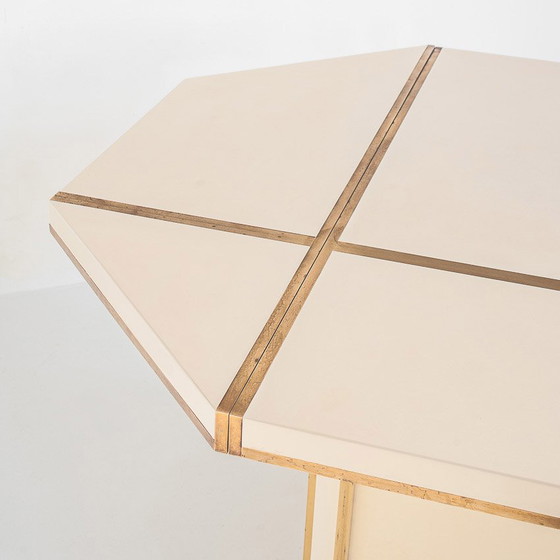
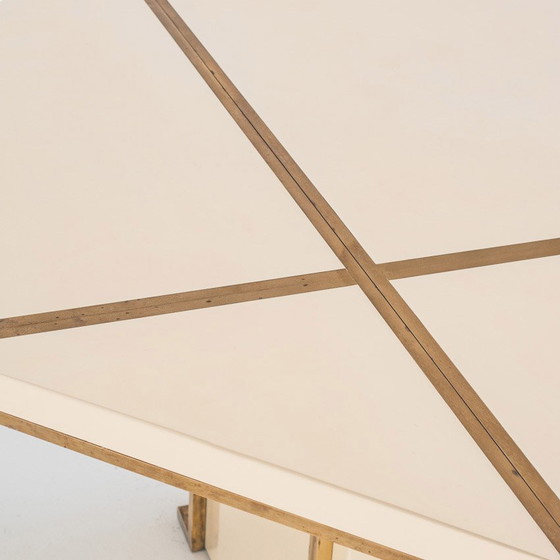
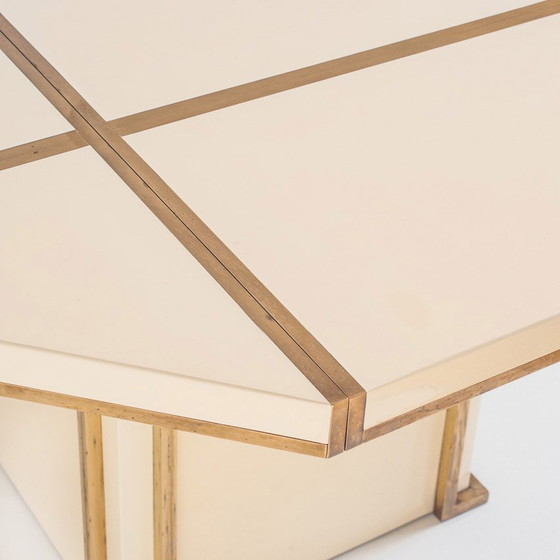
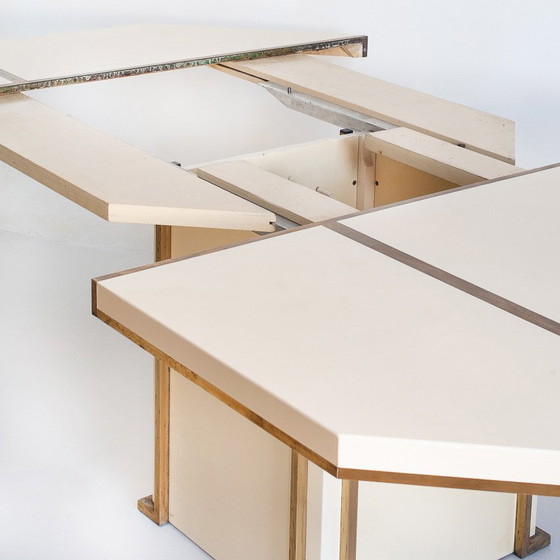
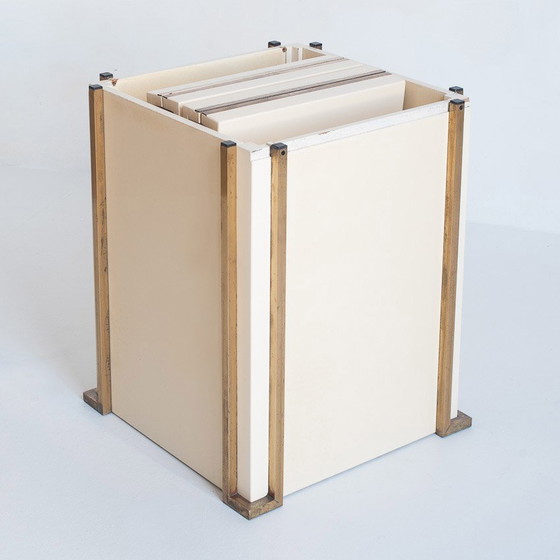
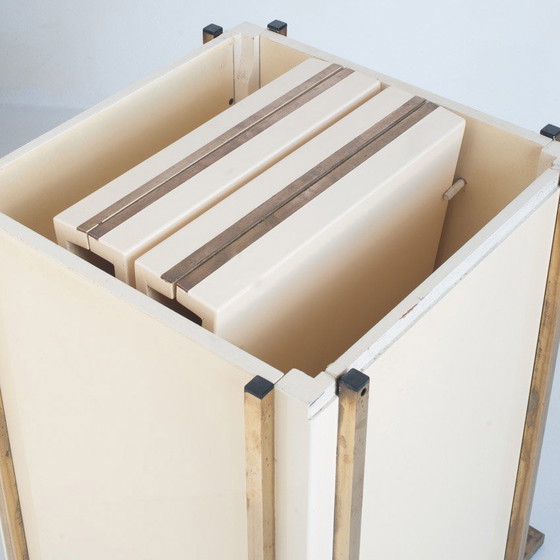
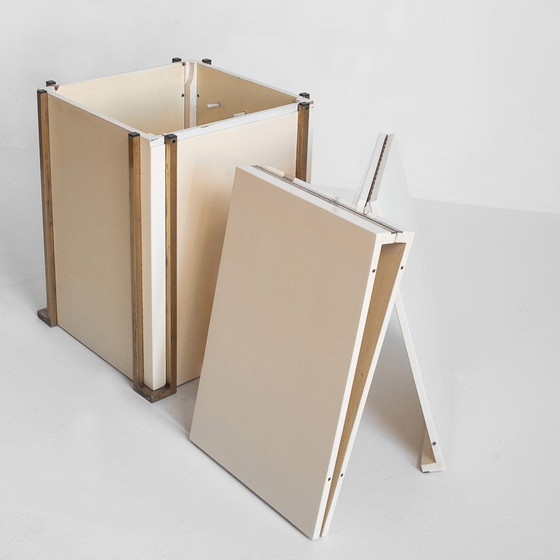
Extendable dining table, Jean-Claude Mahey, lacquered wood and gilt brass, 1970s – France
€10,450Bid from €9,500
Buy with confidence
Shop & pay safely with our Buyer ProtectionDesigner items curated by WhoppahWe only pay the seller once you have safely received the itemTrusted payment methods



About this seller
Product description
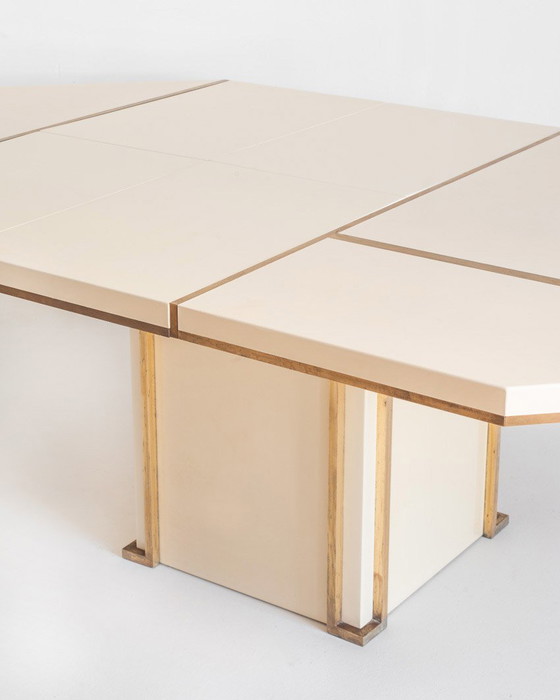
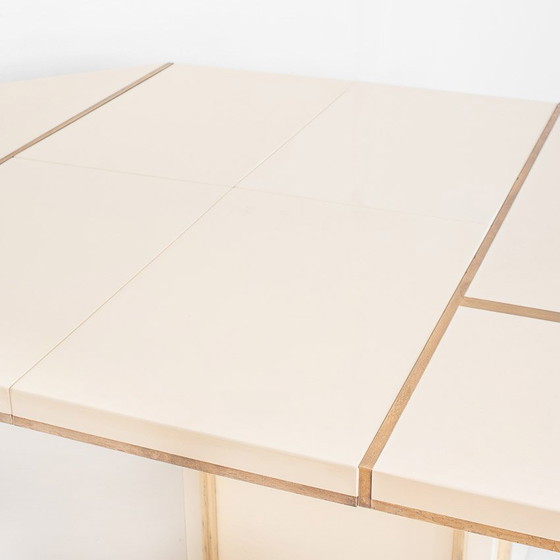
Extendable dining table, Jean-Claude Mahey, lacquered wood and gilt brass, 1970s – France. This exquisite table clearly embodies the spirit of high-end French design from the 1970s and 1980s, a hallmark of Jean-Claude Mahey. Its precise geometry and lacquered finish evoke an aesthetic that fuses Art Deco, reinterpreted with modern glamour. The octagonal shape of the tabletop is particularly striking. This formal choice breaks with rectangular or circular tradition, providing dynamism and sophistication. The gilt brass lines, which divide the surface into triangular planes, reinforce the compositional structure and allude to a sense of almost architectural order. These gilt lines function not only as decorative accents, but also as visual guides that direct the eye toward the center, generating visual balance. Jean-Claude Mahey often used this contrast between polished lacquer and shiny metals to highlight geometric shapes. The ivory or cream lacquer finish provides a polished surface, typical of Mahey's style, which amplifies the sense of luxury and modernity. This type of finish is often associated with Hollywood-inspired interior design and the refined opulence of the mid-20th century. The square, also lacquered, base is presented as a solid, geometric volume, generating an elegant tension between the visual mass of the base and the lightness of the tabletop. The gold metal profiles that frame the edges of the base reinforce the idea of geometric luxury and add stylistic continuity with the design of the tabletop. The table is extendable. Its basic shape is square, but the two extensions (which fold in half) are hidden within the base and fit into rails that are concealed beneath the tabletop. Overall, this table is a paradigmatic example of Jean-Claude Mahey's style: refined, geometric, glamorous, and deeply linked to an artistic vision of furniture as functional sculpture. Jean-Claude Mahey (Mayenne, France, 1944 – ) Jean-Claude Mahey is a French designer famous for his burl wood furniture in the Hollywood Regency and Art Deco styles. Furthermore, some of his furniture, such as tables, mirrors, and display cabinets, are embellished with different decorative techniques. This creates an elegant combination of luxurious materials with other elements such as lacquer, marquetry, marble, and brass, resulting in furniture that will leave no one indifferent. Mahey is originally from Mayenne, France. His family was full of decorators and painters, something that greatly influenced his training. In 1966, he graduated from the Ecole Supérieure des Arts Appliqués in Paris. He subsequently worked for various luxury furniture manufacturers, including Roche Bobois, Maison Romeo, Maville Interiors, and Maison Jasen. After working for these manufacturers between 1967 and 1976, he decided to found his own company. Mahey didn’t focus solely on marquetry, but also developed an interest in a heavy lacquer technique that creates mirror-like finishes and also softens the edges. Lacquered furniture was highly sought after in the design world. In the 18th century, both English and European royalty had a great interest in Japanese lacquer (French furniture designers and Japanese lacquer makers joined forces during the Art Deco era, creating stunning pieces of furniture). Today, Mahey’s workshop is still active and is run by his family. The workshop has created designs that are in high demand all over the world. In 1992, he opened his showroom in central Paris. Designer: Jean-Claude Mahey Style: Mid-Century Materials: Lacquered wood and gilt brass Period: 1970s Country of Origin: France Good condition according to age and use Dimensions: 76 x 136 x 136 cm Dimensions with (2) extensions: 76 x 226 x 136 cm Base/foot dimensions: 70 x 56 x 56 cm. Shipping costs will be paid by the buyer depending on the dimensions, weight, and destination.
Good condition according to its age and use
Good condition according to its age and use
Specifications
ConditionGoodColorsWhite, Creme, GoldMaterialWood, MetalNumber of items1Height76 cmWidth226 cmDepth136 cm
Discover more
Seller information
About this seller
Valladolid, SpainOn Whoppah since October 2024 • 1 sale